
Primary Wholesale Tubular & Flat Steel Products
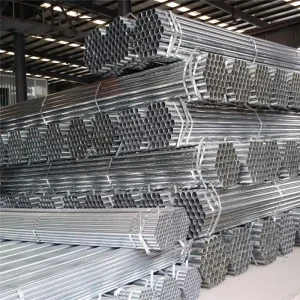
Direct factory supply of structural welded iron/steel pipes, galvanized hollow sections, and specialty coils engineered for high pressure resistance and severe environmental exposure.

1. Global Commercial & Industrial Landscape for Welded Iron Pipes
The global demand for welded iron and steel pipes (specifically Electric Resistance Welded - ERW, Longitudinal Submerged Arc Welded - LSAW, and Spiral Submerged Arc Welded - SSAW) continues to expand at a compound annual growth rate driven by mega-infrastructure, energy transitions, and agricultural modernization.
Infrastructure & Civil Engineering
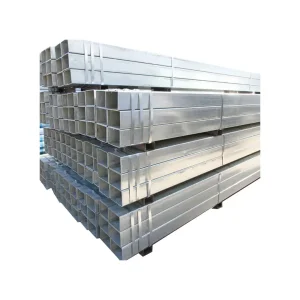
Structural hollow sections (SHS/RHS) are replacing heavy hot-rolled I-beams in airport terminals, high-speed rail stations, and stadium trusses due to their high strength-to-weight ratio and multi-axis torsional resistance. B2B procurement in Southeast Asia, Europe, and North America demands strict conformity with EN 10219 and ASTM A500 standards.
Energy Transmission & Fluid Handling
From cross-country water distribution networks to low-pressure gas pipelines, high-frequency ERW welded black and galvanized iron pipes offer superior yield strengths (up to Grade B/X70). Industrial buyers prioritize zero-defect weld seams verified via automated eddy current non-destructive testing (NDT).
Agricultural Modernization
Controlled-environment agriculture (CEA) requires thick-walled pre-galvanized and hot-dip galvanized structural tubing capable of enduring acidic fertilizers, high humidity, and wind-loading stresses without micro-fissuring or flaking at the weld interface.
2. Engineering Precision: ERW vs. SAW Welding Mechanisms
Understanding the mechanical and metallurgical variances between pipe manufacturing processes is vital for B2B procurement managers specifying structural loading and pressure tolerances.
| Manufacturing Process | High-Frequency ERW (Electric Resistance) | LSAW (Longitudinal Submerged Arc) | SSAW / HSAW (Spiral Submerged Arc) |
|---|---|---|---|
| Outer Diameter Range | 1/2" to 24" (21.3mm – 610mm) | 16" to 56" (406mm – 1422mm) | 8" to 120" (219mm – 3048mm) |
| Heat Source Mechanism | High-frequency induction current (350-500 kHz) without filler metal. | Submerged arc welding with solid filler wire and flux protection. | Double-sided submerged arc welding along helical seam. |
| Heat-Affected Zone (HAZ) | Narrow, refined grain structure post online heat treatment (seam annealing). | Broader HAZ requiring precise interpass temperature control. | Flexible helical strain distribution; medium HAZ. |
| Primary Standards | ASTM A53, EN 10219, GB/T 3091, BS 1387 | API 5L X70/X80, ASTM A672, ISO 3183 | API 5L, ASTM A252 (Piling), SY/T 5037 |
| Core Industrial Applications | Scaffolding, Greenhouse frames, HVAC, Water supply, Solar structures. | Heavy offshore oil/gas lines, structural bridge pilings, high-pressure boilers. | Municipal drainage, foundation piling, low-pressure bulk water transmission. |
In-Line Seam Annealing (Heat Treatment)
To eliminate brittle martensitic phases within the weld joint, tier-1 Chinese manufacturers utilize online intermediate-frequency induction seam annealing. This process heats the weld seam to 850°C – 950°C, normalizing the grain structure to match the parent metal ductility and preventing field joint failures under hydrostatic pressure.
Passivation & Zinc Coating Chemistry
Pre-galvanized pipes utilize continuous hot-dip strip lines with electro-hydraulic air knives achieving zinc weight uniformity down to ±5g/m². For severe environments, hot-dip galvanized (HDG) pipes receive post-weld bath immersion producing zinc-iron intermetallic alloy layers (Gamma, Delta, Zeta phases) capped by a pure Eta zinc surface, offering up to 50+ years of atmospheric corrosion resistance.
3. China Factory Efficiency & Integrated Supply Chain Advantages
China's dominance in structural steel pipe manufacturing stems from deep industrial clustering, raw material vertical integration, and aggressive technological automation in high-frequency roll forming mills.
Upstream Coil Integration
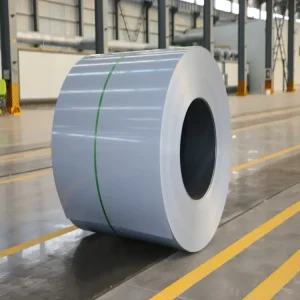
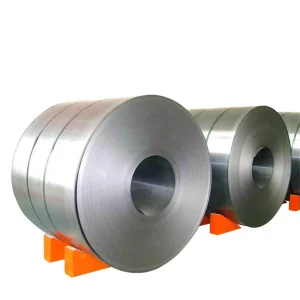
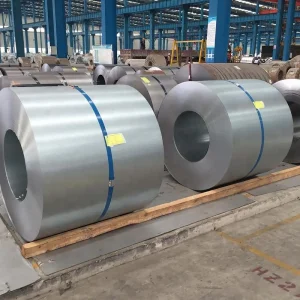
Manufacturing hubs in Tianjin and Hebei sit adjacent to primary state-owned steel mills (HBIS, Shougang). Direct hot-rolled strip coil sourcing ensures chemical purity, controlled carbon equivalents (CEv), and minimal freight latency.
Automated Roll Forming Speed
Modern ERW production lines run at linear speeds exceeding 80 meters per minute with continuous quick-change cage forming technology, significantly reducing batch setup times and lowering per-ton conversion costs.
Comprehensive In-House Tooling
Dedicated CNC die-molding workshops allow rapid custom-size fabrication for non-standard square, rectangular, and elliptical hollow sections without reliance on third-party machine shops.
Logistics & Port Proximity
Proximity to Tianjin Port (Xingang) enables seamless bulk vessel breakbulk loading and containerized sea-freight packing with anti-rust oiling, wooden end-cap protection, and heavy-duty steel strapping.
4. Localized Application Scenarios & Project Engineering Specifications
Welded iron and steel pipes must meet targeted mechanical and chemical requirements depending on their geographical installation zone and operational loads.
Scenario A: Solar PV Mounting Structures in High-Salinity Coastal Zones
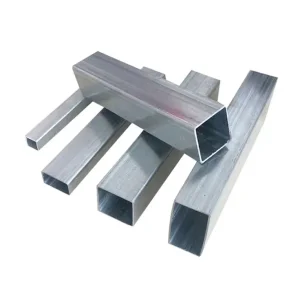
Material Mandate: Hot-Dip Galvanized Square Tubing (ASTM A500 Grade B / DX51D+ZM Zinc-Aluminum-Magnesium).
Engineering Challenge: Photovoltaic plants situated in coastal salt-spray environments face accelerated galvanic corrosion.
Factory Solution: Supplying Z275 to Z600 coating weights with micro-alloyed Zinc-Aluminum-Magnesium (ZM) alloy coatings. The addition of 3% Magnesium forms a dense, self-healing simonkolleite layer over sheared edges and punched installation holes, extending structure lifespan to 30+ years without secondary dipping.
Scenario B: Modern High-Ridge Agricultural Greenhouses in Tropical/Humid Regimes
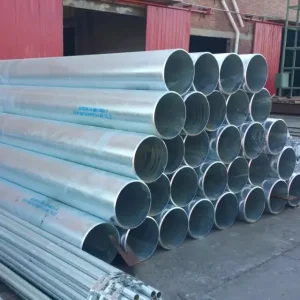
Material Mandate: Pre-Galvanized and Hot-Dip Galvanized Round & Oval Iron Pipes (GB/T 3091 / EN 10255).
Engineering Challenge: High humidity combined with sulfur-based agrochemical sprays causes rapid pitting along internal weld seams.
Factory Solution: Implementing internal seam zinc-spraying (repairing the weld bead flash zone) combined with chromate passivation to guarantee smooth fluid flow internally and eliminate micro-structural corrosion traps.
Scenario C: High-Rise Building Fire Protection & HVAC Sprinkler Lines
Material Mandate: ERW Black and Galvanized Carbon Steel Pipes (ASTM A53 Grade B, Schedule 10 / Schedule 40).
Engineering Challenge: High working pressures (up to 300 PSI) require absolute circularity and uniform wall thickness for grooved coupling joining.
Factory Solution: Automated ultrasonic testing (UT) along 100% of the pipe length, followed by hydrostatic testing at 2.5 MPa for 5 seconds to ensure zero seam leakage during seismic or pressure surge events.
Scenario D: Heavy Structural Scaffolding & Shoring Systems
Material Mandate: High-Tensile Steel Scaffolding Tubes (EN 39 / BS 1139 S235GT / S355).
Engineering Challenge: Repeated handling, high compression loads, and risk of localized denting during multi-story construction.
Factory Solution: Utilizing micro-alloyed structural steel with yield strength $\ge 355 \text{ MPa}$, strict outer diameter tolerances ($\pm 0.2\text{mm}$), and cold-drawn surface finishing to fit standard ringlock and cuplock scaffolding couplers.
5. Future Trends: Decarbonization, Smart Weld Inspection & Advanced Alloys
The wholesale steel pipe manufacturing sector is undergoing a technology-driven paradigm shift towards green manufacturing, digital quality tracking, and multi-component anti-corrosion coatings.
Green Steel & CBAM Compliance
With the European Union's Carbon Border Adjustment Mechanism (CBAM) coming into full effect, Chinese mills are transitioning to Electric Arc Furnace (EAF) steelmaking utilizing recycled scrap and hydrogen-reduced iron. This reduces embodied carbon footprint ($t\text{CO}_2/t\text{ steel}$) by up to 40%–60%, maintaining export viability into environmentally regulated markets.
AI-Powered Real-Time Weld Monitoring
Legacy visual seam checks are being replaced by multi-spectral infrared thermal imaging and machine vision sensors positioned directly behind the welding squeeze rolls. Algorithms analyze heat dissipation profiles in real time, automatically adjusting HF power input to prevent cold welds or burn-through flaws.
Shift Towards ZM Alloys
Traditional hot-dip galvanizing is increasingly yielding market share in structural framing to pre-coated Zinc-Aluminum-Magnesium steel. ZM coatings offer superior formability, lower overall weight, and dramatically reduced environmental impact during site assembly.
6. Global Procurement Framework & Quality Inspection Protocols
International EPC contractors and steel stockists must establish rigorous quality assurance frameworks when sourcing high-volume welded iron and steel pipes from Chinese factories.
1. Mill Test Certificate (MTC) Verifications
Always request EN 10204 Type 3.1 or Type 3.2 certifications issued by accredited laboratories. Key parameters to audit include Chemical Heat Analysis (C, Mn, Si, P, S content), Tensile Strength ($R_m$), Yield Strength ($R_{eH}$), Elongation ($A$), and Charpy V-Notch Impact Energy at $0^\circ\text{C}$ or $-20^\circ\text{C}$.
2. Dimensional Tolerance Verification
Ensure physical measurement audits enforce international limits:
• Outer Diameter (OD): $\pm 0.75\%$ for $OD \ge 193.7\text{mm}$.
• Wall Thickness (WT): $\pm 10\%$ for ERW pipe per ASTM A53.
• Straightness: $\le 0.2\%$ of total pipe length (1:500 ratio).
• Mass/Weight: $\pm 3.5\%$ per single bundle length.
3. Third-Party Inspection (TPI) Protocols
Mandate pre-shipment inspections carried out by independent agencies (SGS, Bureau Veritas, TÜV, Intertek). A comprehensive TPI protocol covers visual surface inspection (checking for zinc tears, laminations, pinholes), magnetic coating thickness gauge verification, flare/flattening mechanical tests, and seaworthy bundle packaging checks.
7. Frequently Asked Questions (FAQ) for Global Steel Buyers
Addressing core technical, commercial, and logistical questions regarding wholesale welded iron pipe manufacturing and international supply chain management.
What is the critical difference between Pre-Galvanized and Hot-Dip Galvanized (HDG) welded pipes?
How do Chinese manufacturers guarantee weld seam integrity on ERW steel pipes?
What are the standard Minimum Order Quantities (MOQ) and lead times for wholesale custom pipe orders?
How does Zinc-Aluminum-Magnesium (ZM) alloy coating compare to traditional galvanizing?
What anti-corrosion packaging and ocean freight protection protocols are standard for export?
Can factory orders be customized with grooved, threaded, or beveled ends?
Specialty Welded Pipes, Coils & Structural Products
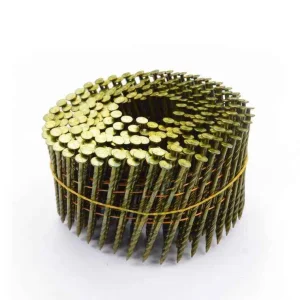
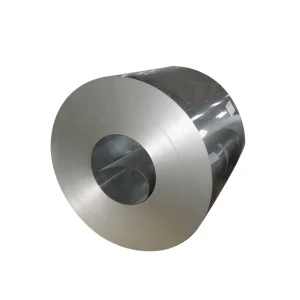
Explore our extended manufacturing line encompassing high-strength spiral welded pipes, precision cold-rolled sheets, pre-galvanized tubes, and tinplate packaging steel.



Connect with Our Engineering & Export Procurement Team
Whether you are sourcing high-volume ERW carbon steel pipes for municipal water works, pre-galvanized tubing for agricultural infrastructure, or custom ZM alloy coils for solar mounting projects, our technical sales engineers provide direct factory pricing, full standard compliance documentation, and rapid project lead times.