
Featured Industrial Products & Components
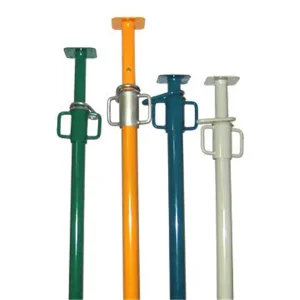
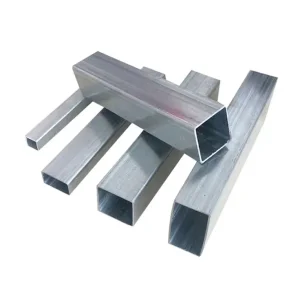
Factory-direct structural support systems, galvanized tubular sections, and heavy-duty building props verified for global project delivery.


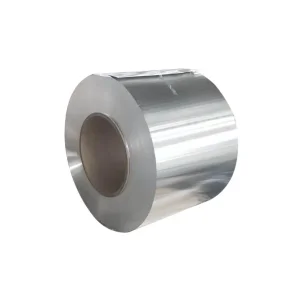
Executive Technical Briefing: Structural Safety & Metallurgical Integrity
Understanding the engineering mechanics behind modern modular scaffolding, steel prop shoring, and high-tensile structural tubular systems.
Structural Physics & Buckling Load
Scaffolding performance relies heavily on vertical compression limits and axial load distribution. Modern system scaffolding (Ringlock, Cuplock, Kwikstage) leverages node rigidity to reduce unbraced length ($L_e$), significantly elevating the critical Euler buckling threshold ($P_{cr} = \frac{\pi^2 E I}{L_e^2}$). Utilizing Q355B low-alloy structural steel over standard mild steel yields up to a 30% reduction in self-weight while sustaining heavy-duty EN 12810 Class 6 loading conditions (up to $6.0 \text{ kN/m}^2$).
Corrosion Dynamics & HDG Metallurgy
Longevity in aggressive coastal, chemical, or humid civil environments is determined by surface protection. Hot-Dip Galvanizing (HDG) compliant with ISO 1461 / ASTM A123 forms a multi-layered zinc-iron alloy (Gamma, Delta, Zeta micro-layers topped by an Eta pure zinc outer coat). This sacrificial anode mechanism ensures self-healing protection across scratch points, preventing structural wall thinning and sub-surface hydrogen embrittlement across decades of operational life.
Regulatory E-E-A-T Safety Standards
Global infrastructure tenders require stringent certification compliance. Certified tier-1 manufacturers implement continuous ultrasonic non-destructive weld testing (NDT), automated magnetic particle inspection (MPI) for rosette joints, and batch-level destructive destruction load verification. Adherence to BS 1139, EN 12811-1, ANSI/SSFI SC100-5/05, and OSHA 1926 Subpart L is mandatory to eliminate catastrophic job-site structural collapse risks.
Strategic Sourcing: SCM Advantages of Chinese Scaffolding Factories
Why global EPC engineering firms and commercial scaffolding rental conglomerates concentrate structural steel procurement in Tianjin and Northern China manufacturing hubs.
Upstream Raw Material Proximity
Tianjin (Jinghai District) sits at the epicenter of China’s premium steel strip and structural pipe production. Immediate access to state-owned steel mills (such as Shougang, Tangshan Steel, and HBIS) guarantees consistent billet chemistry with trace elements (S, P < 0.025%) locked within tight metallurgical limits, preventing micro-fissuring during high-speed cold-forming.
Automated Robotic Welding & Precision
Modern Chinese factories have transitioned from manual arc welding to 6-axis Panasonic/ABB robotic welding stations. This achieves precise 360° continuous fillet welds on Ringlock rosettes, ledger ends, and prop collars, maintaining penetration depths > 80% of wall thickness and virtually zero porosity under X-ray quality verification.
Scale Economics & Logistics Hub
With monthly pipeline capacities exceeding 100,000 metric tons, factory scale drives down overhead per unit. Proximity to Tianjin Xingang Port—one of North China’s largest deep-water container terminals—allows seamless break-bulk or SOC container shipping with optimized bundle packing, reducing ocean freight costs per ton.
Scaffolding Tech Trends: The Shift to Modular & Smart Shoring
Evolution of job-site temporary works: Moving from traditional tube-and-coupler methods to modular, high-strength, IoT-integrated access systems.
Modular Ringlock Dominance
Global adoption of Allround/Ringlock modular scaffolding is growing rapidly. Its 8-connection rosette geometry eliminates loose couplers, accelerating assembly/dismantling speeds by 60% while drastically improving site safety.
High-Strength Alloy Migration
Transitioning from traditional carbon steel (Q235 / Grade 50) to high-yield micro-alloyed steel (Q355 / S355JR) yields lighter standards and ledgers, allowing workers to handle larger spans safely without ergonomic fatigue.
BIM & Digital Twin Integration
Modern scaffolding engineering incorporates Building Information Modeling (BIM) software to accurately simulate dead, live, and wind load vectors ($q_p$), generating exact Bill of Materials (BOM) and eliminating site material wastage.
IoT Load-Sensing Base Jacks
Next-generation heavy-duty prop systems integrate IoT wireless strain gauges in base jacks to monitor real-time concrete pouring loads, alerting engineers if dynamic shoring strain approaches yield failure limits.
Macro Industry Solutions & Global Use Cases
Engineered temporary work solutions adapted to specialized regional regulations and challenging environmental constraints.
High-Rise Civil Infrastructure
Requirement: Heavy floor slab loads and facade finishing across 50+ story residential and commercial towers.
Engineered Solution: Telescopic heavy-duty steel props combined with modular Ringlock birdcage scaffolding. Heavy-duty props with inner tube 48mm / outer tube 60mm handle slab shoring loads up to 35kN per prop.
Offshore Oil Platforms & Marine Shipyards
Requirement: Severe saline spray corrosion, tight spatial geometry, and strict fire protection standards.
Engineered Solution: Hot-Dip Galvanized Ringlock components ($\ge 85\mu m$ zinc thickness) fitted with self-locking steel planks and anti-slip perforations, preventing offshore slip hazards and ocean spray oxidation.
Industrial Petrochemical Turnarounds
Requirement: Rapid scaffolding erection around complex spherical tanks, distillation columns, and tight piping networks.
Engineered Solution: Tube and Coupler systems paired with swivel clamps and forged rosettes, giving 360-degree attachment flexibility for intricate pipe bridge access.
Scaffolding System Architectural Matrix
Detailed structural selection parameters comparing major temporary access systems for structural procurement officers.
| System Type | Primary Material Grade | Node Connection | Max Load Class (EN 12810) | Anti-Corrosion Surface | Assembly Speed |
|---|---|---|---|---|---|
| Ringlock System | Q355B Low Alloy Steel | 8-Hole Rosette & Wedge Key | Class 6 ($6.0 \text{ kN/m}^2$) | Hot-Dip Galvanized ($80-120\mu m$) | Very High (Modular) |
| Cuplock System | Q235B / Q355B Steel | Bottom Cup & Top Rotating Cup | Class 5 ($4.5 \text{ kN/m}^2$) | HDG or Painted / Dip Varnish | High |
| Kwikstage System | Q235 Carbon Steel | V-Pressing & Captive Wedge | Class 4 ($3.0 \text{ kN/m}^2$) | Painted / Electro-Galvanized | Moderate to High |
| Frame Scaffolding | STK400 / Q235 Steel Tube | Gravity Lock Pin & Cross Brace | Class 3 ($2.0 \text{ kN/m}^2$) | Pre-Galvanized / Powder Coated | High (Facade work) |
| Tube & Coupler | S235JR / EN 39 Steel Pipe | Drop-Forged Swivel/Right-Angle Couplers | Variable (Design Dependent) | Hot-Dip Galvanized | Low (Highly Flexible) |
Global Enterprise Procurement & QA/QC Protocols
Framework for technical audit compliance, raw material traceability, and mill test certification (EN 10204 3.1).
1. Material Chemical Analysis
Every steel batch undergoes Spectrometric Chemical Verification to ensure Carbon Equivalent Values ($CEV = C + \frac{Mn}{6} + \frac{Cr+Mo+V}{5} + \frac{Ni+Cu}{15} \le 0.43\%$) stay within safe thresholds, guaranteeing structural field weldability without thermal cracking.
2. Mechanical Destructive Testing
Representative samples undergo Tensile Strength ($R_m$), Yield Strength ($R_{eH}$), and Charpy V-Notch Impact Testing at $-20^\circ\text{C}$ to verify low-temperature ductile transitions, crucial for European and North American winter sites.
3. Galvanization Adhesion & Thickness
Coating integrity is audited using magnetic induction thickness gauges according to ISO 1461. Electromagnetic magnetic drop tests verify zinc layer adhesion under impact, preventing flaking during sea transport.
Frequently Asked Questions (Technical & Sourcing FAQ)
Expert technical answers addressing real-world engineering queries from procurement managers and safety inspectors.
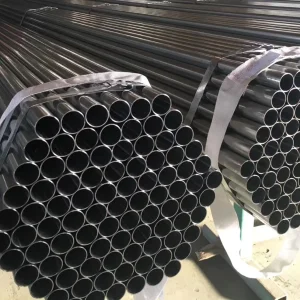
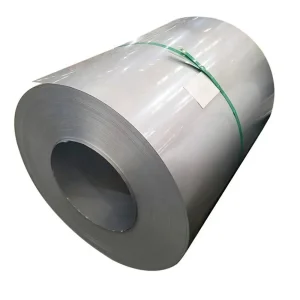
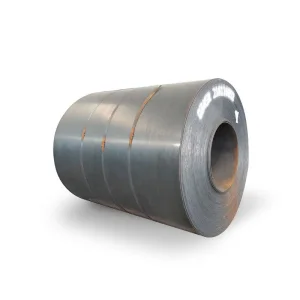
Additional Industrial Steel & Material Inventory
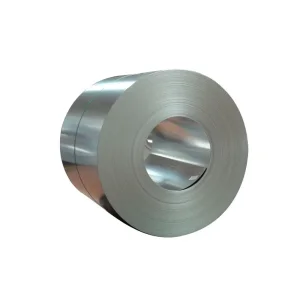
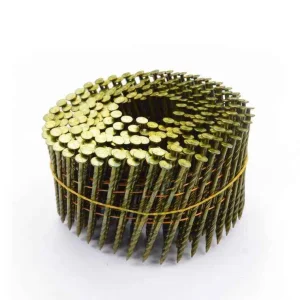
Factory-direct supply chain solutions for complementary structural steel, piping, coils, and industrial fastings.


Ready to Optimize Your Scaffolding Supply Chain?
Connect directly with our Tianjin structural engineering team for comprehensive MTR reports, structural load calculations, and factory-direct mill pricing for global tenders.