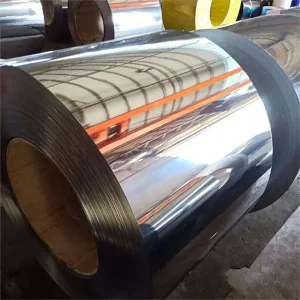
Featured Hot Rolled Steel Coils, Plates & Sheets
Mill-direct structural steel plates, HRPO sheets, and carbon coil products engineered to international standards.
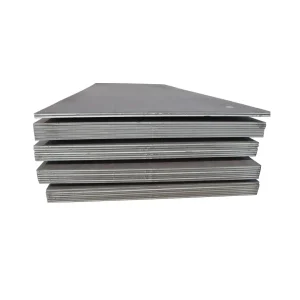
High-Quality Q235 Q195 Q345 ST S355 Hot rolled carbon steel plates Factory
View Product Details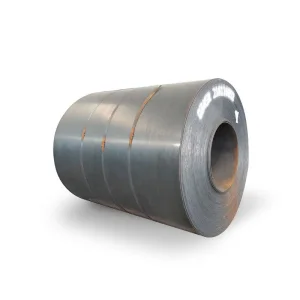
High-Quality Hot Rolled Pickled & Oiled (HRPO) Steel Heavy Gauge Wide Plate
View Product Details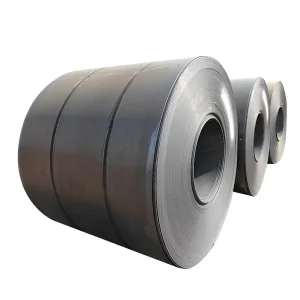
Wholesale Hot Rolled Steel Plate Manufacturers & Global Factory Suppliers
View Product Details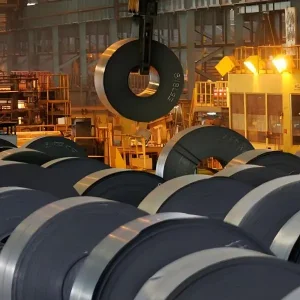
High-Quality Prime Hot Rolled Pickling & Oiled Steel Coils Suppliers
View Product Details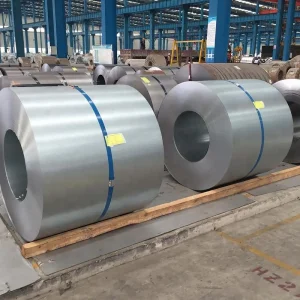
High-Quality China Suppliers of Galvanized Steel Coils for Construction
View Product Details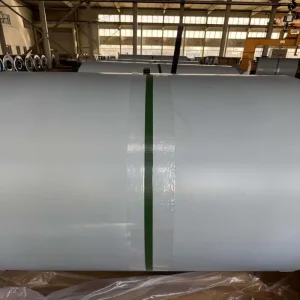
Wholesale Electrogalvanized Steel Coil & Sheet Supplier Factories
View Product Details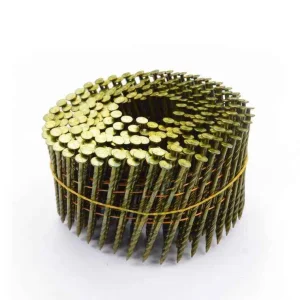
High-Precision 15° Coil Nails with Copper Plated Wire for Wood Furniture
View Product Details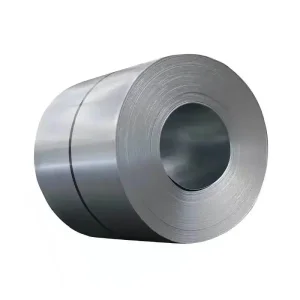
Non-Grain Oriented Silicon Steel Coils M310 M350 M470 M600 M800
View Product DetailsGlobal Commercial & Industrial Status of Hot Rolled Steel
An authoritative analysis of production volume, structural demand drivers, global trade routes, and raw material trends.
Hot rolled steel represents the foundational backbone of the modern global industrial economy. Produced through a high-temperature rolling process executed at temperatures exceeding the steel’s recrystallization point (typically above 1,700°F or 926°C), hot rolled coil (HRC), plate, and sheet products provide the essential structural raw material for global infrastructure, automotive manufacturing, energy transit, heavy machinery, and maritime engineering.
The global hot rolled steel market currently exceeds 900 million metric tons annually, driven by surging urbanization in emerging economies, large-scale renewable energy infrastructure deployment, and structural upgrades in transportation networks. Unlike cold-rolled variants, hot rolled steel is characterized by superior formability, high weldability, and exceptional yield strength-to-cost ratios, making it the primary choice for load-bearing structures and heavy fabrication.
Structural Infrastructure Demand
Global infrastructure initiatives require massive volumes of heavy-gauge hot rolled structural plates (Q345, S355, ASTM A572) for civil bridges, commercial skyscrapers, and modular stadium frameworks requiring guaranteed mechanical toughness.
Energy Sector & Pipelines
High-grade hot rolled coil serves as the key precursor material for ERW, LSAW, and SSAW line pipes (API 5L X42 to X70 grades) essential for long-distance petroleum, natural gas, and hydrogen transportation network buildouts.
Automotive & Commercial Fleet
Advanced Hot Rolled Pickled and Oiled (HRPO) steel offers clean, scale-free surfaces required for vehicle frame chassis, suspension arms, wheel rims, and heavy truck structural members requiring deep-drawing capabilities.
China Factory Efficiency & Supply Chain Advantages
Why leading global EPC buyers, steel stockists, and OEM manufacturers partner directly with modern Chinese steel mills.
China accounts for over 50% of world crude steel production, backed by state-of-the-art continuous hot strip mills (HSM) equipped with Hydraulic Automatic Gauge Control (AGC), Work Roll Bending, and Automated Plan View Rolling technologies. This massive scale translates into unprecedented manufacturing efficiency, micro-grain refinement control, and ultra-tight dimensional tolerances that outpace traditional manufacturing hubs.
Core Pillars of Chinese Hot Rolling Competitiveness
Raw Material & Energy Integration
Integrated steelworks situated adjacent to deep-water ports combine blast furnace/EAF ironmaking with direct hot-charging systems, drastically reducing reheating energy costs and yield losses.
Thermo-Mechanical Processing (TMCP)
Advanced Laminar Cooling and Accelerated Cooling Systems (ACC) allow precise control over phase transformation, yielding high-strength structural grades (S460 to S700) without high micro-alloying costs.
Unrivaled Lead Times & Logistics
With monthly factory outputs exceeding 100,000 metric tons per mill cluster, containerized and breakbulk seaworthy packaging can be dispatched to major ports (Tianjin, Qingdao, Shanghai) within 7 to 10 days.
International Hot Rolled Steel Standards Comparison
Comprehensive cross-reference matrix aligning Chinese GB standards with ASTM, EN, and JIS equivalent grades.
| Chinese Standard (GB) | International (ASTM) | European (EN 10025) | Japanese (JIS G3101/3106) | Yield Strength (MPa) | Tensile Strength (MPa) | Key Application |
|---|---|---|---|---|---|---|
| Q195 | ASTM A283 Grade A | S185 / 1.0035 | SS330 | ≥ 195 | 315 - 430 | Light structural, hardware, tubing, nails |
| Q235B | ASTM A36 / A1011 SS Gr 36 | S235JR / 1.0038 | SS400 | ≥ 235 | 370 - 500 | General construction, welded frames, pipes |
| Q345B / Q355B | ASTM A572 Grade 50 | S355JR / 1.0045 | SM490A | ≥ 355 | 470 - 630 | Heavy bridges, transmission towers, crane booms |
| Q460C | ASTM A572 Grade 65 | S460N / 1.0490 | SM570 | ≥ 460 | 550 - 720 | High-rise buildings, heavy machinery chassis |
| SPHC / SPHD (HRPO) | ASTM A1011 DDQ | DD11 / DD13 (EN 10111) | SPHC / SPHD | 170 - 300 | ≥ 270 | Automotive deep stamping, compressor shells |
Note: Chemical compositions must maintain strict Carbon Equivalent Values (CEV ≤ 0.42%) to guarantee superior field weldability without preheating requirements during heavy structural fabrication.
Localized Use Cases & Industrial Scenarios
How engineering sectors specify and deploy hot rolled steel coil, plate, and strip products.
1. Construction & Structural Engineering
Hot rolled structural steel plates (S235JR, S355J2+N) form the primary framework for load-bearing columns, I-beams, H-beams, and box girders. High-strength weather-resistant grades (Corten A/B) are deployed in exposed bridge construction to eliminate ongoing painting maintenance.
2. Heavy Equipment & Earthmoving Machinery
Excavator booms, mining dump truck beds, and agricultural harvesters rely on quenched and tempered hot rolled wear-resistant plates (NM400, NM500) and high-yield strength structural steels (Q690D) to withstand severe abrasion and high dynamic impacts.
3. Pressure Vessels & Boiler Shells
Petrochemical storage tanks, LPG spheres, and power plant boiler drums utilize specialized boiler-grade hot rolled plates (P265GH, P355GH, ASTM A516 Gr 70) normalized to ensure high impact resistance at sub-zero and elevated temperatures.
4. HRPO in Automotive & Precision Metal Stamping
Hot Rolled Pickled and Oiled (HRPO) steel undergoes an acid pickling wash to strip away surface iron-oxide mill scale, followed by an oil film application. It replaces costlier cold rolled steel in automotive control arms, wheel hubs, door hinges, and heavy-gauge stampings.
5. Shipbuilding & Offshore Platforms
Marine-grade hot rolled steel plates certified by international classification societies (ABS, DNV, LR, BV, CCS) provide high corrosion resistance and high weld ductility required for commercial vessel hulls and offshore oil rig decks.
6. Renewable Energy Infrastructure
Solar photovoltaic mounting systems utilize hot rolled strip steel as the base substrate for high-zinc galvanized coatings, while wind turbine towers require heavy-gauge normalized plate rings up to 100mm in thickness.
Industry Trends: Decarbonization & Smart Rolling
How green steelmaking technologies and AI-driven rolling processes are transforming hot rolled steel manufacturing.
Electric Arc Furnace (EAF) & Scrap-Based HR Steel
Transitioning from blast furnace routes to high-power Electric Arc Furnaces utilizing clean recycled steel scrap reduces Scope 1 carbon emissions by up to 70%, producing low-carbon "Green HRC" for environmentally conscious global OEMs.
Hydrogen-Based Direct Reduced Iron (H2-DRI)
Leading Chinese steel mills are deploying megawatt-scale hydrogen direct reduction plants. H2-DRI iron replaces coking coal with green hydrogen, yielding near-zero-carbon hot rolled slabs for high-end structural applications.
AI Digital Twins & Endless Strip Rolling (ESP)
Arvedi Endless Strip Production (ESP) technology couples continuous casting directly with finishing rolling mills, eliminating reheating furnaces, saving 45% energy, and enabling ultra-thin hot rolled gauges down to 0.8mm.
Global Corporate Sourcing & Quality Risk Mitigation
Essential verification protocols, mill certification standards, and supply chain safeguards for international buyers.
Procuring hot rolled steel coils and plates internationally requires strict quality assurance protocols to guarantee material compliance and protect project budgets. Professional procurement managers evaluate suppliers based on raw material provenance, non-destructive testing capabilities, and mill certificate authenticity.
Critical Quality Inspection Checkpoints
Mill Test Certificates (EN 10204 3.1 / 3.2)
Every shipment must be accompanied by an original MTC detailing actual ladle heat analysis, mechanical tensile test ($R_{eH}$, $R_m$), Charpy V-notch impact values at specified temperatures, and elongation percentages ($A_5$).
Ultrasonic Flaw Detection (UT Testing)
Heavy structural plates (≥ 20mm) subjected to Z-axis tensile stresses must undergo Ultrasonic Testing in accordance with ASTM A435, ASTM A578, or EN 10160 to detect internal laminations, inclusions, or voids.
Seaworthy Export Packaging Standards
Coils require 4 to 6 circumferential and radial steel strapping bands, waterproof anti-rust paper wrapping, plastic edge protectors, and wooden skid saddles to prevent sea-salt atmosphere oxidation and handling damage.
Hot Rolled Steel Procurement FAQ
Detailed technical and commercial answers to common questions asked by industrial procurement directors.
What is the fundamental difference between Hot Rolled (HR) and Cold Rolled (CR) steel?
What are the advantages of Hot Rolled Pickled & Oiled (HRPO) steel compared to standard HR steel?
How do Chinese steel factories ensure consistent thickness tolerances across wide hot strip coils?
Which structural steel grade should I choose for cold climate or seismic bridge construction?
What third-party inspection agencies are accepted for mill verification in China?
What are standard lead times and Minimum Order Quantities (MOQ) for factory-direct orders?
Complete Structural Tubing, Pipe & Profile Directory
Explore additional specialized ERW carbon steel tubes, seamless pipes, and profiles manufactured by our partner facilities.
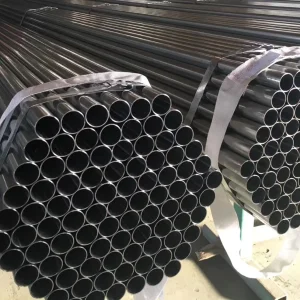
Wholesale High-Quality ASTM A106 Sch 40 ERW Iron Tube Carbon Steel Pipe
View Product Details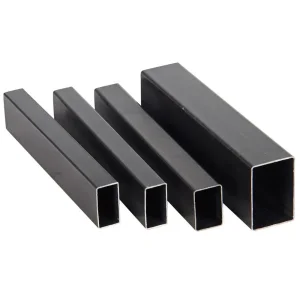
Wholesale Construction Pipe 50*50mm 4x4 Square Tubing for Steel Fence Post
View Product Details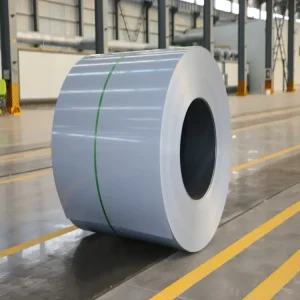
High-Quality G550 Galvanized Corrugated Metal Roofing Sheets & Color Coated Steel
View Product Details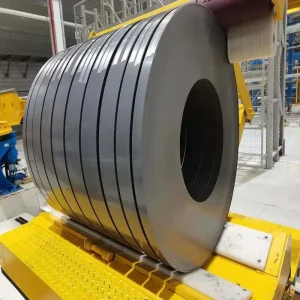
Wholesale China Silicon Steel Coil (CRNGO) for Soft Magnetic Alloys Factory
View Product Details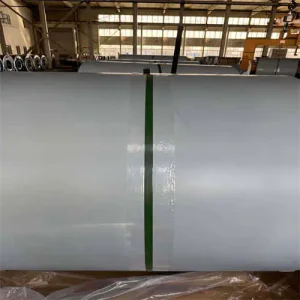
Wholesale SECC Electrical Galvanized Steel Coils for Door Gates Manufacturer
View Product Details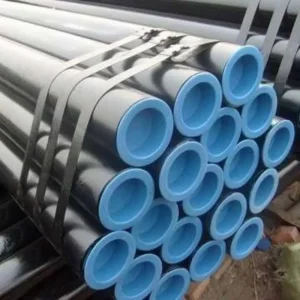
Wholesale Seamless Steel Pipe Factory - ASTM Carbon Steel Seamless Pipes
View Product Details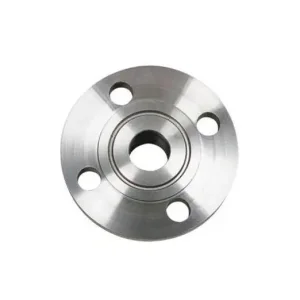
Wholesale Slip on Plate Flanges Flat Plain Welding Carbon Steel Stainless Flange
View Product Details