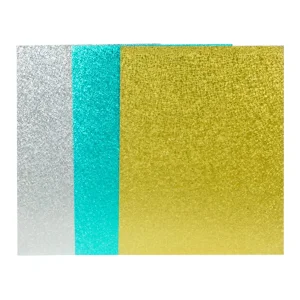
Featured Industrial Stainless & Alloy Products
Direct factory supply featuring precision cold-rolled coils, structural plates, electrical steel, and specialized alloy piping engineered for rigorous global projects.
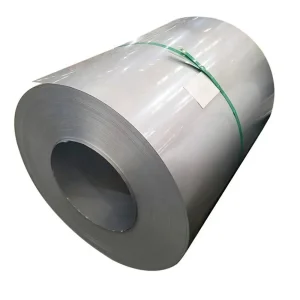
High-Quality 2B BA No. 1 No. 4 HL 8K Cold Rolled 201 304 304L 316 316L 309S 310S 321 430 2205 904L Roll Stainless Steel Coil Manufacturer
View Product Specs
Wholesale China Suppliers Factory 8K Cold Rolled Stainless Steel Coil 201 304 316 430 2205 904L Suppliers
View Product Specs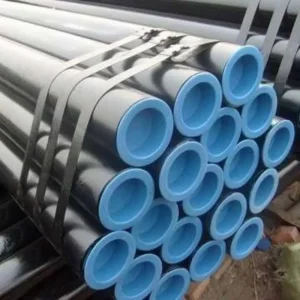
Wholesale China Suppliers Seamless Carbon Steel Pipe Factory for Construction – High-Quality Seamless Tubes & Pipes
View Product Specs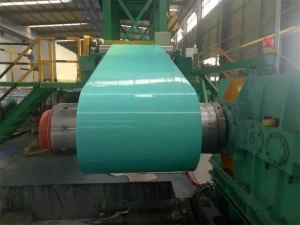
High-Quality China PPGI PPGL Galvanized Metal Roofing Sheets Suppliers - G550 Steel Plate Factory Manufacturer
View Product Specs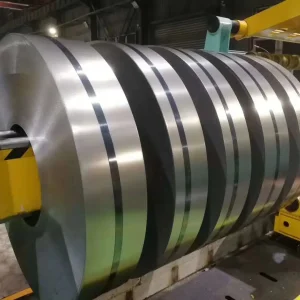
Wholesale 0.23mm CRGO Grain Oriented Electrical Silicon Steel Coil for Transformer | China Suppliers & Factory
View Product Specs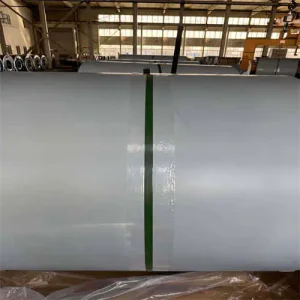
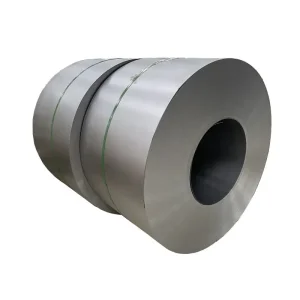
High-Quality Cold Rolled High Strength Steel Sheets for Deep Drawing - China Factory Manufacturer
View Product Specs
Wholesale High Strength Cold Rolled Steel Sheets for Extra Deep Drawing - Top China Suppliers
View Product SpecsExecutive Summary: The Global Stainless Steel Plate Manufacturing Landscape
Navigating changing raw material dynamics, stringent international standards, and advanced metallurgical processing in modern heavy industry.
In the era of modern industrial infrastructure, selecting a reliable stainless plate manufacturer has evolved from a simple procurement transaction into a critical strategic partnership. Stainless steel plates serve as the foundational backbone for high-stress structural, chemical, offshore, and thermal applications globally. With global demand projected to grow at a Compound Annual Growth Rate (CAGR) of over 5.8% through 2030, driven largely by green energy transitions, LNG transport terminals, seawater desalination projects, and chemical process engineering, buyers require absolute precision in material performance and supply chain transparency.
Historically, stainless steel plate manufacturing was constrained by localized regional standards and traditional hot-rolling limitations. Today, leading manufacturers leverage state-of-the-art continuous casting, computer-controlled thermomechanical rolling, and automated ultrasonic defect scanning. This ensures that every plate—whether an austenitic staple like AISI 304/304L or a high-alloy duplex like 2205—meets strict chemical composition tolerances, uniform grain structures, and flawless surface conditions.
Comprehensive Alloy Grade Selection Matrix & Specifications
Understanding chemical balances, mechanical thresholds, and corrosion metrics is essential for selecting the correct plate for critical applications.
| Alloy Grade | UNS / EN Standard | Nominal Chemical Composition (%) | Yield Strength (0.2% MPa) | Tensile Strength (MPa) | PREN Score | Primary Industrial Use |
|---|---|---|---|---|---|---|
| 304 / 304L | UNS S30400 / 1.4301 | 18Cr - 8Ni - 0.03C (max L) | ≥ 205 | ≥ 515 | ~ 18.5 | Food processing, architectural cladding, general tanks |
| 316 / 316L | UNS S31600 / 1.4401 | 16Cr - 10Ni - 2.0Mo | ≥ 220 | ≥ 520 | ~ 23.1 | Chemical equipment, pharmaceutical, marine hardware |
| 309S / 310S | UNS S31008 / 1.4845 | 25Cr - 20Ni (High Thermal) | ≥ 205 | ≥ 515 | N/A (Thermal) | Furnace liners, heat exchangers, boiler baffles |
| 2205 Duplex | UNS S31803 / 1.4462 | 22Cr - 5Ni - 3Mo - 0.18N | ≥ 450 | ≥ 620 | ≥ 34.0 | Offshore oil & gas, desalination, pressure vessels |
| 904L Super Austenitic | UNS N08904 / 1.4539 | 20Cr - 25Ni - 4.5Mo - 1.5Cu | ≥ 220 | ≥ 490 | ≥ 36.0 | Sulfuric acid production, flue gas desulfurization (FGD) |
| 430 Ferritic | UNS S43000 / 1.4016 | 16Cr - 0.12C - Low Ni | ≥ 205 | ≥ 450 | ~ 16.0 | Kitchen appliances, interior panels, trim |
The Role of Pitting Resistance (PREN)
Calculated via %Cr + 3.3(%Mo + 0.5%W) + 16%N, the PREN index allows engineering teams to quantitatively determine an alloy's resistance to localized chloride pitting in harsh environments, avoiding costly field failures.
Surface Finishes & Processing
From Hot-Rolled Annealed & Pickled (No.1 HRAP) for thick structural plates to Cold-Rolled Bright Annealed (BA), Satin (No.4), Hairline (HL), and 8K Mirror polish for decorative facades, surface topography determines both aesthetics and corrosion resistance.
Tight Tolerance Rolling Standards
Leading manufacturers adhere strictly to ASTM A480/A480M and EN 10029 Class B/C thickness tolerances, ensuring zero material wastage during laser cutting, press-braking, and automated welding operations.
China Industry 4.0: Supply Chain Resilience & Manufacturing Superiority
How Chinese stainless steel plate mills transformed global sourcing through digital automation, raw material integration, and unprecedented logistics efficiency.
The global steel manufacturing landscape has undergone a seismic shift over the past decade. China's stainless plate manufacturing sector has evolved from high-volume standardized output to advanced, automated, Industry 4.0 smart manufacturing. Modern mill direct suppliers in major production hubs such as Tianjin, Jiangsu, and Shandong now deploy fully digitalized production lines that integrate real-time AI visual inspection, automated hydraulic gauge control (AGC), and direct spectral analysis.
Backward Raw Material Integration
By integrating nickel pig iron (NPI) production, recycled stainless scrap refining, and ferrochrome smelting, Chinese mills achieve complete raw material stability, insulating global buyers from volatile spot-market pricing surges.
Automated Continuous Casting & Rolling
Modern 4-high and 20-high cold rolling mills paired with wide-plate hot-rolling mills execute continuous online annealing and pickling (CAPL), delivering precise mechanical properties and superior flatness across widths up to 2500mm.
Unmatched Seaport Logistics Speed
Proximity to Tier-1 deep-water ports (such as Tianjin Port, Ningbo-Zhoushan, and Shanghai) enables rapid sea-freight staging, streamlined containerization, and seaworthy wooden-box/steel-frame packaging tailored for long transit times.
Furthermore, modern quality assurance protocols in Chinese factories guarantee full traceability from liquid melt to finished bundle. Mill Test Certificates (MTC) issued according to EN 10204 3.1 or 3.2 accompany every order, backed by third-party testing agencies like SGS, Bureau Veritas, TÜV, or Lloyd’s Register.
Global Procurement Demand & Localized Application Scenarios
From chemical distillation towers to architectural landmarks, stainless plates perform critical structural and anti-corrosive duties.
1. Offshore Oil & Gas and Seawater Desalination
Primary Alloys: Duplex 2205, Super Duplex 2507, 904L
Offshore topside structures, subsea manifolds, and reverse osmosis desalination banks face constant chloride bombardment. Duplex stainless plates provide extremely high yield strength combined with immunity to chloride stress corrosion cracking (SCC).
2. Chemical, Petrochemical & Process Storage
Primary Alloys: AISI 316L, 317L, 321
Reactor vessels, pressure storage tanks, and acid transportation tankers require low-carbon grades (L-grade) to eliminate intergranular carbide precipitation during heavy-section welding operations.
3. Thermal Power & High-Temperature Baffles
Primary Alloys: AISI 309S, 310S, 321
In power generation plants, waste-to-energy incinerators, and thermal treatment furnaces, high-nickel and high-chromium plates maintain mechanical integrity and resist scaling at continuous operating temperatures up to 1150°C.
4. Hygienic Food, Beverage & Pharmaceutical Processing
Primary Alloys: AISI 304, 316L (2B or No.4 finish)
Dairy silos, pharmaceutical fermenters, and commercial food machinery require smooth, non-porous stainless surfaces with low surface roughness ($Ra < 0.4 \mu m$) to prevent bacterial harborage and simplify CIP (Clean-in-Place) sanitation.
5. Architecture, Structural Frameworks & Cleanrooms
Primary Alloys: AISI 304, 316, 430 (BA / 8K Mirror / HL)
Modern skyscraper facades, structural canopy supports, escalator side panels, and cleanroom wall linings leverage polished stainless steel sheets for high aesthetic impact, low maintenance, and long service life.
6. Heavy Machinery & Transportation Engineering
Primary Alloys: High-Strength Cold-Rolled & Hot-Rolled Plates
Used in mining dump-truck bodies, railway hopper cars, cement mixers, and crane booms where exceptional deep-drawing properties, impact resistance, and structural stiffness are non-negotiable.
Frequently Asked Sourcing & Technical Questions
Expert responses addressing standard compliance, manufacturing parameters, lead times, and quality validation for international buyers.
Hot-rolled stainless plates (No.1 HRAP) are typically produced in thicker gauges (3mm up to 100mm+), featuring a matte, slightly textured surface suitable for heavy industrial tanks, structural frames, and pressure vessels. Cold-rolled plates (2B, BA, No.4) undergo additional cold reduction processes, resulting in thinner gauges (0.3mm to 6.0mm), ultra-smooth surface topography, tighter thickness tolerances, and superior aesthetic appeal suitable for precision stamping, appliances, and architectural enclosures.
Duplex 2205 possesses a dual-phase ferritic-austenitic microstructure that delivers nearly double the yield strength of 316L (≥450 MPa vs. ≥220 MPa). Additionally, with a PREN score ≥34 (compared to 316L's ~23.1), Duplex 2205 offers significantly superior resistance to pitting and stress corrosion cracking in high-chloride marine and chemical environments. The elevated strength often allows engineers to reduce plate thickness, saving total material weight and transport costs.
Top-tier Chinese manufacturers employ rigorous multi-stage quality control. This includes spectrographic raw material validation, online automatic ultrasonic testing (UT) for internal flaw detection, mechanical tensile and impact testing, and intergranular corrosion testing according to ASTM A262. Finished goods are shipped with a Mill Test Certificate (MTC) conforming to EN 10204 3.1 or 3.2. Buyers are also welcome to arrange third-party pre-shipment inspections via SGS, BV, or Intertek.
Stainless steel plates and coils are protected using heavy-duty seaworthy packaging. This includes neutral interleaving paper or protective PE film between sheets to prevent surface scratching, waterproof plastic wrapping, desiccant packs, steel edge protectors, and solid wooden skids or fumigated wooden boxes bound securely with high-tensile steel strapping.
Yes. Mill-direct suppliers operate high-precision laser cutting, plasma cutting, waterjet cutting, and decoiling lines capable of supplying custom plate widths (up to 2500mm), specific lengths (up to 12000mm), and tailored geometric profiles according to customer CAD drawings and project specifications.
Explore Additional Industrial Steel & Pipe Solutions
Discover our extended line of electrical silicon steel, structural hollow sections, galvanized pipes, and precision alloy profiles.
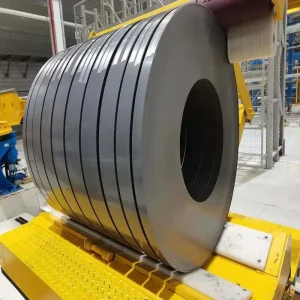
High-Quality China Silicon Steel Coil (CRNGO) - High-Quality Suppliers and Factory for Your Magnetic Alloy Needs
View Product Specs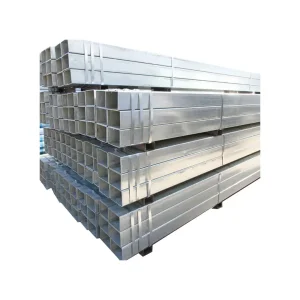
High-Quality 40x40 Tube SHS Hot Dip Galvanized Square Steel Pipe - China Suppliers and Factory for Construction and Machinery
View Product Specs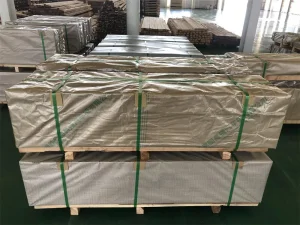
Wholesale China Suppliers Factory SECC/SECD/SECE 20/20 Electro-Galvanized Steel Plate with Superior Coating for Durability
View Product Specs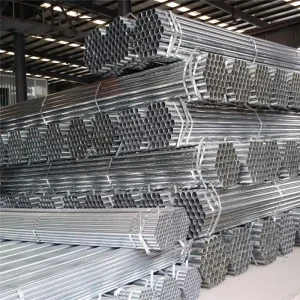
Wholesale Thick-Wall Pre-Galvanized Steel Pipe for Greenhouse - China Suppliers & Factory Quality at Competitive Prices
View Product Specs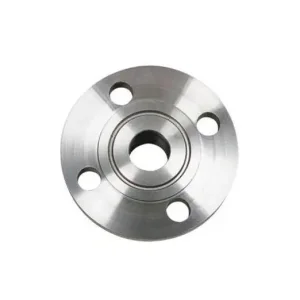
Wholesale China Factory Slip-on Plate Flanges for Carbon Steel & Stainless Steel - Top Suppliers of Blind Flanges
View Product Specs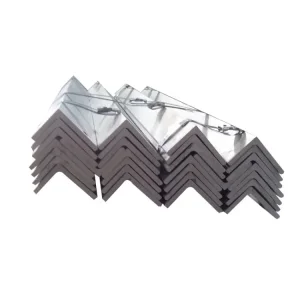
High-Quality China Suppliers Factory Steel Angle Iron Beam Q195 Q215 Hot Rolled Structural Parts for Building and Engineering
View Product Specs
High-Quality 0.23mm CRGO Grain Oriented Electrical Silicon Steel Coil for Transformers - China Suppliers & Factory Quality
View Product Specs