Engineered Profiles & Pipe Fittings Solutions
Factory-direct structural components, hollow sections, flanges, and processed steel engineered to international ASTM, EN, DIN, and JIS performance benchmarks.
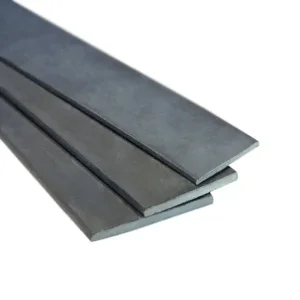
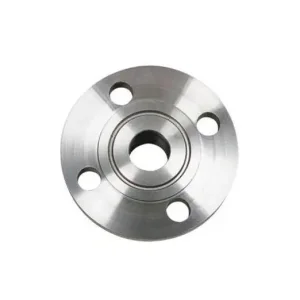
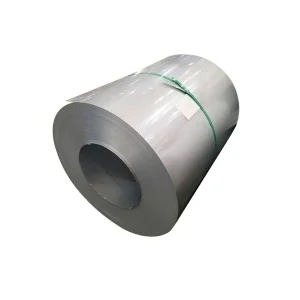
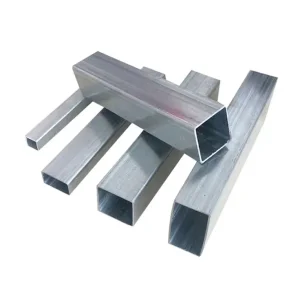
Profiles & Pipe Fittings Infrastructure Overview
An engineering-grade breakdown of load-bearing structural profiles and high-integrity fluid conveyance pipe fittings designed for critical industrial applications.
Hot-Rolled Structural Profiles
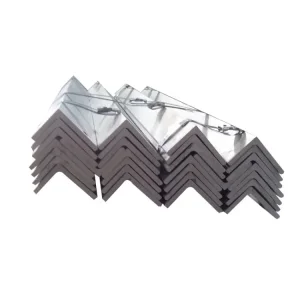
Structural steel profiles including H-Beams, I-Beams, Equal/Unequal Angles (Q195-Q345/S235JR-S355JR), and Channels form the primary load-bearing skeleton for modern heavy civil engineering, industrial plants, and bridge superstructures. Precise flange thickness ratios ensure superior section modulus and high resistance to torsional bending.
Engineered Pipe Fittings & Flanges
Precision-machined pipe fittings encompass Slip-On (SO), Weld Neck (WN), Blind, and Threaded Flanges conforming to ASME B16.5 and EN 1092-1 ratings (Class 150 to 2500 / PN6 to PN100). Engineered to maintain leak-proof integrity across extreme thermodynamic pressure differentials and aggressive chemical media.
Precision Hollow Sections (SHS/RHS)
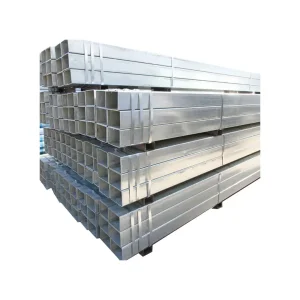
Cold-formed and High-Frequency Welded (HFW) Square Hollow Sections (SHS) and Rectangular Hollow Sections (RHS) manufactured to EN 10219 and ASTM A500 specifications. Features uniform wall thickness, tight radius corner tolerances, and exceptional yield strength for aesthetic architectural and mechanical framework.
Standard Harmonization & Chemical Composition Matrix
Cross-reference guide for global procurement engineers evaluating chemical mechanics, tensile boundaries, and impact energy thresholds across major manufacturing standards.
| Standard System | Equivalent Grade | Yield Strength (ReH Min, MPa) | Tensile Strength (Rm, MPa) | Impact Energy (KV / J) | Primary Industrial Application |
|---|---|---|---|---|---|
| Chinese GB/T | Q235B / Q345B | 235 / 345 | 370 - 630 | ≥ 27 J (at 20°C) | General structural framing, structural angle iron, solar mounting brackets. |
| European EN | S235JR / S355J2H | 235 / 355 | 360 - 630 | ≥ 27 J (at -20°C) | Offshore structural hollow sections, heavy civil trusses, pressure fittings. |
| American ASTM | ASTM A36 / A106 Gr.B | 250 / 240 | 400 - 550 | N/A (Standard) | Petrochemical piping networks, slip-on flanges, building steel beams. |
| Japanese JIS | SS400 / SM490A | 245 / 325 | 400 - 610 | ≥ 27 J (at 0°C) | High-rise building joints, precision flat bars, machine tool foundations. |
| Stainless Steel | AISI 304L / 316L | ≥ 220 / 240 | 520 - 700 | ≥ 60 J (at -196°C) | Cryogenic storage vessels, highly corrosive marine pipelines, pharmaceutical fittings. |
Metallurgical Process & Grain Refinement Control
When selecting profiles and pipe fittings for load-critical environments, chemical micro-alloying plays a decisive role. The addition of trace Niobium (Nb), Vanadium (V), and Titanium (Ti) in carbon steel grades such as Q345E or S355K2 yields micro-alloyed fine-grain structures through controlled thermo-mechanical rolling (TMCP). This process suppresses austenite grain growth, substantially elevating low-temperature impact toughness down to -40°C while maintaining strict Carbon Equivalent Values (CEV ≤ 0.43%), ensuring excellent field weldability without pre-heating.
For pipe fittings subjected to severe fluid dynamics, forging processes dictate grain flow orientation. Flanges produced via automated closed-die forging exhibit continuous grain lines parallel to section profiles, eliminating internal porosity, micro-cracks, and structural anisotropy commonly found in cast alternatives. This directly translates into heightened burst pressure resistance, compliant with ASME Boiler and Pressure Vessel Code (BPVC) Section VIII.
China Supply Chain Optimization & Manufacturing Ecosystem
How localized supply chain integration in Tianjin and Hebei steel manufacturing hubs creates unparalleled cost efficiency, scale, and operational agility for global importers.
Upstream Steel Mill Integration
Direct raw material hot-rolled coil (HRC) and billet sourcing from tier-one state-owned mills (BaoSteel, HBIS, Shougang) eliminates intermediary markups, securing primary steel at rock-bottom benchmark prices while guaranteeing raw chemical purity and full heat traceability.
Deep Port & Logistics Infrastructure
Strategic positioning within the Tianjin Jinghai Industrial Zone grants seamless proximity to Tianjin Xingang Port (Northern China’s largest maritime hub). Enables rapid container loading, break-bulk chartering, and streamlined customs clearance within 48 hours of production sign-off.
End-to-End Processing Capabilities
Integrated automated lines handle profile cold-bending, hot-dip galvanizing, precision CNC flange facing, beveling, roll-grooving, and anti-corrosion painting in-house. Reduces production lead times from industry averages of 45 days down to 15-20 business days.
Localized Application Scenarios & Field Engineering
Real-world deployment dynamics showing how structural profiles and pipe fittings are customized to address unique environmental challenges.
1. High-Salinity Marine & Offshore Platforms
In coastal processing plants and offshore rigs (C4/C5 marine atmospheric corrosion zones), standard carbon steel degrades rapidly. We supply heavy-duty 316L Stainless Steel Weld Neck Flanges and Hot-Dip Galvanized Structural H-Beams featuring a minimum zinc coating weight of 610 g/m² (≥85 μm thickness per ISO 1461). This provides over 30 years of maintenance-free cathodic protection against salt spray and chloride stress corrosion cracking.
2. Renewable Energy & Photovoltaic Solar Racking
Utility-scale solar farms deployed across desert or agricultural terrains demand high strength-to-weight structural ratios. Our Zinc-Aluminum-Magnesium (ZAM) Coated Square & Rectangular Hollow Sections offer self-healing edge corrosion resistance. Combined with custom pre-punched slotted flat bars, solar EPC contractors achieve a 25% faster field assembly speed with zero on-site welding required.
3. High-Pressure Petrochemical & Utility Pipelines
High-pressure fluid networks transferring toxic or volatile hydrocarbon media require zero leak tolerance. We engineer carbon steel ASTM A106 Seamless Tubes combined with ASME B16.5 Slip-On Plate and Blind Flanges. Each unit undergoes 100% Non-Destructive Testing (Radiographic and Hydrostatic testing up to 1.5x design pressure) to satisfy stringent refinery safety codes.
Localization Support & Compliance Assurance
De-risking overseas procurement through transparent quality verification, international certification compliance, and customized logistics support.
Eliminating Sourcing Friction for EPC Contractors & Distributors
Navigating international trade barriers, tariff classifications, and stringent local construction codes requires more than standard manufacturing. Our dedicated international compliance engineering team acts as an extension of your procurement office, guaranteeing full regulatory alignment prior to vessel dispatch.
- 3rd-Party Quality Verification: Full co-operation with international inspection agencies including SGS, BV (Bureau Veritas), TÜV, and Intertek for chemical analysis, dimensional tolerance check, and mechanical pull tests.
- Complete Document Package: Every shipment is accompanied by EN 10204 Type 3.1 or 3.2 Mill Test Certificates (MTC), heat treatment charts, NDT reports, and Certificate of Origin (Form E, Form F, CO) for preferential tariff utilization.
- Seaworthy Export Packaging: Anti-corrosion VCI paper wrapping, heavy-duty steel strapping, protective end caps on pipe fittings, and wooden crate bundling tailored for long-transit containerized or break-bulk sea freight.
Comprehensive Compliance Checklist
Industry Trends & Future Technological Advancements
Key evolutionary vectors transforming profile manufacturing, pipe fitting engineering, and sustainable steel production through 2030.
Green Steel & EAF Decarbonization
Driven by the European Union’s Carbon Border Adjustment Mechanism (CBAM), the steel manufacturing sector is transitioning from traditional Blast Furnace-Basic Oxygen Furnace (BF-BOF) routes toward Electric Arc Furnace (EAF) production using Direct Reduced Iron (DRI) and renewable power. This lowers embodied carbon footprints by up to 65% for structural profiles exported to Europe.
Next-Generation Coating Technologies
Traditional hot-dip galvanizing is increasingly giving way to ternary Zinc-Aluminum-Magnesium (ZAM) alloy coatings. ZAM provides 2 to 5 times greater corrosion resistance than standard pure zinc at equivalent coating thicknesses, offering cut-edge protection through precipitation of dense zinc-basic salt films when exposed to harsh outdoor weathering.
AI-Driven Quality Control & Laser Scanning
Modern steel pipe fitting and profile factories are incorporating inline 3D laser profiling scanners and automated ultrasonic weld inspection. Real-time machine-vision algorithms detect micro-porosity, wall-thickness variations, and geometric ovality deviations instantantly, achieving near-zero defect escape rates during high-speed production.
Technical & Procurement FAQ
Expert answers to critical engineering, manufacturing, and sourcing inquiries from global buyers and project managers.
What is the difference between Slip-On (SO) flanges and Weld Neck (WN) flanges?
Slip-On (SO) flanges slide over the pipe exterior and are fillet-welded both inside and outside. They are lower in initial cost, easier to align in field installations, but possess approximately one-third the fatigue strength of Weld Neck flanges. Weld Neck (WN) flanges feature a tapered hub that is butt-welded to the pipe, offering smooth pressure transition and high structural integrity under elevated pressure rating (Class 600+) and cyclic thermal expansion loads.
How do you ensure zinc layer uniformity on complex structural profiles and hollow sections?
For Pre-Galvanized profiles, high-precision air knives control the molten zinc thickness across continuous strip lines before roll-forming. For Hot-Dip Galvanized structural items, fully fabricated sections are immersed into molten zinc baths (~450°C) after rigorous multi-stage acid pickling and fluxing. Internal venting and drain holes are engineered into hollow sections to guarantee complete coverage on interior walls per ASTM A123 / ISO 1461 standards.
Can you supply non-standard customized section sizes or custom-cut lengths?
Yes. Our factory operates automated CNC band saws, laser cutting centers, and custom profile forming mills. We can supply structural angles, flat bars, and hollow sections in exact project lengths up to 12.0 meters (or 11.8m for standard 40ft container loading) with tight length tolerances of ±2mm, reducing jobsite waste and eliminating secondary cutting costs.
What quality documentation accompanies an order of pipe fittings and structural steel?
Every shipment is backed by a Mill Test Certificate (MTC) conforming to EN 10204 3.1. The MTC details raw material heat numbers, chemical ladle analysis (C, Si, Mn, P, S, Cr, Ni, Mo), mechanical test results (Yield, Tensile, Elongation, Impact Energy), non-destructive hydrostatic/ultrasonic testing certification, and surface coating measurements.
How does China's steel export pricing compare with domestic Western suppliers?
Due to raw material economies of scale, integrated industrial manufacturing clusters in Tianjin/Hebei, and efficient port logistics, Chinese manufacturers typically offer a 15% to 35% cost advantage over Western suppliers on equivalent steel grades—even after accounting for international ocean freight and local import duties.
What lead times can be expected for custom industrial profile and fitting orders?
Standard inventory items and regular specification profiles (such as standard SHS/RHS, carbon steel flat bars, and common flange sizes) ship within 7 to 10 days. Customized profiles, non-standard wall thicknesses, or special alloy heat treatment orders require 15 to 25 manufacturing days from final drawing approval.
Comprehensive Supply Chain Product Line
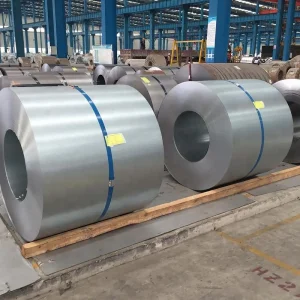
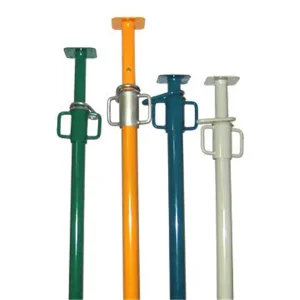
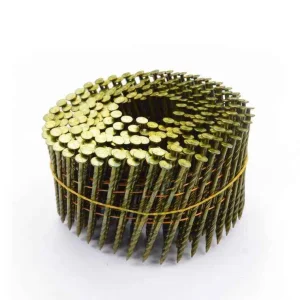
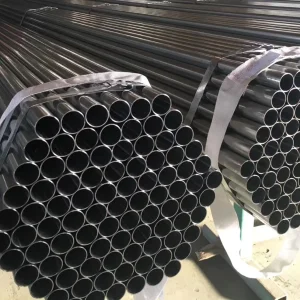
Explore our extended steel product range, including coils, scaffolding systems, structural tubes, and specialty coated steel.