Premium Coated & Structural Steel Products
Mill-direct manufacturing capabilities delivering rigorous engineering compliance and exceptional mechanical reliability for global export markets.
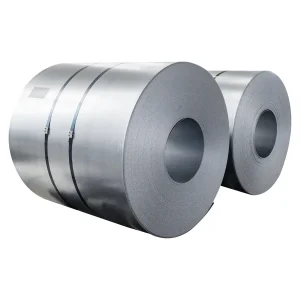
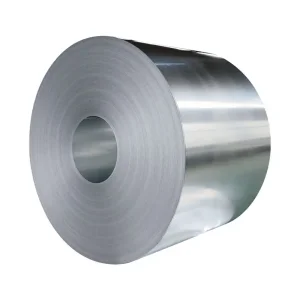
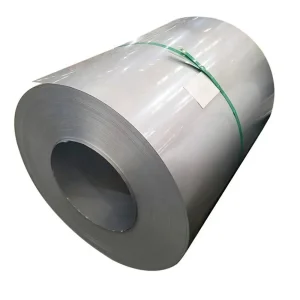
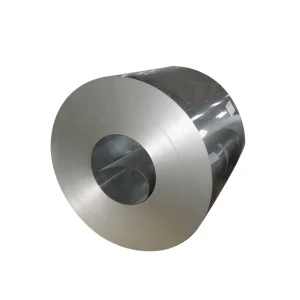
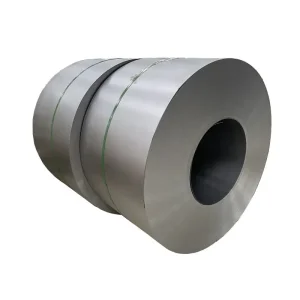
Metallurgical Architecture of Zinc-Iron Alloy (Galvannealed) Steels
Understanding the intermetallic phase transformation, surface micro-topography, and structural advantages over standard hot-dip galvanized coatings.
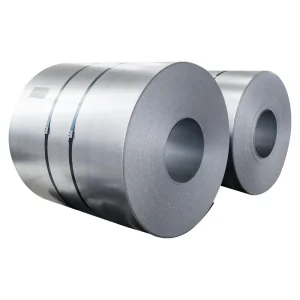
Zinc-Iron Alloy coated steel—known in international metallurgical engineering standards as Galvannealed (GA) steel (e.g., designations ZF60, ZF100, ZF275 under EN 10346 and ASTM A653/A653M)—represents a high-precision evolution of continuous hot-dip galvanizing. Unlike traditional Galvanized (GI) steel where molten zinc solidifies as a pure zinc layer on the substrate, galvannealed steel undergoes an inline high-temperature annealing process immediately following the zinc bath. By heating the steel strip to 500°C–560°C in an induction furnace, thermal diffusion causes iron atoms from the carbon steel substrate to migrate into the liquid zinc coating. This reaction transforms the pure zinc layer into a uniform intermetallic Zinc-Iron (Zn-Fe) binary alloy containing typically 8% to 12% iron by weight.
Intermetallic Phase Dynamics & Coating Structure
The performance superiorities of galvannealed zinc-iron alloy steel are directly rooted in its distinct layered intermetallic crystal structure. During the controlled thermal soaking phase, four distinct Zn-Fe intermetallic phases form sequentially across the cross-section from the steel base to the outer surface:
- Gamma Phase (Γ / Γ1): Positioned at the substrate interface, featuring a high iron content (18%–28% Fe). This thin intermetallic bonding layer ensures exceptional mechanical adhesion between the alloy coating and the steel base under high shear stresses during deep drawing.
- Delta Phase (δ1): The primary structural constituent of the coating, exhibiting a hexagonal crystal matrix with an iron content between 7% and 115% Fe. The delta phase supplies the fundamental micro-hardness and scratch resistance characteristic of galvannealed coils.
- Zeta Phase (ζ): Formed towards the outer surface containing 5% to 6% Fe. Precise mill control suppresses excess zeta phase growth to avoid brittle powdering during automotive stamping operations.
| Metallurgical Property | Zinc-Iron Alloy (Galvannealed - GA) | Standard Hot-Dip Galvanized (GI) | Electro-Galvanized (EG) |
|---|---|---|---|
| Coating Composition | 8% - 12% Fe, Balance Zn (Zn-Fe Intermetallic) | 99%+ Pure Zinc (Zn) | 99.9% Pure Zinc (Zn) |
| Spot Welding Efficiency | 4000+ welds before electrode dressing (4x higher) | ~1000 welds (high electrode alloying) | ~1500 welds |
| Paintability & Adhesion | Superior micro-porous matte surface; direct E-coat | Smooth/Spangled; requires aggressive phosphatizing | Excellent smooth surface; costly for thick coatings |
| Corrosion Resistance (Painted) | Eliminates paint blistering & creepage under scribe | Susceptible to underfilm zinc corrosion creep | Good underfilm performance; limited coating mass |
| Hardness (HV) | 200 - 300 HV (Scratch resistant) | 50 - 70 HV (Soft, prone to galling) | 60 - 80 HV |
This microscopic crystal lattice structural transformation fundamentally alters the physical behavior of the sheet during secondary manufacturing. The matte gray, micro-rough surface profile of Zinc-Iron Alloy coil acts as an ideal mechanical anchor for industrial primers, powder coatings, and cathodic electrodeposition (E-coating) systems, eliminating the requirement for complex surface pretreatment stages while offering exceptional corrosion protection in painted assemblies.
Industrial Scale & Quality Benchmarks
Quantifiable manufacturing metrics engineered to satisfy stringent global OEM tier-1 supply chain requirements.
Automotive Grade DC53D+ZF / DX54D+ZF
Specifically engineered for deep drawing and complex automotive stamping dies. High ductility substrates paired with precise phase-controlled galvannealed coatings prevent powdering during aggressive press forming.
Resistance Welding Productivity
Higher electrical resistivity of the Zn-Fe alloy coating reduces current consumption and thermal loading on spot welding tips, extending electrode tip operational life by up to 400% compared to pure zinc GI.
Zero Spangle Flat Surface
Uniform matte finish eliminates spangle shadow through painted coats. Designed for exterior architectural panels, high-end appliance cabinets, and exposed automotive body-in-white (BIW) parts.
Localized Support & Regulatory Compliance Guarantee
Navigating global trade frameworks, environmental legislation, and country-specific engineering standards with complete transparency.
Global procurement directors face unprecedented regulatory scrutiny across international jurisdictions. Sourcing raw materials requires complete alignment with localized statutory requirements, safety mandates, and environmental sustainability directives. Our dedicated compliance framework ensures seamless market integration across Europe, North America, Latin America, and Asia-Pacific territories.
International Quality Standards
Full manufacturing conformity with EN 10346 (ZF60 to ZF275), ASTM A653/A653M (A25, A40, A60 coatings), JIS G3302 (F06, F08, F12, F18), and GB/T 2518. Every shipment is accompanied by a certified EN 10204 3.1 Mill Test Certificate (MTC) detailing complete chemical ladle analysis and mechanical tensile testing results.
REACH & RoHS Environmental Directives
Our continuous galvannealing lines utilize 100% hexavalent-chromium-free (Cr6+) passivation chemistry, fully compliant with EU REACH Regulation (EC No 1907/2006) and RoHS Directives. Safe for indoor HVAC applications, consumer electronics, and healthcare equipment housings.
CBAM Carbon Accounting & ESG Readiness
In response to Europe's Carbon Border Adjustment Mechanism (CBAM), our factory provides verified Scope 1, 2, and 3 embedded carbon footprints. By utilizing energy-efficient regenerative induction heating and hydrogen-blend annealing atmospheres, we minimize embedded carbon emissions per ton of finished steel.
Furthermore, our localized engineering support team offers regional technical consulting, facilitating mill-to-factory integration, material substitution testing (e.g., converting legacy GI specifications to cost-optimized GA equivalents), and localized custom packaging designs (anti-corrosion VCI paper wrapping, moisture-proof aluminum foil, and heavy-duty steel eye-to-sky container skids) tailored for cross-ocean maritime shipping.
China Factory Manufacturing Ecosystem & Coastal Hub Advantages
Leveraging industrial cluster synergy, integrated raw material sourcing, and world-class maritime logistics infrastructure in Tianjin, China.
China's steel manufacturing sector has evolved from sheer volumetric output to cutting-edge metallurgical innovation and precision quality control. As a primary manufacturer situated in the heart of northern China's steelmaking hub—Tianjin Jinghai Industrial Zone—our production infrastructure harnesses distinct structural advantages that directly translate into commercial value for overseas corporate buyers.
Vertical Raw Material Integration & Cost Efficiency
Our production facilities maintain direct upstream partnerships with major primary steelmakers (such as Shougang, HBIS, and Baosteel) for high-purity cold-rolled substrate coils (DC01 through DC06, SPCC, and high-strength low-alloy HSLA series). By securing continuous hot-rolled substrate supply within a 50-kilometer industrial radius, we mitigate raw material price volatility, optimize inventory turns, and maintain mill-direct competitive pricing without trading intermediary markups.
Advanced Automated Continuous Galvannealing Lines (CGL)
Our modern manufacturing facility houses 8 high-speed continuous galvannealing lines equipped with state-of-the-art technological instrumentation:
- X-Ray Fluorescence (XRF) Coating Thickness Gauges: Real-time closed-loop measurement ensuring precision zinc-iron alloy coating weight distribution across both sides of the coil (e.g., ZF60 ± 2 g/m² tolerance).
- Inline Optical Fe-Content Gauges: Continuous monitoring of iron percentage within the alloy layer to maintain optimal metallurgical phase balance (δ1 phase dominant, minimizing brittle ζ phase).
- Tension Leveling & Skin-Pass Mills: Inline four-high skin-pass mill provides exact surface roughness ($Ra$ 0.8–1.6 μm) and superior strip flatness (≤ 3 I-units), critical for high-speed automated press lines.
Tianjin Port Coastal Logistics & Rapid Freight Lead Times
Located just 60 kilometers from Tianjin Xingang Port—one of Asia's largest deep-water commercial maritime hubs—our export supply chain delivers unmatched lead time agility. Direct highway links connect our warehouse yards to container terminals, enabling seamless sea-freight vessel loading, flexible FOB/CIF scheduling, and rapid delivery windows (typical production-to-shipment lead time within 15–20 days for standard coil specifications).
Global Corporate Procurement Dynamics & TCO Optimization
How switching from conventional GI to high-grade Zinc-Iron Alloy coils dramatically lowers Total Cost of Ownership across manufacturing operations.
For strategic sourcing managers, procurement decisions extend beyond FOB price per metric ton. Total Cost of Ownership (TCO) encompasses press shop scrap rates, welding electrode consumption, paint booth energy overheads, and warranty field failure risks. Zinc-Iron Alloy (Galvannealed) steel delivers significant economic payback across the entire manufacturing lifecycle:
40% Reduction in Stamping Downtime
Traditional galvanized coils often exhibit zinc pickup and galling on hard stamping dies, requiring frequent press line stoppages for die polishing. The hard, micro-alloyed surface of galvannealed steel (200–300 HV) resists galling, significantly extending die life and boosting press shop uptime.
Lower Welding Consumables Overhead
Because zinc-iron alloy has a higher melting point and electrical resistivity than pure zinc, resistance spot welding requires lower current levels and causes minimal brassing of copper welding electrodes. Electrode dressing intervals increase by 3x–4x, yielding substantial savings in robot tip replacements and maintenance labor.
Simplified Paint Line Pretreatment
Galvannealed steel's porous surface enables direct paint, primer, or powder coating application with minimal surface etching. Energy consumption in paint shops drops due to reduced chemical bath temperatures and faster curing cycles, while eliminating paint adhesion failure claims.
By conducting joint technical audits with our enterprise buyers, our engineering team regularly calculates custom TCO savings models, helping OEMs justify transitioning from legacy EG or standard GI materials to optimized ZF-series galvannealed coils.
Future Industry Trends & Advanced Metallurgical Innovations
Pioneering next-generation coated steel technologies for lightweight EV structures, ultra-high-strength applications, and zero-carbon steelmaking.
The global steel industry is undergoing a paradigm shift driven by automotive electrification, aggressive vehicle lightweighting, and global decarbonization commitments. Our R&D technology roadmap ensures our Zinc-Iron Alloy product line remains at the bleeding edge of material science:
Galvannealed Advanced High-Strength Steels (AHSS)
To support Electric Vehicle (EV) battery enclosures and crash safety cages, we have successfully developed galvannealed coatings applied to Dual-Phase (DP590, DP780, DP980) and Complex-Phase (CP) steel substrates. Combining 1000 MPa structural tensile strength with superior spot-weldability opens new horizons for lightweight EV body-in-white designs.
Zinc-Iron-Aluminum-Magnesium (GA-ZAM) Hybrid Coatings
Emerging micro-alloyed coatings incorporating trace Magnesium (Mg) and Aluminum (Al) into the zinc-iron phase matrix offer up to 5x higher salt-spray corrosion resistance on cut edges. Designed for extreme atmospheric exposure, such as solar PV mounting tracking systems and coastal infrastructure.
AI-Driven Inline Phase Optimization
Integrating artificial intelligence and real-time computer vision into our galvannealing furnaces allows predictive closed-loop adjustments of furnace temperatures and strip speeds. This guarantees zero-defect phase homogeneity across 100% of coil length, eliminating batch-to-phase variance.
Localized Industry Application Scenarios
Tailored metallurgical properties matched to specific industrial manufacturing requirements.
Automotive Body-in-White (BIW)
Widely adopted by major automotive OEMs for inner and outer body panels, floor pans, door inner structures, and engine hoods (grades DC53D+ZF, DC54D+ZF). Superior spot welding speed and flawless E-coat paint adhesion ensure long-term cosmetic rust warranties.
HVAC & Commercial Refrigeration
Ideal for commercial air handler cabinets, furnace heat exchanger panels, and industrial ductwork (grades DX51D+ZF, ZF100). The scratch-resistant surface prevents damage during mechanical brake forming, while chromate-free passivation meets indoor air safety codes.
Electrical Enclosures & Control Cabinets
Specified for high-durability outdoor power distribution boxes, server racks, and transformer housings. Micro-rough galvannealed surface allows single-coat powder painting without liquid primers, providing exceptional weatherability in high-salinity marine environments.
Architectural Facades & Metal Doors
Utilized for steel security doors, commercial fire-rated door frames, and insulated sandwich panel skins. Eliminates paint peeling under extreme ambient temperature fluctuations, offering lifetime structural stability.
Frequently Asked Questions (FAQ) for B2B Engineers
Direct, engineering-backed answers addressing critical procurement, metallurgical, and manufacturing queries.
Explore Our Complete Steel Portfolio
Factory-direct supply across galvannealed, hot-rolled carbon plates, silicon steel, stainless steel, and structural tubing.