
Direct factory supply featuring mill-certified coated steel coils, electrical laminations, structural tubes, and custom hot-dip alloys engineered for extreme thermal, corrosion, and structural environments.
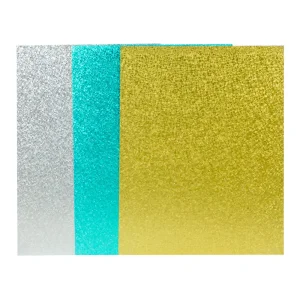
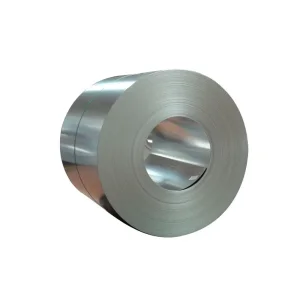
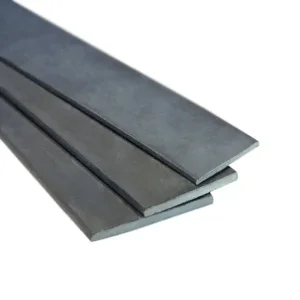
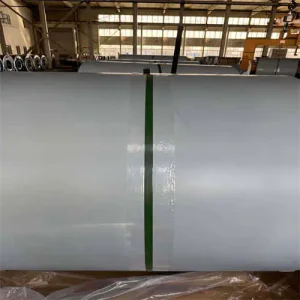

1. Executive Technical Whitepaper: Aluminized Silicon Steel Engineering
An in-depth metallurgical analysis of Type 1 Hot-Dip Aluminized Silicon Coated Steel (Al-Si Alloy), examining core oxidation mechanics, intermetallic diffusion layer formation, and deep-drawing ductility for global B2B procurement leaders.
In high-temperature and aggressive atmospheric operating environments, traditional galvanized (GI) or galvalume (GL) flat-rolled steels encounter severe limitations. Standard zinc coatings begin to degrade rapidly above 200°C due to zinc oxide vaporization and severe micro-cracking of the sacrificial layer. To solve this, advanced metallurgical engineering yielded Type 1 Hot-Dip Aluminized Silicon Steel (AS Steel)—a sophisticated composite material featuring a cold-rolled carbon steel substrate continuously hot-dipped in an alloy bath comprising approximately 87–91% Aluminum (Al) and 8–11% Silicon (Si), alongside controlled trace iron.
The addition of 8% to 11% silicon is not merely additive; it represents a crucial metallurgical breakthrough. Pure aluminum coatings react aggressively with the underlying carbon steel substrate during continuous hot-dip processing, forming an excessively thick, brittle intermetallic layer of iron-aluminide ($\text{FeAl}_3$ / $\text{Fe}_2\text{Al}_5$). This brittle intermetallic interface fractures violently under mechanical stress during deep drawing, stamping, or roll forming. Silicon acts as a powerful reaction inhibitor. It suppresses the excessive growth of the brittle Fe-Al intermetallic phase, restricting the interface boundary layer to a microscopic, ductile zone typically under 2 to 3 microns. Consequently, grades such as DX53D+AS and DX54D+AS achieve exceptional mechanical ductility, permitting complex geometries without coating flaking, micro-chipping, or delamination.
Procurement departments must carefully distinguish between Type 1 (Aluminum-Silicon Coating) and Type 2 (Pure Aluminum Coating). Type 1 is specifically engineered for high-heat performance, deep-draw presswork, heat exchangers, commercial bakeware (bread pans, burger trays), and automotive exhaust heat shields. Type 2 features a thicker pure aluminum layer intended primarily for atmospheric outdoor corrosion protection and civil piping, lacking the severe thermal reflectivity and deep-drawing ductility offered by silicon-inhibited microstructures.
2. Strategic Supply Chain & Manufacturing Advantages of China Factories
China's steel manufacturing ecosystem has evolved from high-volume commodity production into a globally dominant cluster for precision-alloyed, continuous hot-dip coated flat steel products.
Vertical Integration & Raw Material Parity
Tier-1 Chinese factories leverage fully integrated production clusters—from iron ore reduction and oxygen converter steelmaking to advanced cold-reduction tandem mills. This vertical continuity ensures precise control over tramp elements (P < 0.015%, S < 0.010%), yielding exceptionally clean steel substrates necessary for deep-drawing grades like DX54D+AS and DX56D+AS.
State-of-the-Art Continuous Hot-Dip Lines
Modern Chinese mills utilize automated continuous galvanizing and aluminizing lines equipped with X-ray fluorescence coating weight gauges, optical automated surface inspection systems (ASIS), and nitrogen knife wiping systems. These technologies guarantee extremely tight coating weight tolerances (e.g., AS80, AS120, AS150 $\pm$ 5g/m² target accuracy) across full strip widths up to 1500mm.
Unmatched Cost Efficiency & Scalability
By operating massive multi-line mill facilities, Chinese suppliers achieve unprecedented economies of scale. High-speed continuous annealing and tension leveling operations drastically reduce unit conversion costs, giving global buyers a 15% to 30% total cost of ownership (TCO) advantage compared to European or North American domestic mills without compromising metallurgical standards.
Rigorous International Certification Compliance
Leading Chinese exporters maintain comprehensive quality management frameworks including IATF 16949 (Automotive Quality Management), ISO 9001, ISO 14001, and full REACH/RoHS environmental standard compliance. Products are accompanied by EN 10204 3.1 Mill Test Certificates detailing heat chemistry, yield strength, tensile elongation, bend testing, and coating thickness.
3. Material Grades, Coating Weights & Mechanical Property Matrix
Selecting the correct steel grade and coating specification is paramount for optimizing component service life and manufacturing yield. Below is the definitive metallurgical specification benchmark for EN 10346 and ASTM A463 Type 1 standards.
| Steel Grade (EN 10346) | Equivalent Standard | Yield Strength $R_e$ (MPa) | Tensile Strength $R_m$ (MPa) | Elongation $A_{80}$ (%) | Primary Industrial Application |
|---|---|---|---|---|---|
| DX51D+AS | ASTM A463 Type 1 Commercial | 140 – 300 | 270 – 500 | $\ge 22$ | General forming, HVAC ducts, heat shields, outer casings |
| DX52D+AS | ASTM A463 Type 1 Drawing | 140 – 300 | 270 – 420 | $\ge 26$ | Moderate drawing, oven structural frames, flue pipes |
| DX53D+AS | ASTM A463 Type 1 Deep Drawing | 140 – 260 | 270 – 380 | $\ge 30$ | Deep drawn bread pans, burger trays, automotive silencers |
| DX54D+AS | ASTM A463 Type 1 Extra Deep Drawing | 120 – 220 | 260 – 350 | $\ge 36$ | Complex industrial bakeware, intricate heat exchanger stampings |
| DX56D+AS | ASTM A463 Type 1 Super Deep Drawing | 120 – 180 | 260 – 350 | $\ge 39$ | Extremely complex automotive exhaust manifolds & multi-stage pressings |
Standard Coating Weight Specifications & Thickness Rules
Aluminized Silicon Steel coating weight is designated by the double-side coating mass in grams per square meter ($g/m^2$). Understanding coating mass translates directly to thermal and anti-corrosion performance during prolonged industrial exposure:
| Coating Designation | Nominal Coating Mass (Grams/m², both sides) | Single Side Equivalent Thickness ($\mu m$) | Thermal & Environment Suitability |
|---|---|---|---|
| AS080 (AS80) | 80 $g/m^2$ | $\approx 15 \mu m$ | Light thermal reflectivity, electrical appliance internal shields |
| AS120 (AS120) | 120 $g/m^2$ | $\approx 25 \mu m$ | Standard industrial bakeware, commercial oven panels, HVAC units |
| AS150 (AS150) | 150 $g/m^2$ | $\approx 30 \mu m$ | High-temperature industrial heat exchangers, automotive exhaust silencers |
| AS200 (AS200) | 200 $g/m^2$ | $\approx 40 \mu m$ | Extreme duty combustion chambers, heavy industrial furnace liners |
4. Macro-Industry Solutions & High-Performance Application Scenarios
How wholesale Aluminized Silicon Steel engineered coils and sheets solve critical engineering challenges across food processing, automotive thermal management, HVACR, and green energy systems.
Industrial Food Processing & Commercial Bakeware
In high-throughput commercial bakeries, baking pans, bread molds, and burger bun trays undergo thousands of severe thermal cycles daily between 180°C and 280°C. Standard steel warps, while tinplate coating degrades rapidly. DX53D+AS120 Aluminized Silicon steel is the globally preferred material. Its low thermal expansion coefficient prevents tray distortion, while its non-toxic, chemically inert Al-Si oxide layer fully complies with US FDA 21 CFR and EU 1935/2004 food-contact safety regulations, enduring non-stick PTFE coating baking cycles without flaking.
Automotive Exhaust Systems & Underbody Heat Shields
Modern internal combustion engines (ICE) and hybrid vehicles require lightweight, highly effective exhaust insulation. Aluminized silicon steel sheets (DX54D+AS150) are press-formed into multi-layer heat shields, muffler shells, and tailpipe components. The material operates continuously at 600°C without scaling or oxidation, reflecting up to 85% of radiant engine heat away from passenger compartments and sensitive battery electronics in hybrid vehicles.
HVAC Combustion Chambers & Heat Exchangers
Residential and industrial gas furnaces, unit heaters, and duct heaters expose heat exchanger tubes to sulfur-bearing flue gas condensate and rapid flame temperatures exceeding 500°C. Aluminized steel resists acidic condensate attack significantly better than galvanized steel, while preventing severe thermal fatigue cracking, extending HVAC equipment warranty life to over 15–20 years.
Solar Thermal Collectors & Industrial Dryer Enclosures
Concentrated solar thermal systems and grain drying ovens benefit from the high thermal emissivity and radiant heat trapping capabilities of AS coils. When used for internal duct lining and solar collector backing panels, Aluminized Silicon Steel maximizes system thermal efficiency while remaining completely impervious to ambient humidity and weathering degradation.
5. Global Procurement Decision Framework & Quality Verification Protocols
A practical, risk-mitigated framework for international steel importers, procurement managers, and OEM plant directors evaluating direct factory orders from China suppliers.
Sourcing flat-rolled steel internationally requires stringent quality assurance protocols to guarantee that incoming coils meet identical manufacturing tolerances as local domestic mills. Procurement officers should implement a 4-step technical verification framework before approving containerized ocean shipments:
Step 1: Chemical Composition & Spectrographic Analysis
Ensure the supplier provides complete ladle chemistry verification. The aluminum bath must strictly contain 8% to 11% silicon. Inadequate silicon (< 7%) results in brittle intermetallic flaking during deep drawing, whereas excessive silicon (> 12%) causes silicon segregation and surface pinhole defects.
Step 2: Triple-Spot Coating Mass & Micrometer Verification
Verify coating weight in accordance with ASTM A463 / EN 10346 triple-spot testing. Measure coating thickness at the drive side, center, and operator side of the coil to ensure cross-width uniformity. For AS120 coating, single-spot minimum must not fall below 105 $g/m^2$.
Step 3: Mechanical Drawability & T-Bend Testing
For deep-drawing grades (DX53D / DX54D), require mandatory $r$-value (plastic strain ratio) and $n$-value (strain hardening exponent) reporting. Perform zero-T (0T) to 2T bend tests followed by tape adhesion testing to guarantee zero micro-flaking along the bend radius.
Step 4: Seaworthy Export Packaging Audit
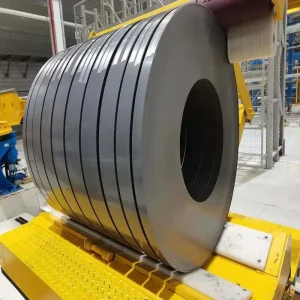
Coils exposed to ocean transit must be protected against salt-air oxidation and white rust. Ensure factory packaging specifications require anti-corrosive VCI (Vapor Corrosion Inhibitor) paper, galvanized outer side guards, heavy-duty steel eye rings, and desiccants inside moisture-sealed radial wrap.
6. Industry Trends: Green Metallurgy, CBAM & Smart Coating Technologies
How leading Chinese steel manufacturers are decarbonizing production lines, adopting AI-driven coating weight controls, and aligning with global Net-Zero standards.
The global steel industry is undergoing a historic decarbonization transformation. Importers supplying markets affected by the European Union's Carbon Border Adjustment Mechanism (CBAM) or stringent corporate ESG scopes require supply chain transparency. Chinese continuous hot-dip aluminizing facilities are actively executing key technical upgrades:
- EAF-Based Substrate Transition: Shifting base cold-rolled substrate steel production from traditional Blast Furnace-Basic Oxygen Furnace (BF-BOF) routes to Electric Arc Furnaces (EAF) utilizing green hydrogen direct reduced iron (DRI) and high-ratio recycled steel scrap, lowering embedded carbon footprint ($CO_2/ton$) by up to 40%.
- AI-Powered Closed-Loop Gas Knife Wiping: Utilizing real-time laser thickness sensors coupled with machine-learning gas knife positioning systems to maintain ultra-precise coating uniformity ($\pm 2g/m^2$ consistency across 1500mm coil widths), eliminating material waste and optimize coating ductility.
- Chromate-Free Cr6-Free Passivation: Eliminating hexavalent chromium surface treatment in favor of environmentally friendly eco-friendly organic passivation, silane sealants, and food-grade thin organic coatings (TOC) that fully comply with EU RoHS 3.0 and REACH Annex XVII regulations.
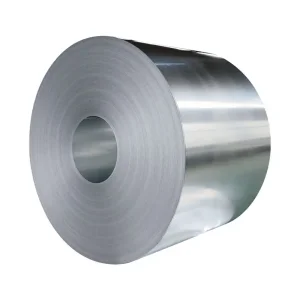
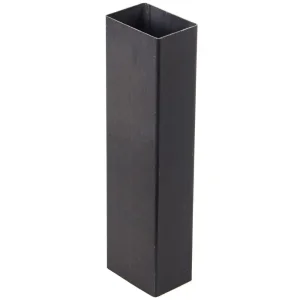
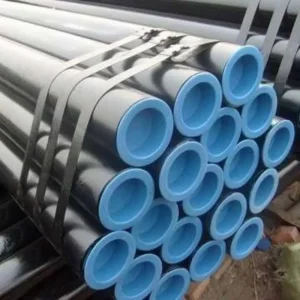
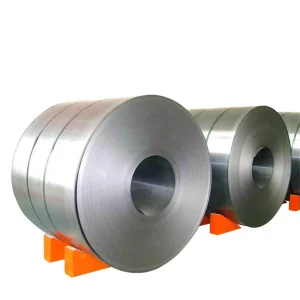
Explore our complete direct-from-factory catalog including seamless carbon pipes, cold-rolled high-strength sheets, electrical silicon steel coils, tinplate, and galvanized hollow sections.

7. Technical FAQ & Procurement Decision Guide
Expert answers to the most rigorous technical and commercial questions posed by global steel buyers, quality engineers, and supply chain managers.
What is the key metallurgical difference between DX53D+AS and DX54D+AS Aluminized Silicon Steel?
While both are deep-drawing grades of Type 1 Aluminized Silicon steel, the primary difference lies in the base carbon steel substrate metallurgy and deep-drawing ductility. DX53D+AS features a low-carbon aluminum-killed steel substrate designed for standard deep-draw stampings such as bakery pans, heat shields, and HVAC covers (yield strength 140–260 MPa, minimum elongation 30%).
DX54D+AS uses an Interstitial-Free (IF) ultra-low carbon steel substrate stabilized with titanium or niobium. This yields superior drawability ($r$-value $\ge 1.6$, $n$-value $\ge 0.18$, elongation $\ge 36\%$), allowing severe multi-stage pressings, deep-drawn burger bun pans, and intricate automotive exhaust components without necking, wrinkling, or micro-cracking of the Al-Si coating interface.
How does Aluminized Silicon Steel withstand high temperatures up to 800°C without peeling?
When exposed to temperatures up to 480°C, the bright aluminum-silicon surface retains over 80% of its initial heat reflectivity, remaining virtually unchanged. As temperatures rise between 480°C and 800°C, a solid-state metallurgical diffusion process occurs: iron atoms from the steel substrate diffuse into the Al-Si layer, transforming the surface into a dark, tightly adherent iron-aluminum-silicon intermetallic alloy ($\text{Fe-Al-Si}$).
This converted refractory alloy layer has an extremely high melting point and acts as a impenetrable barrier against continuous atmospheric oxidation, preventing scaling and structural degradation far superior to galvanized or stainless 409/430 steels under equivalent thermal cycling.
Is Aluminized Silicon Steel certified for direct food contact in commercial baking applications?
Yes. Type 1 Aluminized Silicon Steel manufactured by top-tier Chinese mills complies fully with international food-contact safety standards, including US FDA 21 CFR 175.300, European Regulation (EC) No 1935/2004, and French DGCCRF directives. The tight passivation coating and inert aluminum oxide layer prevent heavy metal leaching under baking conditions.
Furthermore, its smooth surface profile (roughness $Ra 0.6 – 1.2 \mu m$) provides an optimal substrate for silicone or PTFE non-stick spray coatings, ensuring high bond durability through thousands of industrial baking cycles.
What coating weight (AS80, AS120, AS150) should be specified for automotive heat shields vs. bread pans?
For commercial bread pans and burger bun trays, AS120 ($120 g/m^2$ double-sided, approx. $25\mu m$ total thickness) is the international industry standard. It balances deep-drawing lubricity with optimal non-stick coating adhesion.
For automotive exhaust heat shields and industrial flue pipes subject to aggressive hot-corrosion and road salt spray, AS150 ($150 g/m^2$) or AS200 ($200 g/m^2$) is recommended to ensure robust barrier protection across extended 10-year OEM warranty lifetimes.
How does Aluminized Silicon Steel compare in Total Cost of Ownership (TCO) with Stainless Steel 409/430?
In applications under 600°C–700°C (such as automotive exhaust silencers, bakeware, and HVAC furnace heat exchangers), Aluminized Silicon Steel offers a massive economic advantage. Ferritic stainless steels (SUS 409 / SUS 430) contain significant nickel and chromium alloy surcharges, making them 40% to 65% more expensive per ton.
Aluminized Silicon steel provides equivalent thermal oxidation resistance and superior thermal reflectivity at a fraction of the raw material cost, while offering easier tool pressability and lower die-wear rates.
What are the minimum order quantities (MOQ) and delivery lead times for wholesale factory orders?
Standard factory MOQ for custom slitted coils or cut-to-length sheets is typically 25 Metric Tons (one full 20ft container load) per thickness and width specification. Common standard sizes (e.g., 0.6mm, 0.8mm, 1.0mm, 1.2mm thickness in 1000mm or 1250mm widths in DX53D+AS120) are often available from mill stock in smaller trial lots (5–10 tons).
Manufacturing lead times from Tianjin/Shanghai mill ports average 20 to 35 calendar days following LC opening or deposit confirmation, with ocean transit times dependent on destination port location.
Request Direct Mill Quotes & Technical Datasheets
Partner directly with China's leading mill-direct supplier of Aluminized Silicon steel coils, DX53D/DX54D+AS sheets, CRNGO silicon steel, and coated structural products. Our metallurgical engineering team provides comprehensive mill test certificates (EN 10204 3.1), custom slitting, and full export logistics support.