
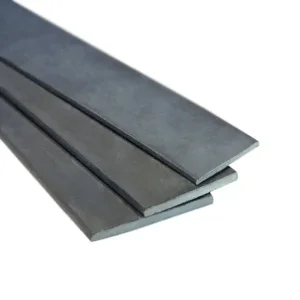
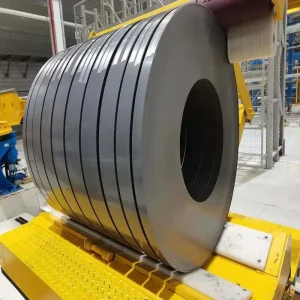
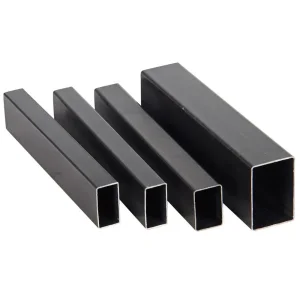
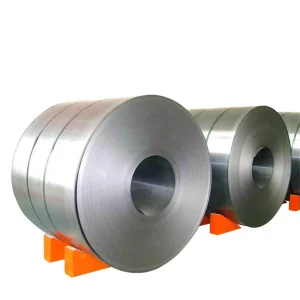

Analyzing how 275g/m² zinc density has transformed controlled-environment agriculture (CEA) economics, structural integrity, and long-term asset value globally.
Structural Integrity Under Microclimate Stress
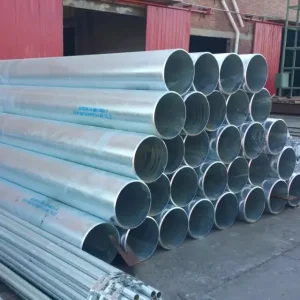
Modern commercial greenhouses operate under harsh interior microclimates characterized by relative humidity exceeding 85%, continuous transpiration, sulfur burner exposure, and aggressive liquid fertigation chemistry. Standard pre-galvanized coatings (Z100–Z180) suffer premature degradation, leading to structural red rust within 3 to 5 years. Zinc 275 (Z275 / 275g/m² total double-sided mass, equivalent to ~20µm coating thickness per side) provides the critical threshold mass required to prevent atmospheric corrosion, structural buckling, and premature frame fatigue over a 15- to 25-year service life.
Wholesale Supply Chain Dynamics & Market Shift
Global engineering procurement contractors (EPCs) and high-tech greenhouse integrators are increasingly standardizing orders on mill-certified Z275 steel profiles. Driven by stringent financing requirements from agricultural REITs and global bank consortiums, greenhouse infrastructure must demonstrate verified lifecycle resilience. Procurement models have shifted away from local stockists toward direct partnerships with Tier-1 Chinese manufacturing conglomerates capable of continuous inline hot-dip galvanizing, precision cold-forming, and high-frequency induction welding (HFW) with re-galvanized weld seams.
Direct comparative analysis of sacrificial protection mechanics, phase layer crystallization, and mechanical performance under load.
To make informed capital expenditure decisions, greenhouse engineers must evaluate the metallurgical characteristics of zinc coatings. The table below outlines the core differences between conventional Hot-Dip Galvanized Z275, Heavy Hot-Dip Z600, and next-generation Zinc-Aluminum-Magnesium (ZM275) alloys when processed for structural hollow sections, purlins, and gutter profiles.
| Coating Designation | Nominal Coating Mass (g/m²) | Layer Thickness (µm per side) | Cut-Edge Self-Healing Rate | Salt Spray Corrosion Resistance (Hrs to Red Rust) | Primary Industrial Applications |
|---|---|---|---|---|---|
| Z180 (Standard GI) | 180 g/m² | ~13 - 15 µm | Low (Minimal galvanic edge protection) | 250 - 350 Hours | Indoor furniture, temporary shade structures |
| Z275 (Commercial Standard) | 275 g/m² | ~20 - 24 µm | Moderate (Sufficient for thin-gauge cut edges) | 600 - 800 Hours | Commercial Venlo bows, purlins, ground posts, RHS/SHS |
| Z600 (Heavy HDG) | 600 g/m² | ~42 - 50 µm | High (Thick sacrificial zinc reservoir) | 1200+ Hours | Heavy civil structural posts, submerged footings |
| ZM275 (Zn-Al-Mg Alloy) | 275 g/m² (Equiv.) | ~18 - 22 µm | Exceptional (Forms dense Simonkolleite phase) | 2000+ Hours | Coastal greenhouses, high-sulfur solar-agrivoltaic frames |
The Sacrificial Anode Mechanism
Zinc acts as a galvanic anode to protecting the underlying carbon steel substrate. When atmospheric moisture breaches the coating, zinc corrodes preferentially, synthesizing a protective layer of basic zinc carbonate [ZnCO₃·3Zn(OH)₂]. Z275 ensures an optimal thickness layer that resists mechanical abrasion during field assembly while maintaining ductile adhesion during tube bending.
High-Frequency Weld (HFW) Seam Restoration
Manufacturing pre-galvanized Z275 tubing requires removing the outer weld bead followed by immediate thermal zinc spraying (metallization). Premier factories utilize twin-wire arc spray systems integrated inline, restoring the coating weight across the heat-affected zone (HAZ) to match or exceed the parent Z275 specification.
Passivation & Anti-White Rust Treatments
To prevent wet-storage stain (white rust) during ocean transport in humid container holds, Z275 steel profiles undergo chemical passivation. Advanced manufacturers utilize trivalent chromium (Cr3+) or bio-based organic passivation sealers that enhance salt-spray performance without compromising environmental compliance (RoHS/REACH).
Tailoring structural steel configurations to regional environmental loads, wind dynamics, snow accumulation, and atmospheric salinity.
Middle East & GCC Region
Climate Challenge: Extreme solar radiation, sandstorm abrasion, and high ambient temperatures coupled with hyper-saline coastal winds.
Solution Profile: Z275 galvanized oval pipes (60x30x2.0mm) combined with thermosetting polyester powder coatings. The dual-duplex system prevents thermal expansion stress, resisting coating degradation up to 70°C surface temperatures.
North America & Northern Europe
Climate Challenge: High snow loads (up to 50 kg/m²), heavy wind gusts, and severe condensation cycles during winter heating.
Solution Profile: High-yield S350GD/S550GD Z275 rectangular hollow sections (RHS 100x50x3.0mm) designed to EN 13031-1 structural standards. Enhanced section modulus prevents roof sag and maintains frame alignment under snow packs.
Southeast Asia & Latin America
Climate Challenge: Tropical monsoons, high year-round relative humidity, organic mold growth, and acidic rainfall environments.
Solution Profile: Z275 or ZM275 continuous hot-dip circular tubes (OD 42mm / 48mm) featuring clear organic passivation sealers. Eliminates moisture entrapment within telescopic connectors and arch joints.
End-to-end operational framework for wholesale distributors, greenhouse OEMs, and large-scale agricultural developers.
1. Material Traceability & Quality Assurance Protocol
Wholesale buyers must mandate Mill Test Certificates (MTC) compliant with EN 10204 Type 3.1. Chemical heat analysis must verify low carbon equivalent values (CEV) to ensure optimal field weldability without micro-cracking. Hydrostatic testing or eddy-current nondestructive testing (NDT) must be conducted inline for all circular pressure-bearing irrigation structural tubes.
2. Freight Optimization & Anti-Deformation Packaging
International ocean freight demands specialized steel tube bundling protocols. Z275 structural pipes are hex-bundled with high-tensile steel strapping, plastic end caps, and heavy-duty VCI (Vapor Corrosion Inhibitor) plastic wrapping. Custom wood-skid cradles prevent metal-to-metal rubbing during container transit, ensuring zero surface abrasion upon jobsite arrival.
Greenhouse Structural Steel Technology Roadmap (2025–2035)
Rapid market transition from conventional Z275 GI to Zn-Al-Mg coatings. Widespread adoption of S420GD high-strength steel to reduce overall steel frame tonnage by 15%.
Integration of self-healing nano-capsules into thin organic coatings (TOC), dynamically repairing micro-scratches caused by installation tools or high winds.
Implementation of Direct Reduced Iron (DRI) powered by green hydrogen in core steelmaking, slashing Scope 1 and Scope 2 embodied carbon of greenhouse structures by 80%.
Embedding wireless galvanic corrosion sensors and strain gauges directly inside critical structural columns to transmit real-time frame health data to farm management software.



Technical clarifications directly from our Chief Metallurgist and Global Engineering Procurement Team.
What specifically defines a "Zinc 275" coating in greenhouse steel manufacturing?
How does Z275 pre-galvanized pipe differ from post-fabrication Hot-Dip Galvanizing (HDG)?
Why is Z275 preferred over Z180 or Z120 for commercial multi-span greenhouses?
How is the longitudinal weld seam protected against internal and external corrosion on Z275 pipes?
What steel grades are used as the substrate for Z275 greenhouse structural profiles?
- DX51D+Z275: Commercial bending and forming quality, ideal for arch bows, swaged joints, and light purlins.
- S280GD / S350GD+Z275: Structural high-yield strength steel (Yield strength ≥ 280–350 MPa), specified for main columns, gutters, wind-bracing, and load-bearing trusses in snow-prone regions.
- S550GD+Z275: Ultra-high-strength steel used for ultra-lightweight structural profiles in modern Venlo-style glass greenhouses.
What chemical passivation treatments are applied to prevent white storage stain during ocean transit?
- Trivalent Chromium (Cr3+) Passivation: Environmentally friendly treatment providing strong corrosion protection compliant with EU RoHS directives.
- Chromate-Free / Organic Passivation: Application of a thin polymer film (TOC - Thin Organic Coating) that acts as a physical barrier against humidity and finger-print staining while improving paint adhesion.
- Oiling: Application of light rust-preventative vanishing oils for short-distance transit or immediate post-processing.
How does Zinc-Aluminum-Magnesium (ZAM / ZM275) compare with standard Z275 Galvanized steel?
What testing certificates and quality inspections should wholesale buyers demand prior to shipment?
- EN 10204 3.1 Mill Test Certificate (MTC): Detailing chemical heat analysis, yield strength, tensile strength, and elongation.
- Coating Mass Verification: Triple-spot magnetic thickness gauge testing or chemical weigh-strip-weigh methods (ISO 1460 / ASTM A90).
- Adhesion & Ductility Tests: 180-degree bend testing (ISO 7438) and flattening tests to ensure no coating flaking or micro-cracking occurs.
- Salt Spray Chamber Testing Report: ASTM B117 neutral salt spray test logs validating hours to white/red rust initiation.