
Featured Industrial Steel & Coil Portfolio
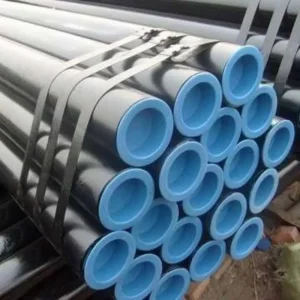
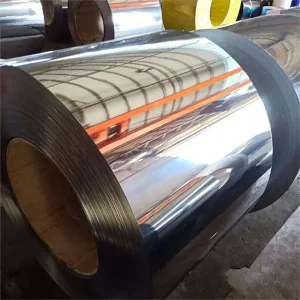
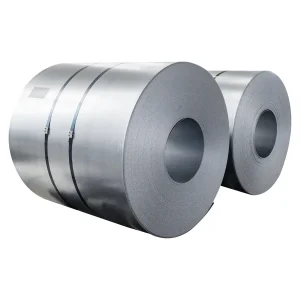
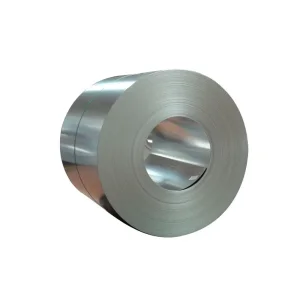
Explore mill-direct silicon steel coils, coated sheets, structural tubes, and specialty alloys optimized for global energy and construction sectors.

Executive Engineering Brief: Hot Rolled Silicon Steel Fundamentals
A comprehensive technical evaluation of metallurgical structures, silicon phase behavior, magnetic hysteresis performance, and industrial processing economics for tier-1 OEMs and power infrastructure developers.
Metallurgical Grain Structure & Silicon Phase Solubility
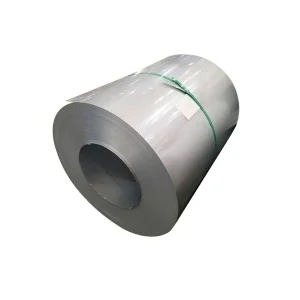
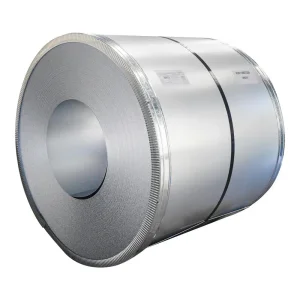
Hot rolled silicon steel (frequently classified within soft magnetic alloy frameworks) represents a foundational material category in heavy electrical machinery engineering. By alloying refined iron with 1.0% to 4.5% silicon (Si), the electrical resistivity ($\rho$) of the matrix increases substantially—from approximately $10 \ \mu\Omega\cdot\text{cm}$ in pure iron to over $45 \ \mu\Omega\cdot\text{cm}$ at 3.2% Si. This dramatic elevation in electrical resistivity suppresses eddy current losses ($P_e$) induced by alternating electromagnetic fields under Faraday’s Law of Induction.
During hot rolling elevated temperatures ($1050^\circ\text{C}$ to $1250^\circ\text{C}$ slab reheating followed by finishing pass sequences above $850^\circ\text{C}$), the crystallographic phase diagram undergoes controlled ferrite-$\gamma$-austenite transformations depending on exact silicon stoichiometry. The presence of silicon stabilizes the body-centered cubic (BCC) $\alpha$-iron ferrite matrix, widening the ferrite phase field and preventing unwanted phase transformation strain during high-temperature thermodynamic processing.
Hot Rolling Dynamics vs. Cold Rolled Grain-Oriented (CRGO/CRNGO) Pathways
While cold rolling processes (such as Cold Rolled Non-Grain Oriented or CRNGO) dominate ultra-thin high-efficiency appliance laminations, hot rolled silicon steel sheets and hot-rolled pickled bands retain crucial engineering advantages for heavy-duty structural magnetics and cost-critical power apparatus:
- Mechanical Toughness & Residual Stress: Hot rolled structures exhibit lower residual strain fields, making them less susceptible to micro-cracking under intense cyclic mechanical stamping or heavy structural welding.
- Thicker Gauge Stability: Applications requiring thickness ranges above 0.50mm up to 3.0mm (such as large-scale industrial motor stators, magnetic shunts, and ballast chokes) benefit from hot-rolled dimensional uniformity.
- Capital & Processing Efficiency: Omitting complex multi-stage cold reduction and secondary high-temperature box annealing cycles yields substantial manufacturing cost advantages.
Technical Note for Procurement Engineers: Modern hot rolled silicon steel production utilizes continuous casting combined with advanced Pickling and Oiling Lines (P&O) to deliver oxide-free surface qualities capable of accepting inorganic insulation coatings (Class C-3, C-5) or organic self-bonding varnishes directly.
Comparative Electromagnetic & Mechanical Property Matrix
| Steel Grade Category | Silicon Content (wt. %) | Typical Thickness Range (mm) | Specific Core Loss $P_{1.5/50}$ (W/kg) | Min. Flux Density $B_{50}$ (Tesla) | Primary Industrial Application |
|---|---|---|---|---|---|
| Hot Rolled Silicon Steel (HR Standard) | 1.2% – 2.5% | 0.50 – 2.00 | 4.50 – 7.20 | 1.68 – 1.74 | Heavy stators, welding transformers, magnetic separators |
| Hot Rolled Pickled & Oiled (HR P&O Electrical) | 1.5% – 3.0% | 0.60 – 3.00 | 3.80 – 6.00 | 1.70 – 1.76 | Structural magnetic shunts, traction choke cores |
| CRNGO (Fully Processed Reference) | 2.0% – 3.5% | 0.35 – 0.50 | 2.30 – 3.50 | 1.65 – 1.72 | EV traction motors, high-speed hermetic compressors |
| CRGO (Grain-Oriented Reference) | 3.0% – 3.25% | 0.23 – 0.30 | 0.85 – 1.10 | 1.88 – 1.95 | EHV power grid transformers, distribution step-downs |
Technical Roadmap & Future Outlook (2025–2035)
The technological evolution of hot rolled electrical steel driven by green steel decarbonization, ultra-thin strip casting, and AI-driven thermomechanical refining.
Direct Strip Casting & Near-Net-Shape Rolling
Traditional slab reheating furnaces consume tremendous thermal energy. Emerging direct strip casting technologies solidify molten silicon steel directly into 1.5mm–2.0mm strips. Immediate online hot rolling passes refine the grain boundary network without requiring re-heating cycles, yielding a 65% reduction in carbon intensity per ton produced.
High-Silicon Alloy Chemistry (6.5% Si Systems)
Silicon concentrations near 6.5% yield near-zero magnetostriction, drastically reducing acoustic noise in power equipment while driving eddy current losses down toward zero. Advanced hot rolling facilities are deploying warm-rolling thermomechanical schedules to process these brittle high-silicon alloys successfully at industrial scale.
Eco-Friendly Chrome-Free Surface Passivation
In accordance with EU REACH, RoHS, and global ESG mandates, premier Chinese silicon steel mills have transitioned 100% of pickled and coated hot-rolled silicon steel outputs to hexavalent-chromium-free waterborne inorganic-organic hybrid coatings. These offer high interlaminar resistance (>100 $\Omega\cdot\text{cm}^2/\text{lamella}$) and superior punchability.
Macro Industry Solutions & System Integration
Tailored material engineering across power generation, renewable energy infrastructure, heavy mining electrification, and industrial automation.
1. Power Grids & Substation Transformers
Hot rolled silicon steel coils serve as essential structural flux shunts and tank wall shields in high-voltage transformers (>110kV). By directing stray magnetic flux away from structural steel tanks, these shunts eliminate local hot spots, preventing transformer insulation degradation and oil thermal breakdown.
2. Heavy Industrial Motors & Mining Pumps
For heavy-duty continuous operating equipment (such as continuous miners, cement mill drives, and municipal water pumps), hot rolled silicon steel stators provide superior fatigue strength under dynamic vibrational torque while delivering steady electromagnetic excitation.
3. Renewable Energy Inverters & Reactors
Solar utility-scale central inverters and wind turbine grid-tie reactors rely on heavy-gauge silicon steel cores for harmonic filter inductors. The high saturation flux density ($B_s \approx 2.0 \ \text{T}$) prevents core saturation during transient grid surges.
China Factory 4.0: Supply Chain Resilience & Efficiency Advantages
Leveraging Tianjin’s premier industrial steel manufacturing hub, advanced automated rolling lines, and integrated sea-freight logistics to guarantee zero-defect supply chains.
Smart Manufacturing Execution Systems (MES)
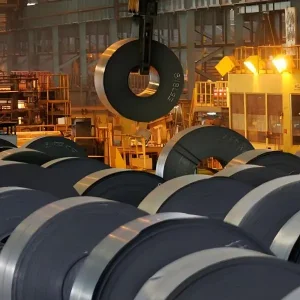
Our modern manufacturing facility covers 66,700 m² in Tianjin, China, operating eight high-frequency welding and specialized steel processing lines. Powered by an enterprise-wide Manufacturing Execution System (MES), every coil of hot rolled silicon steel is continuously monitored from liquid iron ladles through slab continuous casting, hot strip roughing, laser thickness gauging, and automated coil slitting.
Real-time optical sensors detect micro-surface blemishes, while automated gamma-ray thickness controls guarantee coil crown and edge-taper tolerances down to $\pm 0.015\text{mm}$, eliminating punching die wear for downstream transformer stampers.
Port Proximity & Global Logistics Efficiency
Located directly adjacent to Tianjin Port (one of the largest deep-water shipping terminals in Northern China), our global export infrastructure provides unmatched supply chain responsiveness:
- Rapid Vessel Loading: Factory-to-pier transit time under 2 hours, reducing port storage exposure and humidity contact.
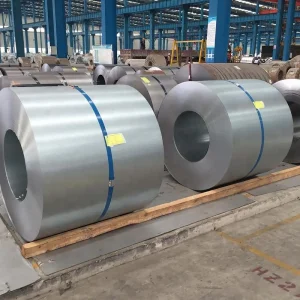
- Seaworthy Anti-Corrosion Packaging: VCI (Vapor Corrosion Inhibitor) plastic wrapping, galvanized inner/outer edge protectors, heavy-duty steel strapping, and wooden skid mounting for ocean container transit.
- Flexible Freight Modes: Containerized loading (20ft heavy-load), Breakbulk shipping for multi-thousand ton project orders, and localized bonded warehouse buffering.
Localized Support & Compliance Assurance
Rigorous international standard alignment, third-party testing protocols, and complete regulatory compliance for frictionless global procurement.
Global Technical Standards Alignment
Our engineering outputs conform strictly to internationally recognized standards: IEC 60404-8-7 (Magnetic materials - Specifications for individual materials), ASTM A677 / A876, EN 10126 / EN 10107, and JIS C2552. Mill Test Certificates (MTC) according to EN 10204 3.1 accompany every shipment, detailing chemical ladle analysis, core loss curves, and dimensional inspection logs.
Independent Quality Verification
To satisfy stringently audited government energy tenders, we support third-party pre-shipment inspections by internationally accredited agencies including SGS, Bureau Veritas (BVI), TÜV Rheinland, and Intertek. Testing parameters cover Epstein frame magnetic property validation, surface coating insulation resistance ($R_i$), and salt-spray corrosion endurance.
Environmental & Trade Compliance
Our Tianjin production plants maintain certified ISO 9001:2015 (Quality Management), ISO 14001:2015 (Environmental Management), and ISO 45001:2018 (Occupational Health & Safety) credentials. Products fully comply with EU REACH registration and RoHS Directive 2011/65/EU hazardous substance restrictions.
Global Enterprise Procurement & Tendering Specification
A structured engineering checklist for purchasing officers, supply chain directors, and EPC tender specifiers evaluating hot rolled silicon steel coils and sheets.
Key RFQ Parameters Checklist
To ensure rapid mill quotation turnarounds and accurate alloy selection, include the following precise engineering parameters in your Request for Quotation (RFQ):
- Nominal Gauge & Tolerance: State target sheet thickness (e.g., $0.50\text{mm} \pm 0.02\text{mm}$) and coil slitting width requirements.
- Max Allowable Core Loss ($P_{1.5/50}$ or $P_{1.5/60}$): Specify target watt-per-kilogram thresholds at 50Hz or 60Hz operating frequencies.
- Minimum Magnetic Flux Density ($B_{50}$): Define required Tesla value under 5000 A/m magnetic field strength.
- Surface Insulation Coating Grade: Select bare pickled, dry oiled, or organic/inorganic varnish insulation coating.
- Coil Physical Dimensions: Specify Inner Diameter (ID: 508mm / 610mm), Maximum Outer Diameter (OD), and Maximum Coil Weight (e.g., 3.5–5.0 Metric Tons).
- Target Application & Post-Processing: Indicate stamping, annealing, or welding assembly steps.
Frequently Asked Technical Questions (FAQ)
Expert answers to technical, commercial, and logistical questions regarding hot rolled silicon steel sourcing from China.
What are the fundamental differences between Hot Rolled Silicon Steel and CRNGO Steel?
How does silicon content affect core loss and mechanical formability?
What minimum order quantities (MOQ) and lead times apply for custom slit silicon steel coils?
What anti-corrosion packaging methods protect silicon steel during ocean transport?
Can mill test certificates (MTC) and third-party lab testing be provided prior to dispatch?
Comprehensive Steel Coil & Pipe Supply Range
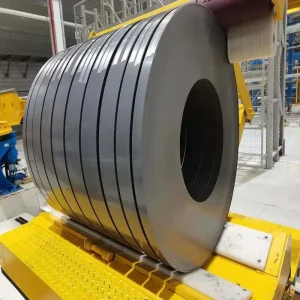
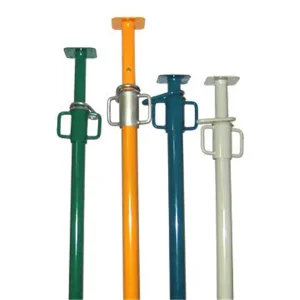
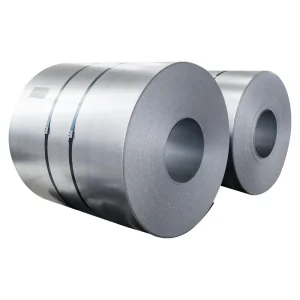
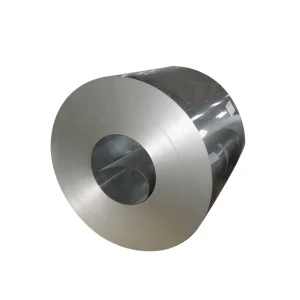
Complete your procurement program with certified galvanized coils, silicon electrical sheets, pickled hot-rolled bands, and structural scaffolding systems.
Partner with China's Leading Silicon Steel Export Factory
Send your project drawings, core loss requirements, or tender specifications directly to our senior metallurgical engineering team for mill-direct pricing and technical support.