
Coated Steel, Structural Sections & Special Alloys
Mill-direct manufacturing specs built for rigorous electrical, industrial, and infrastructure engineering demands.
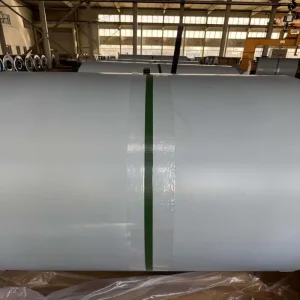
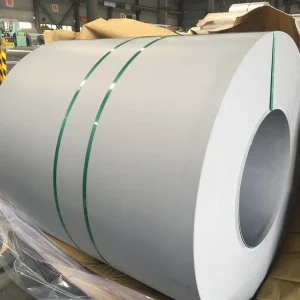
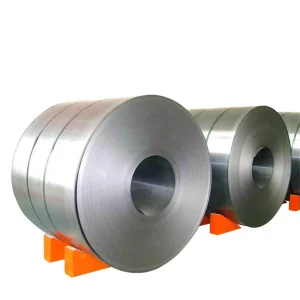
Executive Technical Report: The Physics of Cold Rolled Silicon Transformer Steel
Understanding Goss Texture (110)[001] Orientation, Core Loss Mechanisms, and High-Permeability Grain Dynamics.
Cold rolled silicon transformer steel—interchangeably designated as electrical steel, transformer sheet, or soft magnetic alloy steel—is the fundamental magnetic core substrate enabling electromagnetic energy conversion across global power grids. Containing approximately 2.9% to 3.5% silicon content, these specialized iron-silicon (Fe-Si) alloys are processed via precise cold rolling, high-temperature decarburization, and secondary recrystallization annealing to orient iron crystals in a highly specific direction.
Hysteresis Loss Reduction
Hysteresis loss occurs as magnetic domains continuously realign with alternating AC current. By optimizing silicon purity, eliminating interstitial carbon ($<0.003\%$), and controlling grain boundary size, our cold-rolled steel minimizes magnetic friction, significantly decreasing thermal dissipation during 50Hz/60Hz grid operation.
Eddy Current Suppression
Eddy currents induced within core laminations generate waste heat proportional to strip thickness squared ($i^2 R \propto t^2$). Precision cold rolling achieves ultra-thin gauges (0.18mm, 0.20mm, 0.23mm, 0.27mm, 0.30mm) coated with Carlite insulation (C-5 class) to restrict eddy current circulation.
Laser Domain Refinement
Utilizing automated high-power fiber laser scribing, narrow thermal stress lines are etched perpendicular to the rolling direction. This splits wide magnetic domains into micro-domains, suppressing anomalous eddy current losses by an additional 10% to 15% without damaging surface insulating coatings.
Global Industry Dynamics: Driving the Energy Transition
How regulatory efficiency mandates, renewable grid integration, and electrification are reshaping global transformer silicon steel procurement.
The global transformer steel market is undergoing an unprecedented shift driven by stringent decarbonization policies and massive energy infrastructure modernizations. Governments in North America (US DOE 2027 Efficiency Standards), the European Union (Ecodesign Tier 2 Directives), and Asia-Pacific (China GB 20052-2020) have enacted mandatory minimum energy performance standards (MEPS). Non-compliant, high-loss transformer cores are being rapidly phased out in favor of High-Permeability Grain-Oriented (Hi-B) electrical steels and domain-refined ultra-thin laminations.
Furthermore, the exponential installation of renewable solar and wind generation assets requires ultra-reliable step-up transformers, while the proliferation of megawatt-level Electric Vehicle (EV) fast-charging hubs demands high-frequency distribution transformers capable of handling harsh harmonic distortions. These real-world stressors require steel cores engineered for superior flux density ($B_{8000} \ge 1.90\text{ T}$), high stacking factors ($>96.5\%$), and negligible magnetostriction to reduce audible noise levels in urban substations.
China Factory 4.0: Modern Manufacturing & Supply Chain Resilience
How advanced Sendzimir rolling, automated decarburization, and intelligent logistics deliver unmatched quality and commercial efficiency.
20-High Sendzimir Cold Rolling
Our production facility utilizes state-of-the-art 20-High Sendzimir cold rolling mills equipped with Automatic Gauge Control (AGC) and Automatic Shape Control (ASC). This guarantees strict thickness tolerances within $\pm 0.005\text{mm}$ across the entire coil width, preventing edge waves and thickness taper.
Intelligent High-Temp Annealing
Secondary recrystallization takes place in computerized 1200°C bell-type annealing furnaces operating in pure hydrogen ($H_2$) atmospheres. This precise thermal treatment removes sulfur and nitrogen impurities down to single-digit PPM levels, establishing optimal crystal alignment.
Tianjin Port Logistics Synergy
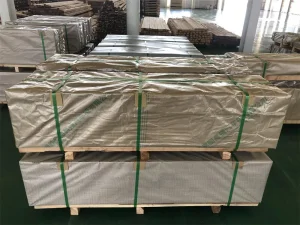
Located in Jinghai, Tianjin, our manufacturing plant benefits from direct access to major northern China steel supply chains and deep-water container terminals. Integrated packaging lines feature moisture-proof vapor corrosion inhibitor (VCI) wrapping and heavy-duty steel skid strapping for ocean transit.
CRGO & CRNGO Electrical Steel Grade Specifications
Standard parameters verified via Epstein Frame SST testing per IEC 60404-2 and ASTM A343 standards.
| Steel Category | Nominal Thickness | Standard Grade (IEC / AISI) | Max Core Loss $P_{1.7/50}$ (W/kg) | Min Flux Density $B_{8000}$ (Tesla) | Primary Application Field |
|---|---|---|---|---|---|
| Laser Domain Refined CRGO | 0.18 mm / 0.20 mm | 1820DR / 2020DR (Hi-B) | 0.65 - 0.75 | 1.92 - 1.95 | Ultra-High Efficiency Power Transformers (500kV+) |
| High Permeability CRGO (Hi-B) | 0.23 mm | 23Q085 / 23Q090 | 0.80 - 0.88 | 1.90 - 1.93 | Ecodesign Tier 2 Distribution Transformers |
| Regular Grain Oriented (CGO) | 0.27 mm / 0.30 mm | 27Q110 / 30Q120 | 1.00 - 1.18 | 1.85 - 1.88 | Standard Oil-Immersed & Dry-Type Transformers |
| Non-Grain Oriented (CRNGO) | 0.35 mm | 35W250 / 35W270 | 2.10 - 2.50 (at $P_{1.5/50}$) | 1.68 - 1.72 | High-RPM EV Traction Motors & Generators |
| Non-Grain Oriented (CRNGO) | 0.50 mm | 50W310 / 50W470 | 2.80 - 4.20 (at $P_{1.5/50}$) | 1.62 - 1.68 | Industrial AC Motors & Appliance Compressors |
Core Market Applications & Engineering Use Cases
Matching electromagnetic properties to real-world electrical equipment performance requirements.
Extra-High Voltage Power Grid
500kV to 1100kV UHV transmission substations require large power transformers where core loss translates directly into massive lifetime financial expenses. Laser-scribed 0.18mm and 0.23mm Hi-B CRGO coils provide peak efficiency and thermal stability under continuous operational loads.
Distribution & Cast Resin Transformers
Urban indoor substations, commercial buildings, and industrial plants rely heavily on 11kV/33kV dry-type cast resin transformers. Precision slit CRGO strip with burr height under 0.02mm eliminates localized overheating and prevents core insulation breakdown.
Renewable Inverters & Reactors
Solar PV central inverters, wind turbine step-up units, and high-frequency active power filter reactors demand steel with stable magnetic induction across higher harmonic spectrums, preventing saturation under dynamic voltage fluctuations.
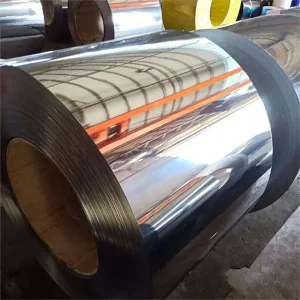
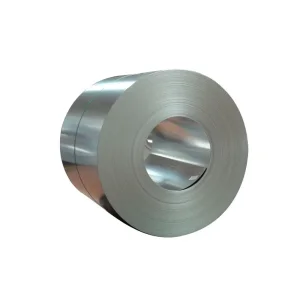
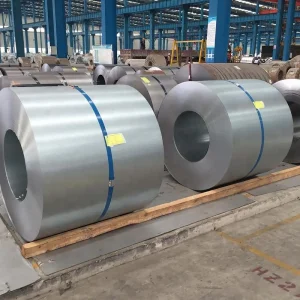
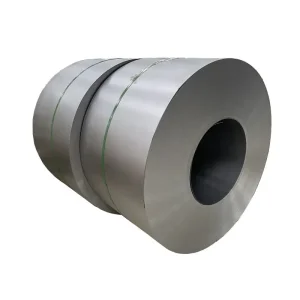
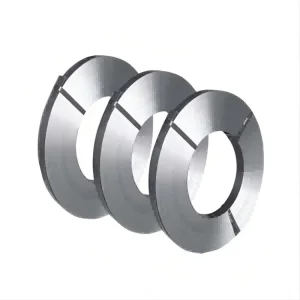
Cold Rolled Silicon Coils & Flat Steel Solutions
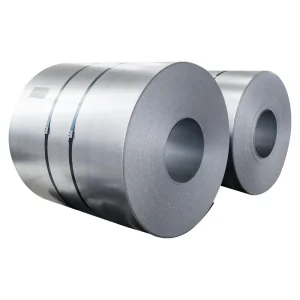
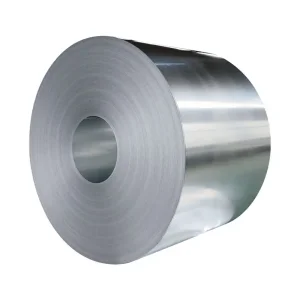
Precision-slit coils, electrical silicon sheets, and high-tensile strip products for global fabricators.
Technical Buyer's Checklist: Sourcing Cold Rolled Transformer Steel
Key parameters electrical engineers and procurement directors must verify before placing volume factory orders.
When sourcing silicon steel coils for power and distribution transformer manufacturing, selecting a factory based solely on base price per ton frequently leads to high rejection rates during core stacking and lamination winding. Global buyers must evaluate the following critical metallurgical and physical tolerances:
-
Slitting Burr Height Thresholds: Burr heights exceeding $0.02\text{mm}$ cut through Carlite surface insulation during core clamping, creating inter-laminar short circuits that exponentially increase eddy current losses and localized heating. Our factory maintains laser-guided precision rotary slitting knives to keep burrs under $0.015\text{mm}$.
-
Inter-Laminar Insulation Resistance (C-5 Coating): Inorganic phosphate-based Carlite coatings must resist temperatures up to 800°C during stress-relief annealing without flaking or degrading. Insulation resistance must consistently measure $>30\ \Omega\cdot\text{cm}^2/\text{lamination}$.
-
Geometric Strip Flatness & Camber: Edge wave or center buckle causes air gaps between stacked core laminations, reducing the overall core stacking factor below $95\%$ and increasing magnetostrictive vibration noise. SMSTEEL guarantees a stacking factor $\ge 96.5\%$.
Frequently Asked Technical & Sourcing Questions
Expert insights addressing common engineering, metallurgical, and international order specifications.