
High-Grade Electrical Steel & Coated Coils for Sydney Engineers
Direct mill shipments engineered to meet rigorous AS/NZS, IEC, and ASTM electrotechnical specifications.
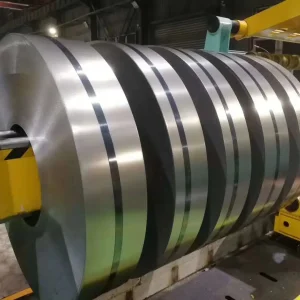
Wholesale 0.23mm CRGO Grain Oriented Electrical Silicon Steel Coil for Sydney Transformer Manufacturers

Wholesale CRNGO M310 M350 M470 M600 M800 Non-Grain Oriented Electrical Silicon Steel Coil Supplier
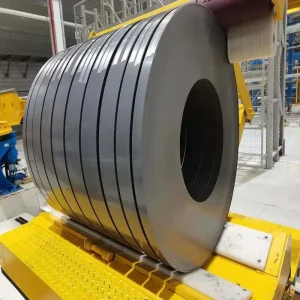
Wholesale Silicon Steel Coil (CRNGO) Precision Slit for Motor Stators & Rotors Sydney Market
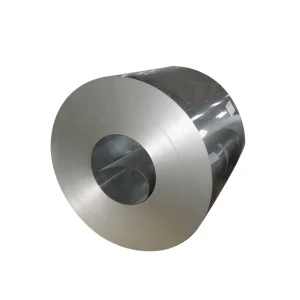
Wholesale Customized Spangle ASTM A653 DX51D Z275 Hot Dipped Galvanized Sheet for Electrical Enclosures
Sydney's Electrical Steel Market Landscape & Megatrends
Navigating energy transition, grid decarbonization, and industrial electrification across Greater Sydney and New South Wales.
Grid Modernization & NSW REZ
As New South Wales transitions toward its Renewable Energy Zones (Central-West Orana, New England, Hunter-Central Coast), Transmission System Operators (TSOs) like Transgrid and distribution networks like Ausgrid and Endeavour Energy require step-up transformers with low excitation currents and minimal standby core losses, driving massive demand for ultra-thin 0.23mm and 0.27mm CRGO electrical steel.
Western Sydney Aerotropolis Hub
The rapid expansion of light manufacturing, automated logistics centers, data infrastructure, and advanced engineering hubs around Badgerys Creek and the Western Sydney Aerotropolis has spurred localized production of high-efficiency HVAC systems, industrial drive motors, and backup power UPS transformers requiring fully processed non-grain oriented (CRNGO) silicon steel.
Electrified Transit & E-Mobility
The Sydney Rail Network overhaul, coupled with NSW's transition to zero-emission bus fleets and electric vehicle (EV) charging corridors, demands high-frequency CRNGO grades (e.g., 0.20mm to 0.35mm thin-gauge laminations) capable of withstanding high rotational speeds and minimizing eddy current losses under high-frequency pulse-width modulation (PWM) inverter drives.
CRGO vs. CRNGO Silicon Steel: Physical Properties & Magnetic Physics
A comprehensive analysis of crystallographic texture, domain wall movement, and electromagnetic loss mechanisms.
Electrical steel (also known as silicon steel, transformer steel, or soft magnetic steel) is a specialized iron-silicon alloy tailored to exhibit specific magnetic properties, including high magnetic permeability, low coercivity, and minimal core losses (iron loss). The addition of silicon ($1.5\%$ to $3.5\%$) significantly increases electrical resistivity ($\rho$), which suppresses eddy currents induced by alternating magnetic fields without sacrificing saturation magnetization.
1. Cold-Rolled Grain-Oriented (CRGO) Steel
CRGO electrical steel undergoes a series of precise cold-rolling and secondary recrystallization annealing processes to align its grain structure along the [001] easy magnetization axis (Goss texture: $\{110\}\langle 001\rangle$). This highly directional crystallographic alignment allows the material to achieve magnetic flux densities exceeding $1.90\text{ T}$ with exceptionally low core loss when magnetized along the rolling direction.
- Primary Applications: Power transformers, distribution transformers, reactor cores, and large hydro-generators.
- Key Thickness Gauges: $0.18\text{ mm}$, $0.20\text{ mm}$, $0.23\text{ mm}$, $0.27\text{ mm}$, and $0.30\text{ mm}$.
- Surface Coating: Inorganic C-5 insulation coating offering high temperature resistance and excellent inter-laminar resistance.
2. Cold-Rolled Non-Grain-Oriented (CRNGO) Steel
CRNGO electrical steel exhibits an isotropic or quasi-isotropic magnetic behavior within the rolling plane. Through controlled hot rolling, cold reduction, and final annealing, the crystal grains are oriented randomly (non-textured), ensuring uniform magnetic permeability and low core losses regardless of whether the magnetic flux travels parallel or transverse to the rolling direction.
- Primary Applications: Electric vehicle (EV) traction motors, rotating electric machinery, AC/DC industrial motors, hermetic compressor motors, and small power transformers.
- Key Standard Grades: M310-50A, M350-50A, M470-50A, M600-50A, and high-frequency ultra-thin grades (0.20mm / 0.35mm).
- Surface Coating: Organic/inorganic hybrid coatings (C-3 / C-6) optimizing stampability, die wear, and weldability.
Electromagnetic Core Loss Breakdown: $P_{total} = P_h + P_e + P_a$
When selecting electrical silicon steel for transformer or motor core laminations in the Sydney market, engineers must evaluate total core loss ($P_{total}$) at operating frequencies ($50\text{ Hz}$ standard for Australia, or up to $1\text{ kHz}$ for EV inverters):
- Hysteresis Loss ($P_h$): Caused by the energy expended to flip magnetic domains during alternating AC cycles. Proportional to frequency ($f$) and hysteresis loop area ($P_h \propto f \cdot B_{max}^n$). Minimized by high chemical purity, low interstitial carbon ($<0.003\%$), and optimal grain size.
- Classical Eddy Current Loss ($P_e$): Induced by Faraday's law of induction within the conductive steel. Proportional to the square of lamination thickness ($t^2$) and square of frequency ($f^2$), according to $P_e \propto \frac{t^2 \cdot f^2 \cdot B_{max}^2}{\rho}$. This underscores why reducing thickness from $0.35\text{ mm}$ to $0.23\text{ mm}$ or $0.18\text{ mm}$ yields dramatic efficiency gains in high-frequency applications.
- Anomalous (Anomalic) Loss ($P_a$): Microstructural energy dissipation resulting from domain wall motion. Advanced laser-scribing or plasma treatment on CRGO surfaces refines domain spacing, reducing $P_a$ by up to $15\%-20\%$.
| Material Category | Standard / Grade Designation | Nominal Thickness (mm) | Max Core Loss @ 1.5T 50Hz (W/kg) | Max Core Loss @ 1.7T 50Hz (W/kg) | Min Magnetic Induction B8000 (Tesla) | Stacking Factor (%) |
|---|---|---|---|---|---|---|
| CRGO (High Permeability) | 23R075 / B23R075 | 0.23 | 0.52 - 0.58 | 0.75 - 0.82 | 1.91 | ≥ 95.5 |
| CRGO (Conventional) | 27G120 / M120-27G | 0.27 | 0.85 - 0.92 | 1.20 - 1.28 | 1.88 | ≥ 96.0 |
| CRGO (Conventional) | 30G130 / M130-30G | 0.30 | 0.92 - 1.02 | 1.30 - 1.38 | 1.85 | ≥ 96.5 |
| CRNGO (Low Loss Motor) | M310-50A (EN 10126) | 0.50 | 3.10 Max | - | 1.60 (B5000) | ≥ 97.0 |
| CRNGO (General Motor) | M350-50A / 50WW350 | 0.50 | 3.50 Max | - | 1.62 (B5000) | ≥ 97.0 |
| CRNGO (Standard Industrial) | M470-50A / 50WW470 | 0.50 | 4.70 Max | - | 1.64 (B5000) | ≥ 97.2 |
| CRNGO (High Frequency EV) | 20NOX1200 (Thin Gauge) | 0.20 | 1.20 @ 1.0T 400Hz | - | 1.65 (B5000) | ≥ 95.0 |
Sydney Infrastructure Engineering Scenarios
Tailored electrotechnical steel configurations solving specific power delivery and electromechanical engineering challenges across NSW.
Substation & Distribution Transformers (AS/NZS 60076)
Distribution networks throughout Greater Sydney (from Botany Bay to Penrith and the Blue Mountains) utilize thousands of pole-mounted and pad-mounted oil-immersed transformers. Utilizing prime 0.23mm CRGO coils (e.g., 23R075) with inorganic C-5 insulation guarantees ultra-low no-load losses, enabling utilities to satisfy strict Australian MEPS (Minimum Energy Performance Standards) under AS/NZS 2374 / AS 60076 series.
- Low acoustic noise signature suitable for suburban Sydney residential zoning.
- High inter-laminar resistance preventing thermal breakdown under harmonic distortion.
Industrial Electric Drives & Commercial HVAC Rotors
Sydney's commercial tower boom and industrial park developments rely heavily on high-efficiency pumps, ventilation systems, and elevator traction motors. Our CRNGO M310-50A and M350-50A coils offer exceptional punchability, minimal tool wear during progressive stamping operations, and uniform magnetic flux distribution across 360 degrees of rotation.
- Optimized organic C-3 coating extends die life up to 200,000 punch cycles per sharpening.
- Excellent flat-lay tolerance preventing burrs and inter-sheet shorting during core stacking.
Technology Roadmap & Decarbonization (2025–2035)
Next-generation soft magnetic materials aligning with Australia's Net-Zero targets and green steel manufacturing.
Laser-Scribed Domain Refinement
Utilizing non-contact Nd:YAG laser etching to introduce periodic thermal stress lines across the surface of CRGO coils. This breaks micro-magnetic domains into narrower sub-domains, dramatically suppressing anomalous core loss ($P_a$) and yielding core loss figures as low as $0.65\text{ W/kg}$ at $1.7\text{ T} / 50\text{ Hz}$.
Ultra-Thin Silicon Steel ($0.10\text{–}0.20\text{ mm}$)
To support high-speed EV traction motors operating at $15,000\text{ to }22,000\text{ RPM}$ and frequencies above $800\text{ Hz}$, our developmental thin-gauge non-oriented silicon steel reduces high-frequency eddy current losses by over $40\%$ compared to standard $0.35\text{ mm}$ laminations.
Green Silicon Steel & Scope 3 Reduction
Manufactured via Hydrogen-based Direct Reduced Iron (H2-DRI) and Electric Arc Furnace (EAF) steelmaking routes powered by renewable energy. Supplying carbon-neutral electrical steel coils directly to Sydney importers assists local OEMs in reducing embodied carbon and Scope 3 supply chain emissions.
Compliance, Testing & Port Botany Maritime Logistics
Rigorous quality verification and seaworthy export packaging tailored for Australian port handling.
Standard Electrotechnical Testing Protocols
Every batch of electrical silicon steel shipped to Sydney undergoes comprehensive mill laboratory testing prior to dispatch, with full Mill Test Certificates (MTC) provided according to EN 10204 3.1 / 3.2:
- Epstein Frame Testing (IEC 60404-2): Standardized electromagnetic measurement of magnetic polarization, specific core loss (W/kg), and excitation magnetic field power (VA/kg).
- Single Sheet Tester (SST) (IEC 60404-3): Verification of magnetic uniformity across full-width continuous master coils.
- Franklin Insulation Resistance (IEC 60404-11): Testing surface coating electrical resistance to prevent inter-laminar circulating eddy currents.
- Dimensional & Geometric Tolerances: Laser micrometer tracking of gauge thickness uniformity, crown, camber, edge burr height ($<0.02\text{ mm}$), and longitudinal coil flat-lay.
Seaworthy Packaging for Tasman & Pacific Shipping Routes
Electrical silicon steel is highly sensitive to moisture, oxidation, and mechanical deformation during ocean transit. Our standardized export packaging guarantees pristine delivery into Port Botany, Sydney:
- VCI (Volatile Corrosion Inhibitor) Film: Full moisture-proof sealed wrapping preventing marine humidity oxidation.
- Corrugated Galvanized Outer Armor: High-impact steel outer shell protecting coil edges and outer circumferences.
- Fumigated Wooden Skids / Eye-Vertical (EOV) or Eye-Horizontal (EOH): Heavy-duty timber skids complying with ISPM 15 biosecurity standards for Australian Department of Agriculture compliance.
Frequently Asked Questions for Sydney Sourcing Managers
Expert answers addressing electrical steel selection, local Australian standards, slitting customization, and shipping logistics.
Q: What is the primary operational difference between CRGO and CRNGO electrical steel in grid applications?
CRGO (Grain-Oriented) steel is metallurgically engineered to optimize magnetic permeability along the rolling direction, making it essential for static electromagnetic machinery like power and distribution transformers. CRNGO (Non-Grain-Oriented) steel offers uniform magnetic properties in all planar directions, making it ideal for rotating equipment like electric motors, generators, and rotors where the magnetic flux vector rotates continuously.
Q: Do your electrical silicon steel products comply with Australian Standard AS/NZS 60076?
Yes. Our CRGO electrical silicon steel coils are manufactured in strict compliance with IEC 60404-8-7 / EN 10107 specifications, which form the material baseline required for transformer cores certified under AS/NZS 60076 and Australian Minimum Energy Performance Standards (MEPS).
Q: What custom precision slitting widths can be supplied for Sydney manufacturers?
We provide mill-direct precision slitting from master coils ($1000\text{ mm}\text{--}1250\text{ mm}$ width) down to narrow slit coils as fine as $15\text{ mm}$ width, with strict edge burr controls ($<0.015\text{ mm}$) and tight width tolerances ($\pm 0.10\text{ mm}$), ready for immediate feeding into high-speed stamping presses or transformer core winding machines.
Q: What insulation coatings are offered, and how do they impact weldability and stamping?
We offer organic (C-3), inorganic (C-5), and hybrid organic-inorganic (C-6) coatings. C-5 inorganic coating is ideal for CRGO transformers requiring high thermal resistance during stress-relief annealing. C-3 organic coating is preferred for CRNGO motor laminations because it acts as a punch lubricant, dramatically extending die tool life during high-speed stamping.
Q: What is the typical lead time for ocean container shipments arriving at Port Botany, Sydney?
Standard manufacturing and precision slitting take approximately 15 to 25 days, with direct maritime container transit to Port Botany taking approximately 14 to 18 days. Total door-to-port lead time typically ranges between 30 and 42 days from order confirmation.
Comprehensive Steel Coil, Pipe & Plate Inventory
Explore our wider range of high-strength structural pipes, pickled coils, galvannealed sheets, and alloy coated products.
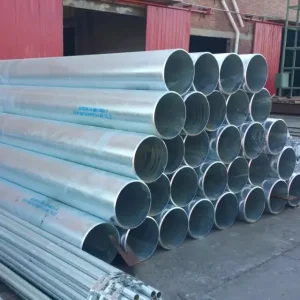
High-Quality High Strength A53 A106GR.B Spiral Steel Pipe for Sydney Infrastructure Construction
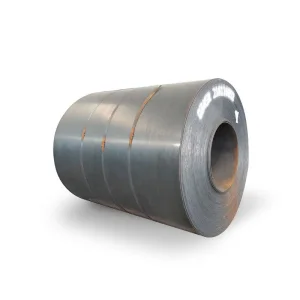
High-Quality Hot Rolled Pickled & Oiled (HRPO) Steel Heavy Gauge Wide Plate Supplier
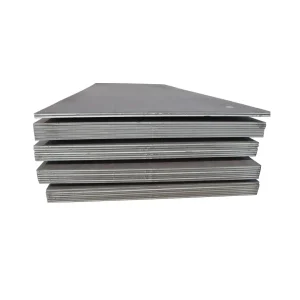
Wholesale Hot Rolled Carbon Steel Plates Q235, Q195, Q345, S355 for Sydney Steel Fabricators

Galvannealed Steel Coil ZF60 ZF275 Zinc-Iron Alloy DC51D Dx51D for Superior Welding & Coating

Wholesale Galvannealed Steel Coil DC51D Dx51d ZF60 ZF275 Zinc-Iron Alloy Coating Factory
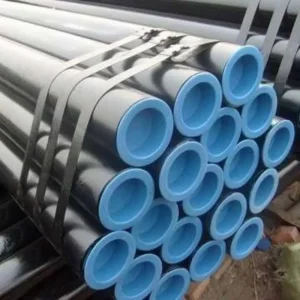
Seamless Carbon Steel Pipe for High-Pressure Structural Applications in Sydney Projects
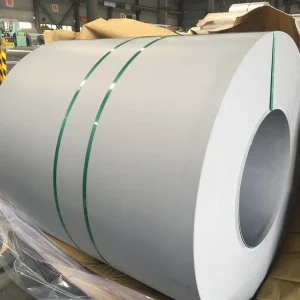
Wholesale Electro-Galvanized Steel Plate SECC/SECD/SECE 20/20 Coating Supplier

ZM AZM Alloy Coated Steel Sheet 275g Zinc Aluminum Magnesium for NSW Solar Mounting Frames
Request Technical Datasheets & Mill Pricing for Sydney Projects
Connect directly with our senior electrotechnical steel engineers. We provide comprehensive core loss curves, slitting specs, sample coils, and competitive CIF Port Botany quotes within 24 hours.
Send Inquiry Now