
Featured Industrial Steel Products & Alloy Solutions
Explore our premium-grade steel coils, pipes, structural hollow sections, and specialty packaging materials manufactured to international ISO, ASTM, EN, and JIS standards.
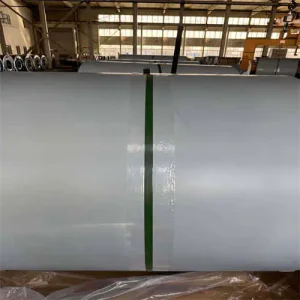
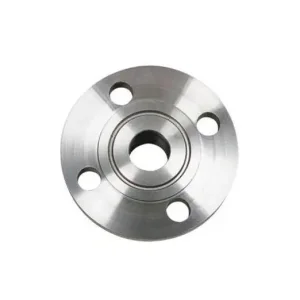
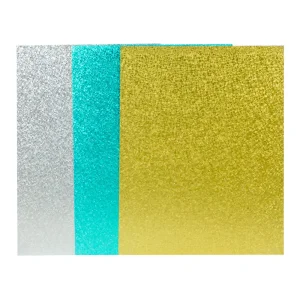
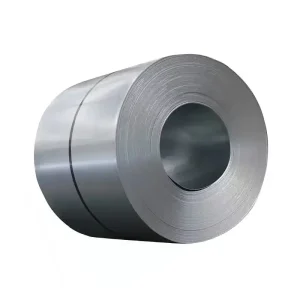
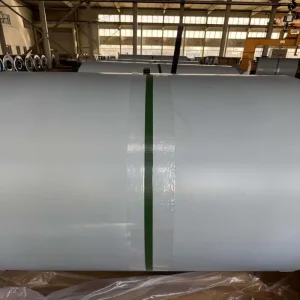
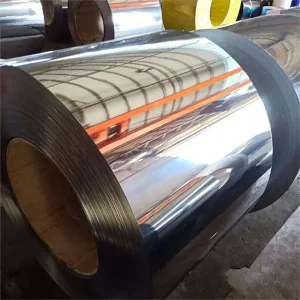
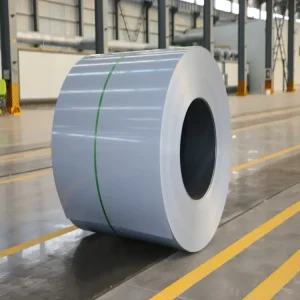
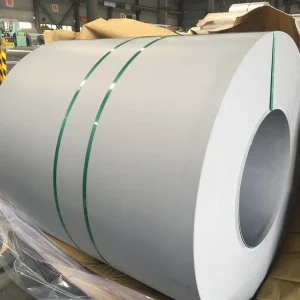
Global Industrial Landscape of Zinc-Iron Alloy Coils (Galvannealed GA)
In modern high-precision manufacturing, traditional hot-dip galvanized (GI) coatings often present technical bottlenecks—specifically in spot-welding electrode degradation, paint cratering, and intermetallic powdering under complex deep-drawing operations. **Zinc-Iron Alloy Coils** (commonly designated as **Galvannealed or GA steel** under ASTM A653 / EN 10346) address these challenges by converting the pure molten zinc coating into an iron-zinc intermetallic compound layer through precise post-dip induction annealing.
Automotive BIW Standardization
Over 65% of global Body-in-White (BIW) structures rely on GA coils due to their superior electrical resistance welding cycles. The high melting point of the Zn-Fe alloy phase ($1050^\circ\text{C}$ vs. $419^\circ\text{C}$ for pure zinc) prevents electrode brassing and tip erosion.
Enhanced Paint Adhesion
The micro-porous texture of the iron-zinc crystal matrix offers an optimal mechanical keying surface for automotive E-coat (electrophoretic deposition) and primer systems, achieving zero paint delamination in 1500-hour cyclic corrosion testing.
Cost Efficiency & Procurement Flexibility
By optimizing coating weight to ZF40-ZF90 ($30\text{--}60\,\text{g/m}^2$ per side), manufacturers cut overall zinc consumption while maintaining superior sacrificial corrosion protection compared to standard electro-galvanized substrates.
Microstructural Phase Transformation in Galvannealed Steel Coils
The performance of wholesale zinc-iron alloy coils is fundamentally determined by the kinetics of the solid-state interdiffusion reaction between the molten zinc bath and the steel substrate during the annealing process ($500^\circ\text{C}\text{--}560^\circ\text{C}$). Controlling the formation of specific Fe-Zn intermetallic phases is key to mitigating powdering (coating detachment) and flaking.
Critical Metallurgical Principle: The Phase Equilibrium Equation
When the iron mass fraction in the coating is maintained strictly between **8% and 12%**, the coating micro-architecture forms a dense, well-balanced **Delta ($\delta$) phase** matrix. Excess iron ($>12\%$) promotes brittle **Gamma ($\Gamma_1 / \Gamma$) phases** at the substrate interface leading to flaking, while insufficient iron ($<8\%$) leaves residual unalloyed **Zeta ($\zeta$) phase** on the surface, causing die-galling during stamping.
Gamma ($\Gamma_1$ & $\Gamma$) Phase
Iron Content: 18% – 28% Fe
Crystal Structure: Cubic (BCC / FCC)
Mechanical Behavior: Highly brittle, thin interface layer ($<0.5\,\mu\text{m}$). If over-annealed, excessive Gamma thickness induces micro-cracking and interfacial flaking under high press strain.
Delta ($\delta_1$) Phase — Target Structure
Iron Content: 7% – 12.5% Fe
Crystal Structure: Hexagonal Compact (HCP)
Mechanical Behavior: Excellent balance of hardness and ductility. Occupies 80%+ of a prime-grade GA coating, providing optimal powdering resistance and cathodic corrosion defense.
Zeta ($\zeta$) Phase
Iron Content: 5.5% – 6.0% Fe
Crystal Structure: Monoclinic
Mechanical Behavior: Soft, columnar structure. While useful for mild bending, surface presence of Zeta phase increases friction coefficient during press-forming and clogs stamping dies.
Galvannealed (GA) vs. GI, EG & ZAM Coils: Industrial Comparison Matrix
Selecting the optimal coated steel coil requires evaluating microstructural, mechanical, and manufacturing performance factors. The matrix below contrasts Zinc-Iron Alloy Coils against traditional coated variants.
| Coating Characteristic | Zinc-Iron Alloy (GA) | Hot-Dip Galvanized (GI) | Electro-Galvanized (EG) | Zinc-Alum-Mag (ZAM) |
|---|---|---|---|---|
| Coating Composition | Zn-Fe Alloy (8-12% Fe) | 99%+ Pure Zinc | 99.9% Pure Zinc | Zn + 11% Al + 3% Mg |
| Resistance Spot Weldability | Superior (3000+ Spots) | Moderate (800-1200 Spots) | Good (1500 Spots) | Moderate (1000 Spots) |
| Paintability & Phosphatizability | Outstanding (Direct E-coat) | Requires Pre-treatment | Excellent | Requires Special Primer |
| Surface Hardness (HV) | 260 – 350 HV | 60 – 100 HV | 70 – 90 HV | 150 – 200 HV |
| Press Forming / Powdering | Requires $\delta$-Phase Control | Galling Susceptible | High Formability | Good Formability |
| Cut-Edge Cathodic Protection | Good (Synergistic Fe-Zn) | Excellent | Moderate (Thin Coating) | Exceptional (Self-healing) |
| Cost Profile (Wholesale) | Highly Cost-Effective | Base Economy Standard | High Electrical Cost | Premium Niche Coating |
Global Enterprise Demand & Regional Sourcing Breakdown
Purchasing managers and supply chain directors across Tier-1 automotive and industrial manufacturing sectors face evolving tariff regimes, strict localized content rules, and stringent quality assurance mandates when procuring zinc-iron alloy coils.
North America (NAFTA / USMCA)
Driven by automotive light-weighting initiatives and EV battery frame enclosures. Sourcing specifications demand **ASTM A653 A40 (ZF120) and A60 (ZF180)** coatings on Ultra-High Strength Steels (AHSS DP590GA, DP780GA). Strict mill certificate validation (MTC 3.1/3.2) is mandatory for tariff classification compliance.
European Union & UK Market
Regulated by **EN 10346 DX54D+ZF to DX57D+ZF** standards. Procurement is heavily focused on Carbon Border Adjustment Mechanism (CBAM) compliance, requiring mills to provide verified embodied carbon footprint data along with REACH and RoHS certification for surface passivation oils.
Asia-Pacific Industrial Hubs
Centered around **JIS G3302 (F04, F06, F08)** grades for high-volume appliance manufacturing (washing machine drums, compressor housing) and commercial vehicles. Wholesale procurement prioritizes width tolerances within $\pm 0.5\,\text{mm}$ and oiling levels ($500\text{--}1500\,\text{mg/m}^2$) to avoid transit rust in tropical maritime freight.
Sector-Specific Industrial Solutions Utilizing Zinc-Iron Alloy Coils
From complex automotive stampings to heavy-duty electrical control cabinets, zinc-iron alloy coils provide targeted material properties designed for harsh manufacturing environments.
Automotive Body-in-White (BIW)
Used extensively in door inner panels, hood reinforcements, floor pans, and wheelhouse structures. The high micro-hardness prevents die galling while maintaining high-speed robotic spot welding speeds of over 30 welds per minute without tip replacement.
High-End Home Appliance Housings
Ideal for premium refrigerator side panels, washing machine cabinets, and microwave structural frames. The micro-rough matte surface allows direct powder-coating application with up to 20% lower paint consumption while achieving zero orange-peeling defect.
Electrical Switchgear & Transformer Cases
Provides durable structural integrity for outdoor power distribution boxes and server rack frames. The Zn-Fe alloy coating resists atmospheric corrosion and withstands post-punching and bending without micro-flaking at 0T to 2T bend radii.
Technical Roadmap & Sustainable Metallurgy (2025–2035)
Advanced steel mills are integrating artificial intelligence and green hydrogen reduction technologies to elevate the quality, consistency, and sustainability of wholesale zinc-iron alloy coils.
AI-Driven Online Phase Monitoring
Integration of real-time X-ray Diffraction (XRD) sensors inside the galvannealing furnace to dynamic-adjust induction heating temperature, maintaining Delta phase purity within $\pm 0.5\%$ Fe margin.
Ultra-High-Strength GA (1200+ MPa)
Development of third-generation Advanced High Strength Steel (3rd Gen AHSS) GA coils for EV crash-box structures, balancing extreme tensile strength ($>1200\,\text{MPa}$) with zero powdering under severe deformation.
Zero-Carbon Hydrogen Substrate
Transitioning substrate coil manufacturing to 100% Direct Reduced Iron (DRI) powered by green hydrogen, reducing embedded carbon emissions of GA coils to below $0.4\,\text{t CO}_2\text{/t Steel}$.
Quality Assurance Framework & International Compliance Standards
To guarantee that every master coil delivered meets international manufacturing standards, our wholesale supply chain follows strict quality management protocols aligned with IATF 16949 and ISO 9001 certifications.
Chemical & Metallurgical Testing
Method: Spectrometric Acid-Dissolution Analysis
Testing Standard: ASTM A754 / ISO 1460
Verifies total iron mass percentage ($8.0\%\text{--}12.0\%$) and confirms uniform coating mass across drive side, center, and operator side of the strip.
Powdering & Flaking Resistance
Method: 60° V-Bending & Double Draw Bead Testing
Acceptance Criteria: Coating mass loss $< 5\,\text{g/m}^2$ under high-pressure friction strain, ensuring zero peeling during automotive press tooling.
Cyclic Corrosion & Salt Spray
Method: ASTM B117 / ISO 9227 Corrosion Chamber
Benchmarking: Minimum 1200 hours to red rust initiation on phosphated and painted samples; 72 hours for unpainted oil-passivated coils.
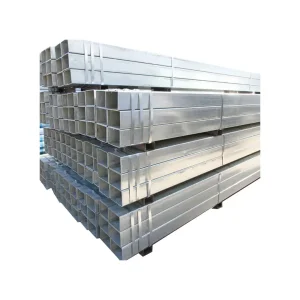
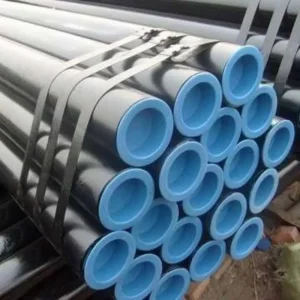
Comprehensive Steel Piping & Coils Portfolio
Browse additional high-demand structural tubes, seamless pipes, and coated sheet products available for wholesale worldwide distribution with mill-direct pricing.
Frequently Asked Procurement & Metallurgical Questions
Find authoritative answers regarding product specifications, ordering parameters, quality assurance testing, and international freight logistics.