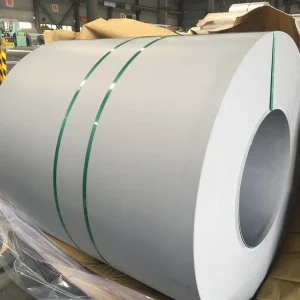
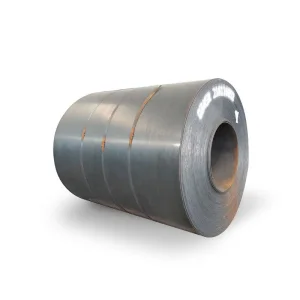
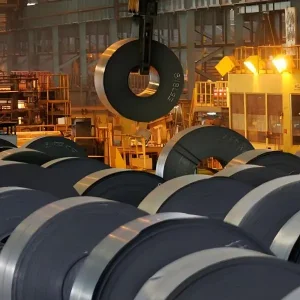
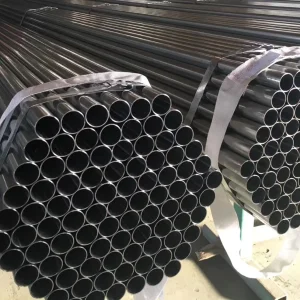
Factory-Direct Cold Rolled & Coated Steel Solutions
Featured export-grade cold rolled coils, strips, sheets, and structural profiles direct from China production facilities.
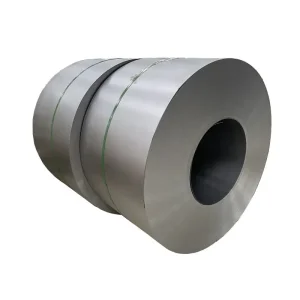


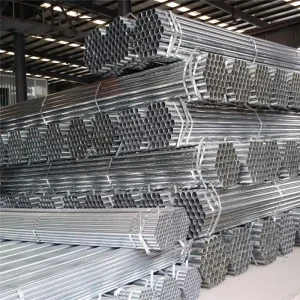


How Cold Rolled Steel Is Made: Step-by-Step Metallurgical Process
Understanding the transition from hot-rolled black coil substrate to high-precision, smooth-finish cold rolled steel sheet.
Pickling & Surface Descaling
The manufacturing process begins with Hot Rolled (HR) steel coil substrate. Prior to cold reduction, the iron oxide scale (Fe₃O₄, Fe₂O₃, and FeO) formed during hot rolling must be completely removed. The coil passes through a continuous hydrochloric acid (HCl) pickling line at 70°C–85°C, followed by water rinsing and electrostatic oiling. This step ensures an ultra-clean steel substrate free from surface inclusions.
Cold Reduction Rolling Mill
The pickled strip enters continuous Tandem Cold Reduction Rolling Mills (such as 5-stand 6-high mills or Sendzimir cluster mills for stainless steel). Unlike hot rolling, cold reduction takes place below the steel's recrystallization temperature (at room temperature). Hydraulic Roll Gap Control (AGC) applies compressive stress exceeding the steel's yield strength, reducing thickness by 50% to 85% while drastically increasing yield strength via dislocation hardening.
Work Hardening Mechanics
During cold rolling, severe plastic deformation elongates the ferrite grain structure along the rolling direction. Dislocation density increases by several orders of magnitude (from 10⁸ to 10¹² cm⁻²). While this mechanical work hardening raises hardness (up to HRB 85–95) and tensile strength, it drastically reduces ductility, producing a brittle intermediate state known as Full Hard (FH) Steel.
Recrystallization Annealing
To restore formability and ductility, the full-hard strip undergoes thermal treatment in a Continuous Annealing Line (CAL) or Hydrogen Batch Annealing Furnace (BAF). Heated to 680°C–780°C under a protective 100% H₂ or N₂/H₂ reducing atmosphere, the distorted grain matrix undergoes recovery, recrystallization, and grain growth. This eliminates internal residual stresses and establishes optimum grain orientation for deep drawing.
Skin-Pass / Temper Rolling
Post-annealing, the steel receives a light cold-reduction pass (0.5% to 2.0% draft) in a Temper Mill. This minor deformation serves three critical engineering functions: it eliminates the sharp discontinuous yield point (preventing stretcher strain marks / Lüders lines during stamping), imprints precise surface roughness (Ra value tuning from bright to dull), and corrects strip flatness.
Tension Leveling & Slitting
Finally, the cold rolled strip is processed through a tension leveler to eliminate edge waves and center buckles. It is inspected via automated optical flaw detectors, coated with anti-rust oil (or chemical passivation), slit to specific customer widths, and tightly coiled with waterproof protective packaging ready for global export.
Mechanical Properties & Grade Performance Comparison Matrix
Comprehensive metallurgical benchmark parameters comparing hot-rolled, full-hard, and annealed cold rolled steel grades.
| Steel Grade Category | Standard Equivalents | Yield Strength (MPa) | Tensile Strength (MPa) | Elongation A50 (%) | Hardness (HRB) | Primary Fabrication Characteristics |
|---|---|---|---|---|---|---|
| Full Hard (FH) CR | ASTM A1008 Full Hard / SPCC-1D | ≥ 550 | ≥ 580 | ≤ 3% | ≥ 85 HRB | Unannealed, ultra-high strength, flat unbent roll-forming |
| Commercial Quality (CQ) | ASTM A1008 CS Type B / DC01 / SPCC | 140 – 280 | 270 – 410 | ≥ 28% | ≤ 65 HRB | Standard bending, shallow forming, cabinet enclosures |
| Drawing Quality (DQ) | ASTM A1008 DS Type B / DC03 / SPCD | 140 – 240 | 270 – 370 | ≥ 34% | ≤ 57 HRB | Moderate deep drawing, automotive interior brackets |
| Deep Drawing (DDQ) | ASTM A1008 DDS / DC04 / SPCE | 120 – 210 | 270 – 350 | ≥ 38% | ≤ 50 HRB | Complex deep drawing, oil pans, appliance shell stampings |
| Extra Deep Drawing (EDDQ) | ASTM A1008 EDDS / DC06 / IF Steel | 100 – 170 | 260 – 330 | ≥ 42% | ≤ 45 HRB | Interstitial-Free (IF) steel, extreme stretch-draw ratios |
| High-Strength Low-Alloy (HSLA) | ASTM A1008 HSLAS / HC340LA | 340 – 420 | 410 – 510 | ≥ 21% | 70 – 82 HRB | Structural weight reduction, crash-resistant automotive framing |
Industry 4.0 Roadmap: The Future of Cold Rolling Technology
How next-generation smart manufacturing, closed-loop AI control, and green steel technology are reshaping factory production.
AI Closed-Loop AGC Gauge Control
Integrating X-ray radiometric sensors with real-time hydraulic actuators allows rolling mills to maintain micro-scale gauge precision within ±0.003 mm across a 1500 mm strip width, even at rolling speeds exceeding 1,200 meters per minute.
100% Hydrogen Annealing
Replacing traditional nitrogen-based annealing gas with pure hydrogen (H₂) accelerates thermal convection by 500%. This yields ultra-uniform grain recrystallization while eliminating surface carbon deposition for superior paint adhesion.
Green Steel & CBAM Compliance
By pairing Electric Arc Furnace (EAF) scrap melting with renewable hydrogen reduction pathways, modern cold rolling factories are cutting embedded carbon footprints by up to 70%, meeting EU CBAM decarbonization benchmarks.
Macro-Industry Application Solutions
Engineered cold rolled substrate solutions custom-tailored for demanding global industrial sectors.
Automotive Lightweighting & Stamping
Supplying High-Strength Low-Alloy (HSLA) and Galvannealed (ZF) cold rolled sheets for automotive body-in-white (BIW), door panels, and structural chassis components where formability and crash energy absorption are critical.
HVAC & Home Appliance Cabinets
Ultra-smooth Electro-Galvanized (SECC/SECD) and Cold Rolled Commercial steel sheets designed for electrostatic powder coating, providing zero surface defect finishes for refrigerator doors, washer panels, and air conditioners.
Solar Mounting & Renewable Energy
Heavy-gauge Zinc-Aluminum-Magnesium (ZAM / ZM275) coated steel profiles offering superior cut-edge self-healing protection in harsh C4/C5 atmospheric solar park installations.
Electrical Motors & Transformer Cores
Specialized Cold Rolled Non-Grain Oriented (CRNGO) and Grain Oriented (CRGO) electrical silicon steel coils featuring ultra-low core loss and high magnetic permeability for energy-efficient transformers and EV traction motors.
China Factory 4.0: Supply Chain Resilience & Cost Efficiency
Why sourcing cold rolled steel from integrated Tianjin mill clusters guarantees quality, speed, and competitive pricing.
Tianjin Steel Hub Logistics & Raw Material Integration
Situated in the Jinghai Industrial Park of Tianjin, SMSTEEL leverages direct pipeline integration with upstream blast furnace hot-rolling mills (such as Shougang, Tangsteel, and Baotou Steel). This localized ecosystem eliminates inter-factory transportation costs and guarantees high-grade HR coil substrate availability year-round.
With direct proximity to Tianjin Port (Xingang), cold rolled steel coils, pre-galvanized pipes, and sheets are loaded onto containerized vessels or bulk carriers within 24 hours of final tension leveling, significantly cutting lead times for international buyers.
Advanced Quality Assurance & Lab Testing Protocol
Every cold rolled manufacturing batch undergoes rigorous quality control checkpoints certified under ISO 9001 and ISO 14001 frameworks:
- Spectrometric Chemical Analysis: Verifying C, Mn, P, S, Si, and micro-alloying elements.
- Tensile & Formability Testing: Universal testing machines check Yield Strength, Tensile Strength, and n/r values.
- Surface Roughness (Ra): Profilometers maintain surface texture for uniform paint absorption.
- Coating Weight Verification: X-ray fluorescence gauges measure zinc/alloy deposition down to g/m².
Global Enterprise Sourcing Strategy & TCO Optimization
Key risk-mitigation factors for international steel buyers when evaluating wholesale cold rolled steel manufacturers.
EN 10204 3.1 / 3.2 Certification
Never compromise on Mill Test Certificates (MTC). Direct factory sourcing ensures full heat-number traceability back to the liquid steel ladle, validated by independent third-party inspection bodies such as SGS, Bureau Veritas, or TÜV.
Anti-Corrosion VCI Protection
Ocean freight exposes steel coils to extreme humidity and salt air. Cold rolled steel must be wrapped with Volatile Corrosion Inhibitor (VCI) paper, sealed in galvanized steel outer casing, equipped with corner guards, and bound with heavy-duty radial steel straps.
ASTM A568 / EN 10131 Standard
Ensure your factory supplier complies with tight dimensional tolerances on thickness, width, camber, and flatness. Precise mill tolerances prevent downstream machine jams and die wear during automated stamping operations.
Cold Rolled Steel Manufacturing Q&A (FAQ)
Expert engineering answers to common procurement, technical, and manufacturing inquiries.
What is the core difference between Hot Rolled and Cold Rolled Steel?
What is Full Hard (FH) cold rolled steel vs Annealed cold rolled steel?
Why is Skin-Pass (Temper Rolling) necessary after annealing?
How do factories prevent rust during maritime transit?
Can cold rolled steel be directly welded or painted?
What international quality standards can your manufacturing lines meet?
Complete Steel Product Portfolio & Custom Processing
Explore our full lineup of hot-rolled pickled, electro-galvanized, structural, and electrical silicon steel products.