
Primary Structural & Coated Steel Inventory
Mill-direct certified inventory manufactured under rigorous quality control standards. Select a specialized grade to inspect detailed geometric, chemical, and mechanical tolerances.
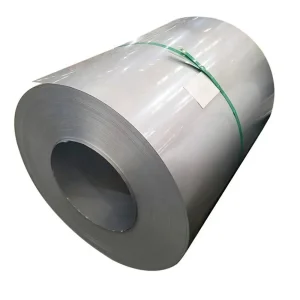


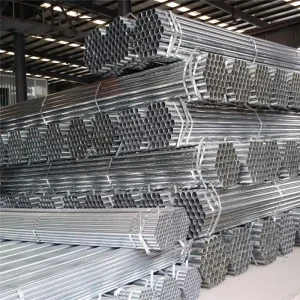
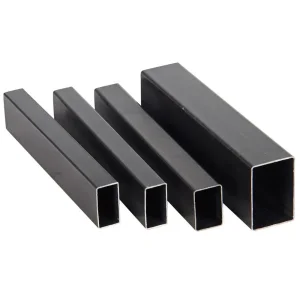
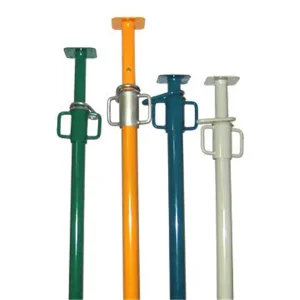

Industry Executive Overview: The Evolution of Modern ERW Manufacturing
Electric Resistance Welded (ERW) and High-Frequency Welded (HFW) steel tubular products form the structural backbone of modern civil infrastructure, energy transportation, automotive framing, and agricultural engineering.
Metallurgical Precision & Continuous Roll Forming
Modern wholesale High Quality ERW steel pipe manufacturing has transitioned from low-frequency processes to state-of-the-art High-Frequency Induction (HFI) welding operating at frequencies between 300 kHz and 500 kHz. By utilizing hot-rolled carbon steel strip (skelp) sourced from premier steel mills, the process involves continuous cold-forming through progressive roller passes, followed by rapid localized heating of the coil edges without filler metal addition.
In-Line Seam Heat Treatment (Annealing)
A critical engineering differentiator of top-tier ERW factories is full-body or weld-seam normalising. Post-welding, the localized heat-affected zone (HAZ) undergoes automated seam annealing at temperatures exceeding 900°C (1652°F). This completely eliminates untempered martensitic structures, restores parent-metal ductility, and neutralizes residual stress—guaranteeing that the pipe withstands severe flattening, flaring, and high-pressure service environments.
Global Procurement Demands & Specification Matching Matrix
Purchasing managers, EPC contractors, and OEM structural engineers require standardized chemical and mechanical integrity. The matrix below defines key international standards for high-quality ERW structural and pressure tubing.
| Standard Specification | Common Steel Grades | Yield Strength (Min, MPa) | Tensile Strength (Min, MPa) | Primary Industrial Applications |
|---|---|---|---|---|
| ASTM A53 / A53M | Grade A, Grade B | 240 MPa (Gr. B) | 415 MPa (Gr. B) | Low-pressure fluid conveyance, plumbing, fire protection systems, HVAC. |
| ASTM A500 / A500M | Grade B, Grade C, Grade D | 315 – 345 MPa | 400 – 425 MPa | Cold-formed welded structural hollow sections (round, square, rectangular). |
| EN 10219-1 / EN 10210 | S235JRH, S275J0H, S355J2H | 235 – 355 MPa | 360 – 630 MPa | European structural framing, architectural steelwork, infrastructure piling. |
| API 5L (PSL1 & PSL2) | Grade B through X70M | 245 – 485 MPa | 415 – 635 MPa | Petroleum, natural gas, refining transportation pipelines, onshore/offshore lines. |
| BS 1387 / EN 10255 | Class Light, Medium, Heavy | 235 MPa | 340 – 520 MPa | Threaded and socketed steel tubes for water, gas, and structural scaffolding. |
Dimensional Tolerances
High quality ERW mills maintain ultra-tight tolerances: Outside Diameter (OD) variance within ±0.75%, wall thickness tolerance within ±5% to ±10%, and straightness better than 1 in 1000mm length.
Surface Protection Options
Supplied in black bare finish, anti-corrosion light oiling, clear varnish, pre-galvanized strip finish, or post-fabrication heavy hot-dip galvanized coating (zinc weight up to 610 g/m²).
End-Condition Engineering
Custom end preparations include Square Cut, Plain End (PE), Beveled Ends (BE at 30°/35° for field welding), Threaded & Coupled (T&C), or Roll Grooved for fast mechanical coupling.
Macro Industry Solutions & Applied Systems Engineering
ERW steel pipe serves diverse sector requirements. Below are engineered solutions tailored to critical global industrial demands.
Solar Trackers & Greenhouses
Incorporating Zinc-Aluminum-Magnesium (ZAM) and high-zinc hot-dip galvanized ERW square and round tubes. These products provide up to 30 years of corrosion resistance in high-humidity agricultural soil and severe coastal marine atmospheres.
High-Rise Civil Construction & Scaffolding
Utilizing high-tensile structural steel tubing (e.g., S355, Grade C) paired with heavy-duty prop systems. Delivers optimal strength-to-weight ratios, ensuring exceptional column buckling resistance and structural safety during concrete formwork support.
District Heating & Hydro Utility Lines
Precision hydrostatically tested ERW pipes capable of enduring working pressures exceeding 5.0 MPa. Internal weld bead removal (scarfing) guarantees smooth hydraulic flow, minimal pressure drop, and elimination of turbulent erosion pockets.
Quality Assurance Assurance, NDT Protocols & Global Compliance
To eliminate procurement risk for international partners, certified ERW mills deploy multi-stage non-destructive and mechanical testing protocols before clearing lots for export shipping.
In-Line Ultrasonic (UT) Inspection
100% continuous ultrasonic wave monitoring along the longitudinal weld seam to detect internal voids, micro-cracks, and incomplete fusion flaws instantly.
Hydrostatic Pressure Testing
Every single pressure pipe length is subjected to automated chamber hydrostatic testing held for 5 to 10 seconds to verify structural water-tightness.
Eddy Current Testing (ECT)
Electromagnetic flaw detection conducted per ASTM E309 to verify outer and inner wall surface integrity without harming the pipe surface layer.
EN 10204 3.1 Traceability
Full Mill Test Certificates (MTC) accompanying every order detail melt heats, ladle chemical analysis, tensile testing, yield ratio, and elongation verification.
Technical Roadmap: Next-Generation ERW Horizons
Driven by global decarbonization mandates and Industry 4.0 automation, modern steel manufacturing is undergoing a major technological transformation.
AI-Driven Weld Bead Control
Implementation of real-time laser profile meters paired with neural network feedback loops. This system dynamically adjusts high-frequency welding power, squeeze roll pressure, and speed—ensuring weld flash scrap consistency within ±0.05mm.
Green Steel & Low-Carbon Skelp
Transitioning raw material sourcing toward Electric Arc Furnace (EAF) steelmaking utilizing direct reduced iron (DRI) and renewable power. Reduces the embedded Scope 1 and Scope 2 carbon footprint of ERW pipes by up to 45%.
Advanced Self-Healing Coatings
Development of next-generation alloy coatings integrating nano-passive passivation layers. Provides self-healing protection along cut edges and punched holes, eliminating the need for manual zinc-spray touch-ups during jobsite installation.
Flat Rolled Coils, Alloy Plates & Specialized Profiles Catalog
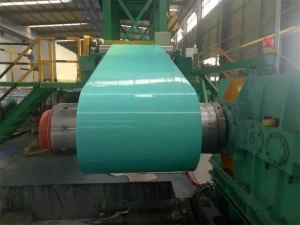
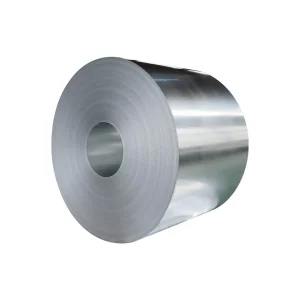
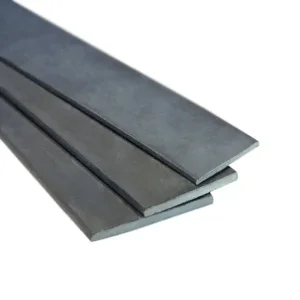
Explore our extended industrial supply line of specialized galvanized coils, corrugated sheets, structural plates, and flat bars optimized for fabrication and roll-forming facilities.



Frequently Asked Questions: Technical Engineering & Global Procurement
Comprehensive engineering insights clarifying key distinctions between ERW steel pipe technologies, standard specifications, surface treatments, and international supply chain logistics.