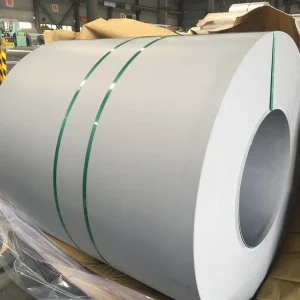
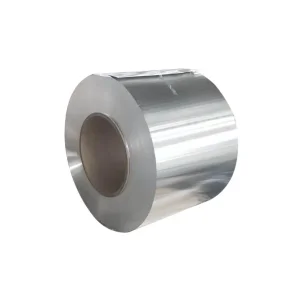
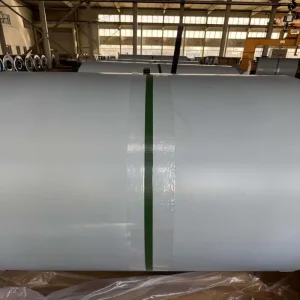
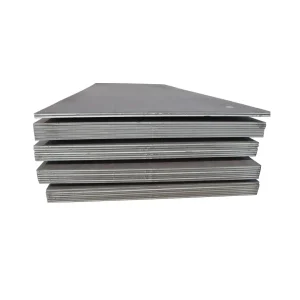
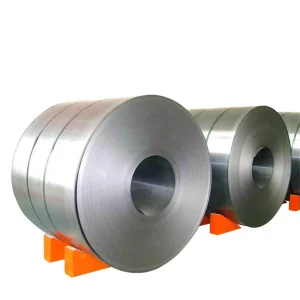
Select mill-direct steel coil, sheet, pipe, and flange solutions manufactured to international standards (ASTM, EN, JIS) for high-precision and structural applications.
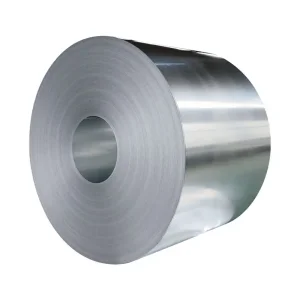
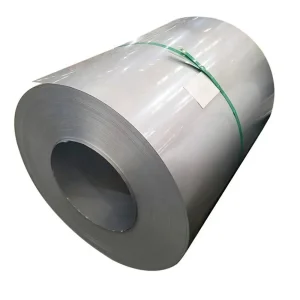

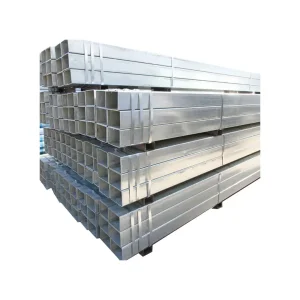




1. Metallurgical Foundations: Electro-Galvanizing vs. Hot-Dip Galvanizing
Understanding the fundamental chemical, physical, and microstructural distinctions between electro-deposited zinc coatings and molten thermal immersion diffusion.
When procurement managers, structural engineers, and industrial buyers evaluate zinc-coated steel substrates, the choice between Electroplated Galvanized Steel (EG) and Hot-Dipped Galvanized Steel (HDG) dictates product longevity, mechanical formability, surface finish aesthetic, and total lifecycle cost. While both processes leverage zinc to provide sacrificial cathodic protection to the underlying carbon steel matrix, their processing physics, interfacial bonding, and coating structures are fundamentally distinct.
Electro-Galvanizing (EG / SECC / SECD / Electro-Deposition) is an electrochemical cold process. Steel coil or sheet passes through an aqueous electrolyte bath containing dissolved zinc salts (such as $\text{ZnSO}_4$ or $\text{ZnCl}_2$). Electric current drives pure zinc ions to deposit evenly onto the steel cathode surface at ambient temperatures. The resulting coating consists of a 99.9% pure, smooth, crystalline zinc layer directly bonded to the steel via metallic adhesion without forming intermetallic diffusion layers. Coating thicknesses typically range from 1.5 $\mu m$ to 5 $\mu m$ (approx. $12\text{ g/m}^2$ to $40\text{ g/m}^2$).
Hot-Dip Galvanizing (HDG / GI / Batch & Continuous Immersion) is a metallurgical diffusion process. Pickled steel is immersed into molten zinc maintained at approximately 440°C to 460°C (824°F to 860°F). At this elevated thermal state, iron and zinc react metallurgically, forming a series of complex iron-zinc intermetallic alloy layers capped by a pure zinc outer layer. These distinct metallurgical phases include:
Gamma Phase ($\Gamma$) & Delta ($\delta$)
Gamma ($\Gamma$): 75-80% Zn, 20-25% Fe. Extremely thin, hard layer directly adjacent to the base steel.
Delta ($\delta$): 90% Zn, 10% Fe. Ductile phase providing impact resistance.
Zeta Phase ($\zeta$)
Zeta ($\zeta$): 94% Zn, 6% Fe. Columnar crystals forming the primary bulk of intermetallic thickness, harder than the base carbon steel itself (up to 179 HV vs 159 HV).
Eta Phase ($\eta$)
Eta ($\eta$): 100% pure Zn outer layer. Highly ductile, absorbing external mechanical abrasion and providing initial environmental barrier protection.
Key Takeaway for B2B Sourcing Engineers
Because Hot-Dip Galvanizing creates a chemical metallurgical bond with zinc-iron alloy layers thicker than 45–85 $\mu m$ (up to $600\text{ g/m}^2$), HDG is the undisputed standard for outdoor structural steel exposed to harsh marine, agricultural, and industrial atmospheres. Conversely, Electro-Galvanized steel offers unmatched thickness precision, zero spangle surface flatness, and superior paint adhesion, making it ideal for deep-drawing automotive panels, server racks, and consumer electronics where microscopic tolerance matters.
2. Engineering Benchmark Matrix: Electroplated vs. Hot-Dipped
A quantifiable comparison of chemical, physical, mechanical, and economic parameters governing wholesale procurement decisions.
| Performance / Spec Metric | Electro-Galvanized Steel (EG / SECC) | Hot-Dip Galvanized Steel (HDG / GI) | Engineering Selection Impact |
|---|---|---|---|
| Manufacturing Process | Cold Electrolytic Deposition (Room Temp) | Molten Zinc Thermal Bath (~450°C) | EG maintains steel temper; HDG alters grain structure slightly. |
| Coating Thickness Range | 1.5 $\mu m$ to 5 $\mu m$ (12 – 40 $g/m^2$) | 35 $\mu m$ to 85+ $\mu m$ (275 – 600 $g/m^2$) | HDG provides 10x–20x thicker sacrificial barrier protection. |
| Salt Spray Life (ASTM B117) | 72 to 120 Hours to Red Rust (Unpainted) | 500 to 1500+ Hours to Red Rust | HDG required for C3-C5 outdoor corrosive environments. |
| Surface Aesthetics & Finish | Ultra-smooth, matte gray, zero spangle | Spangled (Regular, Minimized, or Zero) | EG is optimal for class-A painted automotive/appliance bodies. |
| Welding & Formability | Excellent spot welding, no zinc splatter | Requires higher current, fumes & electrode buildup | EG minimizes electrode wear during automated resistance welding. |
| Paint Adhesion (E-Coat / Powder) | Superior direct-paint adhesion without primer | Requires etching, phosphatizing, or sweep blasting | EG significantly lowers post-processing prep costs. |
| Hydrogen Embrittlement Risk | Higher risk during acid cleaning/plating | Low risk; thermal relief during immersion | High-strength fasteners require strict EG baking protocols (200°C). |
| Primary Material Standards | JIS G3313 (SECC/SECD), ASTM A879, EN 10152 | ASTM A653, EN 10346, JIS G3302, ISO 1461 | Standard compliance required for mill certification (EN 10204 3.1). |
3. Global Commercial Footprint & Sector Applications
Analyzing macro-market demands, international supply chain dynamics, and volume throughput across global industrial hubs.
The global consumption of coated steel coils, sheets, and tubular profiles is divided across distinct commercial sectors. Sourcing managers must match the zinc application technology with the operational ecosystem of their end product:
Precision Enclosures & Automotive
SECC / Electro-Galvanized: Heavily used in computer chassis, server racks, home appliances (washing machines, microwave cavities), automotive interior pressings, and electrical control cabinets requiring close dimensional tolerances.
Heavy Infrastructure & Solar Mounting
HDG & ZM Coated Steel: Photovoltaic ground-mount racking, highway guardrails, bridge structural beams, agricultural greenhouses, and offshore piping systems benefit from thick batch HDG or continuous HDG Z275–Z600 coatings.
HVAC & Architectural Cladding
Continuous GI & Galvannealed: Air ducting systems, purlins, structural decking, pre-painted roofing panels (PPGI), and door frames balance cost, formability, and long-term atmospheric corrosion resistance.
4. Corrosion Physics & Failure Mode Prevention
An in-depth metallurgical breakdown of sacrificial anode protection, passivations, and avoiding hydrogen embrittlement.
In atmospheric environments containing oxygen, moisture, and chloride ions (such as coastal areas), carbon steel undergoes rapid oxidation ($\text{Fe} \rightarrow \text{Fe}^{2+} + 2\text{e}^{-}$), forming destructive hydrated iron oxide (rust). Galvanizing prevents this destruction via dual protection mechanisms:
- Physical Barrier Protection: The zinc coating isolates the underlying iron matrix from atmospheric contact.
- Cathodic Protection (Sacrificial Anode): Zinc has a lower standard electrode potential ($-0.76\text{V}$) compared to iron ($-0.44\text{V}$). In an electrochemical cell, zinc corrodes preferentially, supplying electrons to the steel substrate and suppressing iron oxidation even if scratches expose the raw steel edge.
However, the protective lifespan is directly proportional to zinc mass per unit surface area. According to Faraday’s Laws of Electrolysis, an electro-plated coating of 20 $g/m^2$ (~3 $\mu m$) will consume its sacrificial zinc layer exponentially faster under wet outdoor exposure than a hot-dipped coating of 275 $g/m^2$ (~20 $\mu m$).
Critical Quality Control: Preventing Hydrogen Embrittlement in High-Strength Steels
During the electro-galvanizing acid pickling stage ($\text{HCl}$ or $\text{H}_2\text{SO}_4$) and electrolytic deposition, atomic hydrogen can diffuse into the interstitial crystal lattice of high-strength carbon steels (tensile strength $> 1000\text{ MPa}$ or Grade 10.9/12.9 fasteners). Under sustained mechanical stress, trapped hydrogen induces catastrophic brittle fracture without prior deformation. Professional electroplating factories MUST execute a post-plating baking heat treatment at 190°C to 220°C for 4 to 24 hours within 4 hours of plating to effuse atomic hydrogen before final passivation.
5. Future Technology Roadmap & Sustainable Coating Trends
How next-generation Zinc-Aluminum-Magnesium (ZAM) alloys and low-carbon green steel mills are reshaping procurement specifications.
Zinc-Aluminum-Magnesium (ZAM)
Next-gen ternary coatings (Zn-3%Al-3%Mg) offer 5x-10x superior corrosion resistance over conventional HDG with self-healing cut-edge protection.
Chromate-Free Passivation
Full transition to RoHS/REACH-compliant trivalent chromium ($\text{Cr}^{3+}$) and organic silane passivations, eliminating toxic hexavalent chromates ($\text{Cr}^{6+}$).
CBAM & Green Steel Integration
Implementation of Electric Arc Furnace (EAF) steel substrate with low-carbon hydrogen reduction, preparing global buyers for EU CBAM tariff compliance.
Inline AI Coating Inspection
Real-time laser fluorescence and X-ray coating thickness gauge sensors connected to automated air-knife systems for zero-defect coil manufacturing.
6. Frequently Asked Questions (Procurement & Technical FAQ)
Clear, authoritative answers to common commercial and metallurgical questions raised by global steel importers.
Why is Electro-Galvanized (EG) steel more expensive per ton than standard Hot-Dip Galvanized (HDG) steel despite having a thinner zinc coating?
While Electro-Galvanized steel uses less zinc material by mass, the electricity consumption during high-amperage electro-deposition, the low line speed required for uniform crystal growth, and the cost of premium cold-rolled steel (CR Substrates like SPCC/SECC) drive up overall processing costs. Hot-Dip Galvanizing utilizes continuous high-speed molten immersion lines processing hot-rolled pickled coil substrates, yielding higher output tonnage per hour at lower electrical energy consumption per ton.
Can Hot-Dip Galvanized steel sheet be welded with automated spot-welding robots?
Yes, but it presents operational challenges. The thick zinc coating melts at 419°C before steel melts at 1500°C. Zinc vaporizes, creating porosity in the weld nugget, while molten zinc alloys with copper welding tips, causing rapid electrode degradation. To overcome this, operators must use higher welding currents, longer hold times, copper-chromium-zirconium (CuCrZr) electrodes, or specify Galvannealed Steel (GA / ZF Series), which converts pure zinc into a zinc-iron alloy designed specifically for automotive spot-welding lines.
What mill certificates and compliance documentation should buyers demand from Chinese suppliers?
Global procurement teams should demand Mill Test Certificates (MTC) compliant with EN 10204 3.1. MTCs must report heat numbers, chemical composition (C, Mn, P, S, Si, Al), mechanical properties (Yield Strength, Tensile Strength, Elongation), and precise coating weights ($g/m^2$ per side measured via triple-spot weigh-strip-weigh test per ASTM A90). For structural projects, third-party inspection reports (SGS, Bureau Veritas, TÜV) verifying salt spray resistance (ASTM B117) and coating adhesion (bend test / cross-hatch) should be stipulated in the Letter of Credit (LC).
How does Zinc-Aluminum-Magnesium (ZAM) compare with conventional HDG for outdoor solar mounting structures?
ZAM (e.g., ZM275) outperforms conventional HDG Z600 in salt-spray performance by forming a dense, tightly adhering protective film of Simonkolleite and basic magnesium carbonate. Crucially, when ZAM steel sheet is cut, drilled, or scratched on site, magnesium ions migrate across the exposed raw carbon steel cut edge, creating a self-healing sacrificial barrier that prevents red rust bleeding without requiring manual touch-up paint.
What is the shelf life and storage requirement for imported Galvanized Steel coils during sea transit?
Unpassivated or light-oiled galvanized coils are vulnerable to "white rust" (zinc hydroxide formation) if exposed to trapped condensation during oceanic transit across temperature zones. Overseas buyers must mandate water-proof synthetic kraft paper wrapping, metal outer corner protectors, anti-humidity desiccant packs, and chromate-free passivated surface treatments. Coils should be stored in ventilated indoor warehouses with controlled humidity below 60% and kept off concrete floors on wooden dunnages.
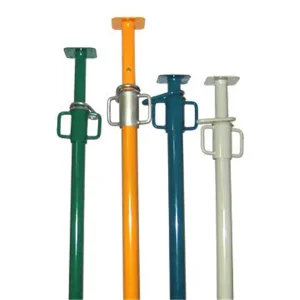
Explore additional specialized alloy coils, plates, silicon steel sheets, and scaffolding components available for direct export shipment.