
Primary Industrial Supply Showcase
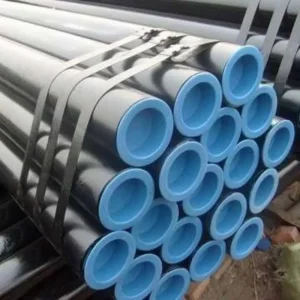
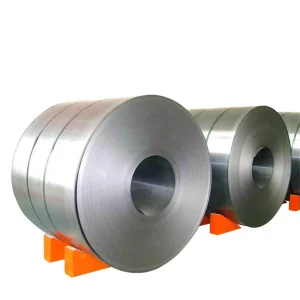
Explore mill-certified seamless carbon steel pipes, specialty electrical steels, and coated sheets manufactured to global ASTM, EN, and JIS compliance standards.


Navigating the Corrosion Prevention Paradigm
In modern industrial manufacturing and civil engineering, selecting between Electro-Galvanized (EG) and Hot-Dip Galvanized (HDG) steel is a pivotal technical decision. Both processes utilize zinc to shield the underlying carbon steel substrate from oxidation, yet their chemical mechanics, phase compositions, and physical bond structures differ fundamentally.
For strategic procurement officers, quality control engineers, and project managers, misspecifying these materials can lead to catastrophic field failures or unnecessary cost overruns. Electro-galvanizing deposits a hyper-pure, ultra-thin zinc layer via electroplating, creating an flawless surface ideal for high-precision stamping and paint adhesion. Conversely, hot-dip galvanizing immerses steel into molten zinc at $450^\circ\text{C}$, yielding multi-layered iron-zinc intermetallic phases that deliver decade-long sacrificial protection in severe atmospheric environments.
Key Technical Highlights
- Coating Thickness Variance: EG delivers ultra-thin coatings ($10\text{--}30\text{ g/m}^2$, $1.5\text{--}5\,\mu\text{m}$ per side), while HDG provides heavy structural layers ($100\text{--}600\text{ g/m}^2$, $15\text{--}85\,\mu\text{m}$).
- Metallurgical Bonding: HDG forms distinct Fe-Zn alloy phases ($\zeta, \delta, \Gamma$) offering exceptional physical abrasion resistance.
- Surface Topography: EG features zero spangle with exceptional surface roughness ($R_a$) parameters optimized for automotive primers and high-gloss powder coating.
- Thermal Effects: EG operates at cold room temperatures avoiding thermal strain; HDG involves thermal immersion requiring consideration for thin-gauge warping.
Process Physics & Metallurgical Phase Genesis
Understanding the molecular-level deposition mechanics provides engineering clarity when evaluating supplier submittals and mill test certificates (MTC).
Electro-Galvanizing (EG / SECC / SECD / SECE)
The electro-galvanizing process is an electrolytic cold-deposition method. Cold-rolled steel coils pass through a bath containing zinc ion solution ($Zn^{2+}$). An electrical current drives anode-to-cathode transport, depositing pure zinc atoms onto the strip surface.
Metallurgical Characteristics:
- Pure Zinc Layer: $99.9\%$ pure zinc crystalline matrix with no intermetallic alloy transition zones.
- Uniformity: Exceptional micro-level thickness consistency across the entire width of the coil ($20/20\text{ g/m}^2$ standard).
- Zero Heat-Affected Zone: Process executed at ambient temperature ($30\text{--}50^\circ\text{C}$), preserving cold-rolled mechanical grain structures and ultra-deep drawing properties (SECD/SECE).
- Pre-treatment Readiness: Frequently combined with anti-fingerprint (AFP) organic coatings or chromate-free passivation for immediate processing.
Hot-Dip Galvanizing (HDG / DX51D+Z / GI)
Hot-dip galvanizing involves immersing thoroughly pickled steel strip into a molten zinc bath maintained at approximately $440\text{--}460^\circ\text{C}$. A metallurgical reaction occurs between molten zinc and iron atoms in the steel, creating distinct alloy phases.
Metallurgical Phases (From Substrate Outer Boundary):
- Gamma Phase ($\Gamma$): $75\%\text{ Zn}, 25\%\text{ Fe}$ intermetallic layer immediately adjacent to steel substrate; extremely hard and thin ($7.5\text{--}10\text{ GPa}$).
- Delta Phase ($\delta$): $90\%\text{ Zn}, 10\%\text{ Fe}$ column-like alloy layer providing superior impact resistance.
- Zeta Phase ($\zeta$): $94\%\text{ Zn}, 6\%\text{ Fe}$ monoclinic crystal structure.
- Eta Phase ($\eta$): Outer layer of $99.9\%$ pure zinc, solidified upon exiting the molten kettle, providing initial soft ductility.
Comprehensive Engineering Parameter Comparison
Use this reference table to evaluate technical trade-offs between wholesale Electro Galvanized and Hot Dip Galvanized steel products:
| Technical Parameter | Electro Galvanized (EG) | Hot Dip Galvanized (HDG) | Engineering Significance |
|---|---|---|---|
| Primary Standards | ASTM A879, JIS G3313 (SECC/SECD), EN 10152 | ASTM A653, EN 10346 (DX51D+Z), JIS G3302 | Defines dimensional tolerances and chemistry. |
| Coating Thickness Range | $1.5\,\mu\text{m} - 7\,\mu\text{m}$ ($10 - 50\text{ g/m}^2$) | $7\,\mu\text{m} - 85\,\mu\text{m}$ ($60 - 600\text{ g/m}^2$) | HDG provides up to 10x thicker coating mass. |
| Atmospheric Life (C3 Urban) | 2 to 5 years (Unpainted) | 20 to 50+ years (Unpainted) | HDG is essential for exposed outdoor infrastructure. |
| Salt Spray Resistance (ASTM B117) | $72 - 120\text{ Hours}$ to red rust | $300 - 1500+\text{ Hours}$ to red rust | Measures accelerated sacrificial zinc longevity. |
| Surface Appearance & Finish | Matte silver/grey, uniform, 0 spangle | Spangle visible (Regular, Minimized, or Zero) | EG required for high-aesthetic interior panels. |
| Formability & Drawability | Superior (Preserves cold-rolled elasticity) | Good (Slight micro-cracking of alloy phase under extreme draw) | EG preferred for automotive stamping (SECE grade). |
| Weldability (Resistance/Spot) | Excellent (Low zinc thickness minimizes tip wear) | Moderate (Higher zinc vaporizes, requiring higher current) | EG increases welding electrode lifespan by 200%. |
| Paint & Primer Adhesion | Superior direct adhesion without phosphating | Requires mechanical etching or chemical treatment | EG lowers down-stream painting prep costs. |
Global Galvanizing Industry Trends & Next-Gen Coatings
The global steel galvanizing market is undergoing a structural transition driven by decarbonization mandates, automotive lightweighting, and aggressive renewable energy expansion. Supply chain leaders must adapt to three key technological developments:
1. Zinc-Aluminum-Magnesium (ZAM) Convergence
Traditional HDG zinc coatings are increasingly supplemented by ternary Zinc-Aluminum-Magnesium ($1.5\text{--}3\%\text{ Mg}, 2\text{--}6\%\text{ Al}$) alloys. ZAM coatings develop a dense simonkolleite [$Zn_5(OH)_8Cl_2\cdot H_2O$] protective film, delivering up to 3x better corrosion resistance than standard HDG with thinner coating weights, along with self-healing edge protection on sheared cut edges.
2. Green Steel & Low-Carbon Galvanizing
With the implementation of Europe's Carbon Border Adjustment Mechanism (CBAM), mills in China are adopting electric arc furnace (EAF) steelmaking coupled with hydrogen-based annealing lines. Solar-powered electrolytic baths for EG lines and natural gas energy-recovery systems for HDG kettles significantly reduce Scope 1 and Scope 2 embodied carbon footprints.
3. Ultra-Thin Passivation & Chemical Ecology
Environmental regulations (RoHS/REACH) have accelerated the phase-out of hexavalent chromium ($Cr^{6+}$) passivation. Modern wholesale suppliers now provide trivalent chromium ($Cr^{3+}$) passivated or entirely inorganic silane/titanium-based sealed surfaces, ensuring regulatory compliance across EU and North American markets without compromising salt-spray endurance.
Global Sourcing Demands Across Key Industrial Sectors
Cross-border procurement teams must align material specifications with specific end-use application parameters. Below is an engineering matrix detailing sectoral material preferences:
Automotive & Transportation Manufacturing
Primary Choice: Electro-Galvanized (SECC/SECD/SECE) & Galvannealed (GA / DX51D+ZF).
Buying Drivers: Automotive body panels require perfect paint surfaces (Class A surface finish) and precise deep-drawing performance. EG sheets eliminate spangle patterns that could telegraph through thin automotive topcoats. For underbody structural brackets, Galvannealed (Zn-Fe alloy) is selected for superior spot-welding electrode lifespan.
Building Construction & Solar Infrastructure
Primary Choice: Heavy-Coated Hot-Dip Galvanized (Z275, Z450, Z600) & Pre-Galvanized Tubes.
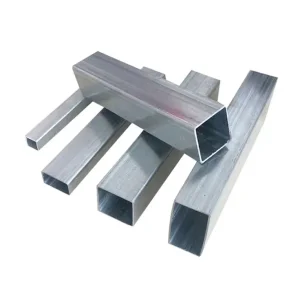
Buying Drivers: Structural hollow sections (SHS/RHS), solar ground-mount racking, and exterior cable trays require decades of maintenance-free service. Buyers prioritize high zinc coating weight ($275\text{--}600\text{ g/m}^2$) to withstand C4/C5 industrial or coastal environments, sacrificing surface micro-smoothness for long-term sacrificial zinc protection.
Precision Electronics & Consumer Appliances
Primary Choice: Anti-Fingerprint Electro-Galvanized Steel (SECC-N5 / SECE).
Buying Drivers: Server chassis, computer enclosures, and internal home appliance frames require tight electromagnetic shielding, strict thickness tolerances, and high cleanliness. Anti-Fingerprint (AFP) acrylic sealing over EG eliminates the need for post-stamping painting, lowering total cost of ownership (TCO).
HVAC, Ducting & Grain Storage Silos
Primary Choice: Continuous Hot-Dip Galvanized Coils (DX51D+Z180 to Z275, Lock-Forming Quality).
Buying Drivers: Ductwork fabrication demands zero flaking during tight 180-degree lock-forming seams. Continuous HDG sheet with minimized spangle provides the ideal balance between ductility, high corrosion resistance against condensation, and cost-efficient mass production.
China Supply Chain Resilience & Mill Efficiency
Tianjin and northern China's industrial manufacturing hubs have evolved into highly integrated, smart-manufacturing steel ecosystems. Wholesale buyers sourcing through China direct factory networks gain distinct competitive advantages in lead times, quality consistency, and scale pricing.
Real-Time Coating Thickness Control
X-ray fluorescence (XRF) online gauge sensors monitor zinc deposition in real time, adjusting electroplating current density or HDG air-knife pressure to ensure $\pm 1.5\%$ coating uniformity across the entire coil length.
Integrated Deep-Processing Ecosystem
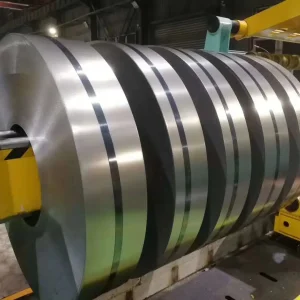
Mills combine pickling, cold rolling, continuous galvanizing, slitting, and precision cut-to-length shearing under one facility roof. This vertical integration reduces transport overhead and minimizes coil handling damage.
Seaworthy Export Packaging Protocols
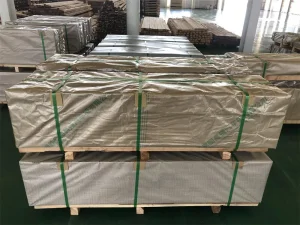
Heavy-duty anti-rust VCI paper wrapping, outer galvanized steel protective sleeves, radial/circumferential steel strapping, and wooden skid mounting prevent ocean transit moisture ingress during multi-week voyages.
Mill Quality Assurance Checklist
Every wholesale batch leaving our factory floor undergoes mandatory multi-point testing backed by EN 10204 3.1 Mill Test Certificates:
- Chemical Composition: Spectrometric ladle analysis (C, Si, Mn, P, S, Al content).
- Mechanical Tensile Tests: Yield strength ($R_e$), Tensile strength ($R_m$), Elongation ($A_{80}$).
- Coating Mass Measurement: Triple-spot weigh-strip-weigh test per ISO 1460 / ASTM A90.
- Bending & Adhesion: 180-degree bend test ($0T - 2T$) with zero coating flaking.
- Surface Topography: Optical profilometer inspection for spangle and roughness ($R_a, R_z$).
ISO 12944 Environmental Classification & Selection Scenarios
To optimize project life-cycle costing, materials must be specified according to atmospheric corrosivity categories (C1 through C5). Below is the recommended selection matrix for engineering procurement:
| Corrosivity Category | Environmental Context | Recommended Steel Product | Coating Specification | Expected Maintenance Free Span |
|---|---|---|---|---|
| C1 (Very Low) | Heated interior buildings, cleanrooms, dry offices | Electro Galvanized (SECC / SECD) | EG $10/10\text{ g/m}^2$ ($1.5\,\mu\text{m}$) | 25+ Years |
| C2 (Low) | Atmospheres with low pollution, unheated warehouse interiors | Electro Galvanized / Light HDG | EG $20/20\text{ g/m}^2$ or HDG Z100 | 15 to 20 Years |
| C3 (Medium) | Urban industrial air, coastal zones with low salinity, HVAC lines | Hot Dip Galvanized (DX51D+Z) / Pre-GI Tube | HDG Z180 to Z275 ($12\text{--}20\,\mu\text{m}$) | 15 to 25 Years |
| C4 (High) | Industrial areas, coastal regions with moderate salt spray, chemical plants | Heavy Hot Dip Galvanized / ZAM Coil | HDG Z350 to Z450 ($25\text{--}32\,\mu\text{m}$) | 20+ Years |
| C5 (Very High) | Offshore marine structures, extreme industrial humidity, mining sites | Post-Fabrication HDG Structural / ZAM Heavy | HDG Z600 or ZAM 275 ($40 - 85\,\mu\text{m}$) | 25+ Years |
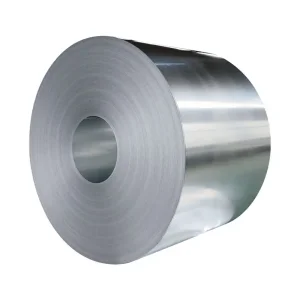
Galvannealed, Coated & Hot/Cold Rolled Solutions
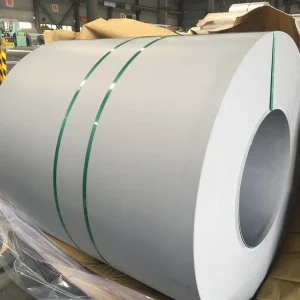
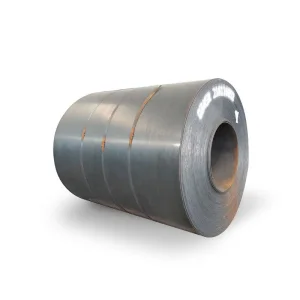
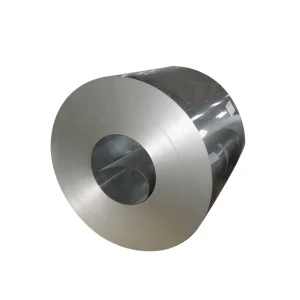
Review our specialized coated coils, zinc-iron alloy plates, and high-strength cold-rolled products manufactured for heavy industrial press lines and structural fabrication.


Frequently Asked Questions (FAQ)
Addressing the exact technical, commercial, and logistical queries raised by global importers and supply chain directors.
Why is Electro Galvanized (EG) steel significantly more expensive per micrometer of zinc than Hot Dip Galvanized (HDG)?
Can Electro-Galvanized steel be welded using conventional resistance spot welding?
How does spangle formation affect the performance of Hot Dip Galvanized steel coils?
What is the difference between SECC, SECD, and SECE electro-galvanized steel grades?
- SECC: Commercial Quality (CQ) intended for general flat bending and light forming.
- SECD: Drawing Quality (DQ) suitable for moderate stamping and shallow draw components.
- SECE: Extra Deep Drawing Quality (EDDQ) with extremely high plastic strain ratio ($r$-value) for complex automotive pressings.
Can pre-galvanized tubes be used outdoors without post-weld protection?
What mill test certifications and third-party inspections are supported for global wholesale orders?
Request Custom Mill Quotations & Sample Bundles
Partner directly with Tianjin's premier steel manufacturing base. Contact our technical sales team for coil slitting, custom coating weights, or engineering advice on project tenders.