
Primary Structural Steel & Tubular Inventory
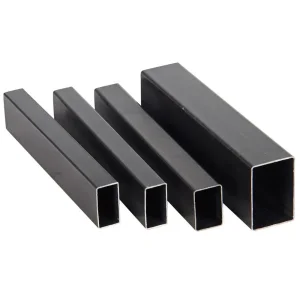
Mill-certified carbon steel hollow sections, seamless pressure pipes, and specialized alloy coils optimized for global infrastructure projects.

Construction Carbon Steel Pipe Industry Development Trends
An in-depth analysis of metallurgical advancements, decarbonization mandates, and structural engineering paradigms driving global carbon steel demand.
1. Shift Toward High-Strength Low-Alloy (HSLA) Steels
Modern architectural engineering is rapidly moving away from standard mild carbon steels (such as S235 or Grade A) toward advanced High-Strength Low-Alloy (HSLA) grades including ASTM A500 Grade C, EN 10219 S355J2H, and S460NH. By leveraging precise micro-alloying elements—such as Niobium (Nb), Vanadium (V), and Titanium (Ti)—manufacturers achieve higher yield strength ($f_y \ge 460 \text{ MPa}$) without adding dead weight to superstructure foundations. This weight reduction directly translates into lower transport emissions, faster crane erection cycles, and decreased overall project embodied carbon.
2. EAF Decarbonization & Green Steel Mandates
Global environmental regulations, including the European Union's Carbon Border Adjustment Mechanism (CBAM), are forcing steel mills to pivot from traditional Blast Furnace-Basic Oxygen Furnace (BF-BOF) routes to Electric Arc Furnace (EAF) recycling powered by green hydrogen or renewable energy grids. Wholesale construction buyers now scrutinize the environmental product declaration (EPD) of carbon steel pipes, requiring precise Scope 1, 2, and 3 emission audits to align with green building certifications such as LEED v4.1 and BREEAM Outstanding.
3. BIM Integration & Prefabricated Modular Construction
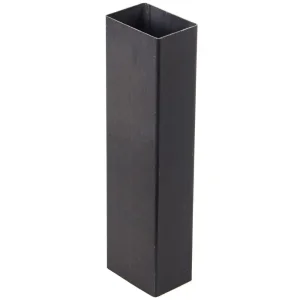
Building Information Modeling (BIM) Level 3 compatibility has revolutionized structural pipe procurement. Modern Tier-1 wholesale suppliers no longer just ship raw pipe lengths; they deliver pre-cut, pre-beveled, and pre-drilled square (SHS), rectangular (RHS), and circular (CHS) hollow sections configured for rapid off-site modular assembly. Tight dimensional tolerances ($\pm 0.2\%$ on outer diameter and $\pm 5\%$ on wall thickness) are mandatory to ensure frictionless automated robotic welding on modular assembly lines.
Global Enterprise Procurement & Standards Matrix
Rigorous metallurgical compliance benchmarks across North American, European, and Asian structural engineering frameworks.
When enterprise procurement teams evaluate wholesale carbon steel pipe suppliers, technical due diligence centers on mechanical yield behavior, chemical purity, and non-destructive testing (NDT) verification. Below is an engineering comparison matrix of primary structural standards:
| Standard | Common Grades | Min. Yield Strength ($R_{eH}$) | Min. Tensile Strength ($R_m$) | Impact Energy (Charpy V-Notch) | Primary Infrastructure Uses |
|---|---|---|---|---|---|
| ASTM A500 | Grade A, B, C, D | 310 - 345 MPa | 400 - 427 MPa | Optional (Custom CVN at -20°C) | Cold-formed structural tubing, bridges, building frames |
| EN 10219 / EN 10210 | S235JRH, S355J2H, S460NH | 235 - 460 MPa | 360 - 630 MPa | 27 Joules at -20°C / -50°C | Offshore structures, high-rise trusses, heavy shoring |
| ASTM A53 / API 5L | Grade B, X42 through X70 | 241 - 485 MPa | 415 - 570 MPa | Mandatory for Line Pipe / Pressure Specs | Fire protection lines, fluid transmission, structural piling |
| GB/T 3091 / GB/T 6728 | Q235B, Q355B, Q355D | 235 - 355 MPa | 375 - 510 MPa | 27 Joules at 0°C / -20°C | Scaffolding systems, greenhouse frames, civil works |
Metallurgical Verification & Quality Control
Top-tier suppliers implement automated online Ultrasonic Testing (UT) along the longitudinal weld seam of High-Frequency Electric Resistance Welded (HF-ERW) pipes, alongside offline Hydrostatic Pressure testing ($100\%$ hold for 5+ seconds). Carbon Equivalent Values ($CEV = C + \frac{Mn}{6} + \frac{Cr+Mo+V}{5} + \frac{Ni+Cu}{15}$) must be tightly capped below $0.43\%$ to ensure flaw-free field weldability without pre-heating.
Traceability & EN 10204 3.1 Certification
Every wholesale batch must be accompanied by an authentic Mill Test Certificate (MTC) according to EN 10204 3.1 or 3.2. MTCs detail ladle chemical composition, heat number tracking, mechanical tensile/yield curves, flattening and bending test results, and surface roughness parameters, granting procurement teams full legal compliance assurance.
Macro Industry Solutions Across Global Verticals
Engineered structural pipe applications solving complex load-bearing, corrosion, and environmental challenges.
High-Rise Architecture & Stadium Superstructures
Structural Circular Hollow Sections (CHS) and Square Hollow Sections (SHS) are crucial for high-span roof trusses, airport terminals, and skyscraper cores. With superior torsional resistance ($J$) and isotropic buckling resistance, carbon steel hollow sections reduce structural footprint while handling extreme multi-axial wind and seismic loading.
Solar Photovoltaic Racking & Tracker Torque Tubes
Utility-scale solar farms demand high-grade Zinc-Aluminum-Magnesium (ZM) coated square steel tubes and pre-galvanized pipes. Operating in aggressive C4/C5 corrosive environments (deserts, coastal regions, and agricultural soil), these specialized torque tubes withstand cyclic wind vibrations while providing self-healing edge corrosion protection.
Civil Underground Infrastructure & Marine Piling
Large-diameter Spiral Submerged Arc Welded (SAW) carbon steel pipes serve as foundation piles, bridge piers, and deep cofferdams. Engineered to ASTM A252 Grade 3 specifications, these heavy-wall pipes withstand driving energy from hydraulic hammers and offer predictable axial load capacities in soft soils.
Heavy Equipment, Scaffolding & Shoring Systems
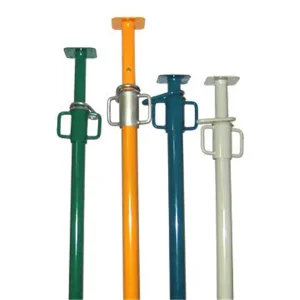
Precision-drawn black ERW tubes and heavy-duty telescopic prop scaffolding systems form the backbone of modern temporary construction works. High-yield Q355/S355 structural tubing ensures maximum shoring capacities under concrete pouring operations while resisting field impact denting.
Specialized Coated Steel, Coils & Structural Profiles
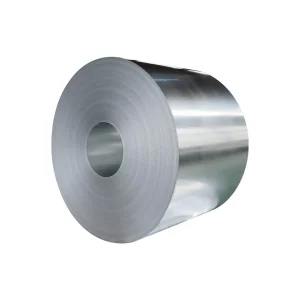
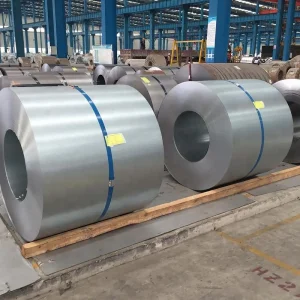
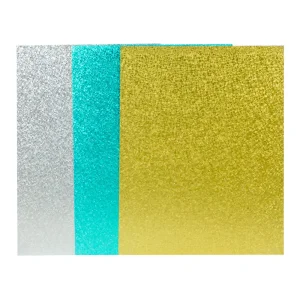
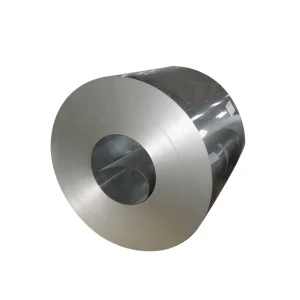
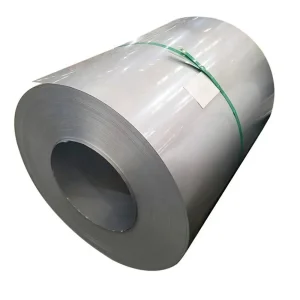
Full spectrum product directory for wholesale buyers seeking high-corrosion-resistant coils, silicon steel, and specialized metal profiles.




Supply Chain Resilience, Localized Support & Trade Compliance
De-risking global steel import operations through rigorous regulatory compliance and end-to-end logistics engineering.
Tariff Navigation & Trade Protection Compliance
Navigating complex international anti-dumping duties (AD), countervailing duties (CVD), Section 232 tariffs, and EU Safeguard quotas requires experienced trade compliance teams. Reliable Tier-1 suppliers provide transparent Certificate of Origin (COO) documentation, Form E, Form F, and RCEP trade origin verifications to optimize import tariff structures legally.
Seaworthy Packaging & Port-Side Logistics
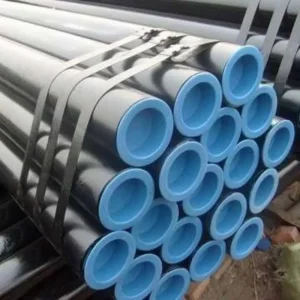
Export steel pipe shipments encounter severe maritime humdity and motion stress. Premium suppliers apply automated anti-rust VCI (Vapor Corrosion Inhibitor) oiling, heavy-duty plastic end caps to protect bevels, and steel-strapped hex bundles with wooden skids. Cargo is secured inside 20ft/40ft containers or breakbulk holds under strict marine survey supervision.
Third-Party Inspection (SGS, BV, TÜV, Intertek)
To ensure 100% E-E-A-T trust compliance, wholesale deliveries support independent third-party audits. Inspection engineers perform on-site dimensional verification, wall thickness ultrasonic gauge testing, zinc coating mass measurement (magnetic gauge according to ISO 1461), and destructive tensile/bend tests prior to port loading.
Technical Roadmap & Future Outlook (2025–2035)
Emerging manufacturing technologies and next-generation alloy engineering transforming carbon steel pipe production.
AI-Driven Real-Time Weld Quality Control
Integration of computer vision, infrared thermography, and AI neural networks directly onto HF-ERW weld seams to detect micro-porosity and weld flash defects instantaneously at line speeds exceeding 60 m/min.
Ultra-High-Durability Zn-Al-Mg-Si Coatings
Widespread commercialization of advanced quaternary alloy coatings (Zinc-Aluminum-Magnesium-Silicon) offering 10x the corrosion resistance of conventional hot-dip galvanizing, enabling thin-wall high-durability infrastructure.
Hydrogen Pipeline Ready Carbon Steel Alloys
Development of specialized micro-alloyed carbon steel pipes engineered to resist Hydrogen Embrittlement (HE) and Hydrogen-Induced Cracking (HIC) for dual-use natural gas and green hydrogen transport networks.
Fully Circular Near-Zero Carbon Manufacturing
100% green hydrogen direct reduced iron (DRI) coupled with renewable EAF steelmaking, delivering structural carbon steel hollow sections with embodied carbon footprints under 0.2 t CO2 / t steel.
Frequently Asked Questions (FAQ) - Structural Steel Procurement
Expert engineering answers to critical inquiries raised by EPC contractors, structural engineers, and wholesale steel importers.