Precision Cold-Rolled & Coated Structural Steel Portfolio
Mill-direct manufacturing options with verified dimensional tolerances, custom oiling, and mill test certification (MTC) compliant with EN, ASTM, and JIS standards.





1. Metallurgical Foundations of the Cold Rolling Process
Understanding the strain hardening mechanisms, recrystallization kinetics, and dimensional accuracy that differentiate Cold Rolled Coil (CRC) from Hot Rolled Coil (HRC).
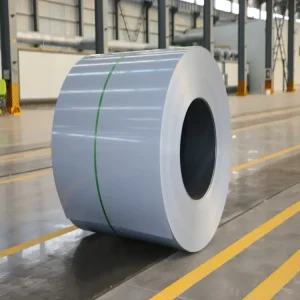
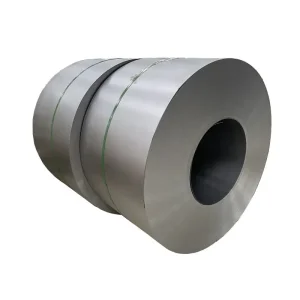
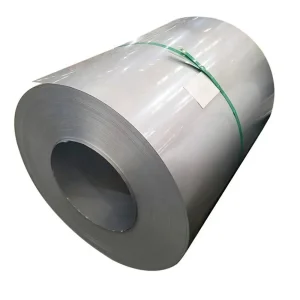
Cold rolling is an essential secondary metallurgical process where hot-rolled steel coil (HRC)—having previously undergone descaling and pickling—is passed through a series of tandem rolling mills below its recrystallization temperature (typically at ambient room temperature). Unlike hot rolling, which relies on thermal plasticity to reshape steel billets, the cold rolling process achieves thickness reduction through plastic deformation driven by extreme mechanical pressure. This fundamental difference triggers severe dislocation entanglements within the ferrite crystal lattice, yielding significant strain hardening (work hardening) that dramatically boosts tensile strength ($R_m$) and yield strength ($R_e$), while reducing ductility.
To restore formability for downstream deep-drawing, bending, and hydroforming operations, cold-rolled strip must undergo precisely controlled heat treatment—either through Batch Annealing Processes (BA) in a 100% hydrogen protective atmosphere or Continuous Annealing Lines (CAL). During annealing, strain-free ferrite grains nucleate and grow, neutralizing internal stress fields while imparting uniform mechanical anisotropic properties ($r$-value and $n$-value) essential for zero-defect OEM metal stamping.
Key Technical Differences: Hot Rolled vs. Cold Rolled Steel
For B2B procurement managers and engineering teams, selecting between hot-rolled and cold-rolled substrates directly dictates production efficiency, tool wear rates, and final product aesthetics. The table below delineates critical metallurgical and physical performance metrics:
| Parameter / Property | Hot Rolled Steel (HRC Substrate) | Cold Rolled Steel (CRC Finished Strip) |
|---|---|---|
| Processing Temperature | Above recrystallization temp (~1,100°C - 1,250°C) | Ambient room temperature (Cold reduction mill) |
| Thickness Tolerance Range | Standard ±0.15 mm to ±0.35 mm | Ultra-tight ±0.01 mm to ±0.03 mm (AGC controlled) |
| Surface Finish & Quality | Mill scale oxide layer, dark grey, rough finish | Smooth, lustrous metallic silver, pickled, oiled, matte or bright |
| Microstructural State | Equiaxed coarse grains, minimal internal residual stress | Refined, recrystallized fine grains with controlled texture orientations |
| Mechanical Performance | Lower yield strength, high strain allowance, non-uniform hardness | Customizable temper states (Full Hard, 1/2 Hard, Annealed Deep Draw) |
| Typical Thickness Capability | 1.5 mm to 25.0 mm | 0.12 mm to 3.0 mm |
2. Six-Stage Advanced Cold Rolling Process Sequence
An inside view of modern cold rolling mills—from continuous hydrochloric acid pickling to skin-pass temper rolling and electrostatic oiling.
Continuous Acid Pickling & Electro-Mechanical Scale Break
Hot rolled coils carry a tough iron oxide surface scale ($Fe_2O_3$, $Fe_3O_4$, $FeO$). The coil passes through tension levelers to mechanically break the scale, followed by immersion in heated hydrochloric acid ($HCl$) baths. High-pressure rinsing and hot-air drying eliminate chemical residues, ensuring a ultra-clean metallic strip.
Tandem Cold Reduction Milling (4-Stand / 5-Stand 6-High Reversing Mills)
The pickled coil enters high-rigidity 6-high reversing mills or continuous 5-stand tandem mills equipped with Hydraulic Automatic Gauge Control (HAGC) and X-ray thickness measurement sensors. The steel undergoes up to 50%–85% thickness reduction under extreme compressive load, cooled continuously by synthetic emulsions.
Electrolytic Degreasing & Surface Scrubbing
Cold rolling lubricants and residual carbon fines are thoroughly removed via alkaline electrolytic degreasing tanks and high-impact rotary brush scrubbers. Achieving clean surfaces is mandatory to prevent carbonization stains during high-temperature hydrogen annealing.
Recrystallization Hydrogen Annealing (BA / CAL)
Hardened steel strips are subjected to thermal cycles at 650°C–720°C. In Bell Annealing (BA), coils sit inside 100% $H_2$ protective atmospheres for 24-48 hours. In Continuous Annealing Lines (CAL), strips pass through rapid heating, soaking, and controlled cooling towers within minutes, ensuring uniform elongation and isotropic drawing traits.
Skin-Pass / Temper Rolling (Roughness Control & Stretcher Strain Elimination)
Annealed steel displays a sharp yield point elongation, causing stretcher strain marks (Lüders lines) during stamping. A light temper pass (0.5%–2.5% reduction) eliminates the yield point phenomenon while transferring specific surface textures (Matte finish $R_a$ 0.8–1.5μm or Bright finish $R_a$ < 0.4μm) from textured rolls.
Tension Leveling, Automated Slitting & Electrostatic Rust Prevention
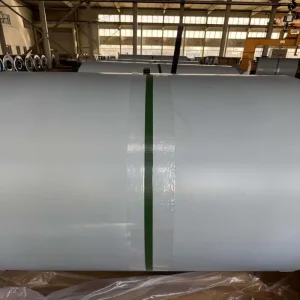
Finished strips undergo tension leveling to correct edge waves and center buckles. The material is precision slit to client-specified widths, sprayed with anti-corrosion electrostatic oils (DOS/thixotropic oils), wrapped in vapor corrosion inhibitor (VCI) paper, and strapped onto wooden pallets for ocean transport.
3. China Factory 4.0: Supply Chain Resilience & Cost Optimization
How modern Chinese steel processing hubs utilize IoT-driven tandem mills, AI surface flaw detection, and integrated maritime logistics to serve international importers.
AI-Driven Surface Defect Inspection
High-speed optical visual inspection systems scan 100% of the cold-rolled strip surface at line speeds up to 1,200 m/min. AI neural networks detect pinholes, rolled-in scale, scratches, and oil spots in real-time, tagging defective coils automatically before export packaging.
Closed-Loop Hydraulic AGC Systems
Mill stands integrate sub-millisecond hydraulic actuators paired with radioactive isotope/X-ray thickness gauges. Closed-loop feedback maintains thickness tolerances within ±0.015 mm along the entire length of a 25-ton coil, minimizing stamping die wear for global OEMs.
Strategic Port Integration (Tianjin Hub)
Located near major ocean freight facilities in Northern China, integrated steel processing plants dramatically reduce inland transit times. Direct terminal connections facilitate fast container loading, breakbulk cargo vessel chartering, and streamlined customs clearance for international buyers.
4. Global Sourcing Demand Drivers & Specialized Applications
Where cold rolled steel products deliver critical structural, electrical, and aesthetic performance in modern industrial manufacturing.
Global commercial consumption of Cold Rolled Steel products spans several core manufacturing vectors. B2B buyers must specify accurate temper grades, surface roughness ($R_a$), and oiling protection tailored to their specific downstream fabrication environment:
- Automotive Stamping & Body-in-White (BIW): Demands Interstitial-Free (IF) deep-drawing steels (DC05, DC06) and Advanced High-Strength Steels (AHSS/Dual-Phase DP590/780) for lightweight structural frames, vehicle doors, bonnet panels, and crash-energy absorbing chassis brackets.
- Home Appliances & White Goods: Requires extra-smooth surface cold-rolled sheets (SPCC, DC01) with strict flatness control for refrigerator side panels, washing machine drums, microwave ovens, and HVAC air duct housings prior to powder coating or enameling.
- Electrical Steel Laminations (CRNGO & CRGO): Specialized cold-rolled silicon steel coils engineered for magnetic permeability and low core loss, powering electric vehicle (EV) drive motors, industrial transformers, power generators, and hermetic compressor rotors.
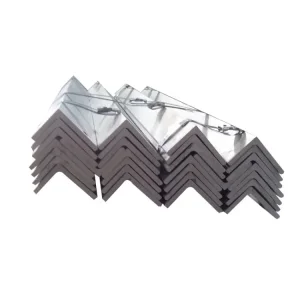
- Solar Mounting Systems & Agricultural Structures: Cold-formed structural channels, C/Z purlins, high-zinc hot-dip galvanized and Zinc-Aluminum-Magnesium (ZM/AZM) coated profiles engineered for 25-year corrosion protection in solar farms and high-humidity greenhouse frames.
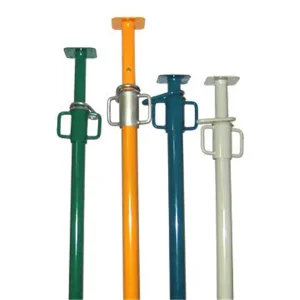
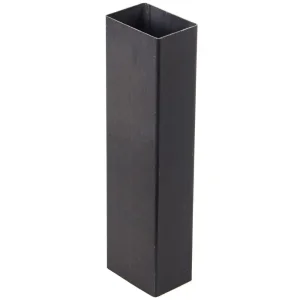
- Building Construction & Heavy Formwork Shoring: Heavy-duty telescopic prop sleeves, precision steel square tubing (SHS/RHS), scaffolding tubes, and structural steel beams calculated to withstand high axial loads on commercial building sites.
5. Global Steel Grade Equivalence & Mechanical Property Matrix
Compare equivalent cold rolled steel grades across European (EN 10130), American (ASTM A1008), Japanese (JIS G3141), and Chinese (GB/T 5213) standards.
| Quality Designation | EN 10130 Standard | ASTM A1008 Grade | JIS G3141 Standard | GB/T 5213 Standard | Yield Strength $R_e$ (MPa) | Elongation $A_{80}$ (%) |
|---|---|---|---|---|---|---|
| Commercial Quality (CQ) | DC01 | CS Type A / B | SPCC | St12 / St37-2G | 140 – 280 | ≥ 28 |
| Drawing Quality (DQ) | DC03 | DS Type A / B | SPCD | St13 | 140 – 240 | ≥ 34 |
| Deep Drawing Quality (DDQ) | DC04 | DDS | SPCE | St14 | 140 – 210 | ≥ 38 |
| Extra Deep Drawing (EDDQ) | DC05 | EDDS | SPCEN | St15 (IF Steel) | 140 – 180 | ≥ 40 |
| Super Extra Deep Draw (S-EDDQ) | DC06 / DC07 | EDDS Grade 1008 | SPCF / SPCG | St16 (Ultra-IF) | 100 – 170 | ≥ 42 |
6. Frequently Asked Questions (FAQ) for Global Buyers
Expert technical and commercial guidance covering cold rolled steel coil manufacturing, surface oiled protection, anti-white-rust strategies, and shipping logistics.
Explore Coated, Structural & Profile Products
Factory-direct structural steel, galvanized tubing, galvannealed coils, ZM solar mounting profiles, and scaffolding support systems.