
Featured Silicon Steel & Coated Steel Supplies


Global Macro-Industrial Landscape & The Role of CRNGO Silicon Steel
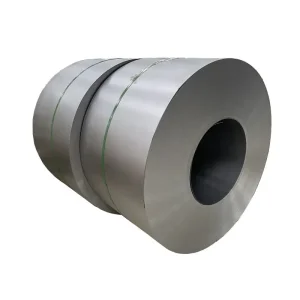
Cold Rolled Non-Grain Oriented (CRNGO) electrical silicon steel coils represent the foundational backbone of the modern global energy transition, electrification infrastructure, and high-efficiency motion control systems. As industrial manufacturing sectors aggressively pivot toward stringent energy efficiency benchmarks—such as IE3, IE4, and IE5 motor compliance mandates—the selection of high-grade electromagnetic steel laminations has shifted from a standardized commodity purchase to a strategic engineering imperative.
Unlike Grain-Oriented Electrical Steel (CRGO), which exhibits highly directional magnetic properties tailored exclusively for stationary power transformers, CRNGO steel possesses isotropic magnetic characteristics in the rolling plane. This multi-directional magnetic uniformity makes CRNGO indispensable for rotating electrical machinery, including industrial induction motors, electric vehicle (EV) traction drive units, hermetic compressor pumps, hydro/wind turbine generators, and precision servo actuators.
The commercial supply chain for wholesale CRNGO steel coils requires an intricate balance between high-volume metallurgical consistency, rigorous dimensional tolerance control (typically within ±0.015 mm), and specialized anti-corrosive, interlaminar insulation coatings. Leading OEM manufacturers and transformer core fabricators rely on robust tier-1 suppliers capable of delivering mill-direct coils that exhibit optimal punchability, minimal tool wear, and flawless surface flatness.
Electromagnetic Core Loss Mechanisms & Alloying Metallurgy
To maximize operational efficiency in electric motors and power converters, electrical engineers must minimize Total Specific Core Loss ($P_T$), which is quantified in Watts per kilogram (W/kg) at specific magnetic flux densities (typically 1.5 Tesla) and frequencies (50Hz / 60Hz or high-frequency EV harmonics). The total core loss in CRNGO steel coils is comprised of three primary physical components:
1. Hysteresis Loss ($P_h$)
Caused by the internal friction of magnetic domain walls during cyclic magnetization reorientation. $P_h$ is directly controlled by optimizing grain size during final continuous annealing and purifying the steel matrix to eliminate interstitial impurities such as carbon, nitrogen, sulfur, and oxygen.
2. Classical Eddy Current Loss ($P_e$)
Generated by induced circulating electrical currents within the steel laminations according to Faraday’s Law. $P_e$ is inversely proportional to electrical resistivity ($\rho$) and proportional to the square of nominal strip thickness ($t^2$). Increasing Silicon (Si) and Aluminum (Al) content elevates bulk electrical resistivity.
3. Anomalous/Anomalic Loss ($P_a$)
Represents domain wall motion non-uniformity and microstructural localized interactions under dynamic high-frequency magnetization. It is minimized by refining crystallographic textures and enforcing precise hot-rolling and cold-rolling reduction sequences.
Modern mill metallurgy incorporates precise ratios of Silicon (1.0% – 3.5%) and Aluminum (0.2% – 1.0%) to boost bulk electrical resistivity ($\rho \approx 10^{-8} \ \Omega\cdot\text{m}$). Manganese (Mn) is added to bind residual sulfur into benign MnS inclusions, preventing the formation of fine FeS precipitates that pin magnetic domain walls and drastically increase hysteresis losses.
Wholesale CRNGO Grade Selection & Performance Metrics
Selecting the optimal electrical steel coil grade requires evaluating the core loss ($P_{1.5/50}$ or $P_{1.5/60}$) against the required magnetic polarization ($B_{50}$). Below is a comprehensive engineering matrix comparing standard industrial CRNGO grades (EN 10106 / IEC 60404-8-4 / JIS C2552 equivalents):
| Nominal Grade | Nominal Thickness (mm) | Max Core Loss $P_{1.5/50}$ (W/kg) | Max Core Loss $P_{1.5/60}$ (W/kg) | Min Magnetic Flux $B_{50}$ (Tesla) | Density ($\text{g/cm}^3$) | Primary Target Application |
|---|---|---|---|---|---|---|
| M310-35A | 0.35 | 3.10 | 3.85 | 1.60 | 7.65 | IE4/IE5 High-Efficiency Premium Motors, EV Motors |
| M350-50A | 0.50 | 3.50 | 4.30 | 1.62 | 7.65 | High-Performance Industrial Motors, Compressors |
| M470-50A | 0.50 | 4.70 | 5.80 | 1.64 | 7.70 | Standard General-Purpose Motors, Small Transformers |
| M600-50A | 0.50 | 6.00 | 7.40 | 1.66 | 7.75 | Commercial Appliances, HVAC Fan Drives |
| M800-65A | 0.65 | 8.00 | 9.80 | 1.68 | 7.80 | Fractional Horsepower Motors, Ballasts, Welding Cores |
Note: Custom slitting widths ranging from 20 mm to 1250 mm and specialized thickness gauges (such as 0.20 mm, 0.27 mm ultra-thin grades for high-RPM high-frequency motors) are fully supported via mill-direct batch orders.
Localized Application Scenarios & Regional Engineering Integration
The deployment of cold rolled non-grain oriented electrical steel coils varies depending on regional regulatory energy codes, local environmental exposures, and regional grid configurations.
E-Mobility & Automotive Traction Motors
In North America and Europe, stringent EV range optimization demands ultra-thin gauge CRNGO steel coils (0.20mm – 0.35mm). Drive motors operate at rotational speeds exceeding 15,000 RPM and fundamental frequencies above 400 Hz. Lower gauges significantly cut high-frequency eddy losses. High yield strength (> 450 MPa) is required to endure extreme centrifugal mechanical stress on rotor bridge structures.
Tropicalized HVAC Hermetic Compressors
In Southeast Asia and the Middle East, air conditioning compressors operate continuously in high-temperature, high-humidity ambient environments. Steel coils specified for these stator/rotor cores utilize C-5 class inorganic/organic hybrid insulation coatings. This ensures maximum interlaminar resistance, high thermal resistance (withstanding > 180°C baking), and zero chemical reactivity with refrigerant gases (R32, R410A) and synthetic polyolester lubricants.
Renewable Hydro & Distributed Wind Generators
For localized micro-hydro direct-drive alternators and off-shore wind auxiliary power units, low core loss at high induction levels ($B_{50} \ge 1.66\text{ T}$) is paramount to maximize energy conversion yield. Coils must provide exceptional stacking factor (> 96%) to optimize slot fill factor and reduce total copper winding weight in compact generator nacelles.
Industrial Pump & Heavy Machinery Drives
In heavy industrial mining, chemical processing, and agricultural irrigation, continuous duty cycle motors (IE3 efficiency) require standard 0.50mm thickness grades (M350-50A or M470-50A). Priority is given to uniform burr height control (< 0.02mm) during high-speed stamping to prevent short-circuit micro-bridges across lamination stacks.
China Manufacturing Ecosystem & Global Supply Chain Resilience
China's integrated steel ecosystem provides unmatched advantages in scale, quality consistency, and cost-competitiveness for wholesale CRNGO steel coil procurement. Modern mega-mills combine direct molten iron desulfurization, vacuum degassing (RH process), continuous casting, tandem cold rolling mills, and automated continuous annealing and coating lines (CCL).
Ultra-Pure Smelting
RH vacuum degassing reduces C ≤ 0.003%, S ≤ 0.002%, and N ≤ 0.003% to prevent aging effects.
Hot Strip Rolling
Computerized gauge control enforces uniform hot-band profile and optimal initial grain structure.
Tandem Cold Reduction
Multi-stand 6-high cold rolling mills maintain strict gauge tolerance (±0.005mm) across entire strip length.
Continuous Annealing
Atmosphere-controlled (H2+N2) furnace promotes precise recrystallization grain growth (100-150 μm).
Online Coating & Slitting
Automated roll-coater applies uniform insulating film followed by laser-guided precision slitting.
Logistical efficiency is bolstered by proximity to major deep-water shipping terminals such as Tianjin Port, Qingdao, and Shanghai. Strategic buffer warehousing, automated vertical coil storage systems, and mill-direct export logistics guarantee rapid lead times—enabling international buyers to implement Vendor Managed Inventory (VMI) strategies and mitigate global supply chain volatility.
Technical Roadmap & Future Outlook (2025–2035)
The global electrical steel industry is undergoing unprecedented technological evolution driven by artificial intelligence, smart grid expansion, and high-frequency power electronics. Key development trajectories include:
Ultra-Thin Gauges for Ultra-High Speed Motors
Commercial production is shifting from standard 0.35mm/0.50mm down to 0.15mm, 0.18mm, and 0.20mm gauges. These thin-strip non-grain oriented steels dramatically curtail eddy current losses at excitation frequencies between 400 Hz and 2,000 Hz, unlocking efficiency gains for high-speed EV traction motors and aerospace actuators.
Self-Bonding (Backlak) Insulating Coatings
Traditional mechanical riveting, welding, or interlocking of stator laminations damages interlaminar insulation and introduces localized mechanical stress that degrades electromagnetic properties. Next-generation self-bonding coatings (Class C-6) allow heat-cured bonding during core assembly, resulting in zero weld-loss penalty, reduced acoustic noise, and enhanced thermal conductivity.
Crystallographic Texture Engineering
Advanced cold-rolling passes combined with specialized lubricants optimize the cubic texture component {100}<001> while suppressing the harmful γ-fiber texture {111}. This crystallographic refinement improves magnetic permeability across all planar angles, reducing the magnetic anisotropy of CRNGO to near-zero levels.
Green Steel Manufacturing & Decarbonization
Leading mills are integrating Hydrogen Direct Reduced Iron (H-DRI) and Electric Arc Furnace (EAF) steelmaking routes powered by renewable energy. This enables the production of eco-friendly electrical steel coils with up to 60% lower embedded carbon footprints, satisfying European CBAM (Carbon Border Adjustment Mechanism) and global ESG compliance parameters.
Quality Control, Testing Standards & Seaworthy Packaging
To guarantee zero-defect delivery across international supply chains, wholesale electrical steel coils undergo rigorous multi-stage laboratory testing and quality verification in accordance with international standards.
Epstein Frame Testing
Standardized Epstein square testing (IEC 60404-2) measures core loss ($W/kg$) and magnetic flux density ($B_{50}$) across longitudinal and transverse strip directions to ensure isotropic consistency.
Coating Resistance Test
Franklin tester apparatus (IEC 60404-6) measures interlaminar insulation resistance ($\Omega\cdot\text{cm}^2/\text{lamination}$) to prevent inter-sheet short circuiting and local overheating.
Geometrical Tolerances
Laser-micrometer inspection checks strip thickness uniformity (±0.01mm), edge camber (< 0.5mm/m), flatness, and slit edge burr height (< 0.015mm).
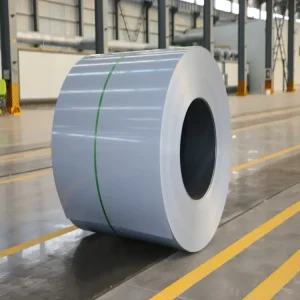
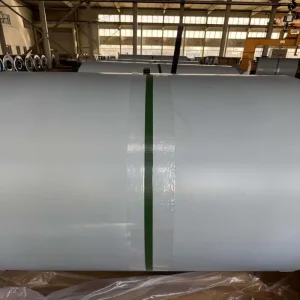
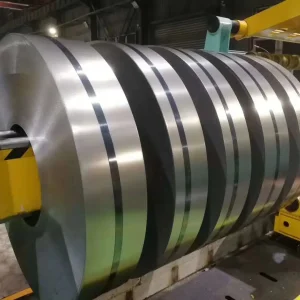
Coils are protected using heavy-duty VCI (Volatile Corrosion Inhibitor) anti-rust paper, fully wrapped in inner and outer galvanized steel edge protectors, sealed with high-tensile radial and circumferential steel strapping, and mounted on heat-treated ISPM-15 compliant wooden skids designed for safe container or break-bulk vessel handling.
Extended Steel Coils, Pipes & Fastener Solutions


Frequently Asked Procurement & Engineering Questions
Clear authoritative answers to common queries raised by electrical motor designers, procurement managers, and transformer core fabricators.
CRNGO (Non-Grain Oriented) steel features magnetic isotropy—meaning its electromagnetic properties are essentially uniform in all direction angles within the sheet plane. This makes CRNGO optimal for rotating equipment like electric motors and generators. CRGO (Grain Oriented) steel undergoes secondary recrystallization to align its magnetic grains in the rolling direction, making it far superior for static transformers where flux flows uni-directionally.
Thinner laminations (e.g., 0.35mm vs 0.50mm) significantly reduce classical eddy current loss, which scales quadratically with thickness ($P_e \propto t^2$). For high-frequency EV traction motors operating at higher excitation frequencies, using 0.20mm or 0.35mm ultra-thin CRNGO minimizes thermal heating and improves overall drive efficiency.
Class C-3 (organic) provides excellent stampability and tool punch life, suited for general motors. Class C-5 (inorganic/organic hybrid) provides high interlaminar resistance, excellent thermal stability (withstanding stress-relief annealing up to 750°C), and refrigerant resistance for hermetic compressors. Class C-6 is a self-bonding (backlak) coating that fuses laminations under heat and pressure without mechanical rivets.
Standard mill manufacturing lead times range from 15 to 30 days depending on coil volume, slit width specifications, and coating requirements. All wholesale orders are packed in heavy-duty VCI anti-corrosion wrap, steel edge protectors, and ISPM-15 heat-treated wooden skids for seaworthy ocean transit.