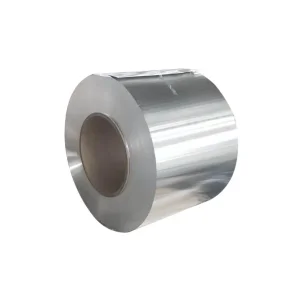
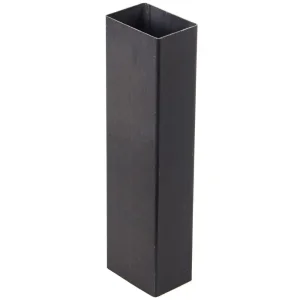
Precision Coated Steel Coils & Structural Steel Products
Direct mill-supply portfolio optimized for extra deep drawing, structural framing, solar racking, and high-durability industrial applications.
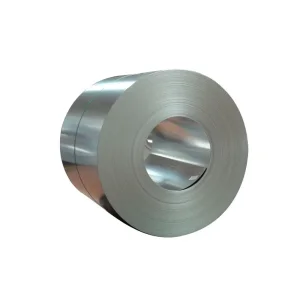
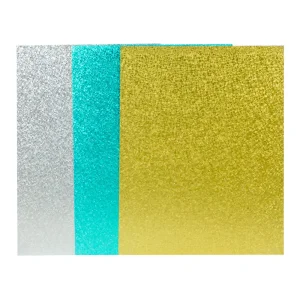
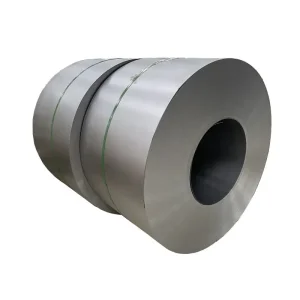
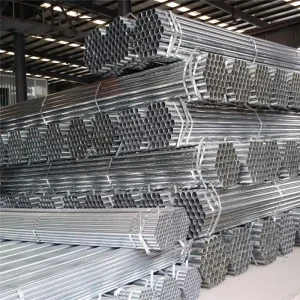
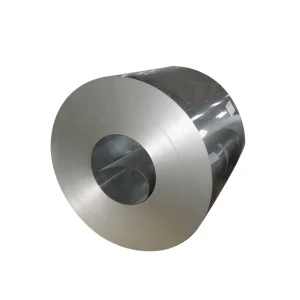

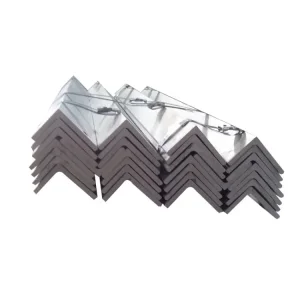
Global Commercial & Industrial Status of Coated EDD Steel Coils
An authoritative technical analysis of how Extra Deep Drawing (EDD) metallic-coated steel coils power modern automotive manufacturing, HVAC systems, and high-precision cold stamping industries worldwide.
Executive Summary for Procurement Directors & Metallurgical Engineers
Coated Extra Deep Drawing (EDD and EDDQ) steel coils represent the apex of flat-rolled carbon steel metallurgy. Engineered using Interstitial-Free (IF) vacuum-degassed chemistry, these coils allow complex geometries to be stamped in single-draw operations without wall thinning, micro-cracking, or zinc flaking. Global industrial growth in light-weight automotive body-in-white (BIW) structures, hermetic compressor housings, and architectural cladding has made sourcing ultra-formable coated steel a strategic imperative for Tier-1 OEMs.
Automotive Stamping Innovation
Automotive OEMs rely on EDD grades such as DC06, DC07, and ASTM A653 EDDS to produce intricate structural components including oil pans, inner door panels, fender liners, and wheel houses. Coating systems like Galvannealed (GA) and Hot-Dip Galvanized (GI) prevent sub-surface oxidation under severe multi-axial mechanical stress.
HVAC & Compressor Shells
Hermetic refrigeration compressors require cylindrical shells that undergo deep draw ratios exceeding $2.1$. Extra deep drawing steel eliminates earring and wall tearing, ensuring structural pressure vessel integrity before gas welding and powder coating.
White Goods & Appliances
Washing machine inner/outer drums, dishwasher tubs, and water heater casings demand smooth, defect-free surface topographies (FB/FC surface quality) with zero strain-aging marks, retaining micro-smooth zinc layers during deep draw operations.
Metallurgical Foundations of Interstitial-Free (IF) Extra Deep Drawing Steel
Understanding crystallographic orientation, vacuum degassing, stabilization alloying, and zinc coating physics under severe plastic deformation.
1. Vacuum Degassing & Chemistry Control
The manufacturing of Extra Deep Drawing (EDD) steel begins in the RH (Ruhrstahl-Heraeus) vacuum degassing unit during secondary steelmaking. Solute carbon ($C$) and nitrogen ($N$) are reduced to ultra-low levels ($C \le 0.002\%$, $N \le 0.003\%$). Small amounts of titanium ($\text{Ti}$) and niobium ($\text{Nb}$) are added to fully tie up remaining interstitial carbon and nitrogen atoms as stable carbides and nitrides ($\text{TiC}$, $\text{TiN}$, $\text{NbC}$). This completely eliminates Lüders strain bands (yield point elongation), rendering the steel non-aging even during extended storage periods.
The resulting matrix consists of pure ferrite, free from interstitial solute atoms. This clean structure allows dislocations to glide smoothly under deep drawing strain without micro-void initiation or localized necking.
2. Texture Optimization ($r$-value & $n$-value)
High deep drawability depends on achieving a favorable crystallographic texture during cold rolling and continuous annealing. Specifically, a strong $\{111\}$ plane texture parallel to the sheet surface maximizes the plastic strain ratio ($r$-value), which measures resistance to thinning:
r = \frac{\epsilon_w}{\epsilon_t} = \frac{\ln(w/w_0)}{\ln(t/t_0)}
While commercial quality GI sheets exhibit $r$-values around $1.0 - 1.2$, our EDD/EDDQ IF steel coils achieve $r$-values between $1.8$ and $2.2$. Simultaneously, high work-hardening exponents ($n$-value $\ge 0.22$) ensure uniform strain distribution across the workpiece, preventing wall rupture during complex geometric draws.
International Specification & Grade Matrix for Deep Drawing Steel Coils
| Standard | Grade Designation | Yield Strength $R_{e}$ (MPa) | Tensile Strength $R_{m}$ (MPa) | Elongation $A_{80}$ (%) min | Plastic Strain $r_{90}$ min | Formability Class |
|---|---|---|---|---|---|---|
| EN 10346 / EN 10152 | DX51D + Z / ZF | 140 – 300 | 270 – 500 | ≥ 22 | — | Commercial Quality (Bending/Profiling) |
| EN 10346 / EN 10152 | DX53D + Z / ZF | 140 – 260 | 270 – 380 | ≥ 30 | ≥ 1.3 | Drawing Quality (DQ) |
| EN 10346 / EN 10152 | DX54D + Z / ZF | 120 – 220 | 260 – 350 | ≥ 36 | ≥ 1.6 | Deep Drawing Quality (DDQ) |
| EN 10346 / EN 10152 | DX56D + Z / ZF | 120 – 180 | 260 – 350 | ≥ 39 | ≥ 1.9 | Extra Deep Drawing Quality (EDD - IF) |
| EN 10346 / EN 10152 | DX57D + Z / ZF | 110 – 170 | 260 – 350 | ≥ 41 | ≥ 2.1 | Super Extra Deep Drawing Quality (S-EDD) |
| ASTM A653 / A653M | CS Type A / B / C | 170 – 310 | ≥ 380 | ≥ 20 | — | Commercial Steel |
| ASTM A653 / A653M | DDS Type A / B | 140 – 240 | ≥ 310 | ≥ 32 | ≥ 1.4 | Deep Drawing Steel |
| ASTM A653 / A653M | EDDS (IF Steel) | 105 – 170 | ≥ 290 | ≥ 40 | ≥ 1.8 | Extra Deep Drawing Steel |
| JIS G3302 / G3313 | SGCC / SECD | 135 – 270 | ≥ 270 | ≥ 28 | — | Commercial / Drawing Quality |
| JIS G3302 / G3313 | SGCD3 / SECF | 120 – 190 | ≥ 270 | ≥ 40 | ≥ 1.9 | Extra Deep Drawing Quality |
China Factory Efficiency & Global Supply Chain Competitiveness
How integrated coastal mill networks, continuous process automation, and economies of scale deliver unprecedented cost-performance ratios to international buyers.
Fully Integrated Metallurgy Lines
Modern Chinese manufacturing bases integrate liquid iron desulfurization, vacuum degassing (RH), continuous slab casting, 5-stand tandem cold rolling mills, continuous annealing lines (CAL), and continuous hot-dip galvanizing lines (CGL) in a single uninterrupted workflow. This reduces thermal energy losses and cycle times by up to 40%.
X-Ray Thickness & Air-Knife Coating Controls
Automated gauge control systems dynamically adjust roll gaps to maintain strip thickness tolerances within $\pm 0.003\text{ mm}$. Simultaneously, closed-loop nitrogen air-knives monitor zinc, galvannealed, or zinc-aluminum-magnesium coating weights in real time across speeds exceeding $180\text{ m/min}$.
Seaport Proximity & Logistical Speed
Located near major ocean hubs (Tianjin, Qingdao, Shanghai), manufacturing plants ship directly via specialized bulk vessels or container lines. Strategic stock reserves of hot-rolled coils allow lead times for custom-slit EDD galvanized coils to be compressed to 15–20 days.
Localized Application Scenarios & Engineering Case Guidelines
Matching metallic coatings, surface finishes, and oil treatments to specific industrial stamping dies and working environments.
Galvannealed (GA / ZF) Coils for Automotive Welding
Galvannealed coating ($100\%\text{ Zn-Fe}$ alloy layer with $9-12\%\text{ Fe}$) is produced by post-heating the galvanized strip to $500-550^\circ\text{C}$. This forms a matte-gray, micro-hard zinc-iron intermetallic structure (Delta and Zeta phases). GA EDD steel (e.g., DX54D+ZF) provides superior spot welding electrode life and paint adhesion (electro-deposition primer) for vehicle doors, body panels, and hood inners.
Hot-Dip Galvanized (GI) Zero-Spangle for White Goods
For home appliances where surface appearance is paramount (FB or FC surface according to EN 10138), zero-spangle hot-dip galvanized DX56D+Z with a skin-passed surface suppresses grain boundary roughness during deep drawing. Skin-passing provides a controlled roughness ($Ra = 0.6 - 1.2 \ \mu\text{m}$) that traps drawing lubricants and prevents die friction galling.
Zinc-Aluminum-Magnesium (ZAM / ZM) for Extreme Environments
Containing $1.5 - 3\%\text{ Mg}$ and $3 - 11\%\text{ Al}$, ZM coatings offer self-healing edge corrosion protection. In deep-drawn solar tracker brackets and agricultural casings subjected to severe shear stress, ZM layers form a dense Simonkolleite corrosion film that outlasts traditional GI coatings by up to four times.
Global Procurement Checklist & Quality Control Verification
Rigorous testing criteria to verify interstitial-free steel quality, coating adhesion under multi-axial strain, and seaworthy packaging integrity.
Essential Mechanical & Metallurgical Testing
- ✓ Tensile & Elongation Testing: Conducted per ISO 6892-1 / ASTM A370 to confirm yield strength, tensile strength, and total strain ($A_{80}$).
- ✓ Erichsen Cupping & Swift Cup Test: Determines the maximum depth of penetration prior to sheet fracturing ($IE \ge 11.5\text{ mm}$).
- ✓ Plastic Strain Ratio ($r$-value): Evaluated at $0^\circ, 45^\circ,$ and $90^\circ$ to rolling directions to calculate average $\bar{r}$ and planar anisotropy $\Delta r$.
Coating Integrity & Packaging Standards
- ✓ Zinc Adhesion Bend Test: $180^\circ$ zero-radius bend testing to ensure zero powdering or flaking along the outer radius.
- ✓ Salt Spray Testing (ASTM B117): Neutral salt spray testing exceeding 720–1200 hours to first red rust formation depending on coating weight.
- ✓ VCI Seaworthy Protection: Eye-vertical or eye-horizontal steel strapping wrapped with anti-corrosion VCI paper, outer steel drums, and side edge protectors.
Technological Roadmap & Industry Outlook (2025–2030)
Emerging innovations in low-carbon steelmaking, ultra-thin high-strength EDD grades, and digital manufacturing intelligence.
Green Steel & EAF Interstitial-Free Refining
Decarbonization commitments are driving the production of IF steel using direct reduced iron (DRI) combined with electric arc furnaces (EAF). Advanced slag refining techniques allow EAF melt shops to match blast furnace purity levels, reducing Scope 1 and Scope 2 carbon emissions by over 60%.
Advanced High-Strength EDD (AHSS-IF)
The boundary between ultra-high formability and ultra-high strength is merging. Next-generation Dual-Phase Interstitial-Free (DP-IF) and Nano-Precipitated EDD steels achieve yield strengths exceeding $340\text{ MPa}$ while retaining total elongations above $32\%$, empowering vehicle lightweighting initiatives.
AI-Driven Surface Defect Detection
High-resolution optical laser cameras integrated directly into continuous galvanizing lines continuously scan strip surfaces at speeds of up to $200\text{ m/min}$. Artificial intelligence models classify micro-dross, pinholes, or zinc scratches instantly, guaranteeing 100% surface quality conformance.
Frequently Asked Questions (FAQ)
Expert responses to critical questions asked by procurement managers, metallurgical engineers, and international importers.
What is the key difference between Deep Drawing (DDQ) and Extra Deep Drawing (EDD / EDDQ) steel coils?
Deep Drawing Quality (DDQ, such as DX54D or DDS) steel is designed for standard multi-stage press stamping where Moderate draw ratios are required. Extra Deep Drawing Quality (EDD/EDDQ, such as DX56D, DX57D, or EDDS) utilizes Interstitial-Free (IF) vacuum-degassed chemistry with ultra-low carbon ($C \le 0.002\%$). EDD steel exhibits a significantly higher plastic strain ratio ($r$-value $\ge 1.9$) and higher elongation ($\ge 39\%$), allowing extremely deep or asymmetrical complex shapes to be formed in a single draw stroke without cracking, thinning, or age hardening.
How do you prevent zinc coating flaking during aggressive deep draw operations?
Zinc flaking is avoided by controlling the iron-zinc alloy interfacial layer during continuous hot-dip galvanizing. By optimizing the aluminum content in the molten zinc bath ($0.15 - 0.20\%\text{ Al}$), a thin, ductile Fe-Al inhibition layer ($\text{Fe}_2\text{Al}_5$) is formed on the steel substrate. This prevents brittle Fe-Zn crystal phase growth, allowing the zinc layer to deform elasto-plastically alongside the steel matrix under high shear stress.
What surface finish and oil treatment should be specified for automotive EDD steel coils?
For outer or unexposed body panels, specify a skin-passed surface (FB or FC surface quality according to EN standards) with a controlled roughness ($Ra = 0.8 - 1.5 \ \mu\text{m}$) and a peak density ($P_c \ge 60/\text{cm}$). A pre-lube or washing oil application ($0.5 - 1.5 \ \text{g/m}^2$) should be applied at the mill. This oil acts as both a temporary corrosion inhibitor and a drawing lubricant during press stamping.
Why is Interstitial-Free (IF) steel non-aging, and what does this mean for inventory management?
IF steel is non-aging because titanium and/or niobium additions bind all free carbon and nitrogen atoms into stable precipitates ($\text{TiC}, \text{TiN}, \text{NbC}$). Without mobile interstitial carbon atoms, Lüders strain bands (stretcher strain marks) cannot form, even after months of warehouse storage. Manufacturers can safely store EDD IF steel coils for over 12 months without risking surface defects during subsequent stamping operations.
What are the recommended coil packaging standards for ocean freight transport?
Ocean shipments require export-grade seaworthy packaging. This includes inner VCI (Vapor Corrosion Inhibitor) paper wrapping, a heavy-duty galvanized steel outer jacket, radial and circumferential steel strapping (minimum 4 radial, 3 circumferential), rubber edge protectors, and corrugated steel side discs. Coils can be packed either "Eye to Side" (Horizontal) or "Eye to Sky" (Vertical) on treated wooden pallets suitable for containerized or break-bulk loading.
How does China manufacturing offer cost advantages for custom-slit EDD steel coils?
China's steel ecosystem benefits from fully integrated production chains—from raw material port terminals and high-capacity RH vacuum degassers to high-speed slitting lines located within the same industrial cluster. This eliminates intermediate transportation costs, minimizes material yield scrap through high-precision laser-guided slitting, and delivers economies of scale that lower price per ton while maintaining full compliance with EN, ASTM, and JIS standards.
Secondary Coated Coils & Industrial Steel Offerings
Explore our extended mill-direct product portfolio, including electrical silicon steels, tinplate, hollow sections, galvannealed coils, and structural plates.