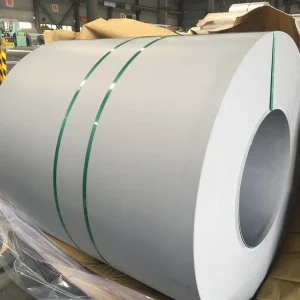
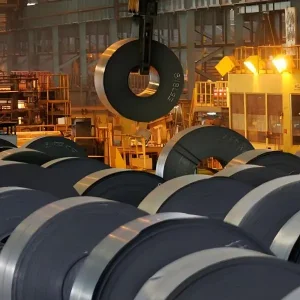
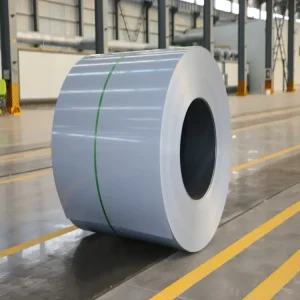
Featured Coated & Structural Steel Solutions
Explore our mill-direct premium coated steel products engineered for extreme environmental durability, high structural integrity, and long service life across global industrial sectors.





Understanding ZAM Steel: Chemical Microstructure & Self-Healing Corrosion Science
Zinc-Aluminum-Magnesium (ZAM) alloy coated steel represents the most significant breakthrough in metallic coating technology since the invention of traditional continuous hot-dip galvanizing. Designed to overcome the structural and environmental limitations of standard Galvanized (GI) and Galvalume (GL/Aluzinc) products, ZAM steel delivers up to 10 to 20 times greater corrosion resistance in harsh atmospheric, marine, and chemical environments.
Ternary Alloy Microstructure
Unlike conventional pure zinc coatings ($>99\% \text{ Zn}$) or binary aluminum-zinc coatings ($55\% \text{ Al}, 43.4\% \text{ Zn}, 1.6\% \text{ Si}$), ZAM features a precisely engineered ternary alloy matrix. The chemical formulation typically consists of:
- Zinc (Zn): Base balance providing foundational cathodic sacrificial protection.
- Aluminum (Al - 1.5% to 11.0%): Enhances barrier layer density and elevated-temperature oxidation resistance.
- Magnesium (Mg - 1.5% to 3.0%): Triggers the formation of dense, stable protective film phases (Simonkolleite and Zinc-Hydroxide-Carbonate).
Cut-Edge Self-Healing Mechanism
The primary weakness of traditional pre-coated steel is edge corrosion at sheared cut edges, drilled holes, or surface scratches. ZAM solves this via an automated electrochemical reaction:
When exposed to corrosive moisture, the magnesium and aluminum ions dissolve from the surrounding coating matrix and migrate across the exposed steel cut edge. They form a tightly adhered, insoluble protective layer composed of Simonkolleite ($\text{Zn}_5(\text{OH})_8\text{Cl}_2\cdot \text{H}_2\text{O}$) and magnesium-substituted zinc carbonates.
This passive film seals the bare steel edge against oxygen and chloride ingress, effectively stopping red rust propagation without requiring secondary post-galvanizing or touch-up painting.
Comparative Metallurgy & Salt Spray Performance Benchmark
The table below details empirical laboratory test data comparing ZAM steel against traditional metallic coatings under identical testing protocols (Neutral Salt Spray Test ASTM B117 / ISO 9227):
| Metallic Coating Type | Nominal Composition | Cut-Edge Protection | Salt Spray Resistance (5% Red Rust) | Formability & Galling | Ammonia & Alkaline Resistance |
|---|---|---|---|---|---|
| ZAM Steel (Zn-Al-Mg) | Zn + 6% Al + 3% Mg | Excellent (Self-Healing) | 4,000 to 6,000+ Hours | High (Low Friction Coeff.) | Superior (C5-I/C5-M Grade) |
| Hot-Dip Galvanized (GI) | 99% Pure Zinc | Poor (Prone to Edge Rust) | 500 to 1,000 Hours | Moderate (Flaking Risk) | Poor (Degrades Rapidly) |
| Galvalume (GL / Aluzinc) | 55% Al + 43.4% Zn + 1.6% Si | Moderate (Limited Sacrificial) | 1,500 to 2,000 Hours | Fair (Micro-cracking risk) | Very Poor (Alkaline Attack) |
| Electro-Galvanized (EG) | Pure Thin Zinc Layer | None | 100 to 300 Hours | Excellent (Thin Sheet) | Poor |
International Technical Standards & Manufacturing Tolerances
Our ZAM steel manufacturing facility strictly complies with global ASTM, EN, and JIS standards. Engineering specifications can be fully customized based on yield strength, coating mass, and surface treatment requirements for major infrastructural tenders.
ASTM A1046 / A1046M Specification
Standard Specification for Steel Sheet, Zinc-Aluminum-Magnesium Alloy-Coated by the Hot-Dip Process.
- Coating Designation: ZM60, ZM90, ZM120, ZM180, ZM275, ZM350, ZM430.
- Structural Steel Grades: SS Grade 33 (230), SS Grade 50 (340) Class 1 & 2, SS Grade 80 (550).
- High-Strength Low-Alloy (HSLA): HSLAS Grade 45 to Grade 80.
EN 10346 European Standard
Continuously hot-dip coated steel flat products for cold forming and structural engineering applications.
- Coating Codes: ZM120, ZM175, ZM200, ZM250, ZM310, ZM430.
- Commercial Steels: DX51D+ZM, DX52D+ZM, DX53D+ZM, DX54D+ZM (Deep Drawing).
- Structural Steels: S250GD+ZM, S320GD+ZM, S350GD+ZM, S450GD+ZM, S550GD+ZM.
JIS G 3323 Japanese Standard
Hot-dip zinc-aluminum-magnesium alloy-coated steel sheets and coils widely adopted across Asia.
- Coating Designations: K08, K10, K12, K14, K18, K27, K35, K45.
- Material Classification: SGC340, SGC400, SGC440, SGC490, SGC570.
- Surface Finishing: Regular Spangle, Zero Spangle, Chromate Free, Oiled, Anti-Fingerprint.
China Supply Chain Advantages & Manufacturing Capability
As a leading primary manufacturer operating advanced Continuous Galvanizing Lines (CGL) in Tianjin, China, we leverage state-of-the-art metallurgical equipment, automated thickness feedback control, and unmatched freight logistics to serve high-volume global buyers.
Direct Mill Sourcing & Scale Efficiency
Our strategic integration with premier raw hot-rolled strip suppliers (BaoSteel, Shougang, Ansteel) ensures prime substrate quality, exact chemical purity, and stable mill pricing. Direct manufacturing eliminates intermediary trading markups, allowing us to pass significant cost savings down to large infrastructure project developers and OEM stockists.
Deep Processing & Custom Fabrication
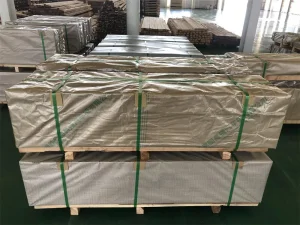
Beyond producing standard master ZAM coils, our integrated workshop provides precision slitting (narrow ribbon coils), cut-to-length flat sheets, C/Z purlin roll forming, structural solar mounting channels (Unistrut profile), and punch-perforated structural components packed in ocean-seaworthy wooden cradles.
Reducing Total Cost of Ownership (TCO) for International Buyers
For international EPC contractors, automotive Tier-1 suppliers, and agricultural equipment manufacturers, material selection is a balance of upfront procurement cost (CAPEX) versus long-term maintenance/replacement overhead (OPEX).
Eliminating Post-Galvanizing Logistics
Traditionally, heavy steel fabrications were fabricated from hot-rolled black steel and then transported to off-site galvanizing plants for batch hot-dip dipping. This process incurs severe logistics costs, extended project lead times, thermal distortion risks, and un-uniform coating thickness.
By switching to pre-coated ZAM steel coils and sheets, fabricators can perform roll-forming, cutting, and stamping directly. The self-healing cut-edge protection removes the need for post-galvanizing entirely, cutting manufacturing lead times by 30% to 50% and dramatically reducing freight overhead.
30-Year Design Lifespan in Extreme C5 Environments
In ISO 12944 atmospheric corrosion categories C4 (Industrial/Coastal) and C5 (Severe Marine/Offshore), standard hot-dip galvanized steel loses 2.1 to 4.2 microns of zinc layer per year. A Z275 GI coating can fail in fewer than 10 years.
ZAM steel exhibits an exceptionally low corrosion rate—frequently under 0.2 microns per year—yielding an operational maintenance-free lifespan exceeding 25 to 30 years. This longevity makes ZAM the preferred specification for utility-scale solar farms financed by institutional infrastructure funds requiring long asset warranties.
Engineering Applications Across Key Global Industries
Due to its unique mechanical formability, surface hardness, and self-healing properties, ZAM steel is replacing legacy materials in critical structural and industrial domains worldwide.
PV Solar Mounting & Trackers
Used extensively for C-purlins, solar tracker torque tubes, ground screw connectors, and mounting structures in desert, agrivoltaic, and offshore solar farms where sand abrasion and moisture are constant threats.
Automotive & Transportation
Specified by Tier-1 OEM auto makers for chassis cross-members, underbody brackets, suspension arms, electric vehicle (EV) battery pack enclosures, and highway crash guardrails.
Agriculture & Livestock Housing
Exceptional resistance to animal excrement, uric acid, and high ammonia atmospheres ($\text{NH}_3$). Ideal for poultry farm roofing, swine housing structures, grain storage silos, and greenhouse arches.
HVAC & Electrical Enclosures
Replaces stainless steel and electro-galvanized sheet in commercial HVAC air ducts, cable trays, switchgear cabinets, and outdoor telecom base station enclosures.
Coastal Infrastructure & Civil Works
Deployed in sea-wall framing, coastal bridge sound barriers, port warehouse roofing, and drainage culverts exposed to high salt-spray marine environments.
Heavy Structural Framing
Utilized for light-gauge steel framing (LGSF), high-density automated warehouse racking systems, and mezzanine flooring profiles requiring precise dimensional tolerances.
Metallurgical Innovations & Green Transition Trends in ZAM Steel
As global decarbonization mandates intensify, the coated steel industry is undergoing a massive transformation toward lower operational carbon footprints and longer asset circularity.
Low-Coating Weight, Superior Protection
The primary environmental benefit of ZAM lies in its ability to achieve superior corrosion resistance with significantly lower coating mass. For example, a ZM120 ZAM coating ($120 \text{ g/m}^2$) outperforms a Z275 ($275 \text{ g/m}^2$) traditional hot-dip galvanized coating in salt spray tests.
Consuming over 50% less refined zinc per square meter directly reduces raw material extraction impact, furnace energy consumption during continuous galvanizing, and transport freight carbon emissions.
Integration with Hydrogen-Based Direct Reduced Iron (DRI)
As a forward-thinking China steel manufacturer, our mill partners are actively integrating electric arc furnace (EAF) steelmaking powered by renewable energy and hydrogen-reduced iron (DRI) substrates. Combining low-embodied-carbon steel substrates with long-life ZAM alloy coatings yields a net-zero compatible steel solution for ESG-conscious global enterprises.
Frequently Asked Questions (FAQ) for Engineering & Procurement Teams
Comprehensive technical responses regarding ZAM steel processing, welding parameters, paintability, and factory customization options.
How does ZAM steel compare directly with stainless steel 304/316 in terms of cost and performance?
While stainless steel (grade 304 or 316) relies on chromium content ($>10.5\%$) for corrosion resistance, its raw material cost is approximately 3 to 5 times higher than ZAM steel due to high nickel and chromium market prices. ZAM steel delivers comparable or superior corrosion resistance in neutral, atmospheric, and chloride environments (such as road salt or coastal spray) at a fraction of the cost. For structural profiles, solar racking, and agricultural housing, ZAM provides a vastly superior cost-to-performance ratio without sacrificing mechanical strength.
Can ZAM steel coils and sheets be welded, and what are the recommended welding practices?
Yes, ZAM steel can be easily welded using standard industrial methods including MIG/MAG (GMAW), TIG, Resistance Spot Welding, and Laser Welding. Because the ZAM coating contains magnesium, it produces slightly less zinc vapor spatter during welding compared to traditional heavy galvanized coatings. It is recommended to use slightly higher welding current or pulsed ARC welding setups and appropriate local exhaust ventilation. Weld seams can be protected post-weld with zinc-rich rich touch-up sprays or left to self-heal if edge migration margins allow.
What is the surface hardness and scratch resistance of ZAM coating compared to standard Galvanized steel?
Standard pure zinc galvanizing has a surface Vickers micro-hardness of approximately 60 to 80 HV. In contrast, the intermetallic phases formed in Zinc-Aluminum-Magnesium coatings (containing $\text{Zn}_2\text{Mg}$ binary and ternary eutectic phases) achieve a surface hardness of 130 to 160 HV—more than double that of GI. This extreme surface hardness renders ZAM highly resistant to scratches, galling, and mechanical abrasion during high-speed roll forming, transportation, and severe field installation.
Is ZAM steel suitable for powder coating or post-painting (Pre-Painted ZAM / PPZAM)?
Absolutely. ZAM steel exhibits outstanding paint adhesion and bare corrosion resistance under paint films. When pre-painted (producing Pre-Painted ZAM or PPZAM), any micro-crack or stone chip in the paint layer will not result in paint blistering or creep rust underneath, because the ZAM base substrate immediately forms its passive self-healing barrier. We supply chromate-free passivated or oiled ZAM coils optimized for direct powder coating lines.
How does the cut-edge self-healing mechanism behave in thick plate gauges (e.g., 3.0mm to 6.0mm)?
The cut-edge self-healing effect operates effectively up to sheet thicknesses of approximately 6.0mm. For thicker gauges ($>3.0\text{mm}$), initial micro-rusting may appear at the center of the sheared edge during the first few weeks of outdoor exposure. However, as rainfall and atmospheric moisture interact with the surrounding ZAM coating, magnesium and zinc ions migrate across the edge, forming the dense Simonkolleite film that completely arrests further corrosion. Within 1 to 2 months, the cut edge stabilizes completely.
What mill test certificates and third-party quality compliance documents are provided with export shipments?
Every shipment from our factory is accompanied by an official EN 10204 3.1 Mill Test Certificate (MTC) stating exact heat numbers, chemical composition analysis (Zn, Al, Mg content), yield strength, tensile strength, elongation, coating weight testing (triple spot test), and bend test results. We also welcome independent third-party inspections by SGS, BV, Intertek, or TUV prior to vessel loading at Tianjin Port.
Additional High-Performance Steel Products
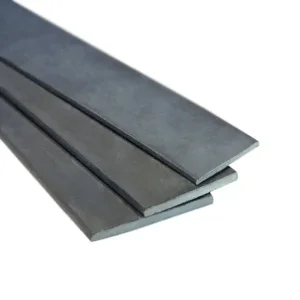
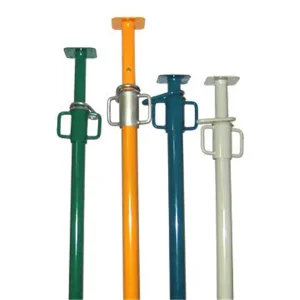
Explore our comprehensive industrial steel portfolio, featuring prime electro-galvanized, stainless, flat bar, structural pipe, and scaffolding solutions.