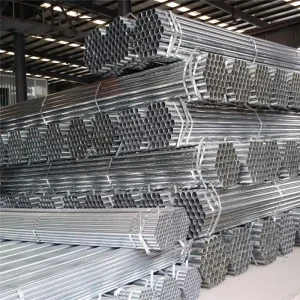
Featured Precision Cold-Rolled & Coated Steel Solutions
Explore our top-tier export range, engineered to stringent international specs (ASTM, EN, JIS, GB/T) for deep-drawing, electrical, structural, and anti-corrosive industrial applications.

Wholesale China Suppliers of Electrolytic Tinplate ETP and TFS Tin Clad Steel for Packaging - Quality Factory Products Supplier, Suppliers
Inquire Product Details
Wholesale China Suppliers Factory ZM AZM Coated Steel Sheet 275g Zinc Aluminum Magnesium Alloy for Solar Mounting Structures Manufacturers, Factory
Inquire Product Details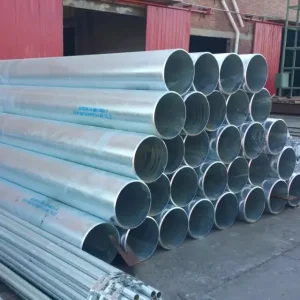
High-Quality High Strength A53 A106GR.B Spiral Steel Pipe from China Suppliers | Quality Factory Manufacturing Manufacturer, Factory
Inquire Product Details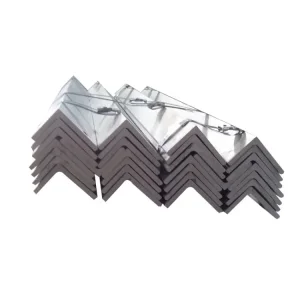
Wholesale Steel Processing Parts Q195 Q215 Hot Rolled steel angle iron beam steel structural Manufacturers, Supplier
Inquire Product Details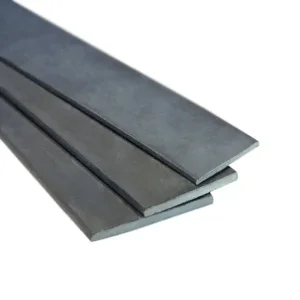
High-Quality Steel Flat Bar Iron And Steel Flat Rolled Products Bar Galvanized Flat Steel Carbon Steel Flat Supplier, Suppliers
Inquire Product Details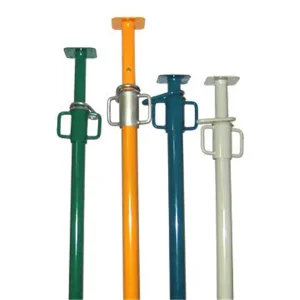
Wholesale Galvanizd/Painted Scaffold Heavy Light Duty Telescopic Post Formwork Construction Scaffolding Support/Shoring Adjustable Steel Prop for Building Supplier, Factories
Inquire Product Details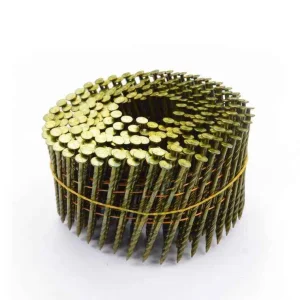
High-Quality Precision 15 Degree Frame Coil Nails with Copper Plated Welding Wire - China Suppliers & Factory for Wood and Furniture Suppliers, Factory
Inquire Product Details
High-Quality 2B BA No.1 No.4 Hl 8K Cold Rolled 201 304 304L 316 316L 309S 310S 321 430 2205 904L Roll Stainless Steel Coi Supplier, Factory
Inquire Product DetailsUnderstanding Cold Rolled Steel: Industrial Core & Quality Metrics
Cold-rolled steel represents the pinnacle of flat-rolled carbon and alloy steel processing. By strain-hardening steel below its recrystallization temperature, mills deliver exceptional surface finish, tight dimensional tolerances, and customized mechanical strength.
How Is Cold Rolled Steel Made? Step-by-Step Manufacturing Workflow
To evaluate supplier capability, global buyers must understand the multi-stage thermo-mechanical processing required to turn hot-rolled pickled coils into premium cold-rolled sheets (CRC) or coils (CRC/SPCC).
Pickling & Descaling (HAPL Line)
Hot-rolled steel coil (HR) enters a continuous Hydrochloric Acid Pickling Line (HAPL). Iron oxide scale formed during hot rolling is chemically removed. The strip is rinsed, dried, and electro-trimmed at the edges to ensure uniform width and prevent micro-cracking during cold reduction.
Cold Reduction Rolling (TCM Mill)
The pickled strip passes room-temperature roll stands in a Tandem Cold Mill (TCM) or Reversing Cold Mill. High mechanical pressure reduces thickness by up to 50%–80%. Grains elongate along the rolling direction, triggering work hardening which dramatically elevates yield and tensile strength.
Electrolytic Cleaning & Degreasing
Rolling lubricants and carbon residue remaining on the strip surface are electrolytically washed. Maintaining micro-cleanliness prevents surface carbon spots during high-temperature thermal annealing, ensuring pristine surface quality for post-painting or plating.
Recrystallization Annealing (CAL / BA)
Hard-rolled steel is brittle. Heat treatment in a Continuous Annealing Line (CAL) or Batch Annealing (BA) furnace heats steel to 650°C–720°C in a protective H₂/N₂ atmosphere. Microstructure recrystallizes, restoring ductility and enabling deep-drawing capability.
Temper Rolling (Skin Pass)
A light pass (0.5%–2% strain) eliminates Lüders bands (stretcher strain marks) and suppresses yield point elongation. Temper rolling imparts precise surface textures—such as dull finish (Ra 0.6–1.2 µm) for oil retention during stamping or bright finish for mirror plating.
Tension Leveling, Oiling & Slitting
The annealed coil passes through a tension leveler to optimize shape flatness. Rust-preventive oil (slushing oil or electrostatic dry oiling) is applied uniformly. Automated rotary shears slit coils to requested widths before seaworthy packaging.
Global Steel Standards & Grades Matrix
International standard alignment chart for procurement engineers and purchasing directors evaluating equivalent cold-rolled steel grades.
| Quality Level | EN 10130 (Europe) | ASTM A1008 (USA) | JIS G3141 (Japan) | GB/T 5213 (China) | Typical Mechanical Application |
|---|---|---|---|---|---|
| Commercial Quality | DC01 | CS Type A/B/C | SPCC | St12 / St37-2G | Bending, light forming, HVAC ducting, structural frames |
| Drawing Quality | DC03 | DS Type A/B | SPCD | St13 / SC1 | Automotive inner panels, appliance casings, complex bends |
| Deep Drawing Quality | DC04 | DDS | SPCE | St14 / SC2 | Oil pans, deep drawn shells, compressor covers |
| Extra Deep Drawing | DC05 / DC06 | EDDS (IF Steel) | SPCGF / SPCG | St15 / St16 | Complex body-in-white (BIW) automotive stampings |
| Structural / High Strength | HC260LA / HC340LA | SS Grade 33-80 | SPFC 340-590 | B240LA / B340LA | Automotive structural beams, chassis components, solar rails |
Global Industry Trends & Technological Innovations in Cold Rolling
The cold-rolled steel industry is undergoing a structural paradigm shift driven by decarbonization, automotive lightweighting, and artificial intelligence.
Ultra-High Strength Steels (AHSS & UHSS)
Modern cold mills are migrating toward 3rd-generation Advanced High-Strength Steels (AHSS) such as DP (Dual Phase), TRIP (Transformation-Induced Plasticity), and QP (Quenching and Partitioning) steels. These grades allow automotive OEMs to reduce vehicle weight by up to 25% without compromising structural crash safety.
Green Cold Rolling & Zero-Carbon Hydrogen Annealing
Environmental standards demand low-carbon footprint steel. Top tier factories utilize 100% green hydrogen continuous annealing furnaces, eliminating CO₂ emissions during thermal processing while recycling acid pickling rinse waters via zero-liquid-discharge (ZLD) purification units.
AI-Driven Automatic Gauge Control (AGC)
Next-gen cold rolling lines integrate real-time X-ray gauge sensors and hydraulic Automatic Gauge Control (AGC). AI neural networks analyze strip tension, roll speed, and thermal expansion simultaneously, reducing strip head-to-tail thickness deviation to within ±0.005 mm.
China Factory 4.0: Supply Chain Resilience & Cost-Efficiency Advantage
Tianjin and northern China steel hubs have evolved into the world's most consolidated steel processing ecosystems, offering international buyers unprecedented supply stability.
Vertical Upstream Integration
By establishing direct strategic partnerships with major hot-rolled coil mills (such as Shougang, HBIS, and Baosteel), Chinese cold rolling mills eliminate raw material bottlenecks, securing consistent carbon chemical purity and competitive baseline pricing.
End-to-End Quality Inspection
From chemical ladle analysis to continuous automatic surface flaw detection systems (ASDI), mills utilize non-destructive ultrasonic testing, tension-straightening verification, and mill test certification (EN 10204 3.1) for complete lot traceability.
Port Logistics & Rapid Customization
Situated adjacent to major deep-water ports like Tianjin Port, local supply chains enable seamless containerized and breakbulk logistics. In-house custom slitting, oiling, and VCI moisture-proof packing shorten international procurement lead times to 15–25 days.
Global Commercial & Industrial Application Scenarios
How different sectors leverage cold-rolled steel properties to maximize structural performance, surface finish, and long-term durability.
Automotive Stamping & Body Components
Cold-rolled sheets (DC04, SPCE) are heavily specified for automotive door inner panels, hoods, fenders, and structural brackets. Their consistent yield strength prevents spring-back issues during high-speed automated stamping dies.
Home Appliances & White Goods
Refrigerators, washing machines, and microwave outer covers utilize commercial-grade SPCC/DC01 cold-rolled coils as substrate for powder-coating and electro-galvanizing. Ultra-flat surface roughness (Ra ~ 0.4 µm) prevents orange-peel paint defects.
Electrical Motors & Transformers
Cold-rolled non-grain-oriented (CRNGO) silicon steel coils (e.g., M310 to M800) undergo specialized cold reduction to align magnetic domains, minimizing core loss (W/kg) in electric vehicle motors and power distribution transformers.
Frequently Asked Questions (FAQ) for Steel Buyers
Expert answers from metallurgy directors addressing global procurement, quality inspection, and technical specifications.
What is the primary difference between Hot Rolled Steel (HRS) and Cold Rolled Steel (CRS)?
Hot rolled steel is rolled above its recrystallization temperature (>1000°C), leaving mill scale, looser dimensional tolerances (typically ±0.15mm), and a rough surface. Cold rolled steel is processed at room temperature from pickled hot-rolled coils, yielding tighter tolerances (down to ±0.015mm), a smooth surface finish, and enhanced yield strength via strain hardening.
How do mills prevent rust during ocean freight shipping?
Cold-rolled steel easily oxidizes if exposed to moisture. Reliable suppliers apply electrostatic rust-inhibiting slushing oil (1.0–2.5 g/m²) and wrap coils with VCI (Vapor Corrosion Inhibitor) anti-rust paper, plastic film, steel inner/outer edge protectors, and heavy-duty iron corrugated sleeves prior to containerizing or breakbulk shipping.
What does "Stretcher Strain Marks" or Lüders Bands mean, and how is it prevented?
Lüders bands are visible flame-like surface lines caused by yield point elongation during initial sheet forming. Cold mills prevent this by subjecting annealed steel to temper rolling (skin pass), which introduces a small amount of plastic strain (0.5%–2%), suppressing discontinuous yield behavior.
Can cold-rolled steel be directly painted or galvanized?
Yes. However, the steel must undergo degreasing to remove protective storage oil. Cold-rolled steel serves as the baseline substrate for Electro-Galvanized (EG), Continuous Hot-Dip Galvanized (GI), Galvalume (GL), and Pre-Painted Galvanized Steel (PPGI/Color Coated Coil) production lines.
Global Industrial Steel Supply Portfolio
Explore related structural pipes, electrical silicon steels, stainless steel coils, and structural profiles direct from China manufacturing facilities.

Wholesale Slip on Plate Flanges Flat Plain Welding Carbon Steel stainless steel Flange blind flange Manufacturer, Suppliers
Inquire Product Details
Wholesale CRNGO Silicon Steel Coil M310 M350 M470 M600 M800 - China Suppliers & Factory for Non-Grain Oriented Electrical Steel Supplier, Suppliers
Inquire Product Details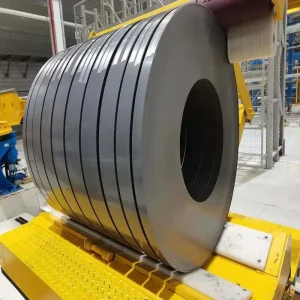
Wholesale Silicon steel coil (CRNGO) Manufacturers, Factories
Inquire Product Details
High-Quality China Suppliers - Factory Direct Stainless Steel Coil 201 304 304L 316 316L 309S 310S 321 430 2205 904L Factory, Factories
Inquire Product Details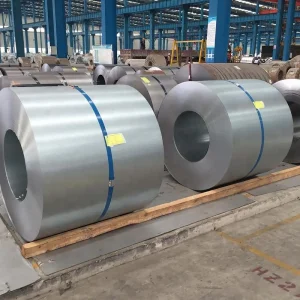
High-Quality China Suppliers of Galvanized Steel Coils - High-Quality Factory Products for Construction and Industry Manufacturers, Suppliers
Inquire Product Details
Wholesale High Zinc Hot-Dip Galvanized Steel Pipes, Greenhouse Steel Pipes,Agricultural Galvanized Pipes Manufacturers, Factory
Inquire Product Details
Wholesale CRNGO of M310 M350 M470 M600 M800 Silicon Steel Non-Grain Oriented Silicon/Electrical Steel Coil Manufacturer, Manufacturers
Inquire Product Details