
Featured Industrial Products Portfolio (Part I)
Precision-engineered carbon steel, galvanized coils, structural tubing, and electrical steel solutions certified for global export.


1. Executive Overview & Chemical Metallurgical Fundamentals of DX51D Steel
Understanding EN 10346 / EN 10143 standard galvanized steel coils: Composition, Mechanical Integrity, and Microstructural Behavior.
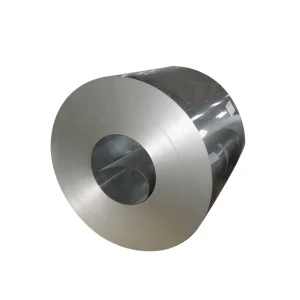
In modern structural engineering, industrial manufacturing, and infrastructure fabrication, DX51D steel coils represent the global backbone of continuously hot-dip zinc-coated flat steel products. Designated under the European standard EN 10346 (which superseded EN 10142 and EN 10147), DX51D is categorized as a commercial profiling and bending grade carbon steel engineered for versatile cold-forming operations, deep lock-seaming, and protective architectural cladding.
The standardized nomenclature breaks down with technical precision: "D" denotes a flat steel product designed specifically for cold forming; "X" signifies that the substrate manufacturing process is not restricted to a single hot-rolled or cold-rolled rolling path (though high-precision applications predominantly utilize cold-rolled strip); "51" represents the mechanical sequence number indicating commercial quality steel with guaranteed formability; and the secondary "D" specifies that the protective hot-dip coating process has been applied directly to the continuous strip.
Standard commercial grade offering optimal yield-to-tensile ratio. Designed for roll forming, lock-seaming, light bending, C/Z purlins, and standard corrugated roofing. Tensile strength: 270–500 MPa.
Engineered for moderate drawing and complex geometry forming. Exhibits higher percentage elongation ($A_{80} \ge 22\%$) and superior ductility for automotive and appliance chassis components.
Deep drawing (DX53D) and super deep drawing (DX54D) grades utilized where severe deformation, deep stamping, and zero-strain aging are absolute engineering requirements.
Chemical Composition & Metallurgical Microstructure
The exceptional cold-forming characteristics of DX51D galvanized steel stem from its strictly controlled chemical composition. By maintaining low carbon ($C \le 0.12\%$) and manganese ($Mn \le 0.60\%$) thresholds, manufacturers eliminate excessive hardness while retaining adequate structural shear strength. Phosphorus and sulfur levels are tightly capped ($P \le 0.10\%$, $S \le 0.045\%$) to eliminate hot-shortness during hot-dip coating and prevent micro-cracking across the heat-affected zones during welding.
| Steel Grade | Carbon (C) % | Manganese (Mn) % | Phosphorus (P) % | Sulfur (S) % | Silicon (Si) % | Yield Strength (MPa) | Tensile Strength (MPa) | Elongation $A_{80}$ (%) |
|---|---|---|---|---|---|---|---|---|
| DX51D+Z | ≤ 0.12 | ≤ 0.60 | ≤ 0.10 | ≤ 0.045 | ≤ 0.50 | 140 – 300 (Reference) | 270 – 500 | ≥ 22 |
| DX52D+Z | ≤ 0.12 | ≤ 0.60 | ≤ 0.10 | ≤ 0.045 | ≤ 0.45 | 140 – 300 | 270 – 420 | ≥ 26 |
| ASTM A653 CS Type A | ≤ 0.10 | ≤ 0.50 | ≤ 0.02 | ≤ 0.035 | — | 205 – 380 | ≥ 310 | ≥ 20 |
| JIS G3302 SGCC | ≤ 0.15 | ≤ 0.80 | ≤ 0.05 | ≤ 0.050 | — | Ref. 205+ | ≥ 270 | ≥ 18 |
2. Manufacturing Engineering & Hot-Dip Galvanizing Process Roadmap
From Continuous Cold Reduction Tandem Mills to High-Speed Zinc Pot Metallurgy and Skin-Pass Finishing.
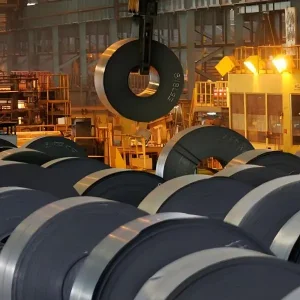
The production of premium-grade DX51D galvanized steel coils requires a continuous, highly automated metallurgical process route. Leading modern manufacturing facilities leverage integrated cold rolling mills coupled with continuous galvanizing lines (CGL) operating at strip speeds exceeding 180 to 220 meters per minute.
The cold-rolled steel strip undergoes high-efficiency alkaline cleaning and electrolytic degreasing to remove rolling oils. It enters a continuous vertical annealing furnace with a protective $N_2 / H_2$ reducing atmosphere ($750^\circ\text{C} - 830^\circ\text{C}$) to recrystallize the grain structure.
The annealed strip enters the molten zinc pot ($450^\circ\text{C} - 465^\circ\text{C}$) under precise tension control. Small amounts of aluminum ($0.15\% - 0.25\%$) are added to the bath to form a microscopic, ductile $\text{Fe}_2\text{Al}_5$ inhibition layer that prevents brittle intermetallic iron-zinc phase formation.
As the strip exits the zinc pot vertically, dual supersonic nitrogen/air knife jets blow off excess liquid zinc. Closed-loop X-ray or isotope thickness gauges continuously measure the coating weight (e.g., Z100, Z140, Z275, Z600) and adjust air pressure dynamically.
Advanced Surface Finishes & Post-Treatments for DX51D Coils
Modern factory production lines offer specialized surface spangle configurations and chemical passivations tailored to client downstream processing needs:
- Regular Spangle (Normal Spangle): Natural dendritic zinc crystal growth formed during unhindered cooling. Preferred for standard industrial structural components, HVAC ducting, and agricultural equipment.
- Minimized / Zero Spangle (Suppressed Spangle): Zinc bath cooling is controlled with lead-free formulation and water/mist spraying to eliminate visible crystal patterns. Provides a smooth, ultra-flat surface essential for high-end pre-painting (PPGI substrate) and automotive body panels.
- Skin-Pass (Tension Levelling): A light cold reduction ($0.5\% - 1.5\%$) applied after galvanizing to eliminate stretcher strain marks, smooth out micro-roughness, and optimize surface texture for stamping and aesthetic painting.
- Chromate-Free Chemical Passivation (RoHS Compliant): Environmentally friendly trivalent chromium or organic thin-film passivations that prevent white rust oxidation during ocean transit and long-term warehouse storage.
3. Global Industrial Market Landscape & Supply Chain Dynamics
Macroeconomic trends, raw material pricing correlations, trade flow logistics, and decarbonization shifts in steel production.
The worldwide demand for DX51D galvanized steel coils continues to expand, driven by rapid urbanization across emerging markets, robust infrastructure investments in North America and Europe, and the global transition toward renewable energy infrastructure. As a versatile, cost-effective corrosion-resistant material, DX51D serves as a reliable economic benchmark for the broader flat steel trading market.
The spot price of DX51D coils is dictated by a dual-commodity relationship: Hot Rolled Coil (HRC) base steel prices and London Metal Exchange (LME) refined zinc prices. Mill conversion margins depend on energy efficiency and chemical additive yield.
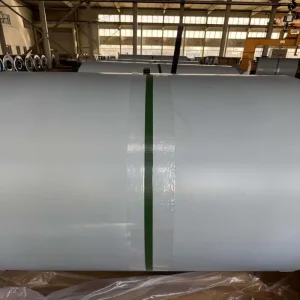
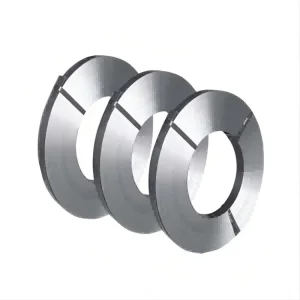
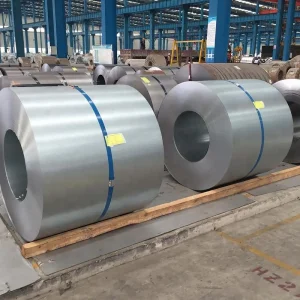
Maritime export requires heavy-duty seaworthy packaging: anti-rust VCI paper, inner plastic wrapping, galvanized outer metal protective rings, eye-to-sky or eye-to-wall steel strapping, and wooden skid pallets capable of handling 5 to 28-ton coils.
With CBAM (Carbon Border Adjustment Mechanism) implementation in Europe, leading manufacturers are integrating Hydrogen-DRI (Direct Reduced Iron) and EAF (Electric Arc Furnace) production routes to supply low-carbon DX51D coils with audited EPD certificates.
4. Macro-Industry Solutions & Localized Application Scenarios
Engineered performance across structural building, HVAC mechanical, agricultural infrastructure, and clean energy sectors.
The versatility of DX51D galvanized steel coils makes them an ideal candidate for customized, cross-industry structural solutions. Below is a engineering analysis of localized application scenarios:
DX51D+Z (typically with Z180 to Z275 coating) is roll-formed into trapezoidal corrugated roofing sheets, standing seam wall cladding, C/Z purlins, and Light Gauge Steel (LGS) framing studs. The sacrificial zinc protection ensures 25 to 50 years of atmospheric maintenance-free service life.
For spiral ventilation ducts, rectangular air distribution systems, cable trays, and electrical junction boxes, DX51D provides excellent lock-seaming performance without zinc coating flaking or micro-cracking at sharp 90-degree bends.
In modern commercial agricultural greenhouses and solar PV ground-mounting structures, heavy galvanizing coatings (Z275 to Z600 or Zinc-Aluminum-Magnesium alternatives) resist harsh organic ammonia emissions, fertilizers, and high soil humidity environments.
5. Advanced Quality Control, Technical Testing & E-E-A-T Assurance
Rigorous laboratory inspection protocols ensuring zero-defect compliance with international engineering standards.
To maintain strict E-E-A-T (Experience, Expertise, Authoritativeness, and Trustworthiness) standards, premier DX51D coil manufacturers enforce rigorous non-destructive and destructive testing regimes on every production heat batch. Factory mill test certificates (MTCs) issued in strict accordance with EN 10204 3.1 or 3.2 accompany all shipments.
| Testing Parameter | Standard Test Method | Engineering Acceptance Criteria | Quality Objective |
|---|---|---|---|
| Coating Weight Determination | ISO 1460 / ASTM A90 (Gravimetric Method) | Triple spot average matching ordered code (e.g., $275\,g/m^2 \pm 10\%$) | Guarantees uniform sacrificial corrosion barrier. |
| Salt Spray Corrosion Test | ASTM B117 / ISO 9227 (Neutral Salt Spray) | Zero red rust formation after 240 – 1000+ hours (coating weight dependent) | Simulates marine and severe industrial atmospheric durability. |
| Coating Adhesion (T-Bend Test) | EN 13523-7 / ISO 17132 | 0T to 2T bend with zero flaking, peeling, or zinc micro-spalling | Validates intermetallic layer ductility during cold roll forming. |
| Tensile & Yield Strength | ISO 6892-1 / ASTM E8 | Yield: 140–300 MPa; Tensile: 270–500 MPa; Elongation $A_{80} \ge 22\%$ | Prevents structural fracture during deep profiling. |
| Surface Roughness ($R_a$) | ISO 4287 (Profilometer) | Skin-passed surface: $R_a = 0.6\,\mu m - 1.2\,\mu m$ | Ensures ideal paint adhesion for subsequent coil coating (PPGI). |
6. Technological Roadmap & Future Outlook (2025–2035)
Next-generation metallic coatings, AI-driven mill automation, and continuous quality traceability.
While pure zinc (+Z) DX51D remains dominant, next-generation lines are rapidly scaling Zn-Al-Mg coatings. Adding 1.5% - 3% Magnesium forms a dense, self-healing simonkolleite corrosion product at cut edges, offering up to 5x higher corrosion resistance than traditional galvanizing.
Integration of high-speed CCD camera arrays powered by deep-learning vision models inspects 100% of strip surfaces at 200 m/min. Micro-pinholes, oil spots, edge burrs, and spangle anomalies are identified and logged in real-time.
Full digital twin integration: each finished coil receives a unique QR/RFID laser marking. Global buyers can instantly verify chemical ladle analysis, raw HRC heat batch numbers, zinc bath temperature logs, and mechanical test results on a secure ledger.
Featured Industrial Products Portfolio (Part II)
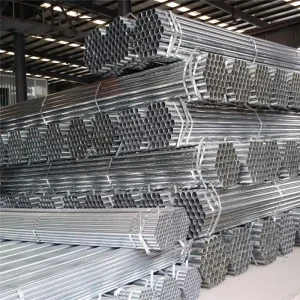
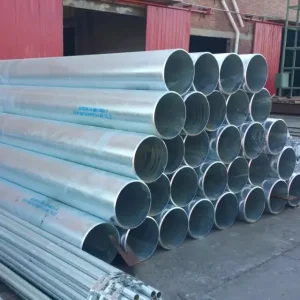
Expanded catalogue of specialized steel plates, alloy-coated sheets, tinplate, and high-strength industrial piping.



7. Technical Procurement Guide & Engineering FAQ
Expert engineering answers to commercial, metallurgical, and international logistics questions regarding DX51D galvanized coils.
What exact engineering standards govern DX51D galvanized steel coils?
How do I calculate the coating layer thickness from zinc weight ($g/m^2$)?
What is the technical difference between DX51D+Z, DX51D+AZ, and DX51D+ZM?
- +Z (Galvanized): 99%+ pure zinc coating. Provides excellent sacrificial protection and standard atmospheric corrosion resistance.
- +AZ (Galvalume / Aluzinc): ~55% Aluminum, 43.4% Zinc, and 1.6% Silicon. Offers superior high-temperature oxidation resistance and enhanced barrier protection in acidic environments.
- +ZM (Zinc-Aluminum-Magnesium): Zinc alloyed with ~3% Aluminum and 1.5–3% Magnesium. Forms an ultra-durable, self-healing chemical barrier ideal for aggressive agricultural, solar mounting, and coastal marine environments.
Why is zero-spangle DX51D preferred for prepainted steel coil (PPGI) manufacturing?
What preventative measures avoid wet storage stain ("white rust") during sea freight?
Can DX51D galvanized steel coils be welded without compromising corrosion resistance?
Partner with an Established DX51D Galvanized Steel Factory
Whether your project requires custom coil slitting, precise coating mass control (Z40–Z600), customized surface passivations, or direct mill-certificated vessel shipments, our engineering export team provides complete supply chain transparency.
Request Factory Quote & Mill Test Certificate