
Featured Industrial Steel Pipe & Sheet Solutions
Direct mill supply options engineered for construction, manufacturing, and agricultural applications worldwide.
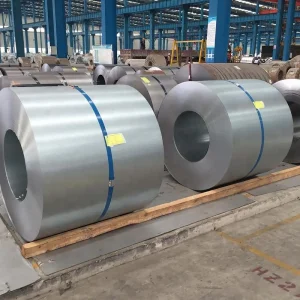
Executive Summary & Global Commercial Landscape of 80g GI Sheets
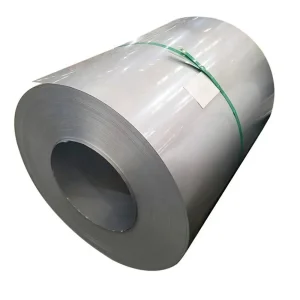
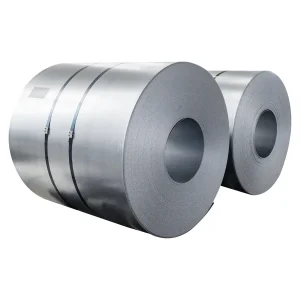
In the contemporary metallurgical and steel procurement domain, the term "80g GI Sheet" represents a vital nexus between structural economics, precision formability, and atmospheric corrosion resistance. Specifically, this nomenclature refers to Galvanized Iron (GI) steel sheet produced via the Continuous Hot-Dip Galvanizing (CGL) process, featuring a total dual-sided zinc coating mass of 80 grams per square meter (Z80 / Z08 class, approximately 5.6 to 6.0 microns per side), or in regional trade vernacular, high-precision flat-rolled galvanized sheet with a nominal gauge of 0.80mm.
As global industrial manufacturing undergoes a structural transition toward decarbonization, material efficiency, and lean logistics, 80g GI sheets have emerged as the foundational material for light-gauge framing, HVAC air-handling ductwork, electrical enclosure cabinets, grain storage components, and automotive stampings. Leading manufacturing hubs across Asia—most notably in Tianjin, Shandong, and Hebei—have modernized their cold-rolling and galvanizing lines to integrate automated air-knife systems, continuous X-ray coating thickness gauges, and closed-loop annealing furnaces. This technological upgrade allows top-tier factories to guarantee tight dimensional tolerances (+/-0.02mm), flawless surface passivations, and superior zinc adhesion under deep-drawing operations.
The macroeconomic trajectory for galvanized sheet metal is heavily dictated by raw substrate price movements (Hot-Rolled Coil / Cold-Rolled Full Hard steel), LME zinc ingot spot fluctuations, and international trade compliance protocols. For procurement officers, B2B importers, and EPC contractors, identifying high-quality 80g GI sheet suppliers requires evaluating not only unit pricing per metric ton, but also total cost of ownership (TCO), metallurgical consistency, surface treatments (chromated, trivalent chromium, anti-fingerprint, or oiled), and mill test certification authenticity (ISO 10474 / EN 10204 3.1).
Metallurgical Architecture & Engineering Specifications
Achieving optimal mechanical integrity and galvanic corrosion protection in 80g GI sheet manufacturing requires strict control over substrate chemical composition, continuous strip annealing temperatures, zinc bath kinetics, and post-galvanizing passivation.
Substrate & Chemistry
Utilizing low-carbon steel chemistry (typically C ≤ 0.10%, Mn ≤ 0.50%, P ≤ 0.035%, S ≤ 0.035%). Aluminum-killed continuous casting slabs ensure zero interstitial gas voids, yielding high deep-drawability (r-value > 1.4) for grades like DX51D+Z, DX52D+Z, and CS Type B.
Zinc Coating Kinetics
The strip enters the 450°C–460°C molten zinc bath containing 0.15%–0.20% dissolved Aluminum. Aluminum suppresses the rapid formation of brittle Fe-Zn intermetallic phases (FeZn13, Fe5Zn21), forming a thin Fe2Al5 inhibition layer that allows 80g/m² coatings to withstand 180-degree bend tests without flaking.
Passivation & Surface
Supplied in zero spangle (smooth, unspangled finish optimal for high-gloss powder coating) or regular spangle. Post-treatment options include Trivalent Cr3+ Chromating (RoHS compliant), Anti-Fingerprint Resin Coating (AFP), and environment-friendly dry/oiled sealing.
Standard Engineering Parameters for 80g GI Sheets (Z80 / Z08)
| Specification Parameter | EN Standard (EN 10346) | ASTM Standard (ASTM A653) | JIS Standard (JIS G3302) |
|---|---|---|---|
| Commercial / Formable Grade | DX51D + Z80 | CS Type A / B (G30) | SGCC |
| Structural High Strength Grade | S250GD / S350GD / S550GD | SS Grade 33 / 50 / 80 | SGC340 / SGC490 |
| Nominal Coating Weight | 80 g/m² (Triple spot total) | 0.30 oz/ft² (~90 g/m² G30) | Z08 (80 g/m²) |
| Equivalent Coating Thickness | ~5.6 to 6.0 µm per side | ~0.23 to 0.25 mils per side | ~5.6 to 6.0 µm per side |
| Available Thickness Range | 0.15mm – 3.0mm | 28 Gauge – 11 Gauge | 0.15mm – 3.0mm |
| Salt Spray Resistance (NSS) | ≥ 72 hrs to white rust (Chromated) | ≥ 72 hrs to white rust (Chromated) | ≥ 72 hrs to white rust (Chromated) |
Macro Industry Solutions & Downstream Sector Applications
Due to its balanced mass-to-protection ratio, 80g GI sheet serves as an indispensable engineering component across five macro-industrial ecosystems:
1. Commercial HVAC & Air Ductwork
In commercial ventilation systems (SMACNA standards), 80g GI sheet (Z80, 0.8mm gauge) provides optimal stiffness without cracking along lock-seam edges (Pittsburgh lock, snap-lock joints). The Z80 coating protects interior duct walls from condensation corrosion without clogging automated lock-forming equipment.
2. Electrical Enclosures & Server Cabinets
Anti-fingerprint (AFP) zero-spangle 80g GI sheets are widely specified for IT server racks, telecom cabinets, and power distribution boxes. The smooth surface accepts electrostatic powder coatings with high adhesion rating (ISO 2409 Class 0), eliminating under-film filiform corrosion.
3. Agricultural Enclosures & Grain Handling
Used extensively in indoor livestock partitioning, poultry cage structures, and ventilation shutters where continuous humidity and mild organic ammonia presence require zinc sacrificial protection combined with economical material replenishment cycles.
4. Automotive Stampings & Structural Brackets
Unexposed auto body panels, heat shield backings, door reinforcement channels, and chassis wire harness brackets utilize high-formability 80g GI sheet (DX53D/DX54D substrate). The lean coating weight reduces spot-welding electrode wear compared to heavy Z275 coatings.
5. Light Steel Framing & Drywall Studs
Non-load bearing interior partition wall studs, ceiling furring channels, and acoustic track systems heavily rely on high-yield structural 80g GI sheet (S280GD/S350GD). It offers excellent roll-forming speed and crisp knurling patterns for self-drilling screws.
6. Appliance Outer Panels & Drums
Washing machine backboards, refrigerator side walls, and microwave interior structural frames utilize zero-spangle 80g GI sheet to maintain surface flatness and prevent orange-peel visual defects upon painting.
Localized Environmental Adaptation & Global Compliance
Choosing the correct zinc coating weight requires matching the ambient atmospheric corrosivity classification defined under ISO 9223 / ISO 12944 standards. While heavy zinc coatings (Z275/Z600) are engineered for extreme marine or chemical environments, 80g GI sheet is optimized for moderate atmospheric zones (C1 to C3).
| Corrosivity Category (ISO 9223) | Typical Environment | Zinc Loss Rate (µm/year) | 80g GI Sheet Service Life Expectancy |
|---|---|---|---|
| C1 (Very Low) | Heated indoor buildings, dry offices, cleanrooms | < 0.1 µm/yr | > 50 Years (Virtually permanent) |
| C2 (Low) | Atmospheres with low pollution, rural areas, dry warehouses | 0.1 to 0.7 µm/yr | 15 – 30 Years |
| C3 (Medium) | Urban industrial, coastal areas with low salinity, HVAC ducts | 0.7 to 2.1 µm/yr | 5 – 12 Years (Clear passivation recommended) |
| C4 / C5 (High / Very High) | Heavy industrial chemical plants, direct marine surf zone | 2.1 to 8.4+ µm/yr | Not Recommended (Specify Z275, Galvalume or ZAM) |
RoHS & REACH Compliance
European and North American markets mandate strict compliance regarding heavy metal migration. Leading suppliers provide Hexavalent Chromium-Free (Cr6+ Free) passivated sheets certified through SGS/Intertek testing, guaranteeing safety for indoor HVAC and consumer appliances.
Custom Slitting & De-coiling
To reduce customer material scrap, modern factories offer precision slitting down to 30mm ribbon widths, custom sheet length cutting (+/-0.5mm), paper-interleaving to prevent transport abrasion, and anti-humidity VCI (Vapor Corrosion Inhibitor) packaging.
Mill Test Certificate (MTR) Audit
Every shipment must be accompanied by an authentic EN 10204 3.1 Mill Test Report detailing heat number, chemical ladle analysis, yield point, tensile strength, elongation percentage, and dual-side magnetic coating gauge verification.
B2B Purchasing Framework: TCO & Factory Selection Audit Protocol
When evaluating Chinese 80g GI sheet factories and suppliers, experienced procurement directors look far beyond basic FOB pricing. Unscrupulous suppliers may offer lower rates by providing negative thickness tolerances (under-gauging), substituting commercial grade steel for high-yield steel, or delivering under-coated sheets (e.g., supplying 40g/m² instead of genuine 80g/m²).
1. Zinc Coating Verification
Mandate third-party magnetic thickness gauge testing or destructive weigh-strip-weigh laboratory analysis (ISO 1460 / ASTM A90). Verify that the average total coating mass equals at least 80g/m² across triple spot samples.
2. Seaworthy Export Packaging
Steel coils and cut sheets are highly susceptible to wet-storage stain (white rust) during ocean transit. Demand heavy plastic film wrapping, rust-inhibiting VCI paper, outer galvanised steel corner protectors, and minimum 4 longitudinal / 3 circumferential steel strapping bands over sturdy wooden skids.
3. Lead Time & Supply Flexibility
Establish clear lead-time SLAs (typically 15 to 25 days production for standard sizes). Ensure your factory partner maintains raw cold-rolled coil stock to buffer against unexpected market price spikes or urgent order rollings.
Metallurgical Roadmap: Next-Generation Coated Sheet Alternatives
The coated steel industry is evolving rapidly toward lighter coating weights with superior self-healing corrosion resistance. While pure zinc 80g GI sheet remains the cost-efficiency champion for dry indoor applications, several next-generation alloy coatings are gaining traction in B2B supply chains:
Zinc-Aluminum-Magnesium (ZAM)
Incorporating 1.5%–3% Magnesium and Aluminum into the zinc bath creates a dense Simonkolleite corrosion product layer. A 60g/m² ZAM sheet matches or exceeds the salt-spray corrosion resistance of a standard 120g/m² pure GI sheet while offering superior cut-edge self-healing protection.
55% Al-Zn Galvalume (AZ)
Galvalume coatings (55% Al, 43.4% Zn, 1.6% Si) provide outstanding high-temperature oxidation resistance and barrier protection. However, they lack sacrificial cut-edge protection in highly alkaline environments compared to pure GI sheets.
Hydrogen-Reduced Green Substrates
Tier-1 Chinese mills are progressively deploying DRI (Direct Reduced Iron) processed with green hydrogen. Future 80g GI sheets will feature low embodied carbon footprints, allowing OEM exporters to comply with the European Union's CBAM (Carbon Border Adjustment Mechanism).
Frequently Asked Questions (Q&A) for Importers & Procurement Engineers
Additional Specialized Industrial Steel Supply Options
Full portfolio of flat-rolled, tubular, and structural products from our verified mill partners.
Request Mill-Direct Pricing & Technical Data Sheets
Partner with a certified Chinese steel mill specializing in precision cold-rolling, custom galvanizing coating weights (Z40 to Z275), custom slitting, and zero-defect export packaging. Contact our engineering team today for instant FOB/CIF quotations.