
Featured Structural Steel & Hollow Section Solutions
High-precision cold-formed, pre-galvanized, and hot-rolled structural products engineered for international construction and OEM manufacturing standards.
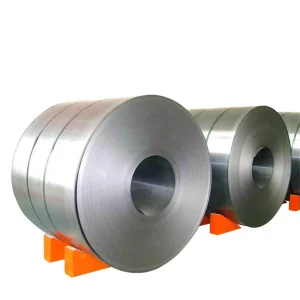
High Strength Cold Rolled Steel Sheets Extra Deep Drawing Quality
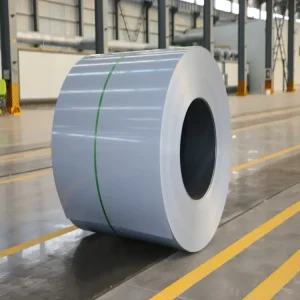
G550 Galvanized Corrugated Metal Roofing Sheets Factory

High-Quality Hot Rolled Steel Plate Structural Steel Mill Direct
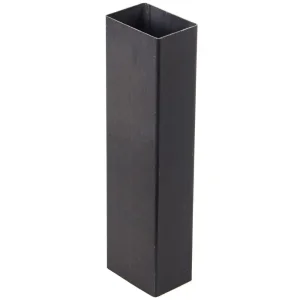
High-Quality Square Tube Hollow Structural Steel Sections

Slip-on Plate Flanges Carbon Steel & Stainless Steel
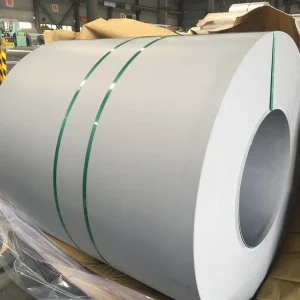
Electro-Galvanized Steel Plate SECC/SECD/SECE 20/20 Coating
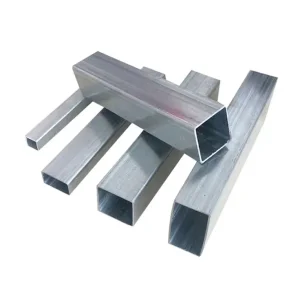
Pre-Galvanized Steel Tube 20*20 SHS RHS Zinc Coated Tube

M310 M350 M470 Non-Grain Oriented Silicon Steel Coils
Macro Technical Analysis: The Engineering Benchmark of 50*50 Square Tubes
Understanding why 50x50mm Square Hollow Sections (SHS) represent the golden structural baseline for modern industrial design and modular civil engineering.
Symmetrical Geometry & Torsional Rigidity
In modern structural design, the 50*50 square tube (50x50mm SHS) provides superior cross-sectional efficiency. Unlike asymmetrical open sections such as I-beams or angle irons, square hollow sections exhibit isotropic moment of inertia ($I_x = I_y$), making them immune to eccentric buckling under multi-axial loads.
Their continuous closed profile delivers up to 250% higher torsional stiffness relative to weight, making them indispensable for dynamic structural frameworks, robotic gantries, and earthquake-resistant scaffolding systems.
Optimized Strength-to-Weight Dynamics
Achieving optimal material economy is paramount for global procurement. The flat perimeter surfaces of 50*50 SHS simplify joint detailing, cutting welding consumable usage by 30% and enabling fast mechanical bolting.
By selecting high-strength cold-formed micro-alloyed carbon steel (e.g., S355J2H or ASTM A500 Grade C), structural engineers can reduce section wall thickness without compromising load-bearing integrity, driving down freight costs and carbon footprint per ton.
Advanced Anti-Corrosion Protection
For demanding environments—from high-humidity agricultural greenhouses to offshore solar installations—the surface protection of 50*50 square tubes must meet strict atmospheric durability classes (C1 through C5-I/M according to ISO 12944).
Leading manufacturers utilize continuous hot-dip galvanizing (HDG) or pre-galvanized strip forming combined with inline electric arc seam zinc spraying, guaranteeing uniform barrier protection across both interior and exterior tube walls.
International Technical Specification Matrix for 50*50 SHS
Comprehensive benchmark comparisons across North American, European, Japanese, and International structural tubing standards.
| Standard Specification | Material Grade | Yield Strength $R_eH$ (MPa) | Tensile Strength $R_m$ (MPa) | Min. Elongation (%) | Key Testing & Impact Criteria |
|---|---|---|---|---|---|
| ASTM A500 / A500M (US/Americas) | Grade B / Grade C | ≥ 315 / ≥ 345 | ≥ 400 / ≥ 427 | ≥ 21% (in 2 inches) | Flattening test, hydrostatic or NDT eddy current, cold bend radius check. |
| EN 10219-1 / EN 10210 (Europe/UK) | S235JRH / S355J2H | ≥ 235 / ≥ 355 | 360-510 / 470-630 | ≥ 22% / ≥ 20% | Charpy V-Notch impact testing at -20°C (27 Joules minimum energy). |
| JIS G3466 (Japan/East Asia) | STKR 400 / STKR 490 | ≥ 245 / ≥ 325 | ≥ 400 / ≥ 490 | ≥ 23% | Dimensional tolerance checks on corner radius ($r \le 2.0t$) and twist angle. |
| GB/T 6728 / GB/T 3091 (China/Global) | Q235B / Q355B | ≥ 235 / ≥ 355 | 370-500 / 470-630 | ≥ 26% / ≥ 22% | 100% online ultrasonic weld seam inspection and chemical ladle analysis. |
Dimensional Tolerances & Geometric Integrity
When sourcing premium 50*50 square structural tubing, precision manufacturing tolerances are critical for automated robotic cutting, laser slotting, and structural fit-up:
- Outer Dimensions (Side Length): Standard baseline $\pm 0.5\text{ mm}$ for cold-formed profiles; precision tolerances down to $\pm 0.25\text{ mm}$ for automotive-grade framing.
- Wall Thickness ($t$): Nominal thickness ranging from $1.2\text{ mm}$ to $5.0\text{ mm}$, with strict tolerance controls within $\pm 8\%$ of nominal thickness.
- Squareness of Corners: 90° $\pm 0.5$° angular deviation, maintaining strict perpendicularity across all four facets.
- Corner Radius ($R$): Outside corner radius maintained between $1.5t$ and $2.5t$, preventing localized stress concentrations and material micro-cracking during cold forming.
- Straightness & Twist: Maximum mill straightness deviation not exceeding $0.15\%$ of total tube length; twist controlled within $1\text{ mm}$ plus $0.5\text{ mm/m}$.
High-Frequency ERW Manufacturing & Processing Workflow
From raw hot-rolled carbon steel coils to precision zinc-coated square hollow sections: a step-by-step metallurgical process review.
1. Precision Slitting & Uncoiling
High-grade hot-rolled or cold-rolled strip steel coils (e.g., Baosteel, Shougang raw stock) are uncoiled and cut to precise width tolerances using automated rotary shear lines. Edge preparation removes micro-burrs to ensure optimal contact during high-frequency welding.
2. Cold Continuous Roll Forming
The strip sequentially passes through multi-stage progressive forming rolls, transforming the flat profile into a round tubular section. Advanced computerized mill stands ensure balanced stress distribution across the strip edges to eliminate edge wave distortion.
3. High-Frequency Induction Welding (HFW)
Utilizing high-frequency electric resistance welding (400-500 kHz), localized heat forge-welds the seam at temperatures up to 1350°C without filler metals. External and internal weld beads are scraped online using carbide scarfing tools for a flush surface.
4. Squaring, Sizing & Annealing
The welded round pipe passes through sizing and Turk’s head squaring passes to achieve the exact 50x50mm square profile. Post-weld induction heat treatment (seam annealing at 850-920°C) restores grain structure across the heat-affected zone (HAZ).
5. Inline Eddy Current & NDT Testing
Every linear meter of 50*50 square tubing undergoes non-destructive testing (NDT) via automated inline eddy current electromagnetic defect detectors, ensuring zero micro-fissures or weld seam porosity prior to mechanical cut-off.
6. Anti-Corrosion Finishing & Bundling
Tubes are processed with high-zinc galvanizing (hot-dip or zinc thermal arc repair), light oiling, or black varnish passivation. Finished products are packaged in tight hexagonal bundles with steel strapping and plastic end-cap protection.
Global Industry Solutions & Localized Use Cases
From smart clean energy infrastructure to automated logistics systems, discover where 50*50 square tubes drive modern structural engineering.
Solar PV Mounting Racks & Tracker Frames
In utility-scale solar farms across North America, the Middle East, and Australia, galvanized 50*50 square tubes serve as key purlins, post supports, and torque tube frame connectors. Their high flexural rigidity withstands severe wind uplift loads (up to 160 km/h) and heavy snow accumulation.
Hot-dip galvanized options with coating weights exceeding Z500 (80μm / 550 g/m²) deliver a maintenance-free service life exceeding 25 years in harsh desert or saline environments.
Modular Prefabricated Construction & Scaffolding
Rapid urbanization in Southeast Asia and Europe demands modular Volumetric Building Systems (PPVC) and system scaffolding. 50*50mm SHS (wall thickness 2.0mm-3.2mm) forms the structural skeleton of containerized housing, temporary field offices, and heavy-duty staging platforms.
Flat surfaces enable flush fitments with insulated sandwich panels and quick corner-casting integration, minimizing assembly times by 40% on-site.
Agricultural Machinery & Industrial Equipment Chassis
Global agricultural OEMs and industrial automation integrators rely on cold-formed 50*50 square tubing for implement chassis, tractor cabs, and conveyor support structures. Micro-alloyed grades provide exceptional resistance to structural fatigue caused by continuous vibration and dynamic loads.
Precision laser-cut tube profiles simplify downstream welding, ensuring seamless integration into robotic assembly lines.
Full Traceability, Global Certifications & Export Packaging
Delivering peace of mind for international EPC contractors, stockists, and industrial buyers through strict quality governance.
Mill Test Certificates (MTC) EN 10204 3.1 / 3.2
Every shipment of 50*50 square tubing is accompanied by an authentic Mill Test Certificate (MTC) detailing complete heat number chemistry (C, Mn, Si, P, S, Cr, Ni, Cu, V), tensile properties ($R_eH, R_m, A\%$), yield-to-tensile ratio, and non-destructive test results.
Third-party inspection reports by independent agencies such as SGS, Bureau Veritas (BV), TÜV Rheinland, or Intertek are available upon customer request.
International Standard Compliance & CE Marking
Our manufacturing facilities operate under ISO 9001:2015 (Quality Management), ISO 14001:2015 (Environmental Governance), and ISO 45001:2018 (Occupational Health & Safety) certified protocols.
Structural square tubes intended for European civil engineering projects carry factory CE Marking compliance under EN 10219-1 (FPC Factory Production Control certification).
Seaworthy Export Packaging & Logistics Execution
Long-distance ocean freight requires robust protective packaging to prevent surface oxidation, white rust (zinc bloom), and mechanical deformation:
- Hexagonal Bundling: Secured with heavy-duty steel bands and perimeter corner protectors.
- Anti-Rust Wrap: VCI (Volatile Corrosion Inhibitor) waterproof paper or plastic shrink wrapping.
- Container & Breakbulk Loading: Optimized 20ft/40ft container stuffing using wooden dunnage and heavy wire lashing to prevent transit movement.
Technical Roadmap & Future Industry Horizons
How next-generation material science and green steel initiatives are transforming square hollow section manufacturing.
1. Ultra-High Strength Low Alloy (HSLA) Steels
Transitioning from standard S235/S275 grades to advanced HSLA grades (e.g., S460NH / S700) allows up to a 35% reduction in wall thickness while maintaining structural capacity. This lightweighting reduces overall steel consumption, lowers transportation emissions, and speeds up crane lifting operations on skyscraper construction sites.
2. Next-Gen Zinc-Aluminum-Magnesium (ZAM) Coatings
The emergence of Zinc-Aluminum-Magnesium (ZAM) coated steel coils (e.g., ZM120 - ZM310) represents a quantum leap in surface protection. ZAM coatings provide self-healing protection along cut edges and punched holes, offering up to 3 times the corrosion resistance of traditional hot-dip galvanizing in coastal and ammonia-rich agricultural environments.
3. Green Steel & Decarbonized Production
Aligned with global net-zero carbon goals and EU CBAM (Carbon Border Adjustment Mechanism) regulations, modern steelmakers are shifting toward EAF (Electric Arc Furnace) scrap processing and Direct Reduced Iron (DRI) powered by green hydrogen. Sourcing low-embedded-carbon 50*50 square tubes enables developers to achieve LEED and BREEAM green building certifications.
Frequently Asked Questions & Sourcing Guide
Detailed answers to technical, mechanical, and procurement questions raised by structural engineers, buyers, and project planners.
The theoretical weight ($W$) per meter of a 50*50 square tube (50x50mm SHS) can be calculated using the simplified volumetric steel density formula ($7.85\text{ g/cm}^3$): $W (\text{kg/m}) = (50 - t) \times t \times 0.0157$, where $t$ is the nominal wall thickness in millimeters. For example, a 50*50*2.0mm tube weighs approximately $2.98\text{ kg/m}$, while a 50*50*3.0mm tube weighs roughly $4.28\text{ kg/m}$.
Pre-galvanized tubes are manufactured directly from steel strip that has already received a zinc coating (typically Z60 to Z180, or $8.5-25\mu\text{m}$ per side). They offer a smooth, visually clean surface ideally suited for indoor furniture, retail racks, and light fencing. In contrast, Hot-Dip Galvanized (HDG) tubes are immersed in a molten zinc bath after tube welding and forming, producing a far thicker zinc coating (Z275 to Z600+, or $40-85\mu\text{m}$) that coats both outer and inner tube surfaces, essential for harsh outdoor structural applications.
When subjected to bending moments aligned parallel to the tube walls, a 50*50 square tube provides a higher Section Modulus ($Z_x$) than a 50mm outer diameter round pipe of identical wall thickness. The square geometry places more material further from the neutral flexural axis, resulting in higher flexural resistance. Additionally, the flat sides of square hollow sections simplify cutting, coping, and joint welding without requiring complex saddle profiling.
Yes. Modern mill processing facilities offer extensive value-added secondary operations including multi-axis CNC fiber laser cutting, inline hole punching, miter cutting, swaging, and cold bending. Low-carbon structural grades such as S235JRH, Q235B, and ASTM A500 Grade B exhibit excellent cold formability and ductility, permitting bending radii down to $3 \times \text{outer dimension}$ without structural wall buckling.
To eliminate weld failure risks under cyclic fatigue loads, premium manufacturers perform automated high-frequency induction weld seam annealing (850-920°C) to relieve residual stresses and refine microstructural grains. Furthermore, 100% inline non-destructive eddy current testing according to EN 10246-3 or ASTM E309 verifies seam sound integrity before section sizing and shipment.
Comprehensive Steel Products & Industrial Components
Explore our full direct-from-factory catalog of structural plates, specialized coils, seamless pipes, and precision profiles.
GI PPGI PPGL Galvanized Corrugated Metal Roof G550 Steel Plate
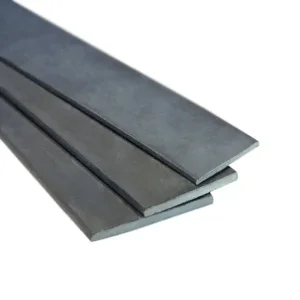
China Steel Flat Bars Carbon & Galvanized Flat Rolled Steel
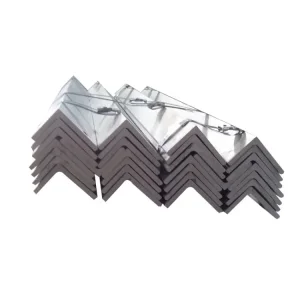
Hot Rolled Q195 Q215 Steel Angle Iron Beam Structural Profiles
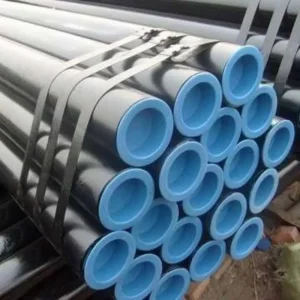
ASTM Carbon Steel Seamless Pipe for High Pressure & Structural Use

Electrical Silicon Steel Coils M310 M350 M470 High Efficiency
ASTM Carbon Steel Seamless Pipes Factory Supplier Construction
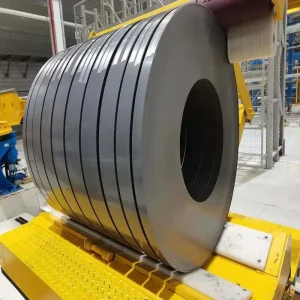
CRNGO High-Quality Silicon Steel Coil for Enhanced Magnetic Performance