
Engineered for Iberian industrial applications, coastal maritime durability, precision deep drawing, and structural longevity. Sourced directly from integrated mill facilities.
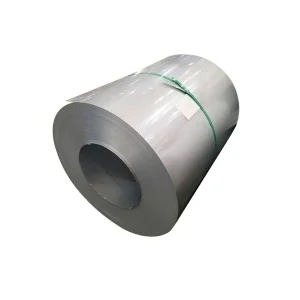
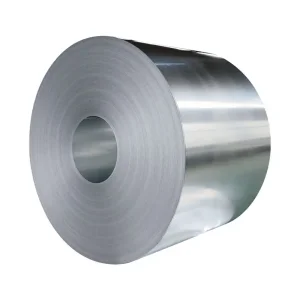
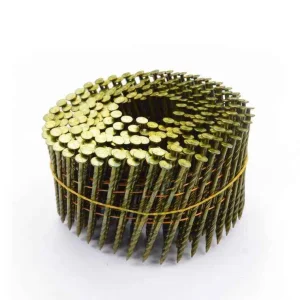
An in-depth analysis of Portugal's expanding manufacturing base, renewable infrastructure targets, marine processing requirements, and geographic demand distribution.
Maritime & Coastal Corrosion Mitigation
With over 1,790 kilometers of coastline, Portugal's maritime infrastructure, shipbuilding facilities in Setúbal and Viana do Castelo, and offshore wind developments demand superior corrosion-resistant alloys. Austenitic (AISI 316L) and Duplex (UNS S31803 / 2205) stainless steel grades are essential to combat high saline atmospheric degradation and pitting corrosion caused by marine chloride exposure.
Agri-Food & Viniculture Engineering
Portugal's renowned wine sector (Douro Valley, Alentejo, Dão) and commercial food canning clusters (Matosinhos, Peniche) enforce strict sanitary processing standards. Stainless steel factories supply cold-rolled AISI 304 and 316L coils featuring 2B and BA (Bright Annealed) surface finishes, guaranteeing zero chemical migration, easy cleanability, and thermal stability during automated sterilization processes.
Renewable Energy & Green Hydrogen Transition
As Portugal accelerates toward its target of generating 85% of its electricity from renewable sources by 2030, hydrogen electrolyzers, solar mounting frameworks, and bio-energy refineries in Sines require high-nickel, high-molybdenum stainless alloys capable of handling extreme working pressures, corrosive chemical reagents, and thermal fluctuations.
Understanding the chemical composition, chromium-nickel passivation kinetics, and mechanical performance parameters governing global stainless steel sourcing decisions.
The global stainless steel sector is experiencing a structural evolution toward high-efficiency, corrosion-resistant alloys. Stainless steel derives its passive surface layer—a micro-thin Chromium Oxide ($\text{Cr}_2\text{O}_3$) film—from a minimum chromium concentration of 10.5%. When exposed to atmospheric oxygen, this self-healing passive layer protects the underlying iron matrix from oxidation.
To assist Portuguese procurement directors, metallurgical engineers, and industrial stockists, the structural performance matrix below delineates chemical classifications and pitting resistance equivalent numbers (PREN = $\% \text{Cr} + 3.3 \times \% \text{Mo} + 16 \times \% \text{N}$):
| Steel Grade Family | Common Standard Grades | Nominal Chemical Composition | PREN Value | Primary Portuguese Industrial Application |
|---|---|---|---|---|
| Austenitic Stainless | AISI 304 / 304L (1.4301 / 1.4307) | 18% Cr, 8% Ni | 18.0 - 20.0 | Wine fermenters, domestic kitchenware, architectural trim. |
| Marine-Grade Austenitic | AISI 316 / 316L (1.4401 / 1.4404) | 16.5% Cr, 10% Ni, 2.0% Mo | 23.0 - 25.0 | Coastal structures in Cascais, marine hardware, canning lines. |
| Duplex Stainless | UNS S31803 / 2205 (1.4462) | 22% Cr, 5% Ni, 3% Mo, 0.17% N | 32.0 - 35.0 | Offshore wind platforms, chemical tankers, reverse osmosis plants. |
| Super Austenitic | UNS N08904 / 904L (1.4539) | 20% Cr, 25% Ni, 4.5% Mo, 1.5% Cu | > 36.0 | Sines oil refinery heat exchangers, sulfuric acid handling. |
| Ferritic Stainless | AISI 430 (1.4016) | 16% Cr, 0% Ni | 16.0 - 17.5 | Home appliances, interior architectural cladding, automotive trim. |
How direct partnerships with advanced Chinese steel mills empower Portuguese enterprises with economic resilience, quality assurance, and supply security.
Integrated Production Metallurgy
Chinese steel manufacturing hubs leverage fully integrated blast furnace (BF-BOF) and electric arc furnace (EAF) infrastructure paired with continuous cold-rolling lines. This technical integration allows ultra-precise gauge tolerances ($\pm 0.01\text{ mm}$), uniform mechanical properties across coil lengths, and scalable production capable of satisfying both small-batch specialized orders and multi-thousand-ton infrastructure tenders in Portugal.
Strict International Quality Compliance
Leading Chinese factories comply strictly with EN 10088-2, EN 10204 3.1 Mill Test Certificates (MTC), ASTM A240, and ISO 9001 quality management standards. Chemical spectral analysis, eddy-current non-destructive testing, tensile strength evaluation, and salt-spray corrosion testing ensure that exported coils, plates, and pipes match the exacting standards expected by European fabricators.
Total Cost of Ownership (TCO) Advantage
By procuring direct from mill origin, Portuguese stockists and OEMs eliminate intermediary distributor markups. Coupled with optimized raw material procurement and high-speed automated processing, Chinese direct-factory pricing provides a 15% to 28% total procurement cost advantage, allowing Iberian companies to improve profit margins without sacrificing structural integrity.
Optimized Maritime Logistics to Iberian Ports
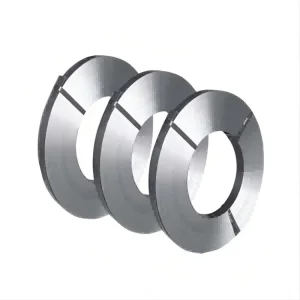
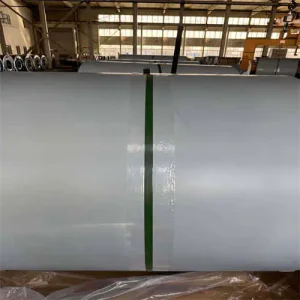
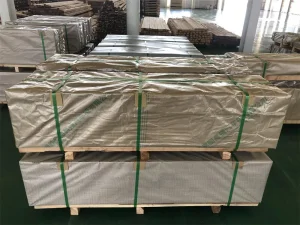
Direct maritime freight routes connect major Chinese steel shipping ports (Tianjin, Qingdao, Ningbo, Shanghai) directly to Portugal's strategic deep-water ports: Sines, Leixões (Porto), and Lisbon. Standardized sea-worthy packaging—including waterproof VCI paper, wooden skids, steel banding, and moisture-absorbing desiccant systems—guarantees rust-free delivery.
Connecting steel grade characteristics with regional manufacturing demands in Porto, Lisbon, Aveiro, Braga, and the Algarve.
Northern Region (Porto & Aveiro)
Metalworking, Furniture & Automotive
The industrial belt of Porto, Águeda, and Aveiro is renowned for precision metalworking, hardware production, and automotive components. Cold-rolled stainless steel sheets, deep-drawing quality coils (DX53D/DX54D), and precision framing wire items are heavily utilized in local stamping facilities and furniture manufacturing plants.
Central & Lisbon Hub (Setúbal & Sines)
Petrochemical, Energy & Shipbuilding
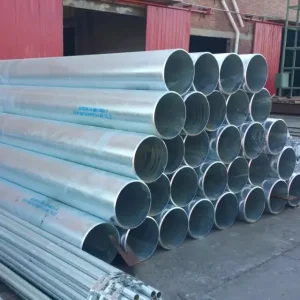
Sines and Setúbal serve as Portugal's industrial heavy-weight zones. The refinery complexes, LNG terminals, and shipyard drydocks rely on thick heavy plates (A53/A106 ERW & Spiral pipe, 316L, 2205 Duplex plate) to construct pressure vessels, high-pressure liquid transport lines, and marine structural components.
Agricultural Interior & Southern Coast
Desalination, Agro-Industry & Solar
In Alentejo and the Algarve, agricultural automation, wine holding facilities, and coastal water treatment / desalination facilities require reliable food-grade stainless tubing, specialized electrical silicon steel for pumps/motors, and durable galvanized/coated sheet metal for solar tracking arrays.
Navigating decarbonization mandates, European Carbon Border Adjustment Mechanism (CBAM) regulations, and technological evolution in steel manufacturing.
1. Decarbonization & Green Steel Transition
European union directives are driving steel producers to lower Scope 1, 2, and 3 carbon emissions. Modern Chinese mills are investing heavily in Hydrogen-based Direct Reduced Iron (H-DRI) processes, electric arc furnace recycling, and solar-powered manufacturing lines to deliver "Green Stainless Steel" coils that satisfy EU sustainability benchmarks and lower CBAM carbon tariff liabilities for Portuguese importers.
2. Electrical Silicon Steel Expansion for E-Mobility
The rapid electrification of Europe's automotive sector (EV production hubs in Spain and Portugal) is driving unprecedented demand for Cold-Rolled Non-Grain Oriented (CRNGO) and Grain-Oriented (CRGO) electrical silicon steel. High magnetic permeability and ultra-low core loss ($0.23\text{ mm} - 0.35\text{ mm}$ thickness) are vital for next-generation electric motor stators and power grid distribution transformers.
Clear, authoritative responses regarding quality control, customs clearance, shipping lead times, and technical specifications for Iberian enterprise buyers.
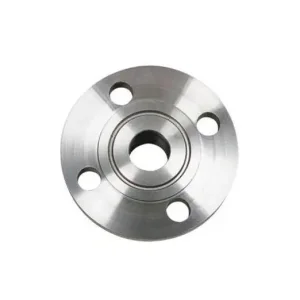
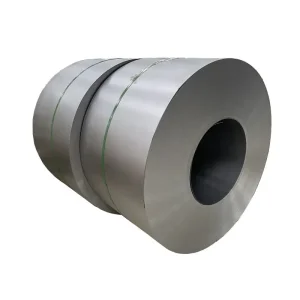
Explore our extended portfolio of electro-galvanized plates, electrical silicon steel coils, coated gate materials, spiral steel pipes, and specialized engineering flanges.
Partner with a Leading Direct Steel Manufacturer Today
Optimize your supply chain costs with high-precision stainless steel coils, sheets, pipes, and electrical silicon steel delivered directly to Portugal's industrial hubs.
Send Inquiry Now