Industrial Selection
Top Steel Solutions for Peruvian Projects
High-performance spiral welded pipes and structural steel products optimized for South American civil, mining, and energy tenders.
Market Whitepaper & Strategic Insights
Macro Industrial Landscape & Steel Pipe Demand in Peru
An in-depth analysis of Peru’s expanding infrastructure, mega-ports, Andean mining expansion, and civil water transfer systems demanding API 5L and ASTM standard Spiral Submerged Arc Welded (SSAW) steel pipes.
Peru stands at a pivotal crossroads of South American industrial expansion. With the flagship development of the Megapuerto de Chancay (Chancay Port Expansion Project), the modernization of Callao port terminals, and the scaling of major copper mining projects in the southern Andean corridor (such as Quellaveco, Las Bambas, Toromocho, and Cerro Verde), the demand for heavy-duty, large-diameter structural and fluid-conveyance steel pipes has reached an unprecedented peak.
Among structural steel solutions, Spiral Submerged Arc Welded (SSAW / HSAW) Steel Pipe has established itself as the indispensable standard across Peruvian engineering projects. SSAW pipe is manufactured by continuously wrapping hot-rolled steel strip into a helical shape and executing double-sided automatic submerged arc welding along the spiral seam. This unique geometric manufacturing process permits the production of large-diameter pipes (OD 219mm up to 3200mm) from standard-width steel coils, optimizing logistics costs and offering exceptional hoop-stress resistance required for Peru’s rigorous mountain terrain and seismic zone dynamics.
Information Gain Insight for Peruvian Engineers: In high-altitude Andean environments exceeding 4,000 meters above sea level, fluid-conveyance pipelines endure severe hydrostatic head pressures and dramatic thermal fluctuations. Spiral welded steel pipes exhibit continuous spiral weld geometry that redistributes internal hoop stress across a 45° to 70° angle relative to the pipe axis, significantly reducing seam stress compared to straight-seam ERW or LSAW pipes under ground movement or seismic shifts common along the Pacific Ring of Fire in Peru.
100,000+
Monthly Factory Output (MT)
API 5L
PSL1 & PSL2 Certified
OD 3200mm
Max Diameter Capacity
3LPE / FBE
Anti-Corrosion Standard
Structural Advantages of SSAW / HSAW Pipe in Peru's Geography
Peru's diverse geography—ranging from humid Pacific coastal strips to hyper-arid coastal deserts (Atacama region influence), high-altitude Andean mountain ranges, and Amazonian rainforest basins—presents complex material engineering challenges. Standard pipe materials often fail prematurely due to micro-seismic activity, soil corrosion, or abrasive wear from tailings transport.
Seismic Ductility & Hoop Strength
Engineered to comply with Peru's Seismic Building Code (Norma E.030). Spiral geometry distributes ground shear stresses evenly along the pipe circumference, preventing localized buckling during earth movements.
Advanced 3LPE / 3LPP Coating
Triple-layer Polyethylene (3LPE) and Fusion Bonded Epoxy (FBE) exterior coatings shield pipe surfaces from highly corrosive saline ocean winds at Chancay / Callao ports and acidic mining runoff soils.
Large Diameter & Custom Wall Thickness
Manufactured from OD 219mm up to 3200mm with wall thicknesses from 5mm up to 25mm, perfect for major hydroelectric penstocks, gravity water mains, and structural foundation piles.
Technical Comparison Matrix
SSAW vs. LSAW vs. ERW Steel Pipe for Peru Engineering
Evaluating manufacturing methodology, structural capacity, unit cost, and application efficiency for South American EPC contractors.
| Manufacturing Parameters | SSAW / HSAW Spiral Welded | LSAW Longitudinal Welded | ERW High-Frequency Welded |
|---|---|---|---|
| Manufacturing Process | Continuous Spiral Roll-Forming + Double SAW | JCOE / UOE Heavy Plate Press + SAW | Continuous Strip Cold-Forming + High-Frequency Induction |
| Outer Diameter (OD) Range | 219 mm – 3200 mm (Large Scale) | 406 mm – 1620 mm | 21.3 mm – 660 mm |
| Wall Thickness (WT) | 5.0 mm – 25.4 mm | 6.0 mm – 50.0 mm | 1.5 mm – 20.0 mm |
| Standard & Grades | API 5L PSL1/PSL2 (Gr B - X80), ASTM A252, ASTM A53 | API 5L PSL2 (X52 - X80), ASTM A572 | ASTM A53, EN 10219, GB/T 3091 |
| Cost Efficiency / Meter | Highest (Uses hot-rolled coil stock) | Medium to Low (High plate cost) | High (Limited to smaller ODs) |
| Peru Application Fit | Water Transfer, Mining Slurry, Marine Piling, Penstocks | High-Pressure Offshore Gas Mains | Urban Fire-Fighting, Structural Scaffolding, HVAC |
As illustrated in the comparative engineering matrix, Spiral Welded Steel Pipe (SSAW) offers an unmatched combination of diameter versatility, rapid manufacturing throughput, and cost savings for infrastructure tenders in Peru. By converting hot-rolled steel strip (HRC) into high-integrity spiral welded tubes, contractors save up to 20-30% in material cost per linear meter compared to LSAW pipes, without compromising bursting strength or hydrostatic capabilities under API 5L specifications.
Compliance & Quality Control
Peru National Standards (NTP) & International Compliance
Ensuring total alignment with INACAL (Instituto Nacional de Calidad), SEDAPAL specifications, and international engineering codes.
Supplying steel pipes to Peruvian public works (via Ministerio de Vivienda, Construcción y Saneamiento) and private mining concessions requires rigorous adherence to technical standards. Every production lot leaving our mill is subjected to non-destructive testing (NDT) and comes accompanied by Mill Test Certificates EN 10204 3.1 / 3.2.
Key Regulatory & Testing Protocols for Peru Delivery:
- API 5L (PSL1 & PSL2): Covers Line Pipe for oil, gas, and slurry transmission. Grades range from Grade B, X42, X52, X60 up to high-yield X70/X80 steel with Charpy V-Notch impact testing at low temperatures (-20°C for high Andean altitude installation).
- ASTM A252 (Grades 1, 2, and 3): Governs structural steel pipe piles used extensively in marine construction at Chancay, Callao, and Pisco ports, providing structural load-bearing capacity for ocean wharves and bridge piers.
- ANSI / AWWA C200 & C210: Defines steel water pipe manufacturing and liquid epoxy coating standards, essential for SEDAPAL municipal water distribution projects in Metropolitan Lima and Callao.
- Non-Destructive Testing (100% NDT): Includes continuous inline Ultrasonic Testing (UT) of weld seams, X-Ray Radiographic Inspection for weld ends, and 100% Hydrostatic Pressure Testing up to 25 MPa to verify zero seam leakage.
Factory Inspection Guarantee: We welcome third-party inspection agencies such as SGS, Bureau Veritas (BV), TUV, or Intertek at our Tianjin manufacturing base to inspect coating thickness (magnetic gauge), bevel geometry, visual surface finish, and mechanical tensile properties prior to vessel loading at Tianjin/Qingdao ports bound for Callao or Chancay.
Peru Application Scenarios
Tailored Field Applications Across Peru's Key Sectors
From copper concentrate slurry lines in Arequipa to coastal port piling in Chancay, see how our steel pipes perform under extreme local environments.
1. Andean Mining Slurry Lines
High-strength API 5L X65/X70 spiral pipes lined with polyurethane or high-density polyethylene (HDPE) internal sleeves to convey abrasive copper/zinc tailings across rugged Andean mountain slopes in Moquegua and Cajamarca.
2. Port Piling & Marine Infra
ASTM A252 Grade 3 extra-thick spiral steel piling pipes engineered to support heavy container cranes, breakwaters, and deep-water berths at Megapuerto de Chancay, protecting against marine salt corrosion via heavy coal-tar coating.
3. Inter-Basin Water Transfer
Large-diameter SSAW pipes (OD 1200mm – 2400mm) for megaprojects like Olmos-Tinajones and Majes-Siguas, delivering vital irrigation water from the Amazon watershed to arid coastal agricultural valleys.
Innovation Roadmap
Technology Roadmap & Green Steel Manufacturing
Pioneering smart automation, micro-alloying metallurgy, and low-carbon production for next-generation South American infrastructure.
Phase 1: Precision Automation
AI-Powered Weld Seam Tracking & Digital Twin Monitoring
Integration of real-time laser weld tracking systems and automatic ultrasonic weld evaluation. Machine vision systems continuously analyze weld pool geometry, reducing weld repair rates to below 0.1%.
Phase 2: Advanced Metallurgy
Micro-Alloyed High-Yield Steels (Nb-V-Ti Grain Refinement)
Development of ultra-fine grain steel chemistries (API 5L X80/X90) with Niobium, Vanadium, and Titanium additions. Delivers superior yield strength while reducing pipe wall thickness and total logistics weight per kilometer.
Phase 3: Sustainability
Zero-Carbon Hydrogen-Reduced Billets & EPD Certification
Transitioning primary hot-rolled coil stock to hydrogen Direct Reduced Iron (DRI) processing in Electric Arc Furnaces (EAF). Providing environmental product declarations (EPD) for carbon-neutral procurement by international mining conglomerates in South America.
Technical FAQ
Frequently Asked Questions by Peruvian Engineers & Importers
Direct answers to technical, commercial, and logistics questions regarding importing steel pipes into Peru.
1. What shipping options and transit times are available from your mill to Callao or Chancay ports in Peru?
We offer direct breakbulk vessel charters and containerized sea freight shipping directly from Tianjin Port or Qingdao Port to Puerto de Callao and Megapuerto de Chancay. Average ocean transit time ranges between 28 to 35 days. Under the China-Peru Free Trade Agreement (FTA), we provide standard Certificate of Origin (Form F) to allow Peruvian importers to clear customs under preferential zero or reduced tariff rates.
2. Can your factory supply custom pipe lengths matching specific trench drawings in Peru?
Yes. While standard export pipe length is 11.8 meters or 12 meters to fit standard container shipping, our continuous spiral forming lines can cut pipes to custom lengths from 6 meters up to 18 meters for breakbulk vessel transport. This eliminates on-site field cutting and beveling costs for project contractors in Peru.
3. How do you prevent internal corrosion for potable drinking water pipelines in Peru?
For drinking water lines (such as SEDAPAL municipal water projects), we apply food-grade liquid epoxy linings compliant with AWWA C210 and ANSI/NSF Standard 61. The internal epoxy lining provides a smooth C-factor surface that minimizes hydraulic friction loss while preventing toxic leaching or rusting inside the pipe.
4. What is the difference between PSL1 and PSL2 in API 5L steel pipe specifications?
API 5L PSL2 imposes stricter chemical composition limits (lower carbon equivalent CEQ), higher yield-to-tensile ratio control, compulsory Charpy V-Notch fracture toughness testing at low temperatures, and mandatory NDT testing. PSL2 is strongly recommended for high-pressure oil/gas or high-altitude mining slurry lines in Peru where structural reliability is vital.
5. How does your mill handle third-party inspection (TPI) prior to shipment?
We fully support buyer-appointed TPI agencies (SGS, Bureau Veritas, TUV, Cotecna). Inspectors have 100% access to witness raw material mill test certificates (MTC), hydrostatic pressure tests, ultrasonic and X-ray weld seam inspections, coating dry film thickness (DFT) checks, and final container/vessel loading.
6. What anti-corrosion coating options are recommended for coastal vs mountain regions in Peru?
For coastal port and marine environments (Chancay/Callao/Paita), we recommend 3LPE (Three-Layer Polyethylene) or coal-tar epoxy due to high humidity and salinity. For high-altitude dry mountain regions with rocky soil, 3LPE provides superior mechanical impact resistance against backfill stone puncturing during trenching.
7. Can your mill supply matching flanges, elbows, and pipe fittings along with spiral steel pipes?
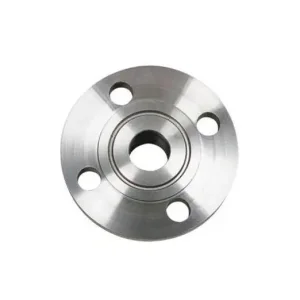
Yes. We provide complete turnkey pipeline packages including slip-on welding flanges, blind flanges, equal tees, concentric reducers, and custom-bent elbows designed to match the exact outer diameter and wall thickness of your SSAW steel pipes.
Comprehensive Catalog
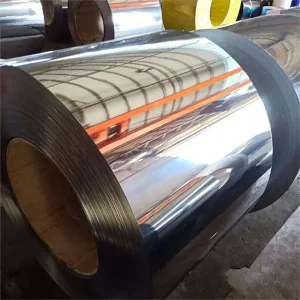
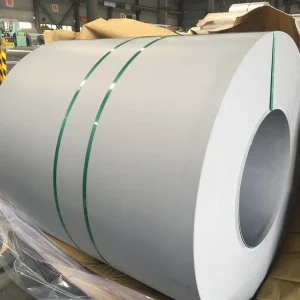
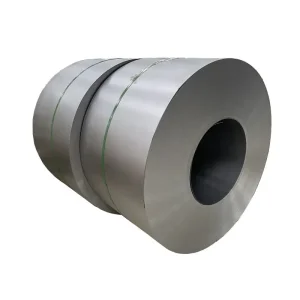
Full Range of Steel Pipe, Coil & Fitting Solutions
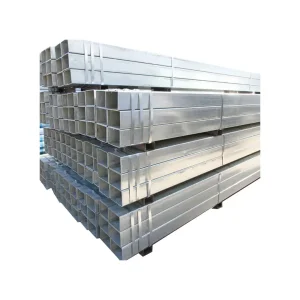
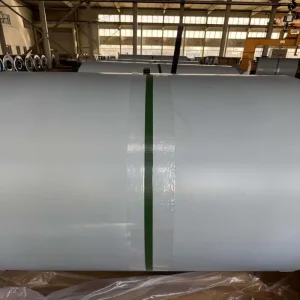
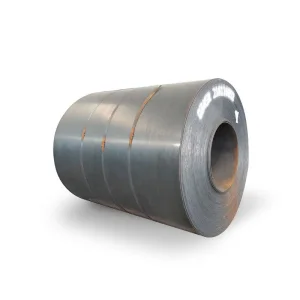
Explore our complete industrial product lines available for direct mill-to-site delivery across South America.
Partner with China's Leading Spiral Welded Steel Pipe Manufacturer for Peru
Get direct factory pricing, full API 5L / ASTM MTC certifications, custom 3LPE coating options, and reliable breakbulk logistics directly to Megapuerto de Chancay & Callao.
Send Inquiry Now - Immediate Response Within 24 Hours