
Featured Precision Tubing & Coated Steel Products
Explore our premier inventory of engineered steel coils, thin-wall welded tubing, and specialty coated metallurgy directly integrated from Chinese manufacturing hubs to international supply chains.


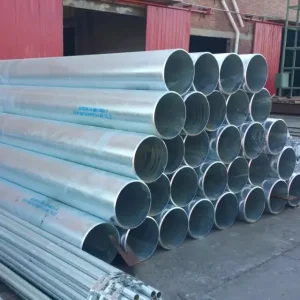
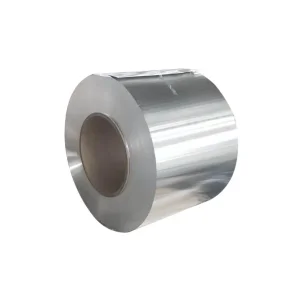
1. Executive Summary & Global Macroeconomic Industry Status
The international market for thin-wall welded steel tubing is undergoing a structural paradigm shift driven by structural lightweighting demands across automotive, aerospace, HVAC, medical device manufacturing, and high-efficiency heat exchangers. Defined primarily by outer-diameter-to-wall-thickness ratios ($D/t \ge 20$) or wall thicknesses falling below $1.5\text{ mm}$ (frequently reaching down to $0.3\text{ mm}$ in ultra-precision stainless and alloy variants), thin-wall welded tubing demands metallurgical consistency and weld seam integrity far exceeding standard structural pipe production.
Globally, the thin-wall tubing market is expanding at an estimated Compound Annual Growth Rate (CAGR) of 6.4%, approaching a multi-billion-dollar market valuation. In developed industrial ecosystems such as North America and the European Union, tier-1 OEMs are shifting away from heavy seamless tubing toward high-frequency induction (HFI) and laser-welded thin-wall tubing. This movement is powered by the need to optimize thermal conductance, reduce vehicle mass for electrification targets, and curtail raw material consumption amidst global carbon neutral compliance frameworks (CBAM).
However, procuring high-quality thin-wall tubing from global wholesale channels introduces distinct technical engineering challenges. Wall thinning, ovality deformation, micro-porosity at the weld seam, heat-affected zone (HAZ) embrittlement, and residual stresses during roll forming present significant quality risks. Consequently, B2B procurement officers and engineering teams must evaluate wholesalers and factories not merely on commodity unit pricing, but on advanced non-destructive testing (NDT), metallurgical control, and raw strip slit quality.
2. Thin-Wall Tubing Metallurgy & Advanced Welding Processes
Achieving structural equilibrium in thin-wall welded tubing requires meticulous control across every phase of manufacturing—from cold-rolled strip coil decoiling to final sizing. Unlike thick-walled structural pipes where thermal mass absorbs welding variations, thin walls ($t < 1.0\text{ mm}$) possess minimal thermal capacity, making them susceptible to burn-through, seam buckling, and grain coarsening.
Weld Seam Metallurgical Quality Controls
Factory-level quality control for thin-wall tubing hinges on managing the microstructural evolution within the fusion zone. When cold-rolled carbon steel coils (e.g., SPCC, DC01, DX53D) or stainless steel strips are continuously formed, inline squeeze rolls must apply exact upset pressure. Insufficient upset yields oxide inclusions; excessive pressure results in wall thinning along the seam shoulder.
- Inline Internal Bead Scarfing/Rolling: Removing the internal weld flash is mandatory for thin-wall tubing to prevent stress concentrations and flow turbulence in fluid transmission lines.
- Online Continuous Eddy Current Testing (ECT): Operating under ASTM E309 / EN 10246-3 standards, high-frequency ECT probes scan 100% of the weld seam in real-time, detecting micro-cracks down to 5% of wall thickness.
- Bright Annealing Heat Treatment: Protective atmosphere furnace annealing (hydrogen/nitrogen mix) at 1050°C restores ductility, homogenizes the weld microstructure, and eliminates cold-work hardening.
3. Strategic Procurement Dynamics & Global Purchasing Criteria
Procuring wholesale thin-wall welding tubing involves navigating complex supplier matrices. Enterprise purchasers—ranging from automotive Tier-1 stampers to industrial heat exchanger fabricators—must analyze critical procurement vectors beyond simple baseline pricing.
In thin-wall tubing, slight wall variations drastically impair downstream automated bending and hydroforming. Premium suppliers adhere to wall thickness tolerances within $\pm 0.03\text{ mm}$ and outer diameter tolerances within $\pm 0.05\text{ mm}$. Concentricity must be maintained above 95% to prevent localized buckling during flaring and swaging.
For decorative, automotive trim, and sanitary applications, surface roughness ($R_a$) must remain below $0.4\,\mu\text{m}$. Suppliers utilizing mirror-polished carbide forming rolls and clean synthetic lubricant emulsions ensure freedom from scratch marks, die drag lines, and oil carbonization during subsequent heat treatment.
Full compliance with EN 10204 3.1 / 3.2 Material Test Certificates (MTC) is essential. MTCs must document chemical heat analysis (C, Mn, Si, P, S, Cr, Ni content), mechanical yield strength ($R_e$), ultimate tensile strength ($R_m$), elongation ($A\%$), and flattening/expansion test validation data.
Thin-wall tubing is vulnerable to mechanical denting and moisture corrosion during oceanic transit. Wholesalers must utilize rigid wooden crate packing, plastic end-caps, VCI (Vapor Corrosion Inhibitor) interleave paper, and heavy-duty steel strapping to preserve straightness and rust-free surfaces upon arrival.
4. The China Supply Chain Advantage: Manufacturing Efficiency & Infrastructure
China’s industrial dominance as the primary global supplier of wholesale thin-wall welding tubing stems from unparalleled structural integration across the entire steel value chain. From upstream primary steelmaking giants (BAOWEISTEEL, HBIS, Shougang) to concentrated downstream tube-forming clusters in Tianjin, Hebei, Jiangsu, and Guangdong, Chinese manufacturers offer structural efficiencies unmatched by regional competitors.
Key Industrial Pillars of Chinese Manufacturing Efficiency:
Direct access to raw hot-rolled and cold-rolled coil slitting lines within immediate geographic proximity cuts internal transit lead-times from weeks to hours, protecting strip raw materials from oxidation.
Modern Chinese tube mills deploy automated continuous roll-forming systems operating at linear speeds exceeding 100 meters/minute, utilizing quick-change cassette tooling to minimize setup times between custom dimensional runs.
In-house CNC die machining and tooling shops enable Chinese factories to prototype and produce custom non-standard tubing profiles (oval, D-shape, triangular, razor-thin rectangles) with minimal tooling lead times and low NDT setup costs.
Furthermore, Chinese factories have aggressively integrated AI-assisted vision system inspection, automated robotic packing bundles, and green energy powered electric annealing facilities. This combination allows global buyers to capture exceptional cost-performance ratios without compromising on international standards such as ASTM A269, ASTM A554, EN 10305-3, or JIS G3445.
5. Localized Downstream Application Scenarios & Engineering Case Studies
Thin-wall welded tubing serves as an essential component across diverse commercial and industrial engineering sectors. The specific mechanical demands dictate material selection, coating options, and seam treatments.
Materials: Ferritic Stainless Steel (409L, 439, 444), Aluminized Silicon Coils (DX53D+AS).
Requirement: High thermal oxidation resistance up to 850°C, deep drawability for complex manifold bends, and high fatigue strength against chassis vibration.
Materials: Ultra-thin copper-plated steel, 304L stainless steel ($t = 0.3\text{ mm} - 0.7\text{ mm}$).
Requirement: Maximized heat transfer coefficient, zero pinhole micro-defects under internal hydrostatic pressures exceeding 50 bar.
Materials: Precision cold-rolled carbon steel (SPCC, ST12), Electro-galvanized thin tubing.
Requirement: Superior surface smoothness suitable for high-gloss electrostatic powder coating or chrome plating; tight bending radiuses without wall wrinkling.
Materials: Austenitic Stainless Steel (316L, 304), Electrolytic Tinplate (ETP / TFS cladding).
Requirement: Complete chemical inertness, resistance to organic acids, mirror-like inner weld bead scarfed flush for clean-in-place (CIP) sanitation.
6. Future Industry Trends: Smart Factories, Green Steel & Ultra-Precision Alloys
The future of wholesale thin-wall welding tubing manufacturing is anchored in three primary technological vectors: AI-driven closed-loop process control, decarbonized feedstock steel production, and advanced alloy miniaturization.
Integrating infrared thermal imaging cameras and acoustic emission sensors directly at the high-frequency welding point. Real-time feedback loops automatically adjust welding wattage and squeeze pressure, eliminating human error during high-speed production runs.
Driven by global ESG mandates, leading Chinese steel mills are deploying Hydrogen-based Direct Reduced Iron (DRI) processes and Electric Arc Furnaces (EAF) powered by renewable energy. Purchasing low-carbon footprint thin-wall tubing reduces Scope 3 carbon emissions for global buyers.
As green hydrogen infrastructure and aerospace heat management expand, demand is accelerating for specialized thin-wall titanium grade 2 and Duplex 2205 welded tubing with wall thicknesses under $0.4\text{ mm}$, pushing metallurgical forming limits.
7. Technical Matrix: Comparison of Thin-Wall Tubing Fabrication Technologies
The selection matrix below details the mechanical, operational, and financial performance trade-offs across common welding technologies for thin-wall tubing production.
| Welding Process | Wall Thickness Range | Linear Welding Speed | HAZ Width Impact | Surface Roughness ($R_a$) | Relative Cost Factor |
|---|---|---|---|---|---|
| High-Frequency Resistance (HFRW) | 0.5mm – 3.0mm | 40 – 120 m/min | Narrow (0.2 – 0.5mm) | 1.6 – 3.2 μm | Economical (1.0x) |
| Tungsten Inert Gas (TIG) | 0.4mm – 2.5mm | 1.5 – 6.0 m/min | Moderate (1.0 – 2.0mm) | 0.4 – 0.8 μm | Moderate (1.45x) |
| Fiber Laser Beam (LBW) | 0.15mm – 1.5mm | 15 – 45 m/min | Ultra-Fine (< 0.15mm) | 0.2 – 0.4 μm | Premium (1.85x) |
| Plasma Arc Welding (PAW) | 0.3mm – 2.0mm | 3.0 – 10.0 m/min | Controlled (0.5 – 1.0mm) | 0.6 – 1.2 μm | Moderate-High (1.60x) |
8. Frequently Asked Questions (Engineering & Procurement Q&A)
Technical clarifications for B2B buyers and structural engineers specifying thin-wall tubing orders.
What is the minimum wall thickness achievable for welded stainless steel thin-wall tubing?
How do factories prevent wall wrinkling or collapsing during tube bending?
What NDT non-destructive testing standards apply to thin-wall pressure tubing?
Can pre-galvanized steel strip be used to weld thin-wall tubing without rusting at the seam?
What is the typical Minimum Order Quantity (MOQ) for custom-sized thin-wall tubing?
How are thin-wall tubes protected against transit denting and rust during sea freight?
Complete Structural, Coated & Specialty Steel Catalog
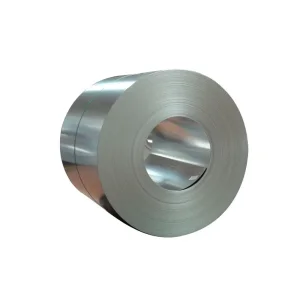
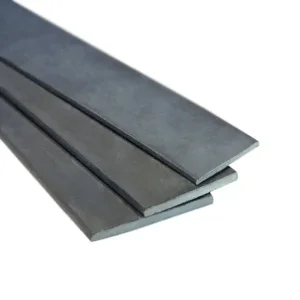
Browse our extended product lines encompassing structural spiral pipe, stainless steel coils, electrogalvanized sheets, and specialized silicon steel laminations.
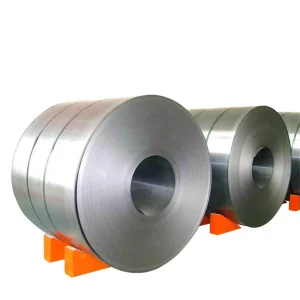

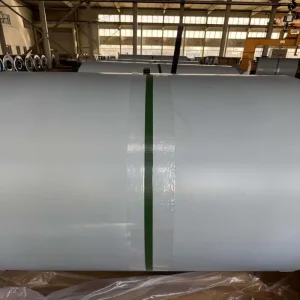

Request Factory-Direct Pricing & Technical Data Sheets
Partner directly with tier-1 Chinese steel tube manufacturers. Submit your project tolerances, material grades, outer diameters, and annual purchasing volume for instant engineering review and wholesale pricing quotes within 24 hours.