
Mill-Direct Structural & Coated Steel Products
High-precision structural steel tubing, welded pipes, cold-rolled coils, and scaffolding supports certified to ISO, ASTM, and EN specifications.


Structural Pipe Welding: Engineering Mechanics & Wholesale OEM Standards
Structural pipe welding is the foundational backbone of modern heavy infrastructure, civil engineering, offshore platforms, and architectural skylines. Understanding the metallurgical, mechanical, and geometric parameters of welded hollow structural sections (HSS) is essential for B2B procurement leaders, EPC contractors, and steel wholesalers worldwide.
Structural pipes differ fundamentally from fluid-conveying conduits. While pressure piping focuses on fluid containment and hydrostatic limits, structural welded pipes are engineered specifically to absorb axial compression, multi-axis bending moments, torsional shear, and dynamic fatigue loads. The integrity of the longitudinal or helical seam weld determines whether a column, truss, or offshore jacket will maintain its structural elasticity under extreme ambient stress and seismic forcing.
"Information Gain Insight: Modern structural pipe welding efficiency depends heavily on minimizing Heat-Affected Zone (HAZ) grain coarsening. Advanced High-Frequency Induction (HFI) welding combined with automated Submerged Arc Welding (SAW) preserves grain refinement and achieves mechanical notch toughness exceeding 47 Joules at -40°C."
ERW / HFI Pipe Welding
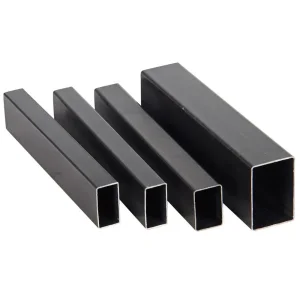
Electric Resistance Welding (ERW) and High-Frequency Induction (HFI) welding utilize high-frequency electrical currents (up to 450 kHz) to melt the abutting edges of strip steel without filler metals. Perfect for square, rectangular, and round structural hollow sections (ASTM A500 / EN 10219).
LSAW Structural Pipe
Longitudinal Submerged Arc Welding (LSAW) utilizes heavy steel plates (JCOE process) with double-sided submerged arc welding using wire and flux. Designed for extreme wall thicknesses (up to 50mm) and high-yield structural applications like offshore jacket legs and bridge piers.
SSAW / HSAW Spiral Pipe
Spiral Submerged Arc Welding (SSAW) forms hot-rolled coiled strip into a helical shape welded continuously inside and outside. Offers high dimensional consistency and exceptional resistance to internal and external hoop stresses for foundation piling and wind turbine towers.
China Manufacturing Synergy: Wholesale Structural Pipe Superiority
China’s structural steel manufacturing ecosystem combines massive raw material scaling, state-of-the-art automated welding infrastructure, and direct seaport logisitical advantages to give global wholesalers an unmatchable competitive edge.
Upstream Raw Material Integration
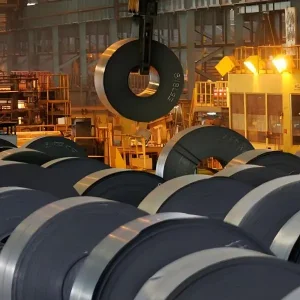
Chinese manufacturing hubs like Tianjin, Tangshan, and Shandong maintain direct vertical integration with premier tier-1 steel mills (Baosteel, Shougang, Ansteel). This provides access to certified low-carbon structural coils (Q235B, Q355B/D/E, S275J2, S355JR/J2, S460NH) with minimal lead time and guaranteed melt chemical purity.
Advanced Automated Robotic Welding
China's modern structural pipe factories lead global automation, incorporating multi-pass robotic arc welding, seam-tracking laser guidance, real-time infrared thermal imaging, and continuous offline heat treatment. This eliminates human error and minimizes internal seam distortion.
Scale Economies & Rapid Customization
With single facilities operating over 8 high-frequency welded lines capable of generating over 100,000 metric tons per month, Chinese factories can effortlessly accommodate large-scale OEM orders, special non-standard cross-sections, and custom cut-to-length structural pipe orders simultaneously.
Future Trends in Structural Pipe Welding Technology
The global structural steel market is undergoing a rapid transition toward digital quality inspection, low-carbon steelmaking, and multi-component alloy coatings.
AI-Powered Real-Time Weld Monitoring
Integration of computer vision and acoustic emission sensors directly onto the welding bridge allows immediate detection of micro-porosity, lack of fusion, or tungsten inclusions during seam creation, triggering automated torch corrections instantly.
Advanced Non-Destructive Testing (NDT)
Phase Array Ultrasonic Testing (PAUT) and full-body Radiographic (RT) digital inspection have largely replaced traditional hydrostatic methods for structural pipe certification, delivering 100% volumetric inspection records for critical structural projects.
Next-Gen Anti-Corrosion Coatings
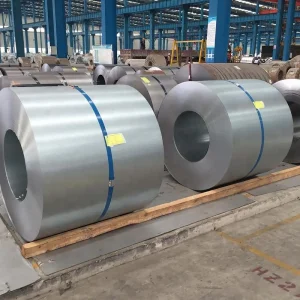
Shift from basic hot-dip galvanizing to Zinc-Aluminum-Magnesium (ZM/AZM) alloy coatings (e.g., 275g Zn-Al-Mg). ZM coatings deliver self-healing corrosion protection at cut edges and weld seams, ideal for solar tracking structures and coastal environments.
Structural Welded Pipe Technical Standards & Specifications
Cross-reference international standards, structural steel grades, mechanical limits, and application domains for wholesale procurement evaluation.
| Standard Specification | Common Steel Grades | Yield Strength (Min) | Tensile Strength (MPa) | Core Application Domain |
|---|---|---|---|---|
| ASTM A500 / A501 | Grade A, B, C, D | 228 - 345 MPa | 310 - 427 MPa | Structural framing, square/rectangular tubing, building columns |
| EN 10219 / EN 10210 | S235JRH, S355J2H, S460NH | 235 - 460 MPa | 360 - 630 MPa | Offshore jackets, heavy machinery frames, crane booms, bridges |
| API 5L (PSL1 / PSL2) | Gr. B, X42, X52, X65, X80 | 245 - 555 MPa | 415 - 700 MPa | Structural foundation piling, offshore jacket legs, heavy conduits |
| GB/T 3091 / GB/T 6728 | Q195, Q235B, Q355B/C/D | 195 - 355 MPa | 315 - 510 MPa | Civil infrastructure, agricultural greenhouses, scaffolding, fence posts |
| JIS G3466 | STKR400, STKR490 | 245 - 325 MPa | 400 - 490 MPa | Architectural support structures, industrial machinery frames |
Macro Industry Solutions & B2B Buyer Criteria
International buyers, stockists, and EPC contractors demand strict compliance protocols, verifiable material traceable certification, and specialized packaging for transoceanic transit.
Mill Test Certificates (EN 10204 3.1 / 3.2)
Procurement requirements mandate complete heat traceability. Every batch must be accompanied by MTRs showing chemical composition (Carbon Equivalent CEV), mechanical tensile tests, yield point ratios, Charpy V-notch impact values, and hydrostatic/NDT clearance logs.
Welder Qualification & ISO 3834
Global buyers require factories to operate under ISO 3834-2 comprehensive quality requirements for fusion welding. Operators and automated welding systems must hold qualifications certified by recognized classification societies (DNV, ABS, Lloyd's Register, SGS).
Seaworthy Export Bundling & Anti-Rust Protection
To survive ocean freight humidity, structural pipes undergo end-beveling with plastic caps, outer varnish/oiling coating, hex-bundling with steel strapping, and waterproof woven wrapping to eliminate white rust and mechanical distortion during crane loading.
Localized Application Scenarios for Structural Pipe Welding
Engineered structural pipes adapted for high-load, high-corrosion, and critical engineering environments worldwide.
1. Utility-Scale Solar Tracking Racks
High-strength square and rectangular welded tubes coated in ZM275 or heavy galvanizing serve as torque tubes and pier posts. Designed to withstand wind speeds over 160 km/h and severe soil corrosion without degradation for 25+ years.
2. Heavy Civil Shoring & Formwork Props
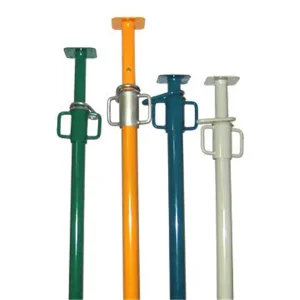
Adjustable telescopic props and scaffolding steel tubes manufactured with thick-walled ERW pipes. Designed for extreme axial compressive capacity during concrete slab curing and deep basement excavation bracing.
3. Offshore Wind & Marine Foundation Piling
Large-diameter SSAW and LSAW structural pipes driven deep into ocean floor bedrocks. Heavy wall thickness resists salt-spray pitting, tidal cycle corrosion, and wave fatigue stress.
4. Commercial Airport Terminal Roof Trusses
Architectural round and SHS hollow sections welded into space frames. High strength-to-weight ratio allows vast column-free interior spaces while meeting severe seismic resistance requirements.
Additional Heavy Industrial & Structural Steel Supplies
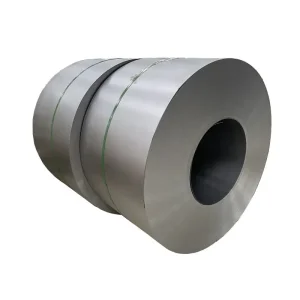
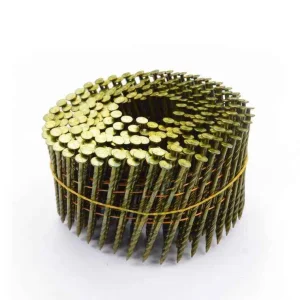
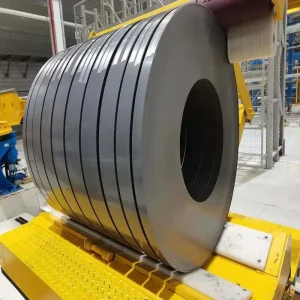
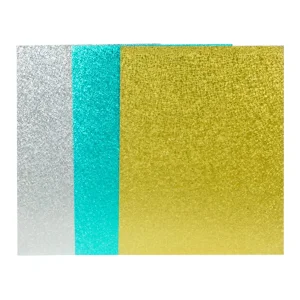
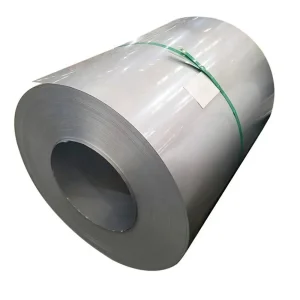
Explore our expanded product line including specialty alloy coils, cold-rolled high-strength sheets, structural plates, and electrical steel.


Structural Pipe Welding & Wholesale Procurement FAQ
Addressing essential technical, quality control, and logistics questions for international structural steel importers.
Request a Direct Factory Quote & Structural Engineering Specification Consultation
Connect with our structural pipe engineering team to receive customized mill price quotes, MTR verification reports, and CAD drawing evaluations for your bulk procurement needs.