
Explore our core portfolio of mill-direct coated coils, structural tubes, and precision engineering materials engineered for demanding international tenders.
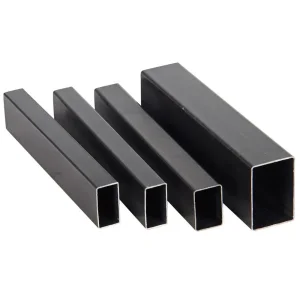
Wholesale China Suppliers 50x50mm Square Tubing Factory - Durable Metal Square Pipe
View Product Details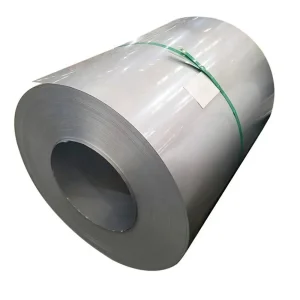
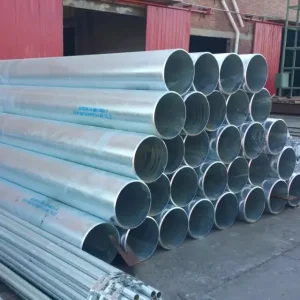
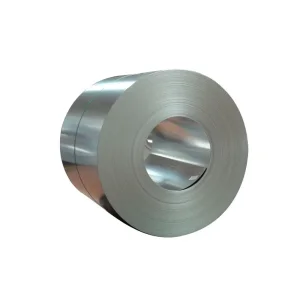
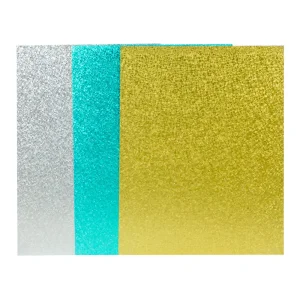
Wholesale China Aluzinc Galvalume Roofing Sheets - Durable Zinc Aluminum Coated
View Product Details
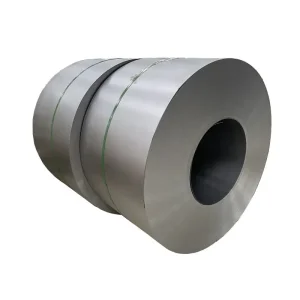
1. Executive Technical Summary & Material Metallurgical Foundation
Silicon steel coil stamping represents the nexus of electromechanical efficiency, advanced metallurgy, and ultra-precision tool engineering. Modern electrical equipment requires stringent control over magnetic hysteresis, core losses, and lamination stacking factors.
CRNGO Steel Chemistry & Anisotropy
Cold Rolled Non-Grain Oriented (CRNGO) electrical steel is engineered with 1.0% to 3.5% silicon content to increase electrical resistivity, thereby suppressing eddy current losses. Unlike grain-oriented alloys, CRNGO possesses isotropic magnetic properties in all rolling directions, rendering it indispensable for rotating machinery such as AC/DC electric motors, hermetic compressors, and automotive traction stators/rotors.
CRGO Steel & Transformer Core Dynamics
Cold Rolled Grain Oriented (CRGO) steel undergoes specialized secondary recrystallization processes to align iron crystals along the (110)[001] Goss texture. This unidirectional magnetic optimization achieves extreme permeability and ultra-low core loss ($P_{1.7/50} \le 0.80 \text{ W/kg}$) along the rolling direction, forming the backbone of power distribution transformers, E-I core laminations, and reactors.
2. Global Macro Procurement Demands & Industry Trends
Navigating the global transition toward ultra-efficient energy systems, carbon neutrality mandates, and electric vehicle (EV) powertrain expansion.
EV Powertrain Electrification
High-RPM electric vehicle traction motors require silicon steel laminations capable of withstanding switching frequencies over 400 Hz. Global OEMs demand thin-gauge CRNGO steel ($0.20\text{mm} - 0.35\text{mm}$) with organic C-5 insulation coatings to maximize motor torque density and battery thermal runaway protection.
Industrial Automation & IEC 60034-30-1
Strict European Union and US Department of Energy (DOE) regulations mandate Super Premium (IE4) and Ultra-Premium (IE5) motor efficiency standards. Sourcing high-permeability, low-coercivity stamped silicon laminations is the primary mechanism to eliminate stator $I^2R$ copper losses and core losses.
Smart Grid Infrastructure
Grid modernization initiatives require low-noise, high-flux density CRGO transformer cores. B2B procurement strategies prioritize suppliers offering continuous tension-annealed slit coils paired with precision rotary notched or step-lap stamped core laminations.
3. Stamping Engineering & Tooling Architecture
Precision stamping of electrical steel requires rigorous engineering parameters, specialized die metallurgy, and advanced lamination bonding technologies.
Progressive Carbide Die Engineering
Silicon steel is inherently abrasive due to high silicon crystallite content. High-speed progressive stamping utilizes tungsten carbide (WC) die components (grades equivalent to CD-650 or KD20) with punch-to-die clearances maintained strictly between 4% and 6% of sheet thickness ($t$). This ensures clean shear fracture, minimal plastic deformation, and tool life exceeding 200 million strokes.
Lamination Joining Technologies
Transforming stamped laminations into dense magnetic cores is accomplished via three primary methodologies:
- Auto-Interlocking (Cleading): In-die mechanical tabs create inter-stack mechanical friction, optimal for cost-effective standard induction motors.
- Laser & TIG Welding: External seam welding for high-vibration applications, executed with low heat input to minimize shorting across laminations.
- Self-Bonding Coating (Backlack): Thermo-activatable bonding varnish applied to coils. Under heat and pressure, it bonds laminations completely without mechanical or thermal strain, drastically reducing acoustic noise and vibration.
4. Silicon Steel Grade Matrix & Electromagnetic Specification Standard
Technical reference table comparing core loss, magnetic flux density, stacking factor, and recommended end-use applications across major international standards.
| Steel Type | IEC / EN Grade | Nominal Thickness | Max Core Loss $P_{1.5/50}$ (W/kg) | Min Magnetic Flux $B_{50}$ (T) | Stacking Factor (%) | Primary Industrial Application |
|---|---|---|---|---|---|---|
| CRNGO | M235-35A | 0.35 mm | 2.35 | 1.60 | ≥ 96.5% | High-Efficiency Motors (IE4), EV Auxiliary Motors |
| CRNGO | M270-50A | 0.50 mm | 2.70 | 1.62 | ≥ 97.0% | Standard Industrial AC Motors, Generators |
| CRNGO | M330-50A | 0.50 mm | 3.30 | 1.64 | ≥ 97.5% | Home Appliance Compressors, HVAC Fans |
| CRNGO (Ultra-Thin) | 20NO1200 | 0.20 mm | 1.20 (at 1.0T/400Hz: 12 W/kg) | 1.58 | ≥ 94.5% | High-RPM EV Traction Motors (> 15,000 RPM) |
| CRGO | M100-23G | 0.23 mm | 0.95 (at $P_{1.7/50}$) | 1.88 | ≥ 96.0% | Power & Distribution Transformer Cores |
| CRGO (Domain Refined) | 085-23h | 0.23 mm | 0.85 (at $P_{1.7/50}$) | 1.90 | ≥ 96.0% | Ultra-Low Noise Renewable Substation Transformers |
5. Quality Assurance, Testing Protocols & Compliance Safeguards
Rigorous quality control frameworks designed to guarantee zero-defect shipment, total trace-ability, and seamless regulatory compliance across North America, Europe, and Asia-Pacific.
Epstein Frame & SST Magnetic Testing
Every master coil and slit package undergoes strict magnetic evaluation via Epstein Frame Testing (IEC 60404-2) and Single Sheet Testers (SST). We measure real-time core loss ($W/\text{kg}$), magnetic excitation impedance, and hysteresis loop behavior to ensure batch-to-batch consistency within $\pm 3\%$ of targeted nominal values.
Automated Vision Optical Metrology
In-line high-resolution vision systems monitor stamping burr height, tooth slot concentricity, and keyway dimensions at press speeds up to 400 strokes per minute. Non-conforming stamped laminations are dynamically rejected, upholding Cpk values $> 1.67$ for critical dimensions.
International Regulatory Compliance
Our steel processing channels comply fully with ISO 9001:2015, IATF 16949 (Automotive Quality Management), ISO 14001, REACH (EC 1907/2006), and RoHS directives. Complete Material Test Reports (MTRs) according to EN 10204 3.1 are supplied with every export shipment.
6. Localized Support, Export Packaging & Supply Chain Resilience
Silicon steel is prone to rapid surface oxidation and physical deformation during sea transit. We deploy military-grade ocean packaging and robust logistics protocols.
VCI Ocean Freight Barrier Packaging
Every coil package is wrapped in continuous Volatile Corrosion Inhibitor (VCI) film, sealed with heavy-duty galvanized steel outer shields, and mounted on customized fumigated hardwood or steel skids. Desiccant packs are inserted internally to prevent condensation during trans-oceanic transit across tropical climate zones.
JIT Inventory & Kanban Buffer Frameworks
To protect OEM assembly lines from raw material price volatility and shipping delays, we maintain dedicated safety stock of prime CRNGO master coils in major regional warehouses, supporting Just-In-Time (JIT) delivery and Kanban pull-systems for global tier-1 buyers.
7. Strategic Technology Roadmap (2025–2030)
Pioneering tomorrow’s electromechanical materials through ultra-thin gauge innovation, amorphous metal integration, and AI-driven smart stamping presses.
Ultra-Thin 0.10mm Stamping
Commercialization of 0.10mm to 0.15mm silicon steel laminations to reduce high-frequency core loss in next-generation 800V EV traction inverters operating at rotational speeds exceeding 25,000 RPM.
Nanocrystalline Hybrid Cores
Developing hybrid stator structures combining stamped silicon steel tooth shoes with amorphous/nanocrystalline yoke cores, cutting total iron losses by up to 45% in industrial servo actuators.
Closed-Loop Adaptive Stamping Presses
Deploying IoT-connected press lines equipped with piezoelectric acoustic sensors. System real-time algorithms adjust die shut-height dynamically to compensate for thermal expansion and tool wear.
Browse additional wholesale products available for global export, custom slitting, coating, and structural fabrication.


Wholesale Slip on Plate Flanges for Welding Carbon & Stainless Steel Blind Flanges
View Product Details
High-Quality DX53D DX54D Aluminized Silicon Coating Coils for Industrial Baking Pans
View Product Details
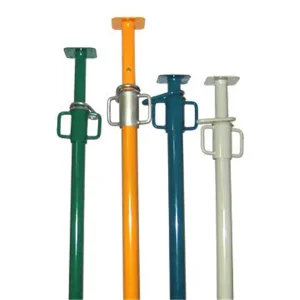
Wholesale Heavy Duty Adjustable Steel Prop for Scaffolding Support in Construction
View Product Details8. Frequently Asked Questions (Technical Sourcing & Procurement FAQ)
Detailed answers to essential engineering, technical tolerance, and supply chain queries encountered by electrical motor and transformer manufacturers.
What is the critical difference between CRNGO and CRGO silicon steel in stamping applications?
CRNGO (Cold Rolled Non-Grain Oriented) steel features isotropic magnetic behavior, meaning its magnetic properties are uniform across all directions. This makes it ideal for rotating equipment such as electric motors, stators, and rotors. CRGO (Cold Rolled Grain Oriented) steel undergoes directional processing to concentrate optimal magnetic performance strictly in the rolling direction, making it suitable for stationary magnetic fields like power transformer cores and distribution reactors. In stamping, CRNGO allows arbitrary rotation of rotor/stator tooth geometries, whereas CRGO requires precise nesting along the coil axis to maintain low hysteresis loss.
How does stamping burr height affect motor core efficiency, and what are your control standards?
Stamping burrs create direct metal-to-metal contact between adjacent laminations in a stacked core, bypassing the C-3 or C-5 insulating varnish layer. This forms localized short circuits that dramatically elevate eddy current losses ($P_e$), causing excessive motor overheating and decreased energy efficiency. Our precision progressive carbide dies maintain punch clearance within 4%–6% of material thickness, guaranteeing burr heights below $0.010\text{mm} - 0.015\text{mm}$, fully compliant with IEC and automotive IATF 16949 standards.
What insulating coatings (C-3, C-5, C-6) are applied to your wholesale silicon steel coils?
We offer a full spectrum of surface insulation coatings engineered for specific post-stamping operations:
- C-3: Organic coating for improved punchability; suitable for small motors not requiring stress-relief annealing.
- C-5: Inorganic-organic hybrid coating offering excellent heat resistance during stress-relief annealing ($750^\circ\text{C} - 800^\circ\text{C}$) and superior electrical resistance.
- C-6 (Self-Bonding / Backlack): Thermo-activatable bonding coat that eliminates the need for mechanical rivets or welding, maximizing magnetic permeability and damping acoustic noise.
Can you accommodate custom slitting widths and small-batch prototype stamping orders?
Yes. Our precision rotary slitting lines can process master coils down to custom narrow strip widths as small as $15\text{mm}$ with width tolerances within $\pm 0.05\text{mm}$. For prototype development and low-volume production runs, we provide wire-EDM cutting and short-run compound die stamping before committing to high-speed progressive carbide tooling.
How do you prevent stress-induced degradation of magnetic properties during stamping?
Mechanical shearing during stamping introduces localized lattice strain along the cut edges of silicon steel laminations, which locally increases coercivity and core loss. To restore optimal domain wall mobility, we offer post-stamping continuous atmosphere stress-relief annealing (SRA) at $780^\circ\text{C}$ under a nitrogen-hydrogen protective atmosphere, fully restoring the intrinsic low-loss characteristics of the alloy.
What documentation and third-party inspections accompany your export steel shipments?
Every shipment is backed by Mill Test Certificates (MTC) conforming to EN 10204 3.1, detailing chemical composition, tensile properties, core loss ($W/\text{kg}$), magnetic induction ($B_{50}$), coating weight, and dimensional tolerances. Third-party inspections from international testing bodies such as SGS, TÜV, or Bureau Veritas are routinely facilitated upon client request.