Featured Industrial Supply Catalog: Round Pipes, Coils & Structural Steel
Direct factory solutions for global procurement managers, EPC contractors, and industrial stocking distributors.


1. Global Market Architecture & Industrial Demand Dynamics
The global consumption of welded round steel pipes and tubular hollow sections has transitioned into a highly sophisticated market segment driven by global infrastructure expansion, energy transit modernization, agricultural automation, and structural engineering advancements. As global procurement officers evaluate partnerships with primary round pipe welding wholesalers, manufacturers, and mill-direct suppliers, the emphasis has shifted from mere volumetric purchasing to comprehensive total cost of ownership (TCO), metallurgical consistency, and rigorous certification compliance.
Welded steel round pipes—produced through High-Frequency Electric Resistance Welding (ERW/HFW), Longitudinal Submerged Arc Welding (LSAW), and Spiral Submerged Arc Welding (SSAW)—form the mechanical backbone of fluid transport, civil foundations, agricultural greenhouses, structural scaffolding, and automotive chassis assemblies. Understanding the specific macroeconomic and technical drivers across key regional markets allows procurement teams to optimize their international supply chains effectively.
Regional Procurement Demand Patterns & Application Vectors
Distributors and engineering, procurement, and construction (EPC) conglomerates prioritize suppliers who demonstrate deep familiarity with localized regulatory specs, climate conditions, and structural load standards:
- North America (ASTM A53 / ASTM A500 / API 5L): High demand for Schedule 40/80 ERW round pipes, structural carbon tubing, and hot-dipped galvanized round pipes for HVAC, fire protection sprinklers, structural piling, and oil/gas gathering lines. Compliance with stringent yield strength tolerances and MTC traceability (EN 10204 3.1) is mandatory.
- European Union (EN 10219 / EN 10255 / EN 10346): Focus on CE-marked structural hollow sections (S235JRH, S275J2H, S355J2H) and high-corrosion-resistant coatings. Demand is soaring for pre-galvanized and zinc-aluminum-magnesium (ZM) alloy-coated round tubes used in utility-scale solar tracking structures and greenhouse frameworks.
- Southeast Asia & Middle East (BS 1387 / JIS G3444): Intense procurement of heavy-duty hot-dip galvanized pipes for municipal water transmission, coastal infrastructure, heavy scaffolding props, and industrial fluid networks where ambient humidity and salinity demand zinc coatings exceeding 500 g/m² (70µm).
2. Technical Deep-Dive: Round Pipe Welding Metallurgy & Manufacturing Quality
Producing structural-grade and pressure-rated round steel pipes requires precise control over steel strip chemistry, high-frequency electric currents, heat-affected zone (HAZ) grain refinement, and post-weld seam annealing. As an established manufacturer and wholesale partner, operating 8 dedicated high-frequency welding lines within a 66,700 m² facility, maintaining zero-defect seam integrity is the foundational metric of engineering success.
High-Frequency Electric Resistance Welding (HFW / ERW) Mechanics
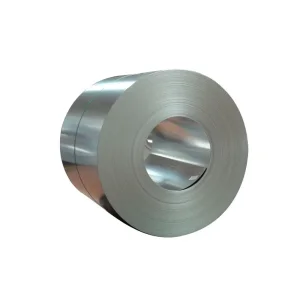
The continuous ERW manufacturing process utilizes hot-rolled pickled and oiled (HRPO) or cold-rolled strip steel fed through a series of precision forming rolls. The strip edges are brought together under controlled mechanical pressure, while high-frequency alternating electric current (typically 200 to 450 kHz) is passed across the seam. The resistance of the steel rapidly heats the edges to forge-welding temperature (approx. 1350°C to 1400°C) without requiring filler metal.
| Welding Process | Diameter Range (OD) | Wall Thickness (WT) | Primary Industrial Applications | Quality Inspection Protocol |
|---|---|---|---|---|
| HFW / ERW High-Frequency Welded |
1/2" to 24" (21.3mm - 610mm) | 1.2mm to 16.0mm | Structural framing, scaffolding, water conveyance, fence posts, greenhouse supports. | Online Eddy Current, Inline Ultrasonic (UT), Flattening & Bending Tests, Hydrostatic. |
| LSAW Longitudinal Submerged Arc |
16" to 56" (406mm - 1422mm) | 6.0mm to 50.0mm | High-pressure oil & gas transmission, deepwater piling, heavy structural columns. | Full Weld 100% X-Ray Radiography, Offline UT, Charpy Impact, Hydrostatic Testing. |
| SSAW / HSAW Spiral Submerged Arc |
8.5" to 120" (219mm - 3048mm) | 5.0mm to 25.4mm | Large-diameter municipal water mains, civil engineering piling, dredge pipe lines. | Online X-Ray Fluoroscopy, Ultrasonic Seam Tracking, Hydrostatic Expansion. |
| Seamless (Ref. Standard) Hot-Extruded / Cold-Drawn |
1/4" to 28" (13.7mm - 711mm) | 2.0mm to 60.0mm | High-temperature boilers, extreme high-pressure hydraulic lines, heavy machineries. | Full Body Magnetic Particle, Eddy Current, Ultrasonic Flaw Detection. |
Metallurgical Heat-Affected Zone (HAZ) Optimization & Seam Annealing
A critical differentiator in high-quality round pipe welding is the online seam heat treatment (seam annealing). During high-frequency welding, localized rapid heating and subsequent air quenching can create brittle martensitic or low-bainite microstructures along the weld line, increasing susceptibility to stress corrosion cracking or impact failure. Our advanced production lines incorporate inline induction seam annealers that reheat the weld zone to austenitic temperature (850°C - 950°C), followed by controlled air cooling. This normalizing process restores ductility, homogenizes grain structure, and aligns the mechanical properties of the weld seam with the parent coil material.
Surface Protection Engineering: Hot-Dip Galvanizing, Pre-Galvanizing & ZF Alloys
Preventing iron oxidation in harsh ambient environments is paramount. Round pipes are engineered with three distinct zinc protection systems depending on the intended duty cycle:
Pre-Galvanized Round Pipes
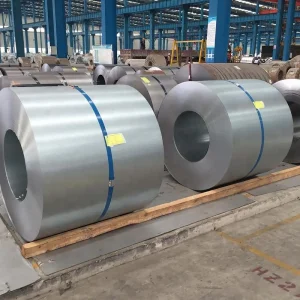
Formed directly from continuous hot-dipped galvanized strip (Z100 - Z275). The external weld seam is scraped and instantly re-metalized with zinc thermal spraying. Offers a ultra-smooth aesthetic, precise wall tolerances, and cost-efficiency for indoor framing, furniture, and light agricultural structures.
Hot-Dip Galvanized (HDG) Pipes
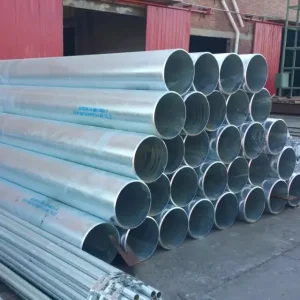
Fabricated black pipes are fully submerged in a molten zinc bath at ~450°C after fabrication. This metallurgical immersion forms multi-layer zinc-iron intermetallic phases bonded to the steel, coating both interior and exterior walls with 300g/m² to 600g/m² (45µm - 85µm) for up to 50 years of outdoor maintenance-free life.
Galvannealed (ZF Alloy) Steel
Subjected to inline thermal treatment after zinc coating, converting the surface into a uniform 90% Zn / 10% Fe zinc-iron alloy matrix (such as DC51D+ZF). Delivers superior paint adhesion, exceptional spot-welding performance, and zero flaking during post-fabrication bending or stamping.
3. Technology Roadmap & Next-Gen Manufacturing Innovations (2025–2035)
The pipe manufacturing industry is undergoing a digital and metallurgical evolution. To maintain competitive advantage, primary manufacturers are integrating artificial intelligence, advanced optoelectronic sensors, and green steel processing techniques to meet stringent international sustainability goals.
Phase 1: Real-Time Optical & AI-Assisted Closed-Loop Weld Monitoring
Implementation of high-speed infrared cameras and laser profilometers mounted directly behind the welding squeeze rolls. AI algorithms continuously analyze seam gap geometry, molten weld pool infrared intensity, and thermal dissipation rates. The system autonomously adjusts high-frequency power output in real-time (<5ms latency), eliminating cold welds, burn-throughs, and micro-porosity before they occur.
Phase 2: Ultra-High-Strength Steel (UHSS) & Hydrogen Pipeline Engineering
Developing specialized round pipe welding techniques for advanced high-strength low-alloy (HSLA) steels and grades capable of transporting gaseous hydrogen under high pressure (e.g., API 5L X80/X100). This involves fine-tuning micro-alloying elements (Niobium, Vanadium, Titanium) and employing hybrid Laser-Arc welding to minimize heat input, preventing hydrogen-induced cracking (HIC) and sulfide stress cracking (SSC).
Phase 3: Decarbonized Green Steel Processing & Circular LCA
Transitioning primary substrate coil sourcing toward Electric Arc Furnace (EAF) steelmaking fueled by Direct Reduced Iron (DRI) and green hydrogen. Coupled with zero-emission solar powered galvanizing lines, these technological upgrades drastically lower the embedded carbon footprint (Scope 1 and Scope 2 emissions), enabling compliance with the European Union's Carbon Border Adjustment Mechanism (CBAM).
4. B2B Enterprise Sourcing Framework & Procurement Risk Mitigation
For international procurement directors and steel stockists, sourcing round welded pipes from China requires structured quality control metrics, transparent commercial terms, and robust logistics management. Below is an enterprise procurement framework designed to eliminate operational bottlenecks and protect profit margins.
1. Raw Material Traceability & Certification
Ensure your chosen supplier sources hot-rolled coil (HRC) exclusively from tier-1 integrated steel mills (such as Shougang, Baosteel, or HBIS). Mandate Mill Test Certificates (MTC) compliant with EN 10204 3.1 standards detailing chemical ladle analysis (Carbon, Manganese, Silicon, Phosphorus, Sulfur, CEV) and mechanical batch testing (Yield, Tensile, Elongation, Charpy V-Notch impact values).
2. In-Process NDT Inspection Protocols
Require non-destructive testing (NDT) sign-offs during manufacturing. For fluid and pressure-bearing round pipes, 100% online Eddy Current seam testing (ASTM E309) or continuous Hydrostatic pressure testing (holding minimum 5 seconds per pipe according to ASTM A53/BS 1387) must be verified prior to coating and final bundling.
3. Seaworthy Export Packaging Engineering
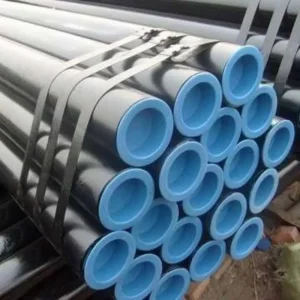
Ocean freight hazards include salt-spray oxidation, bundle shifting, and thread damage. Specifications must mandate hexagonal tight-strapped bundling with heavy-duty steel belts, plastic pipe-end protectors (for bevelled or threaded ends), anti-corrosion VCI paper wrapping, and wooden skids for containerized or break-bulk vessel loading.
4. Total Cost of Ownership (TCO) & Financial Terms
Assess supplier flexibility regarding commercial terms (FOB, CFR, CIF, DDP) and payment instruments (L/C at sight, T/T, OA financing). A reliable factory partner should accommodate small trial orders to verify dimensions and coatings before finalizing full-scale multi-container master contracts.
5. Global Regulatory Compliance, Standard Specifications & Quality Management
Cross-border steel importation requires absolute fidelity to destination standards. SMSTEEL operates under integrated quality systems certified with over 60 global compliance qualifications, ensuring seamless customs clearance and structural approval by local engineering authorities.
Global Standard Specifications Matrix
| Standard Code | Jurisdiction | Common Material Steel Grades | Key Dimensional & Tolerances Criteria |
|---|---|---|---|
| ASTM A53 / A500 | United States / International | Grade A, Grade B, Grade C | Wall thickness tolerance ±12.5%; Outside Diameter ±1% for ≥2" OD. Hydrotested to 2500 psi. |
| EN 10219 / EN 10255 | European Union / UK (UKCA) | S235JRH, S275J0H, S355J2H | Cold-formed structural hollow sections. Exact outer profile, mass, and corner radius limits. CE marked. |
| BS 1387 / EN 10255 | British Standard / Commonwealth | Class Light, Medium, Heavy | Screwed and socketed steel tubes for water, gas, air. Threaded to ISO 7/1 taper threads. |
| API 5L (PSL1 / PSL2) | Global Oil & Gas Sector | Grade B, X42, X52, X60, X65, X70 | Pipeline steel for petroleum and gas transport. Strict carbon equivalent (CEV) and fracture toughness. |
| JIS G3444 / G3466 | Japan / East Asia | STK400, STK490, STKR400 | Carbon steel tubes for general structural purpose. High ductility and earthquake bend performance. |
6. Enterprise Engineering Case Studies
Utility Solar Mount & Agricultural Greenhouse Project (Chile & Spain)
Challenge: An international solar EPC required 15,000 metric tons of pre-galvanized and hot-dip galvanized round tubes capable of surviving high-altitude desert UV radiation and coastal corrosion, with strict ovality limits for automated mechanical assembly.
Solution: Delivered customized high-zinc coated (Z275 & HDG 500g/m²) ERW round pipes with inline seam re-galvanizing. Diameters were held within ±0.5% OD tolerance to allow frictionless slotting into solar drive systems. Delivered zero field rejection across a 14-month phased shipping schedule.
Heavy Shoring Scaffolding & Deep Piling Contract (Middle East)
Challenge: A marine port expansion project demanded heavy-wall round steel pipes and telescopic prop scaffolding capable of supporting heavy concrete deck casting with high axial load requirements.
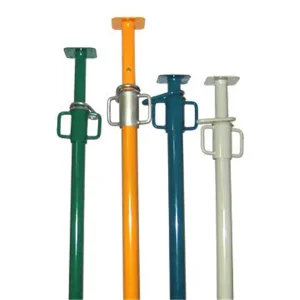
Solution: Supplied high-yield Q345B / S355J2H ERW and spiral welded pipes with full NDT ultrasonic seam verification. Scaffolding props were manufactured with precision threaded sleeves and anti-corrosion dip coating, certified to EN 1065 structural load capacities.
Additional Product Lines & Specialty Steel Inventory
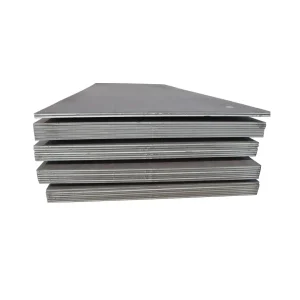
Explore our full range of spiral pipes, stainless coils, structural plates, and engineered fittings.