
Featured Steel Coils, Pipes & Electrical Steels
Premium industrial steel grades processed under strict ISO standards, ready for global deployment in infrastructure, energy systems, and electrical equipment.
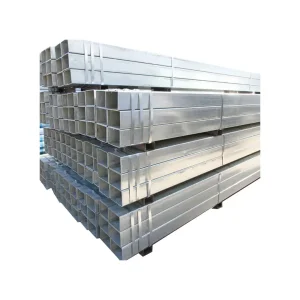
Wholesale China Suppliers Factory 40x40 Tube Shs Hot Dip Galvanized Square Steel Pipe 200*100 for Construction and Machinery Manufacturer, Manufacturers
View Details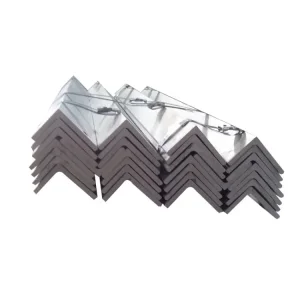
Wholesale China Q195 Q215 Hot Rolled Steel Angle Iron Beam from Reliable Suppliers & Factory for Structural Applications Manufacturers, Supplier
View Details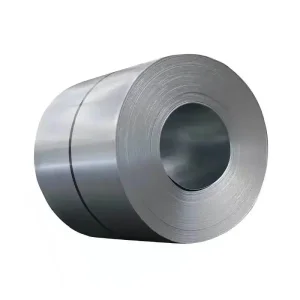
Wholesale China Non-Grain Oriented Silicon Steel Coil M310 M350 M470 M600 M800 | Suppliers & Factory Manufacturer, Manufacturers
View Details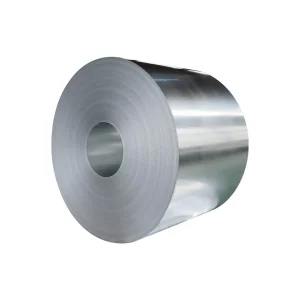
High-Quality DX53D DX54D aluminized silicon (as) coating coils for bread pans and burger buntrays Manufacturers, Supplier
View Details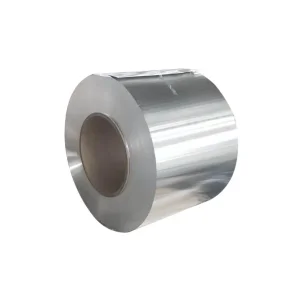
High-Quality Electrolytic Tinplate ETP & TFS Tin Clad Steel from China Suppliers | High-Quality Packaging Solutions Factory Manufacturer, Suppliers
View Details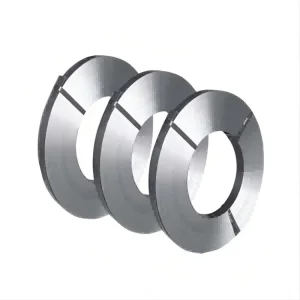
High-Quality 0.23mm CRGO Grain Oriented Electrical Silicon Steel Coil for Transformer - China Suppliers and Factory Manufacturer, Manufacturers
View Details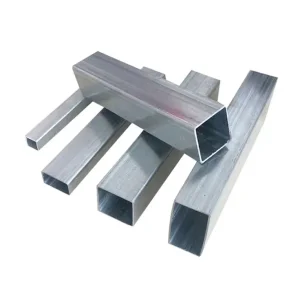
Wholesale Pre-Galvanized Steel Tube 20*20 SHS RHS Zinc Coated Rectangular Hollow Section Square Galvanized Steel Products Suppliers, Factory
View Details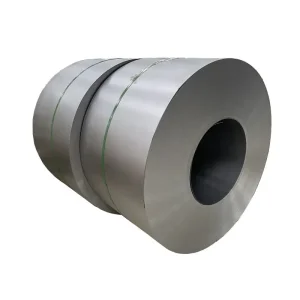
High-Quality High-Quality Cold Rolled High Strength Steel Sheets for Deep Drawing - China Suppliers & Factory Manufacturer, Factory
View Details1. Macro-Economic Energy Transition & The Imperative for High-Permeability Silicon Steel
The global electrical power sector is undergoing its most profound structural transformation since the inception of the AC power grid. Driven by aggressive net-zero carbon targets, the massive integration of variable renewable energy sources (wind and solar PV), the electrification of mobility (EV charging networks), and the exponential energy demand from AI-driven hyper-scale data centers, modern grid infrastructure is being pushed to its physical limits. At the epicenter of this grid evolution lies a critical soft magnetic material: Cold-Rolled Grain-Oriented Silicon Steel (CRGO).
As power grid operators and Original Equipment Manufacturers (OEMs) attempt to curtail distribution losses, minimize thermal dissipation, and comply with increasingly stringent eco-design regulations (such as EU Tier 2 Eco-Design requirements, US DOE 2026 efficiency standards, and China GB 20052 energy efficiency limits), sourcing top-tier **wholesale oriented silicon steel coils** has shifted from a standardized commodity transaction to a high-stakes strategic procurement decision.
Technical Insight: Transformers account for approximately 2% to 5% of all transmitted electrical energy lost globally as waste heat. Utilizing high-permeability, domain-refined CRGO silicon steel coils can cut no-load losses (core losses) by up to 30%, yielding billions of kilowatt-hours in energy savings over a 30-year operational lifecycle.
This technical whitepaper explores the metallurgical physics, global procurement dynamics, manufacturing innovation under China Industry 4.0, and localized application engineering of oriented electrical silicon steel. Designed for power engineers, supply chain directors, and industrial procurement managers, this document provides actionable data to evaluate mill capabilities and optimize total cost of ownership (TCO).
2. Metallurgy Deep-Dive: Grain Orientation, Texture Control & Loss Mitigation
Electrical silicon steel is an iron-silicon alloy engineered to deliver high magnetic permeability and exceptionally low core loss along a specific magnetization direction. Silicon content (typically between 3.0% and 3.5%) elevates electrical resistivity, thereby suppressing eddy current losses, while minimizing magnetostriction.
2.1 The Goss Texture (110)[001] Alignment
Unlike Non-Grain Oriented Silicon Steel (CRNGO), where magnetic crystals are oriented randomly for 360-degree rotation in rotating machinery (electric motors and generators), Grain-Oriented Silicon Steel (CRGO) relies on a perfected crystallographic alignment known as the Goss Texture—denoted by the Miller indices (110)[001].
In a Goss-oriented steel strip, the easy axis of magnetization ([001] crystal direction) is aligned parallel to the rolling direction of the coil. Achieving this orientation requires an intricate, multi-stage thermomechanical process comprising primary recrystallization, high-temperature box annealing (exceeding 1200°C) with a magnesium oxide (MgO) coating to induce secondary recrystallization, and final continuous stress-relief annealing.
2.2 Core Loss Mechanisms: Hysteresis, Eddy Current & Anomaly Loss
When subjected to alternating magnetic fields (50Hz or 60Hz), total iron losses ($P_t$) inside the laminated steel core stem from three distinct physical sources:
- Hysteresis Loss ($P_h$): Energy expended to reorient magnetic domains during each AC cycle. It is proportional to frequency ($f$) and the area enclosed by the magnetic $B-H$ loop. Goss texture alignment reduces domain rotation resistance, dropping hysteresis losses dramatically.
- Classic Eddy Current Loss ($P_e$): Circulating electric currents induced within the conductor by changing magnetic flux. $P_e$ is inversely proportional to electrical resistivity and directly proportional to the square of sheet thickness ($d^2$) and frequency ($f^2$). Hence, reducing strip thickness from 0.35mm down to 0.23mm or 0.18mm drastically lowers eddy losses.
- Anomalous (Excess) Loss ($P_a$): Microstructural energy loss linked to dynamic domain wall movement during magnetization. Advanced mills apply Laser Domain Refinement (LDR)—using high-power laser etching across the strip surface—to artificial narrow domain wall spacing, lowering $P_a$ by 10% to 20%.
2.3 Technical Parameter Matrix: CRGO vs. CRNGO Silicon Steel
| Property Parameter | Grain-Oriented (CRGO) Steel | Non-Oriented (CRNGO) Steel | Impact on Equipment Design |
|---|---|---|---|
| Primary Grain Texture | Goss Texture (110)[001] (Directional) | Isotropic / Random (Multi-directional) | Determines directional flux efficiency. |
| Typical Strip Thickness | 0.18mm, 0.20mm, 0.23mm, 0.27mm, 0.30mm | 0.35mm, 0.50mm, 0.65mm | Thinner gauge suppresses eddy currents. |
| Magnetic Permeability (B800) | Very High (> 1.88 Tesla to 1.95 Tesla) | Moderate (1.60 Tesla to 1.75 Tesla) | Higher flux density enables smaller core size. |
| Specific Core Loss (P1.7/50) | Ultra-Low (0.75 W/kg to 1.10 W/kg) | Higher (2.30 W/kg to 6.00 W/kg) | Directly governs transformer thermal rise. |
| Primary Applications | Power & Distribution Transformers, Reactors | EV Traction Motors, Generators, Appliances | Matches static vs rotational magnetic fields. |
Global Procurement Demand & Strategic Market Trends
How global grid modernization, renewable energy step-up sub-stations, and supply chain constraints are reshaping electrical steel purchasing strategy.
1. Massive Grid Expansion & Ageing Infrastructure Renewal
Both developed nations (US, EU) replacing 40-year-old grid assets and emerging economies (SE Asia, LATAM, Africa) expanding regional electrification are creating unprecedented demand for high-grade CRGO coils, resulting in multi-year lead times from traditional Western mills.
2. Shift to Ultra-Thin Gauges (0.18mm - 0.23mm)
Transformer manufacturers are rapidly abandoning traditional 0.30mm standard loss sheets in favor of 0.23mm and 0.20mm High-Permeability (Hi-B) laser-refined CRGO grades to achieve regulatory compliance and compact footprint designs for urban substations.
3. Renewable Energy Integration & EV Charger Steps
Utility-scale solar farms and wind turbines require specialized step-up transformers capable of handling high harmonics, thermal cycles, and continuous load factors, requiring electrical steel with exceptionally stable loss curves under harmonic stress.
China Industry 4.0: Supply Chain Resilience & Precision Manufacturing
How Chinese modern mills leverage automated cold-rolling complexes, advanced laser domain refinement, and integrated logistics hubs to deliver superior cost efficiency and quality assurance.
China has established itself as the world’s largest and most technologically advanced manufacturing ecosystem for electrical silicon steel. Leading manufacturing hubs in Tianjin and eastern industrial zones have integrated Industry 4.0 methodologies across the entire CRGO manufacturing lifecycle.
-
Ultra-Precision Cold Rolling Mills (20-High Sendzimir Mills) State-of-the-art multi-roll cold rolling clusters maintain strip gauge accuracy within ±0.002mm tolerances across a 1250mm wide coil. This unprecedented dimensional uniformity ensures high stacking factors during core assembly, avoiding localized air gaps and magnetic flux leakage.
-
Online Automated Surface & Magnetic Loss Testing Equipped with inline Epstein frames, single-sheet testers, and laser-scanning surface flaw detectors, Chinese factories execute 100% continuous monitoring of magnetic permeability ($B_{800}$), core loss ($P_{1.7/50}$), and insulation coating integrity (C-5 inorganic coating) in real-time.
-
Tianjin Port Supply Chain Agility & Export Logistics Proximity to Tianjin Port—Northern China's largest maritime gateway—enables seamless containerized and break-bulk shipping with custom anti-corrosion, VCI-wrapped seaworthy packaging, ensuring coils arrive at destination facilities free of oxidation, edge damage, or humidity degradation.
Monthly Ton Capacity
Ultra-Thin Gauge Precision
Global Export Markets
Ultra-Low Core Loss (0.23mm)
Localized Application Scenarios & Engineering Benchmarks
From extra-high voltage transmission networks to industrial power electronics, matching the precise electrical steel grade to operational boundary conditions.
Large Power Transformers (500kV - 1000kV UHV)
High-voltage transmission grid transformers demand laser-refined CRGO steel (e.g., 23QG085, 20QG075) with exceptional magnetic induction ($B_{800} \ge 1.92T$). High induction minimizes core cross-sectional area, reducing copper wire usage and overall transformer weight for transport logistics.
Medium & Distribution Transformers (11kV - 33kV)
Pole-mounted and pad-mounted distribution transformers running continuously benefit significantly from standard or high-permeability 0.23mm and 0.27mm CRGO coils (e.g., 27Q120, 23Q100). The focus is minimizing 24/7 no-load losses for utility providers.
Industrial Reactors & Shunt Inductors
Shunt reactors used for reactive power compensation encounter high harmonic frequencies and DC bias fields. Utilizing grain-oriented slit coils with tight physical tolerances and heat-resistant insulation coatings ensures silent operation (reduced magnetostrictive acoustic noise) and thermal stability.
Grain-Oriented Silicon Steel Grade Designation & Specs
Cross-reference table matching Chinese GB/T 2521.2 standards with International IEC 60404-8-7, American ASTM A876, and European EN 10107 standards.
| Nominal Thickness | China Standard (GB/T 2521.2) | International (IEC 60404-8-7) | USA Standard (ASTM A876) | Max Core Loss P1.7/50 (W/kg) | Min Magnetic Flux B800 (Tesla) |
|---|---|---|---|---|---|
| 0.18 mm | 18QG075 (Laser Refined) | NV075-18S | 18G041 | 0.75 W/kg | 1.92 T |
| 0.20 mm | 20QG080 (Laser Refined) | NV080-20S | 20G045 | 0.80 W/kg | 1.91 T |
| 0.23 mm | 23QG085 (Hi-B) | NV085-23S | 23G048 | 0.85 W/kg | 1.90 T |
| 0.23 mm | 23Q100 (Regular Grade) | M100-23P | 23H070 | 1.00 W/kg | 1.85 T |
| 0.27 mm | 27Q110 (Hi-B Grade) | M110-27P | 27H074 | 1.10 W/kg | 1.88 T |
| 0.30 mm | 30Q120 (Regular Grade) | M120-30P | 30H083 | 1.20 W/kg | 1.83 T |
7. Strategic B2B Sourcing: Risk Mitigation & Mill Vetting Framework
Purchasing wholesale oriented silicon steel coils involves millions of dollars in capital expenditure where a minor deviation in iron loss or slitting burr height can lead to catastrophic core overheating, acoustic vibration, or assembly downtime. Procurement managers must enforce a structured quality verification framework when evaluating factory suppliers.
7.1 Crucial Mill Audit Evaluation Metrics
- Raw Material Substrate Traceability: Verify whether the supplier sources hot-rolled master coils from tier-1 steel groups (such as Baosteel, Shougang, or Ansteel) with certified chemical purity (low nitrogen, controlled sulfur, exact silicon ratio).
- Slitting Capability & Burr Height Control: Precision transformer core shearing requires edge burr height strictly below 0.015mm (15 microns). Excessive burrs pierce the inorganic insulation coating, creating micro short circuits between laminations and spiking eddy current losses.
- Insulation Coating Quality (Carlite C-5): The surface inorganic insulation layer must exhibit strong substrate adhesion, high inter-laminar resistance (> 30 $\Omega\cdot\text{cm}^2/\text{lamination}$), and high thermal tolerance (resisting 800°C stress-relief annealing in nitrogen atmosphere).
- Seaworthy Anti-Corrosion Packaging: Electrical silicon steel rusts rapidly when exposed to humidity and salt spray. Require inner VCI (Vapor Corrosion Inhibitor) plastic film, galvanized metal protective outer rings, radial/circumferential steel strapping, and heavy-duty wooden skids suitable for container or vessel handling.
Complete Factory Direct Steel Product Line
In addition to grain-oriented silicon steel coils, our facilities deliver cold-rolled high-strength sheets, structural pipes, tinplate, and galvanized coils worldwide.
High-Quality Cold rolled high strength steel sheets with an extra deep drawing quality Supplier, Suppliers
View Details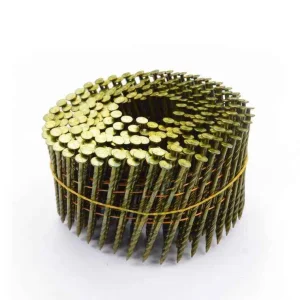
High-Quality Precision 15-Degree Coil Nails with Copper Plated Wire - China Suppliers & Factory for Wood and Furniture Suppliers, Factory
View Details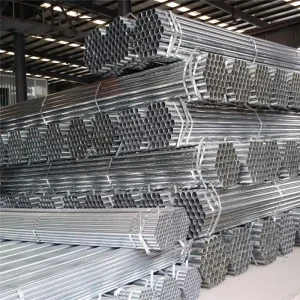
High-Quality Thick-Wall Pre Galvanized Steel Pipe For Green House Supplier, Suppliers
View Details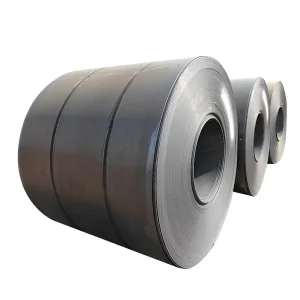
Wholesale Hot Rolled Steel Plate from China Suppliers - Premium Quality Steel Plates from Our Factory Supplier, Factory
View Details
High-Quality 40x40 Tube SHS Hot Dip Galvanized Square Steel Pipe - China Suppliers and Factory for Construction and Machinery Factory, Factories
View Details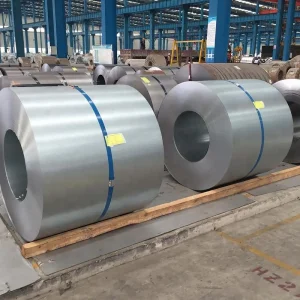
High-Quality China Suppliers of Galvanized Steel Coils - High-Quality Factory Products for Construction and Industry Manufacturers, Suppliers
View Details
Wholesale 0.23mm CRGO Grain Oriented Electrical Silicon Steel Coil for Transformer - China Suppliers & Factory Suppliers, Factories
View Details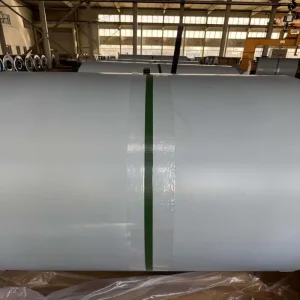
Wholesale Electrogalvanized Supplier, Factories
View DetailsFrequently Asked Questions (B2B Procurement FAQ)
Detailed answers to the technical, commercial, and quality assurance queries raised by transformer manufacturing engineers and global steel buyers.