
Featured Wholesale Steel Portfolio (1 - 8)
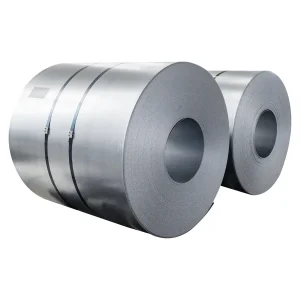
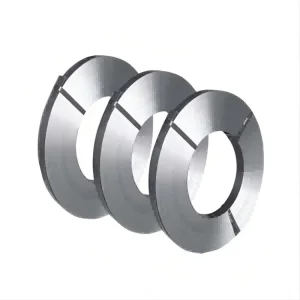
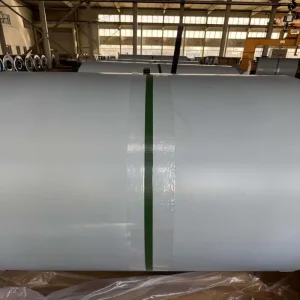
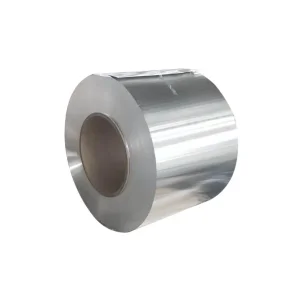
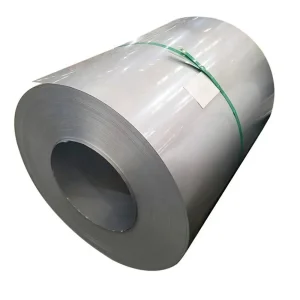
Hot Rolled Pickled & Oiled (HRPO) Steel: The Superior Intermediate Material
Decoding the chemical, mechanical, and surface dynamics of Hot Rolled Oiled Steel Sheets compared to Black Hot Rolled and Cold Rolled Commercial Steels.
The Scale Elimination Mechanism
During hot rolling at temperatures exceeding 1,100°C, steel surfaces react instantaneously with atmospheric oxygen to form iron oxides (Wüstite $FeO$, Magnetite $Fe_3O_4$, and Hematite $Fe_2O_3$). This mill scale layer is extremely hard, brittle, and abrasive.
Pickling & Oiling Intervention: Passing the hot-rolled coil through continuous hydrochloric acid ($HCl$) bath lines dissolves mill scale chemical bonds down to pure substrate steel. Immediately following rinsing and drying, an electrostatic application of specialized rust-inhibiting oil (typically 1.0 to 2.5 $g/m^2$) shields the reactive, clean metal from oxidation, forming Hot Rolled Pickled & Oiled (HRPO) steel.
Economic & Manufacturing Advantage
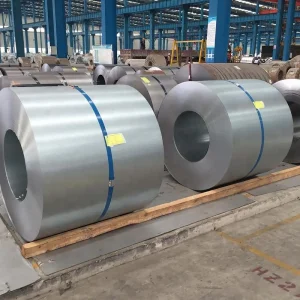
HRPO steel sheets fill the crucial engineering gap between standard Hot Rolled Black Steel (unpickled) and premium Cold Rolled (CR) Steel Sheets.
- Tooling Longevity: Eliminating mill scale extends stamping die and roll-forming tooling life by up to 300–400%, preventing micro-chipping caused by abrasive scale dust.
- Laser Cutting Speed: Absence of oxide scale permits clean fiber laser cutting without surface dross, enabling up to 30% faster cutting speeds.
- Cost Efficiency: Offers cold-rolled level surface cleanliness at a 15% to 25% lower price point per metric ton.
Global Trends Driving Hot Rolled Oiled Steel Demand
Analysis of changing global procurement requirements across North America, Europe, Asia-Pacific, and emerging manufacturing hubs.
Nearshoring & Supply Chain Resilience
Global original equipment manufacturers (OEMs) in automotive, HVAC, and heavy machinery are diversifying their raw material sourcing strategies. Tier-1 suppliers require predictable chemical composition and micro-alloy consistency to feed automated robotic welding lines without recalibration delays.
Automotive Lightweighting & High-Strength Steels
Transition toward High-Strength Low-Alloy (HSLA) HRPO grades (e.g., S355MC, S420MC, ASTM A1011 HSLAS) enables vehicle structural components to maintain structural crashworthiness while reducing wall gauge thickness and overall mass.
Decarbonization & CBAM Compliance
European and North American buyers are shifting procurement specifications toward steel mills operating Electric Arc Furnaces (EAF) or hydrogen-based Direct Reduced Iron (DRI) processes, tracking Scope 1, 2, and 3 carbon intensity metrics from coil to sheet.
China Industry 4.0: Metallurgical Precision & Supply Resilience
How modernized Chinese steel mills leverage AI-driven continuous rolling, automated pickling, and port logistics to deliver global cost-performance leadership.
Automated Gauge Control (AGC) & Optical Inspection
Modern Chinese hot-rolling facilities utilize hydraulic Automatic Gauge Control (AGC) coupled with X-ray thickness measurement devices. This setup guarantees wall thickness tolerances within ±0.03mm across the entire length of a 20-ton coil, minimizing material variation during high-speed stamping.
Surface defect monitoring systems use high-speed optical AI cameras to detect pinholes, surface slivers, or residual scale in real-time during pickling line operations, achieving near-zero defect escape rates.
Port Aggregation & Seaworthy Logistics Infrastructure
Located in key industrial logistics hubs (such as Tianjin, Bohai Rim, and Yangtze River Delta), leading manufacturers maintain fully integrated supply chains: raw iron ore processing, EAF/BOF steelmaking, hot rolling, continuous acid pickling, oiling, slitting, and export packaging.
Standardized seaworthy packaging utilizes anti-rust VCI paper, heavy-duty steel outer edge protectors, and corrugated steel jackets to survive trans-oceanic shipping under humid, high-salinity maritime conditions.
International Standards & Mechanical Grade Mapping
Cross-reference guide for procurement engineers matching American (ASTM), European (EN), and Japanese (JIS) hot-rolled oiled steel specifications.
| Specification Standard | Commercial Grade | Drawing / Deep Drawing Grade | Structural / HSLA Grade | Yield Strength (MPa) | Tensile Strength (MPa) | Elongation Min (%) |
|---|---|---|---|---|---|---|
| ASTM Standard (USA) | ASTM A1011 CS Type B | ASTM A1011 DS Type B | ASTM A1011 HSLAS Gr. 50 | 170 - 340 | 310 - 450 | ≥ 28% |
| EN Standard (Europe) | EN 10111 DD11 | EN 10111 DD13 / DD14 | EN 10149-2 S355MC | 170 - 355 | 440 - 510 | ≥ 19% - 28% |
| JIS Standard (Japan) | JIS G3131 SPHC | JIS G3131 SPHD / SPHE | JIS G3134 SPFH 590 | ≥ 225 | ≥ 270 | ≥ 29% - 37% |
| GB Standard (China) | GB/T 700 Q235B | GB/T 5213 Q/08AL | GB/T 1591 Q355B / Q420B | 235 - 420 | 370 - 630 | ≥ 21% - 26% |
Oil Application Density
Light Oiling (0.8–1.2 g/m²), Medium Oiling (1.2–1.8 g/m²), or Heavy Anti-Rust Oiling (2.0–3.0 g/m²) dependent on shipping transit duration.
Thickness Supply Range
Thickness: 1.2mm to 10.0mm; Width: 800mm to 2000mm; Available in Cut-to-Length Sheets or Precision Slit Coils.
Surface Flatness Control
Tension-levelled to half-standard commercial flatness tolerance (EN 10051 / ASTM A568), preventing oil-canning and bowing during laser cutting.
Localized Industrial Deployment Scenarios
How global manufacturing sectors integrate wholesale hot rolled pickled and oiled steel sheets into automated production environments.
Automotive Chassis & Structural Stamping
HRPO sheets are used in deep-drawn automotive chassis brackets, control arms, clutch plates, wheel rims, and underbody structural cross-members. Clean surfaces ensure flash-free resistance welding and robotically applied e-coating primer adhesion.
HVAC, Compressors & Pressure Vessels
Compressor housings, heat exchanger end-plates, and expansion tanks rely on SPHD/DD13 deep-drawing HRPO steel. The lack of scale prevents contamination inside sealed refrigerant lines, preserving air conditioning compressor efficiency.
Heavy Equipment & Agricultural Machinery
Excavator enclosures, tractor frames, grain storage hoppers, and boom arms utilize heavy-gauge HRPO sheets (4.0mm to 8.0mm S355MC). Smooth surfaces lower prep time prior to high-durability powder coating and polyurethane painting.
Precision Laser Cutting & Service Centers
Contract metal fabricators and steel service centers process wholesale HRPO sheets through high-wattage fiber laser cutters. Uniform oil films protect sheets during automated vacuum-suction loading without blinding optical sensors.
Electrical Enclosures & Cable Trays
Power distribution cabinets, rack-mount server chassis, and perforated cable trays require tight bending radii without surface micro-cracking. HRPO sheets form crisp 90-degree flanges while providing clean surfaces for powder coating.
Cold-Formed Structural Profiles & Tubing
Manufacturers roll-forming HRPO strip into square, rectangular, and custom hollow sections (SHS/RHS) achieve superior high-frequency weld seams ($ERW$) free from mill scale inclusions, increasing tube hydrostatic pressure ratings.
Rigorous QA Protocols & Mill Test Certification
Verified compliance frameworks ensuring zero-defect material shipments for overseas steel buyers and tier-1 procurement managers.
In-Line & Laboratory Inspection Verification
- Acid Residue Neutralization Testing: pH testing of washed surfaces ensures complete removal of hydrochloric acid traces, preventing localized post-packaging pitting corrosion.
- Oil Film Weight Measurement: Hydrocarbon solvent extraction and weigh-strip-weigh methods verify uniform oil deposition ($g/m^2$) to meet contract specifications.
- Erichsen Cupping & Formability Testing: Sheet samples undergo hydraulic cupping tests to record maximum draw depth before necking, verifying lot ductility.
- Roughness ($R_a$) Profilometry: Laser profilometers check surface micro-texture, guaranteeing consistent paint keying properties.
Traceability & EN 10204 3.1 Certification
Every wholesale shipment of hot rolled oiled steel sheet is accompanied by an official Mill Test Certificate (MTC) EN 10204 3.1. Each heat number is traceable back to liquid steel ladle chemical analysis.
Key MTC data points report ladle chemistry ($C, Mn, P, S, Si, Al, Cr, Ni, Cu$), actual yield strength ($R_eH$), ultimate tensile strength ($R_m$), percentage elongation ($A_g$), and impact test values where applicable.
Frequently Asked Questions
Technical and logistics insights from senior metallurgists and international steel trade specialists.
Complete Factory Direct Portfolio (9 - 16)
Partner with Leading Wholesale Steel Manufacturers
Access direct mill pricing, guaranteed mechanical properties, and resilient global supply chain fulfillment tailored for your industrial manufacturing needs.
Request Factory Quote & Technical Spec Sheet