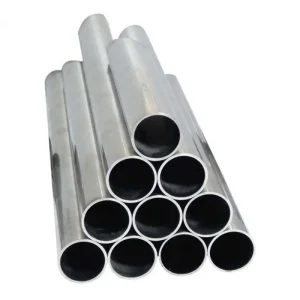
Wholesale Hot Rolled Grain Oriented Silicon Steel Supplier & Suppliers
Global B2B authority for high-permeability Grain Oriented Electrical Steel (GOES), hot-rolled silicon steel coil substrates, low core-loss magnetic laminations, and advanced transformer energy solutions.
Featured Coils, Electrical Steels & Fabricated Products
Mill-direct procurement matrix including hot-dipped galvanized coils, non-grain oriented (CRNGO) silicon steel, structural profiles, and industrial steel products.
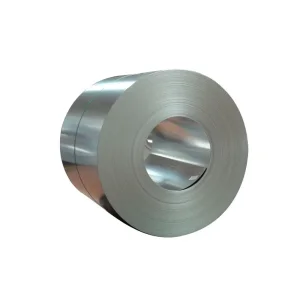
Wholesale Customized Hot Dip Galvanized Steel Coils - China Suppliers, ASTM A653 DX51D Z275 Factory Quality
View Product Details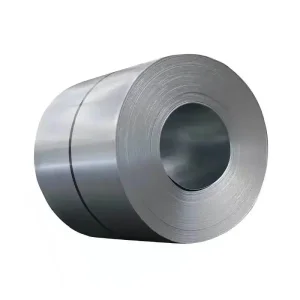
Wholesale China Suppliers of M310 M350 M470 M600 M800 Non-Grain Oriented Silicon Steel Coil - High Efficiency Electrical Steel
View Product Details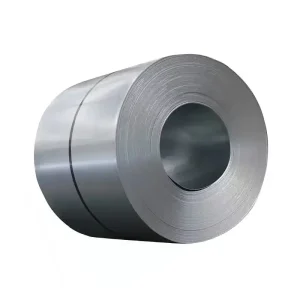
Wholesale China Suppliers Factory CRNGO M310 M350 M470 M600 M800 Non-Grain Oriented Silicon Electrical Steel Coils Manufacturers
View Product Details
Wholesale China Suppliers Factory M310 M350 M470 M600 M800 Non-Grain Oriented Silicon Steel Coils for Transformers & Motors
View Product Details
High-Quality China Factory Suppliers of M310 M350 M470 M600 M800 Silicon Steel Coils for Electrical Applications
View Product Details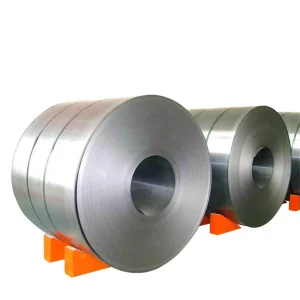
Wholesale High Strength Cold Rolled Steel Sheets for Deep Drawing - Trusted China Suppliers & Factory Manufacturer
View Product Details
High-Quality Precise 15 Degree Frame Coil Nail with Copper Plated Welding Wire for Wood & Furniture
View Product Details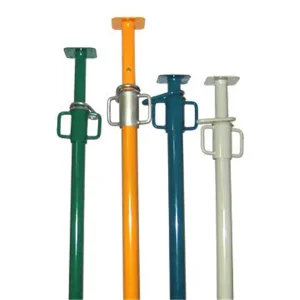
High-Quality China Factory Heavy Duty Telescopic Scaffold Support Adjustable Steel Props for Construction
View Product DetailsIndustrial & Commercial Reality of Hot Rolled Grain Oriented Silicon Steel
Demystifying the strategic role of Hot Rolled Grain Oriented (HRGO) silicon steel substrates in modern electrical grid infrastructure and high-efficiency power equipment manufacturing.
In the global power generation, transmission, and distribution ecosystem, Hot Rolled Grain Oriented Silicon Steel represents the foundational metallurgical substrate upon which modern electrical transformers and high-efficiency inductors are constructed. While final thin-gauge transformer laminations undergo rigorous cold-rolling processes (yielding CRGO steel), the thermomechanical processing during the hot rolling phase dictates the underlying crystallographic orientation, precipitate distribution, and secondary recrystallization potential of the alloy.
Silicon steel—often designated as electrical steel—contains typically between 2.5% and 3.5% silicon. The incorporation of silicon dramatically increases the electrical resistivity of iron (thereby reducing destructive eddy current losses), while reducing magnetostriction. However, grain-oriented silicon steel relies upon a highly precise crystallographic texture known in physical metallurgy as the Goss Texture {110}<001>. In this structure, the easy magnetization direction ([001] crystal axis) is aligned parallel to the rolling direction of the steel strip.
Procurement teams often confuse Hot Rolled Grain Oriented Silicon Steel (HRGO Substrates) with finished Cold Rolled Grain Oriented (CRGO) Sheets. Hot rolled grain-oriented strip serves as the master band (typically 2.0mm to 3.0mm thick). It undergoes specific hot-band annealing, high-temperature slab reheating (1350°C–1400°C to dissolve MnS and AlN inhibitors), and controlled roughing/finishing mill passes before final cold reduction down to standard gauges (0.18mm, 0.23mm, 0.27mm, 0.30mm). Securing top-tier wholesale hot-rolled substrates guarantees superior domain refinement in downstream manufacturing.
Global Market Trends & Macro Energy Transition
How net-zero decarbonization targets, EV grid expansion, and AI data center power surges are reshaping demand for premium electrical steels.
Renewable Integration & Ultra-High Voltage (UHV) Networks
Global expansion of solar photovoltaic and offshore wind farms requires massive step-up transformers equipped with low-loss grain oriented silicon steel cores to minimize line losses across thousands of kilometers of 800kV–1100kV DC grid infrastructure.
AI Hyper-scaler Data Centers & PDU Transformers
Artificial Intelligence infrastructure demands non-stop kilowatt-to-megawatt power delivery. Power Distribution Units (PDUs) require ultra-low noise, high-permeability GOES laminations to handle non-linear harmonic loads without thermal degradation.
Stringent Efficiency Mandates (EU Tier 2 & US DOE 2026)
Regulatory frameworks such as the European Eco-design Directive Tier 2 and U.S. Department of Energy (DOE) efficiency benchmarks make standard electrical steels obsolete, driving mandatory adoption of high-permeability laser-scribed grain-oriented steels.
Metallurgical & Electromagnetic Performance Data Sheet
Comprehensive grade comparison across Grain-Oriented (GOES) and Non-Oriented (CRNGO) silicon steel classifications for transformer core engineering.
| Steel Classification | Standard Grade Equivalent | Nominal Thickness (mm) | Max Core Loss P1.7/50Hz (W/kg) | Min Magnetic Flux B800 (Tesla) | Primary Industrial Application |
|---|---|---|---|---|---|
| High-Permeability GOES | 23QG085 / 23HP85 | 0.23 mm | 0.85 W/kg | 1.92 T | Supergrid Power Transformers (>500kV) |
| Regular Grain Oriented (RGO) | 27Q120 / 30Q130 | 0.27 - 0.30 mm | 1.20 - 1.30 W/kg | 1.85 T | Medium Distribution Transformers & Industrial Sub-stations |
| Laser-Scribed Ultra-Low Loss | 18RK065 / 20QG070 | 0.18 - 0.20 mm | 0.65 - 0.70 W/kg | 1.94 T | Ultra-High Efficiency Green Transformers & Shielded Reactors |
| High-Efficiency CRNGO | M310-35A / M350-50A | 0.35 - 0.50 mm | 3.10 - 3.50 W/kg | 1.68 T | Traction Motors, EV Powertrains, High-Speed Generators |
| Standard Commercial CRNGO | M470-50A / M600-50A | 0.50 mm | 4.70 - 6.00 W/kg | 1.63 T | Hermetic Compressor Motors, General Industrial Stators |
Localized Industrial Application Matrix
Engineered solutions optimized for specific regional infrastructure demands and electrical machine topographies.
1. Power & Distribution Transformers
Step-up and step-down transformers operating under continuous AC excitation require step-lap stacked or wound cores made of high-permeability grain-oriented silicon steel. Minimal hysteresis loop area prevents thermal runaway in closed oil-immersed tanks.
2. Shunt Reactors & Instrument Transformers
High-voltage transmission lines generate reactive power under light load conditions. Shunt reactors constructed with gapped cores of grain-oriented electrical steel absorb excess capacitive VARs, keeping grid voltage within strict operational boundaries.
3. High-Efficiency Industrial Electric Motors
While main rotating stators employ CRNGO steels (such as M310 or M350), specialized high-torque or high-frequency motor applications utilize thin-gauge grain-oriented strip segments aligned with primary magnetic flux paths to achieve IE4 and IE5 super-premium efficiency standards.
Technical Roadmap & Future Metallurgy Outlook (2025–2035)
Next-generation technological breakthroughs in domain refining, ultra-thin strip casting, and low-carbon electric steel manufacturing.
Pillar 1: Advanced Laser Domain Refining (LDR) Technology
To further diminish total iron losses in high-frequency transformer applications, manufacturers employ non-contact laser scribing on the surface of fully processed grain-oriented steel. High-energy fiber lasers create artificial micro-strains perpendicular to the rolling direction. This technique subdivides large 180° magnetic domains into smaller, narrow domain structures, reducing localized anomalous eddy current loss by up to 25% without damaging the protective inorganic insulation coating.
Pillar 2: Direct Strip Casting of High-Silicon Electrical Steel
Traditional manufacturing of hot-rolled silicon steel involves heavy ingot or continuous slab casting (200mm–250mm thick), followed by energy-intensive slab reheating at 1350°C and multiple hot rolling passes. The emerging technology roadmap introduces twin-roll strip casting, producing 1.5mm–3.0mm thin hot bands directly from molten metal. This rapid solidification route suppresses premature nitride coarsening and opens pathways to economically melt high-silicon alloys (Si > 4.0%), which were previously unprocessable due to room-temperature brittleness.
Pillar 3: Eco-Friendly C-5 / C-6 Inorganic Insulation Coatings
Modern GOES and CRNGO coils require specialized surface insulation coatings to maintain high inter-laminar resistance (preventing eddy currents between stacked core sheets). Industry compliance now dictates 100% chromate-free, environment-friendly organic-inorganic phosphate coatings (ASTM A976 C-5 type). These coatings withstand high-temperature stress-relief annealing (up to 800°C in nitrogen atmosphere) while offering exceptional punchability and corrosion resistance.
B2B Supply Chain & Quality Assurance Protocols
Overcoming international logistics challenges, oxidation risks, and precision slit coil tolerances for seamless core manufacturing.
Epstein Frame & Single-Sheet Testing
Every wholesale production batch of silicon steel is subjected to rigorous magnetic property testing in accordance with IEC 60404-2 (Epstein Frame) and IEC 60404-3 standards. Mill Test Certificates (EN 10204 3.1) detail exact loss curves at 1.5T and 1.7T excitation.
VCI Sea-Worthy Packaging Systems
Silicon steel coils are extremely sensitive to edge physical damage and moisture-induced surface oxidation. Wholesale ocean shipments utilize Vapor Corrosion Inhibitor (VCI) film, galvanized outer steel jackets, metal edge protectors, and heavy wooden pallet cradles.
Precision Slitting Width Tolerances
Automated transformer core cutting lines require narrow-slit strip tolerances within ±0.10mm, with minimal burr height (<0.02mm). Controlling slit-edge mechanical stress prevents micro-domain breakdown along the sheared border.
Technical & Procurement FAQ
Direct answers to technical questions concerning hot-rolled silicon steel substrates, grain orientation, core loss, and B2B ordering.
What is the fundamental difference between Grain Oriented (GOES) and Non-Grain Oriented (CRNGO) silicon steel?
Grain Oriented Electrical Steel (GOES) undergoes specialized thermomechanical processing to align its crystal grains almost entirely in the rolling direction (Goss texture {110}<001>). This yields extremely high magnetic permeability and ultra-low core losses along that specific axis, making it ideal for static equipment like power transformers. Non-Grain Oriented steel (CRNGO) has isotropic magnetic properties in all directions within the sheet plane, making it ideal for rotating electrical machinery like electric motors and generators.
Why is Hot Rolled Grain Oriented Silicon Steel used as a substrate for transformer manufacturing?
The hot rolling process establishes the essential chemical homogeneity, slab reheating inhibitor solution (MnS/AlN), and primary microstructural grain texture. Substrates of high-grade hot-rolled electrical steel allow cold-rolling mills to perform single or double cold reductions with intermediate anneals, ensuring secondary recrystallization yields maximum Goss texture alignment in final thin-gauge transformer core sheets.
What factors influence the total core loss (W/kg) in electrical steel laminations?
Total magnetic core loss consists of three primary components: 1) Hysteresis Loss (dependent on crystal orientation, grain size, and impurity content); 2) Classical Eddy Current Loss (proportional to the square of sheet thickness and frequency, inversely proportional to electrical resistivity); and 3) Anomalous / Domain Wall Motion Loss (mitigated by surface domain refining techniques such as laser scribing or mechanical grooving).
What surface insulation coatings are provided on wholesale silicon steel coils?
Silicon steel coils are supplied with standard electrical insulation coatings classified under ASTM A976 / IEC 60404-1-1. The most prevalent are C-5 coatings (inorganic phosphate-based coating with filler, offering exceptional heat resistance for stress-relief annealing) and C-6 coatings (organic-inorganic hybrid coatings engineered to maximize tool life during high-speed stamping of motor laminations).
What minimum order quantities (MOQ) and packaging standards apply to wholesale orders?
Wholesale master coil orders typically start at 5 to 20 metric tons per specification. Packaging complies strictly with international ocean transport standards, utilizing VCI anti-rust paper/film wrapping, inner and outer steel protection rings, galvanized corrugated side caps, and heavy-duty timber skids suitable for container loading or break-bulk handling.
Explore Complete Industrial Steel Product Portfolio
Mill-direct availability of electro-galvanized sheets, carbon structural tubes, tinplate, and specialty coil products.
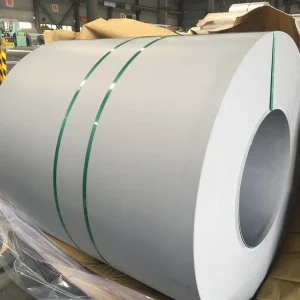
High-Quality SECC/SECD/SECE 20/20 Coating Electro-Galvanized Steel Plate - Manufacturer Factory
View Product Details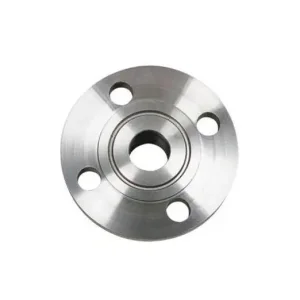
Wholesale China Suppliers Factory Slip on Plate Flanges for Welding Carbon Steel and Stainless Steel Blind Flanges
View Product Details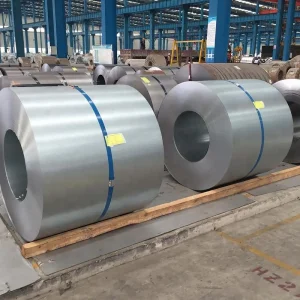
High-Quality China Galvanized Steel Coils from Leading Suppliers and Factory for Construction & Automotive
View Product Details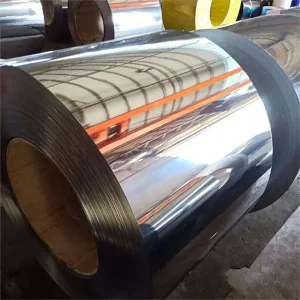
High-Quality China Electrolytic Tinplate (ETP) & TFS Tin Clad Steel Suppliers - Products for Packaging
View Product Details
Wholesale SECC ELECTRICAL GALVANIZED STEEL COILS FOR DOOR GATE Supplier, Factory
View Product Details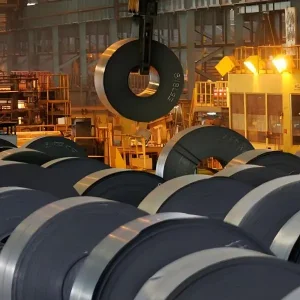
Wholesale China Hot Rolled Pickled and Oiled Steel Coils - Leading Suppliers & Factory Quality Manufacturers
View Product Details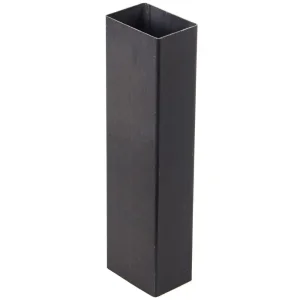
High-Quality Square Tube from China Suppliers | Durable Steel Tube Factory Supplier
View Product Details