
Featured Wholesale Galvanized & Coated Steel Lines
Mill-direct procurement options matching international standards including ASTM, EN, DIN, and JIS specifications.
1. Global Commercial & Industrial Status of Factory-Supplied Galvanized Steel Pipe
The global steel piping market is undergoing a structural paradigm shift driven by massive public infrastructure spending, the expansion of utility-scale renewable energy assets, and the stringent longevity demands of industrial fluid transport. Factory-supplied galvanized steel pipe sits at the nucleus of this transformation. As structural engineers, EPC contractors, and OEM fabricators move away from short-lifecycle untreated carbon steel, the global demand for high-performance zinc-coated tabular products has expanded at a Compound Annual Growth Rate (CAGR) of 5.8% over recent years, projected to reach unprecedented market volumes by 2030.
Direct mill sourcing—commonly designated in procurement tenders as wholesale factory supply—has superseded multi-tiered regional distribution networks. Modern B2B buyer intent prioritizes complete supply chain transparency, metallurgical traceability, and strict adherence to environmental regulations such as Europe's Carbon Border Adjustment Mechanism (CBAM). Mills headquartered in major steel manufacturing hubs, particularly Tianjin, Northern China, now deploy integrated high-frequency Electric Resistance Welding (ERW) and Continuous Hot-Dip Galvanizing (HDG) technology lines capable of delivering mill-certified, precise-tolerance tubular goods directly to seaport terminals.
Regional demand patterns highlight distinct engineering intent:
- North America (ASTM & CSA Standards): Heavy emphasis on heavy-wall Schedule 40/80 hot-dip galvanized structural pipes for industrial civil framing, highway guardrails, and municipal fire protection mains compliant with ASTM A53 Grade B and ASTM A500.
- European Union (EN Standards): High intent for precise structural hollow sections (EN 10219/EN 10210) utilizing advanced low-carbon micro-alloyed steel substrates, accompanied by stringent REACH and RoHS chemical passivation compliance.
- Middle East & North Africa (MENA): Extreme atmospheric humidity and saline coastal air drive demand for high-coating-weight (Z500–Z600) hot-dip galvanized pipes and specialized Zinc-Aluminum-Magnesium (Zn-Al-Mg) structural tubing for solar tracking structures and desalination auxiliary lines.
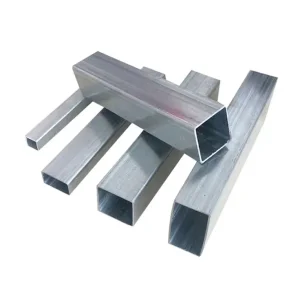
- Latin America & Southeast Asia: Focus on pre-galvanized cost-efficient light structural tubing (20x20mm to 100x100mm SHS/RHS) for large-scale agricultural greenhouses, commercial fencing, and modular urban housing infrastructure.
2. Advanced Metallurgical Trends & Processing Technologies
The production of modern factory-supplied galvanized steel pipe has evolved far beyond rudimentary dip-tank immersion. High-performing manufacturing facilities leverage closed-loop automated metallurgical controls to govern phase transformations during the iron-zinc reaction. Understanding these microstructural phenomena provides engineers with actionable criteria when drafting project specifications.
Hot-Dip Galvanizing (HDG)
Fabricated welded or seamless carbon steel pipe is submerged into a bath of molten zinc (~450°C) after rigorous chemical pickling and fluxing. The resulting coating consists of distinct metallurgically bonded iron-zinc alloy layers (Gamma, Delta, Zeta) topped with a pure zinc outer layer (Eta). Provides superior cathodic protection self-healing properties for external industrial exposures.
Pre-Galvanizing (Inline Mill)
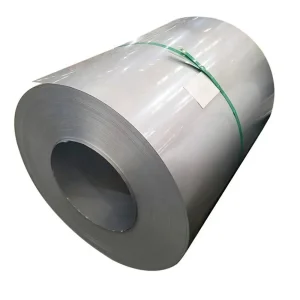
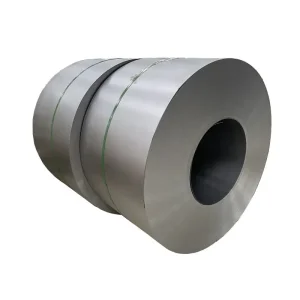
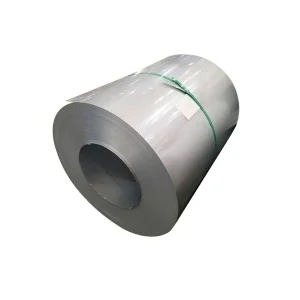
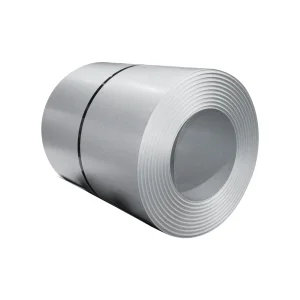
Steel strip coils are continuously hot-dip zinc coated prior to precision roll forming and High-Frequency Induction Welding (HFIW). The outer weld seam is subsequently re-zinc-sprayed via continuous thermal wire arc systems. Offers smooth aesthetic finish, tight dimensional tolerances, and cost optimization for indoor structural or mild outdoor applications.
Zn-Al-Mg Next-Gen Alloy
Incorporating 3% Aluminum and 1.5–3% Magnesium into the zinc bath creates an advanced ternary crystal matrix (Simonkolleite dense protective layer). Yields up to 5 to 10 times higher corrosion resistance compared to traditional pure GI coatings at equivalent coating thickness, establishing new benchmarks for solar tracking structures and agricultural facilities.
Fe-Zn Phase Layer Structure Analysis
During the hot-dip galvanizing immersion cycle, chemical diffusion between the iron substrate and molten zinc creates four distinct microstructural phases:
| Metallurgical Phase | Chemical Formula | Iron Content (%) | Microhardness (HV) | Engineering Characteristic |
|---|---|---|---|---|
| Eta (η) | 100% Zn | 0% | 70 HV | Ductile, impact-absorbing pure outer zinc layer. |
| Zeta (ζ) | FeZn13 | 5.7% – 6.3% | 180 HV | Columnar monoclinic crystal layer providing physical wear resistance. |
| Delta (δ) | FeZn10 | 7.0% – 11.5% | 270 HV | Tough hexagonal alloy phase assuring mechanical bond cohesion. |
| Gamma (Γ) | Fe3Zn10 | 21.0% – 28.0% | 310 HV | Ultra-thin, extremely hard cubic intermetallic layer at iron interface. |
Information Gain Fact: The presence of the alloyed Delta and Zeta layers makes hot-dip galvanized steel pipe significantly more abrasion-resistant than un-galvanized carbon steel or liquid-painted surfaces. Even if the outer Eta layer is scuffed during transit or mechanical site handling, the underlying hard intermetallic layers preserve corrosion barrier integrity.
3. Localized Application Scenarios & Industrial Solutions
Selecting the appropriate galvanized steel pipe configuration demands aligning material specification with precise environmental load parameters. Industrial applications span divergent operational exposures, requiring targeted product selection from factory supply catalogs:
Agritech & Commercial Greenhouses
Environment: High relative humidity, thermal cycling, exposure to nitrated fertilizers and pesticide sprays.
Recommended Spec: Pre-galvanized or HDG round & rectangular hollow sections (20x20mm to 60x120mm), Z275 to Z400 coating weights.
Solution: Smooth surface finish prevents plastic film abrasion, while custom swaging, punching, and bending allow rapid modular site assembly without welding.
Solar PV Tracker Structural Framing
Environment: Open ground fields, deserts, or coastal wind farm sites with high ultraviolet exposure and soil salinity.
Recommended Spec: Heavy-duty Zinc-Aluminum-Magnesium (Zn-Al-Mg) or HDG (Z500+) C/U profile channels, torque tubes, and pile posts.
Solution: Zn-Al-Mg coating provides self-healing edge protection on pre-punched mounting holes, eliminating post-fabrication dipping costs.
Municipal & Fire Protection Fluid Lines
Environment: Pressurized water distribution, chilled water HVAC loops, and automated fire sprinkler riser grids.
Recommended Spec: ASTM A53 Grade B / EN 10255 Schedule 10/40 hot-dip galvanized ERW round pipes with grooved or threaded ends.
Solution: Full internal/external hot-dip zinc coverage prevents tuberculation, micro-biological growth, and premature pipe wall thinning.
4. Technological Roadmap & Future Outlook (2025–2035)
The next decade of galvanized steel pipe manufacturing will be defined by decarbonization, automated quality verification, and advanced metallurgical alloy development. Wholesale buyers who align with forward-thinking factories gain direct operational and commercial advantages.
Phase 1: Green Steel Substrates (2025–2027)
Integration of Hydrogen Direct Reduced Iron (H-DRI) and Electric Arc Furnace (EAF) steelmaking into pipe production master coils. Enables wholesale factory supply to offer certified low-embodied-carbon steel pipes matching strict Scope 3 emissions targets required by European and North American infrastructure owners.
Phase 2: AI-Vision & Online NDT Testing (2027–2030)
Implementation of automated multi-axis online Eddy Current Testing (ECT), Phase-Array Ultrasonic Testing (PAUT), and laser continuous coating thickness gauges directly on high-speed ERW welding lines. Eliminates latent weld seam flaws and guarantees zero coating variance across 100% of manufactured pipe lengths.
Phase 3: Self-Healing Nanotech Coatings (2030–2035)
Development of micro-encapsulated silane-zinc nanotech passivation films applied over hot-dip coatings. Provides autonomous chemical sealing when structural pipes experience surface scratches during field erection, extending marine maintenance-free service intervals to 75+ years.
5. Enterprise Procurement & Quality Assurance Framework
Mitigating procurement risk when buying wholesale factory supply galvanized steel pipe requires establishing rigorous verification protocols before placing high-volume purchase orders. The following framework represents best-practice quality control for international project buyers:
1. Raw Material Mill Traceability
Mandate Mill Test Certificates (MTC) compliant with EN 10204 3.1 detailing heat numbers, chemical ladle analysis (Carbon, Manganese, Silicon, Phosphorus, Sulfur equivalents), and mechanical tensile yield verification.
2. Coating Weight & Adhesion Testing
Verify zinc coating mass via magnetic thickness gauges (ISO 2178) and gravimetric strip-and-weigh methods (ISO 1460). Ensure bend/pivot hammer tests satisfy zero flaking or delamination requirements under ASTM A123.
3. Hydrostatic & NDT Integrity
For pressure conduit applications, mandate 100% inline hydrostatic pressure testing (holding minimum 5 seconds at prescribed PSI) or continuous non-destructive electromagnetic testing per ASTM A53 / API 5L specifications.
4. Seaworthy Export Packaging
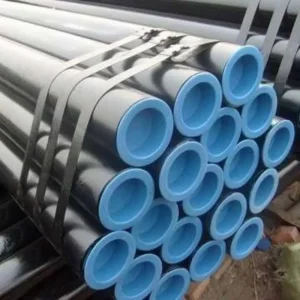
Ensure bundles are strapped with heavy-duty steel bands, fitted with protective plastic end caps, wrapped in anti-corrosion VCI material, and loaded into containers or breakbulk holds with wooden dunnage to prevent wet storage stain (white rust).
Factory Direct Carbon, Stainless & Specialty Steel Products
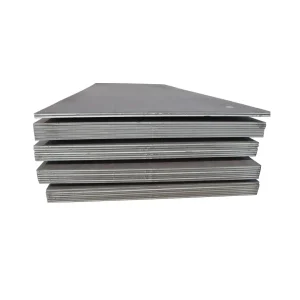
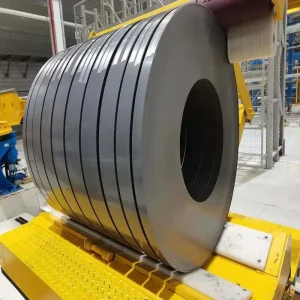
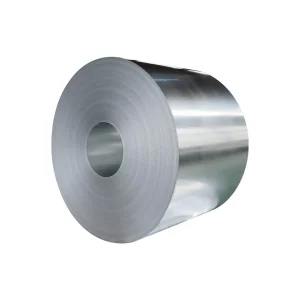
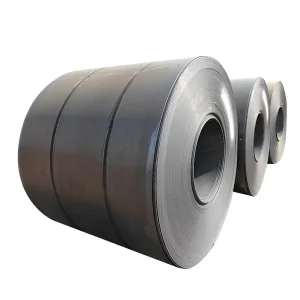
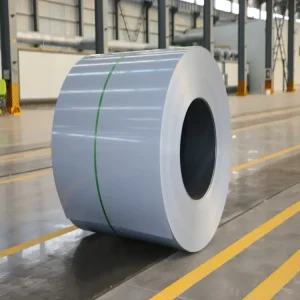
Explore our full line of industrial plates, structural coils, seamless tubes, and electrical silicon steels.
6. Technical & Commercial Procurement FAQ
Expert engineering answers regarding factory supply galvanized steel pipe selection, standards compliance, and direct manufacturing logistics.