Commercial & Industrial Steel Offerings (Part I)
Explore mill-direct electro-galvanized sheets, specialty coated coils, and precision structural steel manufactured under rigorous international quality controls.
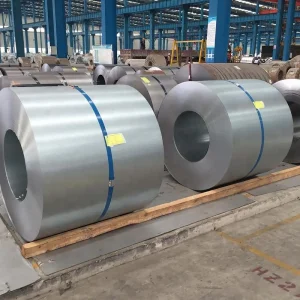
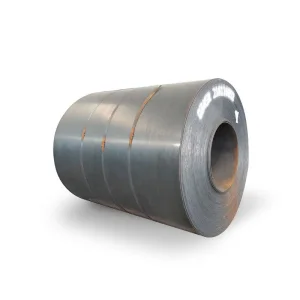
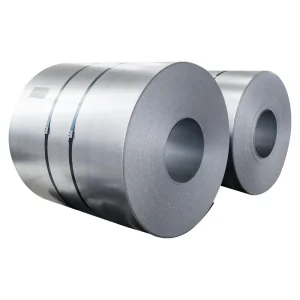
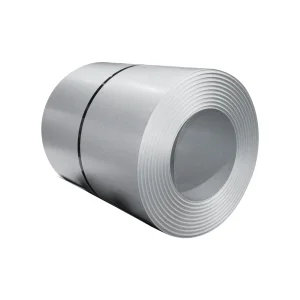
1. Global Commercial & Industrial Dynamics of Electro-Galvanized (GI) Sheet Sourcing
Understanding the shifts in modern manufacturing, raw material procurement strategies, and the technical edge of Electro-Galvanized steel over traditional Hot-Dip coating methods.
The global demand for high-precision coated steel has undergone a structural transformation. Procurement directors, structural engineers, and automotive tier-1 suppliers are increasingly transitioning from standard hot-dip galvanized (HDG) materials to Electro-Galvanized (EG / Electro GI) sheets. Driven by the miniaturization of electronic enclosures, stringent automotive surface-finish requirements, and the exponential growth of green building HVAC infrastructure, Electro GI steel represents the apex of controlled zinc deposition.
Unlike hot-dip processes where steel strip passes through a molten zinc bath at ~450°C—inducing thermal stress, variable spangle formation, and intermetallic alloy layers—continuous electro-galvanizing applies pure zinc at room temperature via electrochemical deposition. This guarantees absolute surface flatness, ultra-precise coating thickness control down to the single-micron level, and unmatched cold-forming ductility.
Microstructural Uniformity
Electro-galvanizing eliminates the brittle iron-zinc intermetallic compound layer (Fe-Zn phases like Gamma and Delta). The result is pure crystal zinc adherence directly to the cold-rolled base metal, enabling zero-flaking performance even during 0T bend tests.
Automotive & EV Battery Casing Spec
As electric vehicle (EV) manufacturers scale production, the need for lightweight, highly weldable, and corrosion-resistant battery module housings has surged. EG sheet grades like SECD and SECE provide the precise drawability and spot-weldability required for seamless automation.
Anti-Fingerprint (AFP) Innovations
Modern commercial appliances and server racks demand non-reactive surfaces. Our continuous electro-galvanizing line integrates organic resin passivation (AFP-Free / Chromate-Free), providing lubricity for stamping while blocking atmospheric oxidation.
2. Comparative Engineering Benchmark: Electro GI vs. Hot-Dip GI vs. Galvannealed
Select the optimal metallic substrate based on mechanical properties, coating adhesion, paintability, and weldability metrics.
| Coating Attribute | Electro-Galvanized Sheet (SECC / SECD / SECE) | Hot-Dip Galvanized Sheet (SGCC / DX51D+Z) | Galvannealed Steel Sheet (ZF60 / ZF275 / DX51D+ZF) |
|---|---|---|---|
| Coating Deposition Process | Cold electrolytic bath (Zinc Fluoroborate/Sulfate) | Hot molten zinc bath (~450°C immersion) | Hot-dip followed by inline annealing heat treatment (~500°C) |
| Coating Thickness Control | Ultra-precise (1.5µm – 10µm / 10/10g to 40/40g) | Standard to heavy (7µm – 40µm / Z60 to Z600) | Controlled iron-zinc alloy layer (ZF60 to ZF275) |
| Surface Finish & Spangle | Zero spangle, mirror-smooth matte finish | Regular spangle, minimized spangle, or zero spangle | Matte grey, non-spangled iron-zinc alloy finish |
| Paintability & E-Coat Adhesion | Superior (Class A Automotive Finish) | Good (Requires phosphatizing or etching) | Excellent (Porated alloy structure aids paint keying) |
| Deep Drawing Ability | Exceptional (No risk of coating flaking/peeling) | Moderate (Coating may powder under severe draw) | Good (Higher friction coefficient, requires lubrication) |
| Resistance Welding (Spot Welding) | High electrode tip life, consistent weld pools | Moderate (Zinc melting causes electrode brassing) | Superior (Iron content elevates electrical resistance) |
3. Comprehensive Substrate Metallurgy & International Grade Designations
Our continuous electro-galvanizing lines comply with JIS G3313, ASTM A879, EN 10152, and GB/T 15675 standards. Understanding the core chemical and mechanical distinctions ensures precise material engineering for your stamping lines.
SECC / DX51D+ZE (Commercial Grade)
Application: General bending, shallow drawing, unexposed architectural panels, server racks.
Mechanical Profile: Tensile strength ≥ 270 N/mm², Elongation ≥ 31%. Utilizes low-carbon killed steel as base plate. Offers ideal rigidity and flat panel stability.
SECD / DX52D+ZE (Drawing Grade)
Application: Automotive door inner panels, HVAC blower housings, complex chassis brackets.
Mechanical Profile: Aluminum-killed deep-drawing steel. Tensile strength ≥ 270 N/mm², Elongation ≥ 35%. Excellent plastic strain ratio (r-value) preventing necking during stamping.
SECE / SECN / DX53D+ZE (Deep Drawing)
Application: Extra-deep drawn automotive body components, complex oil pans, oil pump housings.
Mechanical Profile: Interstitial-Free (IF) steel base plate with ultra-low carbon (<0.003%). Elongation ≥ 38%, r-value ≥ 1.6. Zero room-temperature aging guaranteed.
Coating Weight & Surface Treatment Designation Architecture
Electro-galvanized coatings are designated by the mass of zinc deposited per unit area on each side of the steel plate. Custom differential coatings allow clients to optimize material cost without compromising single-side exposure corrosion performance:
- Standard Double-Sided Equal Coating: 10/10 g/m² (approx. 1.4µm per side), 20/20 g/m² (approx. 2.8µm per side), 30/30 g/m², 40/40 g/m².
- Differential Coating (Custom B2B Spec): 10/30 g/m² or 0/20 g/m² (Single-sided electro-galvanized sheet for specialized automotive welding).
- Post-Galvanizing Chemical Passivation:
- C (Chromated): Superior salt-spray corrosion resistance for unpainted storage.
- P (Phosphated): Micro-porous zinc phosphate surface engineered specifically for immediate automotive primer and powder coating bonding.
- M (Anti-Fingerprint Organic Film / AFP): Transparent organic acrylic resin film providing fingerprint resistance, electrical conductivity, and dry lubricant performance for automated assembly.
4. Global Application Engineering & Macro Sector Solutions
Deploying Wholesale Electro GI Sheets across critical global manufacturing sectors.
Aero & Electronics Enclosures
In high-density data centers, server racks require extreme physical flatness to prevent air-bypass and thermal pockets. Electro GI sheets (SECC with Anti-Fingerprint treatment) deliver dimensional stability within ±0.1mm, ensuring shield conductivity against Electromagnetic Interference (EMI).
Automotive Body & EV Assemblies
Tier-1 automotive stamping plants utilize our SECE extra-deep drawing sheets for interior door frames, instrument panel supports, and electric powertrain control unit housings where standard hot-dip galvanized steel exhibits surface roughness or micro-cracking.
Commercial HVAC & Cleanroom Ducting
Architectural cleanrooms and medical-grade air distribution channels mandate non-gassing, non-flaking metallic walls. Electro-galvanized sheets treated with organic phosphate provide long-term protection in high-humidity ambient environments without zinc oxide particle discharge.
5. Future Outlook: Next-Generation Electro-Galvanizing Innovations
How our metallurgical R&D team is shaping the next decade of corrosion resistance, zero-carbon production, and nano-layer surface coatings.
Zinc-Nickel (Zn-Ni) Alloy Electrodeposition
Transitioning from pure zinc baths to 11–15% Nickel-Zinc alloy electro-plating. Zn-Ni electro-galvanized sheets offer 5 to 10 times higher corrosion protection at equivalent coating weights, enabling thinner gauges for automotive weight reduction.
Zero-Chromate Nano-Self-Healing Passivation
Replacing conventional passivation with self-healing zirconium/titanium nano-coatings. When scratched during stamping, active nano-inhibitors migrate to exposed base iron, sealing the break instantaneously.
AI Continuous Automated Surface Inspection
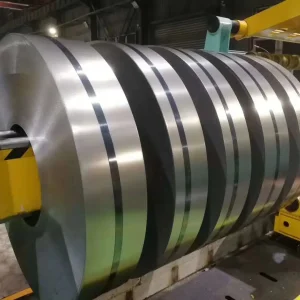
Our continuous electro-galvanizing line (CEGL) integrates high-resolution line-scan vision sensors running AI machine vision. Every square millimeter of coil is scanned at 180 m/min for pinholes, edge burrs, or zinc thickness variations.
6. Quality Assurance Framework, Seaworthy Logistics & Total Cost Sourcing Model
Mitigating international trade risks through rigorous quality assurance testing, rust-proof oceanic packaging, and direct factory pricing.
For international buyers, total cost of ownership (TCO) is defined not just by the base FOB price per ton, but by material consistency, yield loss during stamping, and transit preservation. Our mill-direct supply chain integrates rigorous testing protocols before container loading:
Salt Spray Corrosion Testing (ASTM B117)
Every production lot undergoes accelerated neutral salt spray testing (NSS). Our standard 20/20g Fingerprint-resistant SECC achieves >72 hours before white rust formation and >240 hours before red rust.
Tensile & Formability Testing (ISO 6892-1)
Yield strength, ultimate tensile strength, elongation (A50mm), plastic strain ratio (r-value), and strain hardening exponent (n-value) are validated via computer-controlled tensile test benches and provided on Mill Test Certificates (MTC EN 10204 3.1).
VCI Anti-Rust Export Packaging Standard
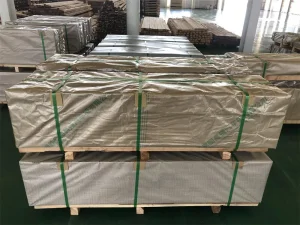
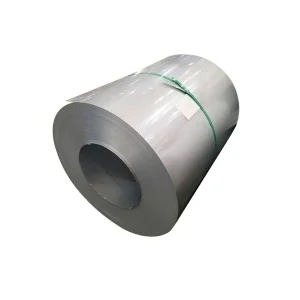
Coils and sheets are wrapped in heavy-duty Volatile Corrosion Inhibitor (VCI) paper, sealed in zinc-coated steel outer jackets, fitted with plastic edge protectors, and secured on wooden pallets for breakbulk or containerized shipping.
7. Frequently Asked Questions (FAQ) - Sourcing Wholesale Electro GI Sheets
Answers to complex metallurgical, purchasing, and logistical questions raised by global steel importers and engineers.
Q1: What is the exact difference between SECC, SECD, and SECE steel grades?
Q2: Why should I choose Electro-Galvanized (EG) sheets over Hot-Dip Galvanized (HDG) sheets for electronics manufacturing?
Q3: How does the coating weight designation (e.g., 20/20 g/m²) translate to micron thickness?
Q4: What surface treatments are available for Wholesale Electro GI Sheets?
Q5: Can you produce differential coating weights on custom B2B orders?
Q6: How does Electro GI Sheet perform during resistance spot welding?
Q7: What dimensional tolerances can your factory guarantee for slit coils and cut sheets?
Q8: What compliance standards and certifications accompany your shipments?
Q9: How do you prevent white rust during oceanic shipping across tropical zones?
Q10: What is your minimum order quantity (MOQ) and standard lead time?
Commercial & Industrial Steel Offerings (Part II)
Explore additional specialized steel lines including non-grain oriented silicon steel, electro-galvanized plates, and cold-rolled deep-drawing solutions.