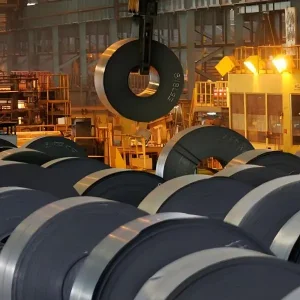
Featured Wholesale Galvanized Steel & Tube Series
Precision-engineered pre-galvanized, hot-dip, and specialty alloy steel coil and tube configurations tailored for commercial greenhouse construction.
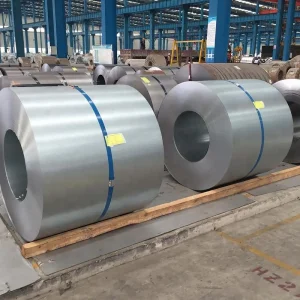
Wholesale Galvanized steel coils are mainly used in the manufacturing of steel pipes and steel sections. Supplier, Suppliers
View Product Details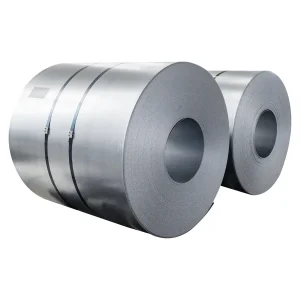
High-Quality China Suppliers Factory DX51D ZF60 ZF275 Galvannealed Steel Coil - Zinc Iron Alloy Coating for Welding and Painting Manufacturer, Manufacturers
View Product Details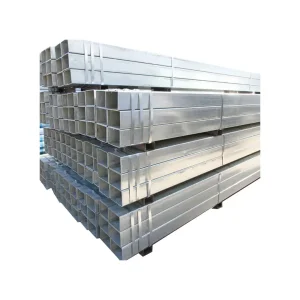
Wholesale China Suppliers Factory 40x40 Tube Shs Hot Dip Galvanized Square Steel Pipe 200*100 for Construction and Machinery Manufacturer, Manufacturers
View Product Details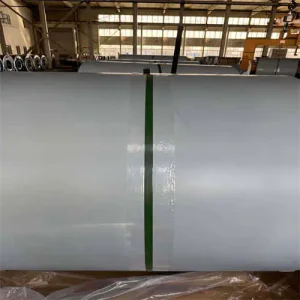
Wholesale China Electro Galvanized Steel Coils for Door Gates | High-Quality Suppliers & Factory Manufacturer, Factory
View Product Details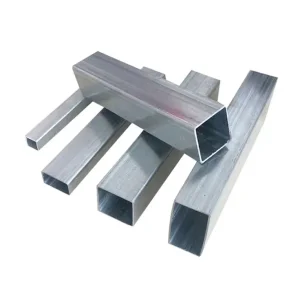
Wholesale China Suppliers Factory Pre-Galvanized Square Steel Tube 20*20 SHS RHS Zinc Coated Rectangular Hollow Section Manufacturers, Supplier
View Product Details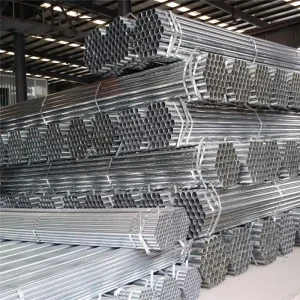
Wholesale China Suppliers Factory: Thick-Wall Pre Galvanized Steel Pipe for Greenhouse - Custom Sizes & Specifications Manufacturers, Suppliers
View Product Details
Wholesale Pre-Galvanized Steel Tube 20*20 SHS RHS Zinc Coated Rectangular Hollow Section Square Galvanized Steel Products Suppliers, Factory
View Product Details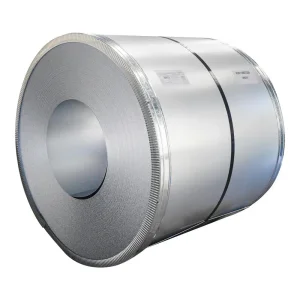
Wholesale China ZM AZM Alloy Coated Steel Sheet Suppliers - 275g Zinc Aluminum Magnesium Factory Product for Solar Mounting Manufacturers, Factories
View Product DetailsUnderstanding Commercial Hot-Dip Galvanized Greenhouse Frame Systems
An authoritative analysis of load-bearing structural dynamics, atmospheric corrosion resistance, and total cost of ownership for commercial agricultural facilities.
Modern controlled-environment agriculture (CEA) demands structural framing systems capable of enduring stringent microclimates, hyper-humid atmospheres (frequently exceeding 85% relative humidity), and exposure to sulfur, nitrogen, and aggressive fertilizer compounds. Selecting qualified Wholesale Dip Galvanized Steel Frame Greenhouse Suppliers & Factories is the foundational step in mitigating catastrophic structural fatigue, crop loss, and premature asset depreciation.
Hot-Dip Galvanized (HDG) and advanced Pre-Galvanized structural steel hollow sections—spanning Circular Hollow Sections (CHS), Square Hollow Sections (SHS), and Rectangular Hollow Sections (RHS)—serve as the backbone of modern Venlo, Poly-Tunnel, Gothic Arch, and Agrivoltaic greenhouse designs. The mechanical viability of these structures depends on structural steel grades (such as Q235B, Q345B, S275JR, S355JR, and ASTM A500 Grade B/C) combined with metallurgical zinc barrier protection ranging from $Z100$ to $Z600$ ($275\text{ g/m}^2$ to $600\text{ g/m}^2$).
To achieve high structural integrity, structural framing components undergo rigorous cold-forming, high-frequency Electric Resistance Welding (ERW), and automated continuous hot-dip immersion processes. The resultant zinc-iron intermetallic alloy layers ($\zeta$, $\delta$, and $\Gamma$ phases) provide dual-layer protection: a physical barrier against atmospheric moisture and galvanic (sacrificial) cathodic protection that seals minor abrasions, cut edges, and field-drilled connection points.
The Evolution of Anti-Corrosion Coatings: HDG vs. Pre-Galvanized vs. Zinc-Aluminum-Magnesium (ZAM)
Evaluating metallurgical performance metrics, salt spray endurance, and future-proof structural coatings for 2025 and beyond.
The agricultural framing industry is experiencing a generational shift from traditional post-weld hot-dip dipping toward high-efficiency continuous pre-galvanizing and next-generation Zinc-Aluminum-Magnesium (ZAM / ZM) tri-alloy coatings. Global buyers must balance upfront procurement expenditure against regional climatic risks, structural span lengths, and internal greenhouse humidity loads.
| Coating Technology | Typical Coating Mass | Salt Spray Test (ASTM B117) | Cut-Edge Protection | ISO 9223 Suitability | Primary Commercial Use Case |
|---|---|---|---|---|---|
| Pre-Galvanized ERW Pipe | $100 - 275 \text{ g/m}^2$ ($14 - 38 \mu\text{m}$) | $250 - 500 \text{ Hours}$ | Requires Spray Metallizing | C1 - C3 (Standard Indoor/Sub-Tropical) | Hoop Houses, Internal Purlins, Crop Supports |
| Hot-Dip Galvanized (HDG) | $350 - 610 \text{ g/m}^2$ ($50 - 85 \mu\text{m}$) | $1,000 - 1,500 \text{ Hours}$ | Full Self-Healing Barrier | C3 - C5 (High Humidity/Coastal) | Main Structural Columns, Gutters, Ground Stakes |
| Zinc-Aluminum-Magnesium (ZAM) | $275 - 450 \text{ g/m}^2$ ($20 - 35 \mu\text{m}$) | $2,500 - 4,000+ \text{ Hours}$ | Self-Healing Simonkolleite Layer | C4 - C5 Extreme (Marine & High Chemical) | High-Tech Solar Agro-PV, Vertical Farms |
Technical Breakthroughs Shaping the Future Roadmap:
ZAM Tri-Alloy Chemistry
By introducing 3% Aluminum and 3% Magnesium into the zinc bath, ZAM forms a dense, tightly adherent protective film of Simonkolleite ($\text{Zn}_5(\text{OH})_8\text{Cl}_2\cdot\text{H}_2\text{O}$). This provides up to 5x greater corrosion resistance than standard zinc with cut-edge self-healing capability.
Micro-Alloyed High-Yield Steels
Transitioning from traditional Q235 carbon steel to Titanium and Niobium micro-alloyed S355 / Q345 grades enables a 15-20% reduction in wall thickness without sacrificing snow-load or wind-load resistance, substantially reducing freight and structural weight.
Green Zinc Smelting & Low-Carbon Steel
In response to EU CBAM (Carbon Border Adjustment Mechanism) regulations, leading Chinese factories are integrating zero-emission electric dipping kettles and hydrogen-reduced strip coils to minimize embedded carbon footprints.
Tailored Structural Framing for Diverse Global Agricultural Paradigms
Customized engineering solutions addressing extreme weather vectors, high microclimate moisture, and specialized commercial crop demands.
Commercial High-Tech Venlo Glass Greenhouses
Venlo designs demand extreme deflection control, zero tolerance on column straightness, and heavy-duty structural load-bearing capacity for glass glazing, hanging gutters, and automated climate screens. We supply heavy-wall RHS columns ($100\times100\text{mm}$ to $150\times150\text{mm}$, $3.0-5.0\text{mm}$ WT) hot-dipped to ASTM A123 standards ($>550\text{ g/m}^2$).
Poly-Tunnel & Multi-Span Gothic Arch Systems
Engineered for high wind resistance and efficient condensation runoff. Utilizing high-tenacity pre-galvanized circular tubing ($\varnothing 32\text{mm}$, $\varnothing 42\text{mm}$, $\varnothing 60\text{mm}$) with precision swaged end joints, elliptical arches, and integrated film-locking base profile tracks for rapid field assembly.
Agrivoltaic (Solar Agro-PV) Dual-Use Structures
Combining elevated photovoltaic power generation with underneath agricultural cultivation requires long-span, high-clearance structural frames. We provide high-strength ZAM C-channels, Z-purlins, and heavy square posts designed to endure high dynamic wind uplift loads while resisting soil-line moisture corrosion.
Livestock & Hydroponic High-Ammonia Environments
Closed vertical farming environments and animal housing suffer from elevated volatile organic compounds, carbon dioxide enrichment, and atmospheric ammonia ($\text{NH}_3$). Special passivated zinc-iron coatings prevent chemical pitting and hydrogen embrittlement over decades of continuous operation.
China Factory 4.0: Supply Chain Resilience & Manufacturing Precision
Leveraging the Tianjin Steel Industrial Cluster for unprecedented cost efficiencies, raw material consistency, and scaled export capabilities.
Tianjin stands as China's primary hub for steel pipe manufacturing and hot-dip galvanizing technology, accounting for a massive share of the world's structural hollow section production. Our centralized supply chain integration connects top-tier raw strip mills directly to 8 continuous high-frequency electric resistance welding (ERW) lines and dedicated hot-dip dipping kettles.
Key Operational Strengths of Our Factory Infrastructure:
- Continuous ERW Pipe Mill Automation: Real-time eddy current testing (ECT) and ultrasonic weld seam inspection ensure zero internal seam defects, guaranteeing that structural pipe withstands post-fabrication flattening, bending, and swaging tests.
- Automated Dipping & Temperature-Controlled Galvanizing: Computer-monitored zinc baths maintained precisely at $450^\circ\text{C}$ to $460^\circ\text{C}$ with controlled dipping durations eliminate rough dross, surface inclusions, and uneven coating distribution.
- In-House Tooling & Profile Fabrication Workshop: Equipped with 20+ specialized CNC machining centers and cold-bending stations, facilitating rapid production of custom oval tubes, gothic arches, header pipes, and punched structural gussets.
- Seaworthy Export Packaging & Logistics: Bundles are secured with high-tensile steel strapping, wrapped in waterproof VCI (Vapor Corrosion Inhibitor) plastic film, and equipped with custom wooden cradles for 20GP/40HQ container loading or breakbulk vessel transport.
Global Enterprise Procurement Requirements & Technical Standards
Eliminating compliance risks for international EPC contractors, agricultural distributors, and commercial growers.
Navigating cross-border procurement of greenhouse structural steel requires rigid adherence to regional building codes, mechanical standards, and mill certification protocols. Our export workflow complies fully with the following global standards:
North American Standards
ASTM A123 / A123M: Standard Specification for Zinc (Hot-Dip Galvanized) Coatings on Iron and Steel Products.
ASTM A500 / A53: Cold-Formed Welded Structural Tubing and Steel Pipe for Structural Applications.
European Norms (EN)
EN ISO 1461: Hot-dip galvanized coatings on fabricated iron and steel articles.
EN 10219-1/2: Cold formed welded structural hollow sections of non-alloy and fine grain steels.
Asian & International Standards
JIS G3444 / JIS G3302: Carbon steel tubes for general structural purposes & hot-dip zinc-coated steel sheets.
ISO 9223: Atmospheric corrosion classification categories (C1 - C5).
Quality Assurance Protocols & Mill Test Certification
Every shipment is accompanied by a full EN 10204 3.1 Mill Test Certificate (MTC) detailing chemical ladle analysis (Carbon, Manganese, Silicon, Phosphorus, Sulfur), mechanical yield/tensile strength testing, elongation percentages, magnetic zinc thickness gauge reports, and hydrostatic/eddy-current NDT results. Buyers are fully empowered to mandate third-party inspection (SGS, Bureau Veritas, Intertek, TÜV) prior to port departure.
Frequently Asked Questions (FAQ) for Procurement Managers
Granular technical insights addressing engineering specifications, coating choices, and factory procurement workflows.
Galvanized Sheets, Corrugated Panels & Specialty Steel Products
Complete structural and roofing steel supply solutions engineered for agricultural sheds, farm buildings, and structural enclosures.
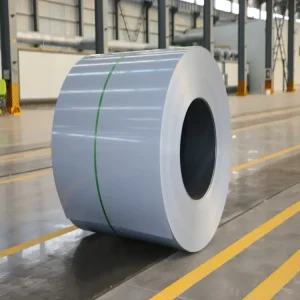
High-Quality China Suppliers G550 Galvanized Corrugated Metal Roofing Sheets Factory | Color-Coated Steel Plate Products Supplier, Factories
View Product Details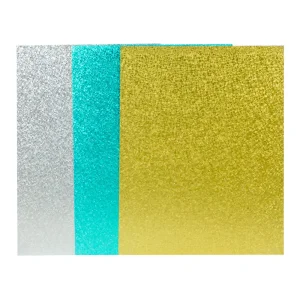
High-Quality China Suppliers Factory Galvalume Aluzinc Zinc Aluminum Coating Roofing Sheets for Durable Wall and Roof Panels Manufacturer, Supplier
View Product Details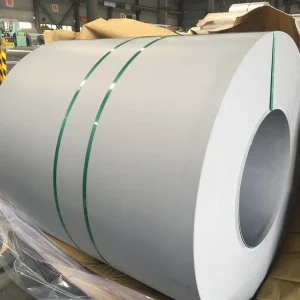
High-Quality SECC/SECD/SECE 20/20 coating Electro-galvanized steel plate Manufacturer, Factory
View Product Details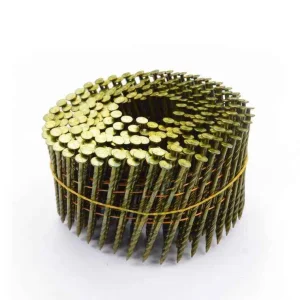
High-Quality High Precision 15° Coil Nails with Copper Plated Wire - China Suppliers & Factory for Wood & Furniture Manufacturer, Factories
View Product Details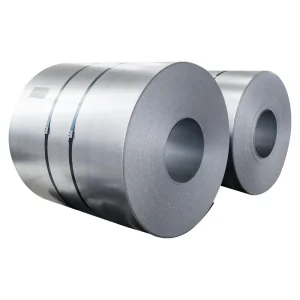
High-Quality China Suppliers Factory DC51D Dx51D ZF60 ZF275 Zinc Iron Alloy Galvannealed Steel Coil with Excellent Welding Properties Supplier, Factories
View Product Details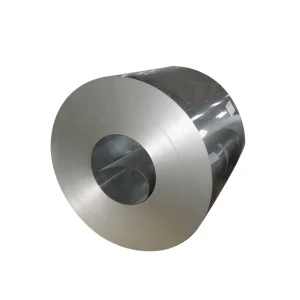
High-Quality Customized ASTM A653 DX51D Z275 Hot Dipped Galvanized Steel Coils from China Suppliers and Factory Suppliers, Factories
View Product Details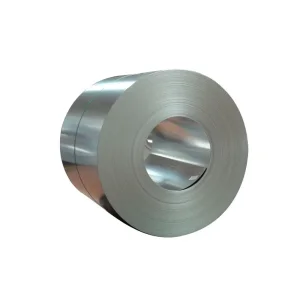
High-Quality Customized Hot Dipped Zinc Coated GI Sheet - ASTM A653 DX51D Z275 from Reliable China Suppliers and Factory Suppliers, Factories
View Product Details