
Featured Coils, Plates & Structural Products
Direct mill-supplied precision steel grades engineered for global industrial and structural applications.
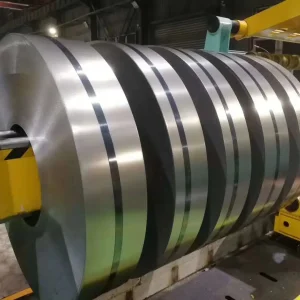
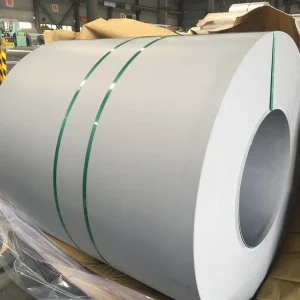
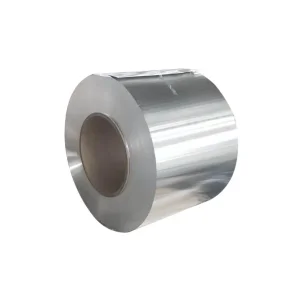
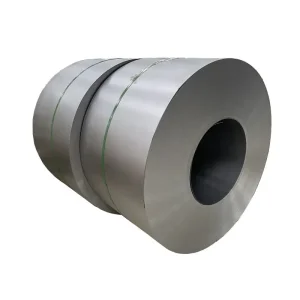
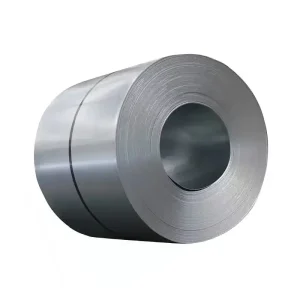
Understanding SECC vs. SGCC: Physical, Chemical & Structural Paradigms
A definitive technical teardown of Electro-Galvanized (SECC) versus Hot-Dip Galvanized (SGCC) steel substrates for industrial procurement officers and OEM design engineers.
SECC: Electro-Galvanized Precision
SECC (Steel Electrolytic Cold Commercial) according to JIS G3313 standards is fabricated through an electrochemical deposition process. The cold-rolled steel strip passes through an aqueous zinc salt solution bath where electrical currents force zinc ions ($Zn^{2+}$) to bond uniformly onto the substrate. This cold electro-deposition retains the base metal's original mechanical stress tolerances and grain orientation.
SGCC: Hot-Dip Protective Thermal Barrier
SGCC (Steel Galvanized Cold Commercial) governed by JIS G3302 undergoes continuous hot-dip immersion into molten zinc baths maintained at approximately 450°C to 460°C. This elevated thermal exposure creates a metallurgical reaction producing distinct Zn-Fe intermetallic alloy layers ($\Gamma, \delta_1, \zeta$) capped by a pure zinc surface layer, generating unmatched atmospheric barrier thickness.
Microstructural & Layer Differences
While SECC produces an extremely smooth, non-spangled layer with a thickness range typically between 10 g/m² and 20 g/m² (approx. 1.5 to 3 microns), SGCC delivers high-density zinc coatings ranging from Z12 (120 g/m²) up to Z275 (275 g/m²). Consequently, SECC excels in high-precision drawing, whereas SGCC guarantees decades of outdoor corrosion endurance.
Engineering Performance Matrix: SECC vs. SGCC Wholesale Specifications
To accurately evaluate material performance during high-volume wholesale sourcing, procurement engineers must assess electro-deposition vs thermal diffusion across core metallurgical parameters:
| Property / Parameter | SECC (Electro-Galvanized) | SGCC (Hot-Dip Galvanized) | B2B Procurement Impact |
|---|---|---|---|
| Manufacturing Process | Electrolytic plating bath ($Zn^{2+}$ ion deposition at ambient temp) | Continuous hot-dip bath in molten zinc (~450°C) | SECC retains original ductility; SGCC gains intermetallic strength |
| Coating Thickness Range | 10/10 to 20/20 g/m² (~1.4 to 3.0 μm) | Z12 to Z275 g/m² (~8.5 to 25.0 μm) | SGCC provides up to 8x higher physical zinc mass for harsh environments |
| Surface Morphology | Uniform, ultra-smooth, silver-gray matte, zero spangle | Spangled (Regular, Minimized, or Zero spangle options) | SECC is directly paintable without prep; SGCC may require passivation |
| Paintability & Adhesion | Exceptional primer-free powder coating & liquid paint adhesion | Requires chromate/phosphate pre-treatment for smooth finish | SECC slashes post-fabrication paint prep overhead by 35% |
| Weldability (Resistance Spot) | Superior electrode lifespan, zero zinc splatter vapor interference | Higher zinc thickness causes electrode degradation and vapor porosity | SECC speeds up automated robotic welding assembly lines |
| Formability & Deep Drawing | SECD/SECE deep drawing grades offer $r$-value > 1.8 | Commercial SGCC suitable for bending/roll forming; lower $r$-value | SECC eliminates micro-cracking in complex stamped electronics enclosures |
| Corrosion Mechanism | Uniform sacrificial zinc barrier + organic sealing oil | Heavy sacrificial layer + self-healing Zn-Fe alloy boundary | SGCC is ideal for outdoor structural HVAC, framing, and roofing |
Navigating "Factory vs. Factories" in Wholesale Procurement
Understanding the structural differences between sourcing directly from a single specialized production plant versus multi-line manufacturing conglomerates.
Single Specialized Factory Advantages
Directly contracting with a single, highly specialized SECC or SGCC mill offers exceptional dimensional consistency, tight gauge tolerance control ($\pm 0.01$ mm), and direct line-engineer communication. Dedicated factories specialize in ultra-clean, high-speed electro-galvanizing lines, ensuring flawless surface finishes for high-end consumer electronics and server chassis OEMs.
Multi-Factory Supply Chain Networks
Engaging multi-factory enterprise networks allows high-volume global buyers to hedge raw material supply chain disruptions. Large industrial conglomerates utilize multiple hot-dip galvanizing pots (handling SGCC, DX51D, and Galvalume) alongside dedicated cold-rolling mills. This infrastructure provides total production throughput capable of handling 100,000+ metric tons per month.
Quality Verification & Mill Certificates
Whether auditing a standalone facility or a factory group, procurement standard operating procedures (SOPs) mandate EN 10204 3.1 / 3.2 Mill Test Certificates (MTC). Key inspection metrics include zinc coating mass verification (via weigh-strip-weigh chemical analysis), tensile yield strength testing ($R_p0.2$), and cupping tests (Erichsen value) for deep drawing performance.
Key Factory Verification Criteria for International Buyers
When selecting a Chinese manufacturing partner for wholesale SECC or SGCC steel coil and sheet orders, evaluate these critical operational benchmarks:
- Substrate Origin & Chemical Purity: Ensure raw cold-rolled coils (SPCC base) are sourced from top-tier primary integrated steel mills, maintaining low sulfur ($S \le 0.015\%$) and phosphorus ($P \le 0.020\%$) contents.
- Continuous Tension Leveling Lines: Verify that the factory operates tension levelers post-galvanizing to guarantee flatness tolerances under 3 mm/m, preventing coil wavy edges and center buckles.
- In-Line Surface Defect Detection: AI-powered optical surface inspection systems monitor coating uniformity in real-time, catching micro-pinholes, zinc dross inclusions, or strip scratches instantly.
- Anti-Fingerprint (AFP) Coating Capabilities: For SECC coils destined for consumer appliances, verify that the mill offers clear organic or inorganic chromate-free anti-fingerprint treatments (resin thickness 0.8–1.5 $\mu$m).
Global Industrial Market Applications & Economic Trade Winds
Analyzing market forces, decarbonization mandates, CBAM compliance, and industry-specific demand drivers shaping SECC and SGCC consumption worldwide.
Consumer Electronics & Data Infrastructure
The explosive growth of AI cloud computing servers, network switch cabinets, and precision desktop enclosures has driven massive wholesale demand for SECC. SECC’s superior electromagnetic shielding (EMI), smooth aesthetic, and grounding conductivity make it the preferred material for high-end chassis fabricators across North America and East Asia.
Automotive & Electric Vehicle (EV) Sector
EV OEMs rely heavily on specialized electro-galvanized SECC and SECD grades for interior door panels, dashboard structural brackets, and battery management housing where strict dimensional tolerances and anti-corrosion properties are required without adding excessive weight.
HVAC, Construction & Solar Racking
SGCC remains the king of structural construction. From ductwork and cable trays to outdoor solar mounting brackets and agricultural framing, SGCC’s thick hot-dip zinc layer provides the necessary sacrificial protection to survive harsh atmospheric conditions and salt-air humidity.
Decarbonization, CBAM & Raw Material Volatility
Global steel supply chains face unprecedented structural shifts. The European Union’s Carbon Border Adjustment Mechanism (CBAM) and strict Scope 1, 2, and 3 emissions reporting require steel mills to transition to hydrogen-reduced direct reduced iron (DRI) and Electric Arc Furnace (EAF) steelmaking. Wholesale purchasers sourcing SECC and SGCC coils must monitor the carbon footprint of their suppliers. Furthermore, zinc ingot price correlations directly impact SGCC wholesale quotes, while electric grid energy costs dictate SECC electro-plating bath surcharges.
Global Standards, Localized Applications & Environmental Safety
Ensuring seamless international cross-border trade through alignment with regional engineering specifications and hazardous substance compliance.
North America (ASTM Standards)
In the US, Canada, and Mexico, SECC is often cross-referenced to ASTM A879 / A879M (Commercial Steel Electrogalvanized), while SGCC aligns directly with ASTM A653 / A653M (Hot-Dip Galvanized CS Type B, G60/G90 coatings). High-volume HVAC fabricators and NEMA enclosure manufacturers mandate compliance with these ASTM standards for contract approval.
European Union (EN Standards)
European OEMs utilize EN 10152 (DC01+ZE, DC03+ZE) for electro-galvanized flat products and EN 10346 (DX51D+Z, DX52D+Z) for continuous hot-dip coated steel. Rigorous CE marking and ISO 9001 quality management verification are essential prerequisites for EU port customs clearance.
RoHS 3 & REACH Environment Rules
Historical galvanizing passivations utilized Hexavalent Chromium ($Cr^{6+}$) for yellow/clear corrosion sealing. Modern global compliance mandates 100% RoHS 3 (Directive 2015/863) and REACH (SVHC) compliance. Chinese export mills now supply trivalent chromium ($Cr^{3+}$) or 100% chromium-free organic chemical passivations across all SECC and SGCC lines.
Next-Generation Coated Steel Innovations: Beyond SECC & SGCC
How advanced metallurgy is pushing coating boundaries through Zinc-Aluminum-Magnesium (ZAM) alloys and self-healing nano-coatings.
Zinc-Aluminum-Magnesium (ZAM) Alloys
The steel industry is seeing rapid adoption of ZAM coatings (e.g., Zn-6% Al-3% Mg). ZAM provides up to 5x higher corrosion resistance than standard hot-dip SGCC at equivalent coating thicknesses. Its unique chemical reaction forms a dense Simonkolleite [$Zn_5(OH)_8Cl_2\cdot H_2O$] protective film that automatically heals cut edges.
Intelligent AI Electro-Plating Control
Modern SECC production lines integrate closed-loop machine learning algorithms that dynamically adjust bath current density, electrolyte agitation velocity, and strip line speed in real-time. This guarantees exact, sub-micron coating uniformity across the entire coil width and length.
Ultra-Thin Bio-Based Anti-Fingerprint Resins
Replacing traditional petroleum-based chemical sealants, research mills are deploying bio-derived silane and acrylic nano-treatments for SECC plates. These coatings provide heat resistance up to 300°C without discoloring, while offering electrical contact resistance required for grounding in high-frequency 5G/6G electronics.
Frequently Asked Questions (FAQ) on SECC vs. SGCC Sourcing
Direct, highly authoritative answers to critical engineering, manufacturing, and commercial trade questions.
What is the primary difference in corrosion resistance between SECC and SGCC?
The primary difference stems from zinc coating thickness and application temperature. SECC is electro-galvanized at ambient room temperatures, resulting in a thin, highly uniform zinc layer typically ranging from 10 to 20 g/m² (approx. 1.5–3.0 μm per side). It is designed primarily for indoor applications, computer chassis, and home appliances, providing around 150 to 200 hours of neutral salt spray resistance before red rust appears.
SGCC is hot-dip galvanized in molten zinc (~450°C), applying a significantly thicker coating ranging from Z12 (120 g/m²) up to Z275 (275 g/m², or ~20 μm per side). This substantial physical zinc mass, combined with the metallurgical Zn-Fe alloy boundary, enables SGCC to endure 720+ hours of salt spray testing, making it superior for harsh outdoor, structural, and high-humidity environments.
Can SECC steel plate be welded easily without surface preparation?
Yes! SECC possesses outstanding weldability, particularly for resistance spot welding and laser welding processes. Because the electro-deposited zinc layer is thin and exceptionally uniform, it does not cause severe copper electrode contamination or zinc vapor entrapment (porosity) during automated spot welding.
In contrast, welding thick hot-dip galvanized SGCC requires higher electrical currents and causes faster electrode wear due to zinc brass alloying on the tip. Therefore, automated automotive and electronics assembly lines frequently specify SECC or SECD to maximize robotic welding efficiency and maintain consistent joint integrity.
Why is SECC preferred over SGCC for computer server cases and consumer audio appliances?
SECC offers three major advantages for electronic enclosures:
- Surface Smoothness: Lacking thermal spangle or dross, SECC provides an ultra-flat, aesthetic matte surface that accepts liquid paint or powder coating immediately without showing texture telegraphing.
- Dimensional Precision: Electro-plating causes zero thermal distortion or residual stress relief, preserving sub-millimeter tolerances on stamped tabs, screw threads, and EMI shielding fingers.
- Conductivity & Anti-Fingerprint: SECC supplied with clear Anti-Fingerprint (AFP) coating maintains low electrical contact resistance necessary for grounding, while preventing oil smudges during manual assembly.
How do SECD and SECE differ from standard commercial SECC?
SECC, SECD, and SECE represent escalating tiers of substrate ductility and deep-drawing capabilities under JIS G3313 standards:
- SECC (Commercial Quality): Designed for general bending, shallow forming, and flat structural stamping.
- SECD (Drawing Quality): Utilizes an annealed aluminum-killed low-carbon base steel, offering higher elongation ($A_{80} \ge 37\%$) for intermediate press forming.
- SECE (Extra Deep Drawing Quality): Uses interstitial-free (IF) ultra-low carbon steel, yielding plastic strain ratios ($r$-value) exceeding 1.8. This grade is required for complex, multi-stage automotive stamping where oil-canning and micro-tearing must be eliminated.
What container packaging standards are required for ocean freight of SECC/SGCC wholesale coils?
Because cold-rolled galvanized coils are prone to white rust (zinc oxidation) if exposed to moisture and salt air during ocean transit, professional export mills mandate export-grade seaworthy packaging:
Coils must be wrapped with VCI (Vapor Corrosion Inhibitor) anti-rust paper, followed by a heavy-duty HDPE plastic film wrap. Outer metallic edge protectors (inner/outer steel rings) are fitted alongside corrugated steel side discs. The bundle is strapped with at least 3 radial and 3 circumferential high-tensile steel bands, then mounted securely on fumigated wooden pallets or skid saddles inside 20ft heavy-duty dry containers.
How do I verify if a factory's SECC or SGCC coils comply with RoHS 3 directives?
To confirm RoHS 3 (Directive 2015/863) compliance, request a third-party chemical laboratory test report (e.g., SGS, TÜV Rheinland, or Intertek) tied directly to the mill's heat number. The chemical test verifies that heavy metals—specifically Hexavalent Chromium ($Cr^{6+}$), Lead ($Pb$), Cadmium ($Cd$), and Mercury ($Hg$)—are below 1000 ppm (0.1%), with Cadmium below 100 ppm (0.01%). Leading Chinese mills supply passivations using trivalent chromium ($Cr^{3+}$) or 100% chrome-free organic resin matrices.
Additional Mill-Direct Wholesale Products
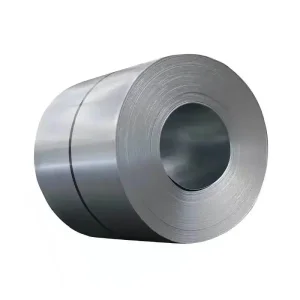
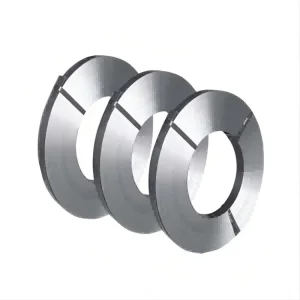
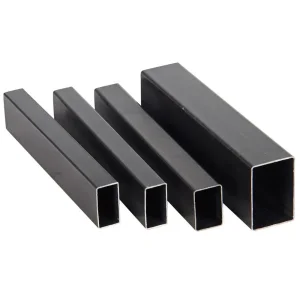
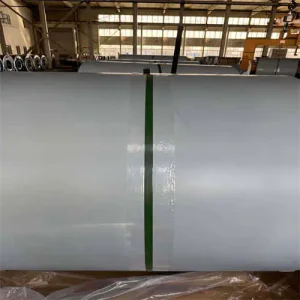
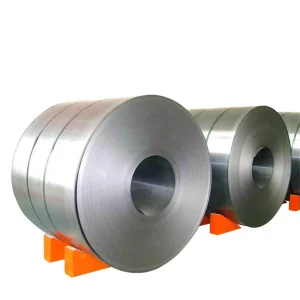
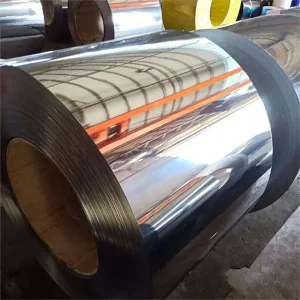
Explore our full line of silicon steel, structural tubing, galvalume sheets, and electro-galvanized coils available for immediate export dispatch.
Optimize Your Steel Coil & Plate Procurement Today
Whether your project requires high-precision SECC electro-galvanized plates with zero-spangle finish or heavy-duty SGCC hot-dip coils engineered for decades of atmospheric corrosion resistance, our engineering support team is ready to review your technical RFQ.