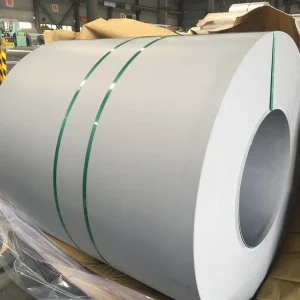
Featured Coated Steel & Industrial Alloy Solutions
Direct factory manufacturing options engineered for extreme heat compliance, precision stamping, and structural integrity.
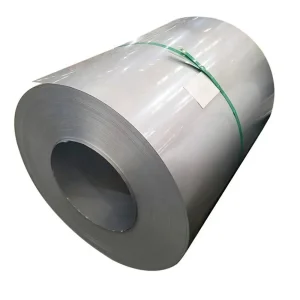
High-Quality Cold Rolled Stainless Steel Coil 201 304 316 321 430 904L 2205
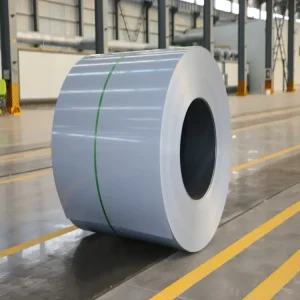
G550 PPGI PPGL Galvanized Corrugated Metal Roofing Sheets - Direct Solutions
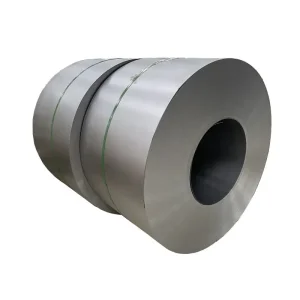
High-Strength Cold Rolled Steel Sheets for Deep Drawing Applications
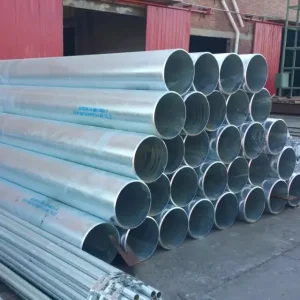
High Strength A53 A106GR.B Spiral Steel Pipe for Pressure & Structural Use
Wholesale High Strength Cold Rolled Steel Sheets for Extra Deep Drawing
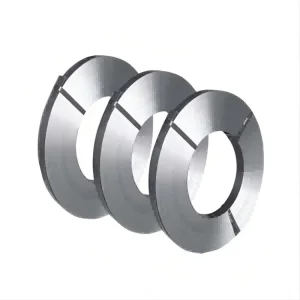
0.23mm CRGO Grain Oriented Electrical Silicon Steel Coil for Transformers
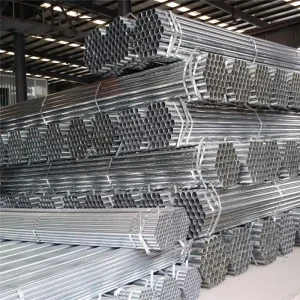
Thick-Wall Pre-Galvanized Steel Pipe for Agricultural & Greenhouse Use
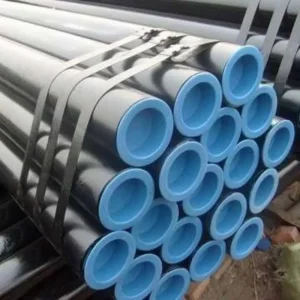
Wholesale Seamless Steel Pipe ASTM Carbon Steel Pipes for Construction
Executive White Paper: Metallurgy & Chemical Architecture of Al-Si Coated Steel
An authoritative analysis of continuous hot-dip silicon-aluminum coating chemistry, phase transformations, and structural substrate mechanics.
Aluminized Silicon Steel Sheet (commonly designated Type 1 Aluminized Steel or Al-Si Coated Sheet) represents an advanced class of metallic-coated alloy flat steel engineered specifically to outperform standard zinc-coated (GI) and galvalume (GL) substrates in high-temperature, sulfur-rich, and high-thermal-reflectivity environments. Manufactured via a continuous hot-dip process in a molten bath containing approximately 89% to 95% Aluminum (Al) and 5% to 11% Silicon (Si), this material forms a tightly bound intermetallic matrix that completely redefines thermal corrosion mitigation.
In standard pure aluminum hot-dip coating processes, an excessively thick, brittle iron-aluminum ($FeAl_3$ / $Fe_2Al_5$) intermetallic layer forms rapidly at the interface of the steel substrate and molten coating. This brittle boundary causes catastrophic coating flaking during secondary deep drawing or roll forming. The controlled addition of 5% to 11% elemental Silicon acts as a diffusion barrier during the immersion cycle. Silicon suppresses the rapid growth of the brittle Fe-Al phase, replacing it with a ultra-thin, highly ductile $Fe-Al-Si$ intermetallic layer (typically 2 to 4 microns thick). This engineered intermetallic bonding layer permits aggressive formability—such as DX53D+AS and DX54D+AS deep-drawing grades—without micro-cracking or peeling.
Thermochemical Dynamics Across Temperature Ranges
When exposed to thermal stress, Aluminized Silicon Steel Sheets display exceptional structural stability due to self-passivating surface kinetics:
- Continuous Operating Range (Up to 450°C / 842°F): The surface retains its high aesthetic metallic luster and reflects up to 80% of heat energy. No thermal discoloration, scaling, or chemical degradation occurs.
- Intermediate Thermal Range (450°C to 600°C / 842°F to 1112°F): The aluminum layer begins to form an alloy bond with the underlying steel substrate. The surface transitions into a subtle grayish hue while forming a microscopic ceramic-like passivation coating of Aluminum Oxide ($Al_2O_3$), blocking oxygen penetration.
- Extreme Peak Range (600°C to 800°C / 1112°F to 1472°F): The Al-Si coating completely converts into an iron-aluminum-silicon intermetallic alloy matrix. This layer possesses an extraordinarily high melting point (>1100°C), preventing destructive oxidation and structural burn-through even in continuous burner flames or heavy combustion chambers.
Global Commercial & Industrial Market Dynamics
Regional consumption trends, economic supply drivers, and structural demand shifting from legacy stainless steel to high-gain Al-Si coated alloys.
Automotive Thermal Management
Accelerating EV battery thermal containment and internal combustion engine (ICE) exhaust heat shields. OEMs require lightweight Al-Si sheet solutions (AS80-AS120) to replace heavier stainless grades, dropping component costs by 28% without compromising thermal safety.
Commercial Baking & Food Machinery
Strict FDA & EU food contact compliance mandates non-toxic, heat-stable baking equipment. Aluminized Silicon Steel (DX53D+AS / DX54D+AS) is the global benchmark for commercial bread pans, burger bun trays, and rotary industrial ovens.
HVAC & Industrial Heat Exchangers
Residential gas furnaces, rooftop HVAC ducting, and heat exchanger tubes suffer severe condensate corrosion. Al-Si sheets offer superior acidic condensation resistance over standard galvanized coils, extending system lifespan to 20+ years.
Technical Specification Matrix & International Standards
Detailed mechanical properties, coating weight specifications, tolerance profiles, and international compliance equivalencies for industrial buyers.
| Grade Designation | Standard Equivalents | Yield Strength (MPa) | Tensile Strength (MPa) | Elongation A80 (%) | Primary Industrial Application |
|---|---|---|---|---|---|
| DX51D + AS | ASTM A463 CS Type 1 / EN 10346 | 140 - 300 | 270 - 500 | ≥ 22 | Commercial Ovens, Heat Shields, Ductwork |
| DX52D + AS | ASTM A463 FS Type 1 / JIS G3314 SA1D | 140 - 300 | 270 - 420 | ≥ 26 | Moderate Forming, Burner Tubes, Flue Pipes |
| DX53D + AS | ASTM A463 DDS Type 1 / JIS G3314 SA1E | 140 - 260 | 270 - 380 | ≥ 30 | Industrial Bread Pans, Commercial Bakeware |
| DX54D + AS | ASTM A463 EDDS Type 1 / Heavy Stamping | 120 - 220 | 260 - 350 | ≥ 36 | Complex Deep Drawn Automotive Heat Components |
| CRNGO Substrate + AS | Custom Electrical Core Substrate | 220 - 380 | 350 - 520 | ≥ 18 | Thermal High-Efficiency Electrical Enclosures |
| Coating Code | Nominal Coating Weight (Both Sides) | Single Spot Minimum | Microscopic Coating Thickness | Recommended Service Environment |
|---|---|---|---|---|
| AS 080 (AS 80) | 80 g/m² | 68 g/m² | ~ 15 μm per side | Light Automotive Heat Shields, General HVAC |
| AS 120 (AS 120) | 120 g/m² | 102 g/m² | ~ 20 μm per side | Standard Bakery Trays, Exhaust Pipe Assemblies |
| AS 150 (AS 150) | 150 g/m² | 127.5 g/m² | ~ 25 μm per side | Heavy Industrial Burners, High-Humidity Ovens |
| AS 200 (AS 200) | 200 g/m² | 170 g/m² | ~ 33 μm per side | Extreme Corrosive Thermal Gas Ducts, Boiler Liners |
Detailed Application Engineering & Case Scenarios
Translating advanced metallurgical properties into field-proven industrial solutions across global key sectors.
1. Automated Industrial Bakery Pan Systems
Commercial bakeries require pan materials that can endure thousands of thermal baking cycles (200°C - 300°C) without warp, degradation, or release of hazardous chemical fumes. Using DX53D+AS and DX54D+AS sheets ensures uniform thermal conductivity across the pan bottom, preventing uneven browning while resisting sugar/oil condensate corrosion. The non-stick coating adhesion remains intact due to minimal thermal expansion mismatch between substrate and coating.
2. Automotive Underbody Thermal Isolation
Modern vehicle architecture demands tight space management around catalytic converters, turbochargers, and battery tray enclosures. Aluminized Silicon sheets act as reflective heat shields that divert radiant thermal spikes away from sensitive electronic sensors and lithium-ion cells. The high punch-stretchability of AS120 deep-drawing sheets allows multi-stage stamping into multi-ribbed shields with zero flaking.
3. Gas Furnace Combustion Liners & Flues
Residential heating systems generate acidic condensation containing sulfur dioxide ($SO_2$) and nitric oxides ($NO_x$) during cooling cycles. Standard zinc coatings dissolve rapidly in acidic condensate (pH 3-5). Aluminized Silicon Steel sheets form a protective passive barrier of insoluble $Al_2O_3$ and silicon silicates, suppressing pinhole rust and structural perforation for decades.
Metallurgical Roadmap & Next-Gen Technology Horizons (2026–2035)
Strategic foresight into eco-passivation, nano-ceramic hybrids, and high-efficiency silicon steel substrate integration.
Al-Si-Mg Multi-Element Nanocoatings
Integration of 1.5% Magnesium (Mg) into the conventional Al-Si bath. The formation of microscopic $Mg_2Si$ precipitates significantly enhances self-healing cut-edge corrosion resistance in aggressive salt-spray environments.
Zero-Chromate Hybrid Nano-Sealants
Transitioning to eco-friendly titanium-zirconium chemical passivations and transparent anti-fingerprint (AFP) organic-inorganic hybrid coatings capable of withstanding 500°C continuous baking without VOC emission.
Ultra-Thin High-Silicon Electrical Core Substrates
Combining 3% Si Electrical Silicon Steel substrates with ultra-thin aluminized layers for high-frequency induction heating vessels, transformer radiation shields, and high-efficiency electromagnetic energy conversion units.
Supply Chain Optimization, Quality Control & Global Logistics
Rigorous mill inspection regimes, protective seaworthy packaging specifications, and OEM custom-cut services.
Spectral Thickness & Surface Auditing
Every master coil undergoes real-time inline X-ray fluorescence (XRF) coating weight monitoring to ensure micro-gram consistency across coil length. Mechanical bend tests (180° Zero-T bend) confirm zero cracking of the Al-Si intermetallic layer.
Seaworthy Protective Packaging
To eliminate inter-coil white rust during oceanic transit, coils are wrapped in VCI (Vapor Corrosion Inhibitor) paper, encased in high-tensile galvanized steel outer shells, fitted with corner guards, and secured onto heavy-duty wooden skids with radial steel strapping.
Custom Slitting & Blanking Solutions
We supply exact-width strip coils (slitting widths down to 20mm) and high-precision rectangular/trapezoidal sheet blanks with burr-free edges, ready for direct feeding into automated high-speed stamping presses.
Technical & Procurement FAQ (E-E-A-T Sourcing Guide)
Clear, expert answers to key metallurgical, operational, and commercial questions asked by international buyers.
What is the structural difference between Type 1 and Type 2 Aluminized Steel?
Why choose Aluminized Silicon Steel over Stainless Steel (e.g., 409 or 304)?
Is Aluminized Silicon Steel safe for direct food contact in commercial baking?
How does the cut-edge corrosion resistance perform on Al-Si sheets?
What welding techniques are suitable for Aluminized Silicon Steel Sheets?
What are the recommended storage conditions to prevent water staining (white rust)?
Complete Steel Product Catalog & Mill Direct Supply
Explore our full line of carbon steel, coated coils, structural pipes, and specialized silicon steel grades manufactured for global export.
Wholesale High Strength Spiral Steel Pipe A53 A106GR.B Pressure Resistance
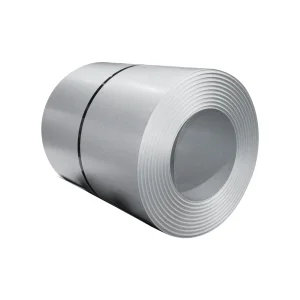
Zinc Aluminum Magnesium Coated Steel Sheet 275g for Solar Mounting
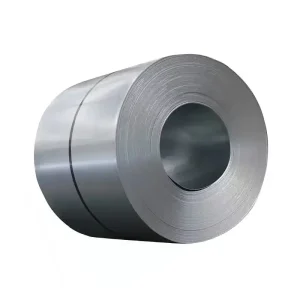
M310 M350 M470 M600 M800 Non-Grain Oriented Silicon Steel Coils
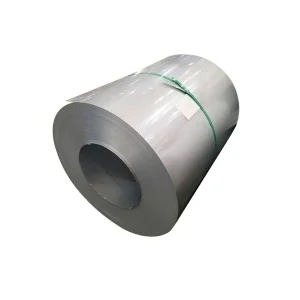
2B BA No.1 No.4 HL 8K Cold Rolled Stainless Steel Coil 201 304 316 430 2205
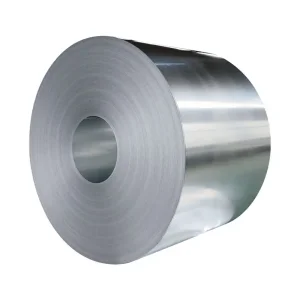
DX53D DX54D Aluminized Silicon Coating Coils for Bread Pans & Bun Trays
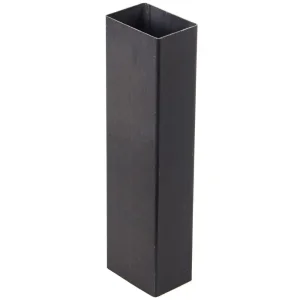
High-Quality Square Tube Suppliers Factory Direct Hollow Structural Sections
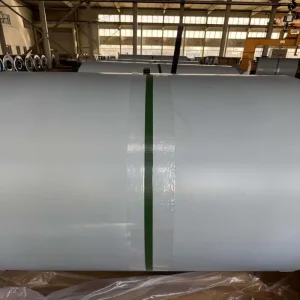
High-Quality Electrogalvanized Steel Factory Direct Coated Metal Products