
Mill-Direct Steel Sheet & Tube Products
Select from our certified global export lineup, engineered to comply with rigorous ASTM, EN, JIS, and GB standards.
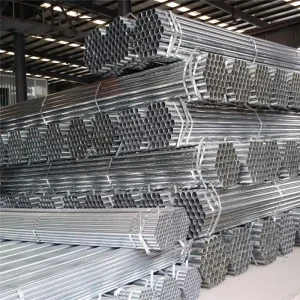
High-Quality Thick-Wall Pre Galvanized Steel Pipe for Green Houses - China Suppliers & Factory Quality Products Manufacturer, Factory
View Specification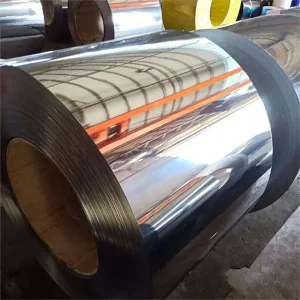
High-Quality Electrolytic Tinplate & TFS Tin Clad Steel for Packaging - China Suppliers & Factory Solutions Manufacturers, Factory
View Specification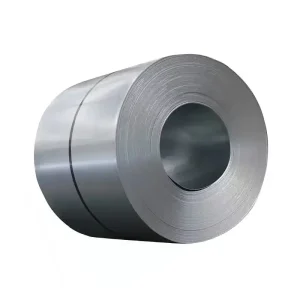
High-Quality China Factory Suppliers of M310 M350 M470 M600 M800 Non-Grain Oriented Silicon Steel Coils for Electrical Applications Manufacturers, Factory
View Specification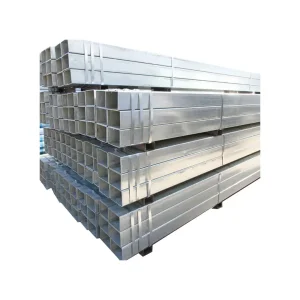
Wholesale China Suppliers Factory 40x40 Tube Shs Hot Dip Galvanized Square Steel Pipe 200*100 for Construction and Machinery Manufacturer, Manufacturers
View Specification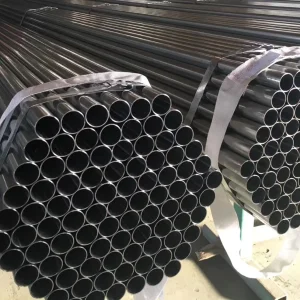
Wholesale High-Quality ASTM A106 Sch 40 ERW Iron Tube from China Factory Suppliers - Durable Carbon Steel Pipe Supplier, Factories
View Specification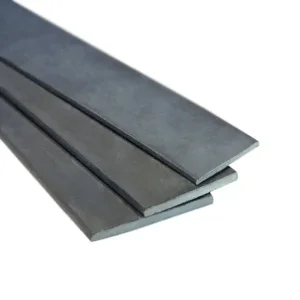
Wholesale China Steel Flat Bar Suppliers - Factory Direct Carbon & Galvanized Flat Rolled Products Manufacturer, Factories
View Specification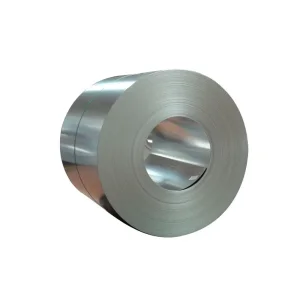
Wholesale Customized Galvanized Steel Coils - China Suppliers Factory | ASTM A653 DX51D Z275 Hot Dipped Zinc Coated Sheets Suppliers, Factories
View Specification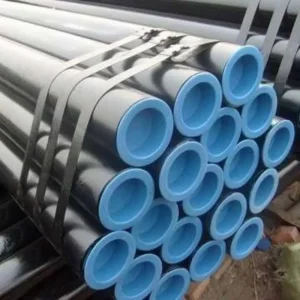
Wholesale China Seamless Steel Pipe Factory - ASTM Carbon Steel Seamless Pipes Suppliers for Construction Manufacturer, Manufacturers
View SpecificationGlobal Commercial & Industrial Landscape of Zinc-Iron Steel Sheet
Understanding the metallurgical shifts, economic catalysts, and regional supply chain evolutions shaping modern galvannealed and zinc-iron alloy steel sheet demand.
The global steel industry is undergoing a profound structural transition driven by decarbonization targets, vehicle lightweighting imperatives, and the demand for longer-lasting civil infrastructure. At the focal point of this transformation is zinc-iron alloy steel sheet (commonly known in commercial metallurgy as Galvannealed steel, or ZF coating under EN standards). By subjecting traditional hot-dip galvanized steel to an inline secondary thermal annealing process at temperatures ranging from 500°C to 560°C, manufacturers induce interdiffusion between the iron substrate and the molten zinc coating. This produces a homogenous, micro-crystalline zinc-iron alloy layer containing 8% to 12% iron by weight.
Unlike standard pure zinc galvanized steel sheet (GI), which possesses a ductile and free-zinc surface layer, zinc-iron alloy steel sheets feature a ultra-hard, matte-grey intermetallic surface composed of specific Fe-Zn phase layers ($\Gamma_1$, $\delta$, and $\zeta$). This unique microstructural configuration endows the material with outstanding spot weldability, superior paint adhesion (phosphatability and electrodeposition priming), and high micro-hardness. Consequently, tier-1 automotive original equipment manufacturers (OEMs), precision stamping plants, and industrial cabinet fabricators are shifting their procurement volumes toward specialized zinc-iron alloy suppliers.
Macro Market Metrics & Growth Drivers
The total addressable market for coated flat-rolled steel products is projected to expand significantly over the coming decade, with zinc-iron and advanced zinc-aluminum-magnesium (ZM) alloy coatings capturing an increasing market share. Sourcing managers and metallurgical engineers evaluate these materials not merely as raw commodities, but as functional engineering solutions that reduce manufacturing total cost of ownership (TCO) by optimizing welding electrode life, decreasing paint cratering defects, and improving cathodic corrosion protection under harsh atmospheric exposures.
Metallurgical Phase Control & Technical Specifications
Precise thermal regulation in continuous galvanizing lines (CGL) determines the crystal phase ratio of zinc-iron sheet, directly controlling stamping behavior and spot-welding performance.
Gamma Phase (Γ & Γ_1) Control
The thin intermetallic layer adjacent to the steel substrate (Fe-rich, 18-28% Fe). Precise control of furnace soaking prevents excessive $\Gamma$ growth, suppressing powdering and flaking during deep-drawing operations.
Delta Phase (δ) Dominance
Forming the bulk of the alloy coating (7-11.5% Fe), the columnar crystal structure of the $\delta$ phase provides the ideal balance between mechanical ductility, hardness, and corrosion-resistant sacrificial behavior.
Zeta Phase (ζ) Suppression
Located at the outer surface (5-6% Fe), excess $\zeta$ phase causes soft zinc transfer and tool clogging during die pressing. Advanced induction heating guarantees complete transformation of $\zeta$ to $\delta$.
| Coating Specification | Standard GI (Hot-Dip Galv) | Zinc-Iron Sheet (Galvannealed) | Zinc-Al-Mg (ZM) Alloy |
|---|---|---|---|
| Coating Composition | 99%+ Pure Zinc (Zn) | 8-12% Fe, Balance Zn | 3% Mg, 11% Al, Balance Zn |
| Surface Appearance | Bright / Spangled Metallic | Uniform Matte Light Grey | Dark Metallic / Fine Grain |
| Resistance Spot Weldability | Moderate (High electrode pickup) | Excellent (Low contact resistance) | Good (Requires tuned pulse) |
| E-Coat & Paint Adhesion | Requires pre-treat phosphatization | Superior direct mechanical keying | High chemical resistance |
| Powdering / Flaking Tendency | Zero (High ductility) | Optimized by Phase Control | Extremely Low |
| Cut-Edge Sacrificial Protection | Standard Sacrificial Action | Moderate Sacrificial + Barrier | Self-Healing Layer Formation |
Technological Roadmap & Innovation Drivers
From Advanced High-Strength Steel (AHSS) integration to zero-chromate passivation chemistry: Next-generation developments in coated steel manufacturing.
1. Integration with Advanced High-Strength Steels (AHSS / UHSS)
Modern engineering designs, particularly within electric vehicle (EV) architectures and heavy industrial equipment, demand higher yield strengths without sacrificing corrosion resistance. The integration of zinc-iron alloy coatings onto Dual-Phase (DP590, DP780, DP980) and Complex-Phase (CP) steel substrates represents a significant technical milestone. Controlling selective oxidation of alloying elements (Mn, Si, Cr) during radiant tube annealing is essential to ensure robust zinc wettability and defect-free alloy conversion.
2. Closed-Loop AI Coating Thickness Control
Leading supply factories utilize X-ray fluorescence (XRF) coating gauges coupled with real-time AI feedback loops. This automated system continuously adjusts gas knife pressure, jet angle, and furnace induction power in milliseconds. The result is an exceptionally tight coating weight tolerance across the entire strip length—minimizing variations down to $\pm 2 \text{ g/m}^2$.
3. Eco-Friendly Chrome-Free Passivation
In full compliance with global environmental regulations such as EU RoHS, REACH, and TSCA, modern zinc-iron sheet manufacturing has phased out hexavalent chromium ($Cr^{6+}$). Advanced silane-based, titanium-based, and organic nanocomposite thin-film passivation treatments are applied inline, delivering up to 72 hours of neutral salt spray (NSS) resistance against white rust without compromising subsequent welding operations.
Micro & Macro Industry Application Scenarios
How specialized zinc-iron steel sheets solve critical engineering challenges across automotive, HVAC, electrical infrastructure, and structural sectors.
Automotive Body-in-White (BIW)
Widely utilized for unexposed and exposed vehicle body panels, hood inner structures, floor pans, and door reinforcements. The zinc-iron coating drastically reduces zinc tip contamination during automated robotic spot welding, expanding dressing intervals by up to 250%.
Electrical Cabinets & Enclosures
For high-voltage transformer housing, server racks, and outdoor switchgears requiring electro-powder coating. The matte zinc-iron surface allows paint primers to lock into the micro-etched crystal structure, preventing paint peeling even under marine atmospheric exposure.
HVAC & Refrigeration Systems
Air handler casings, commercial refrigeration panels, and ducting flanges exposed to condensation benefit from zinc-iron steel's barrier resistance and superior compatibility with antimicrobial clear coats.
Solar Mounting & Cable Trays
Combined with high-zinc or zinc-aluminum-magnesium chemistry, zinc-iron alloyed flat sheets formed into structural profiles withstand continuous thermal cycling, UV exposure, and mechanical vibration.
Agricultural Infrastructure
Greenhouse framework connectors, grain storage structural stiffeners, and livestock partition brackets where ammonia vapor and high humidity accelerate red rust on unalloyed carbon steels.
Precision Metal Stamping
Brackets, hinges, and small complex press parts where standard zinc flakes off into dies. Galvannealed sheet's hard surface minimizes galling and metal pickup on precision stamping tools.
Macro-Industry Solutions & Supply Chain Optimization
Mitigating international supply chain risks through comprehensive mill test certifications, customized slitting, and seaworthy packaging standards.
Global steel procurement requires more than simply securing competitive FOB or CIF prices; it demands strict material traceabilty and quality compliance across international borders. As an authoritative supplier based in Tianjin—the premier steel export hub of Northern China—our facility operates a seamless supply chain ecosystem integrated with primary raw material mills.
Complete Chemical & Mechanical Verification
Every batch of zinc-iron steel sheet is accompanied by an authentic Mill Test Certificate (MTC) conforming to EN 10204 3.1. We verify chemical composition (Carbon, Manganese, Phosphorus, Sulfur, Aluminum, Silicon), coating weight ($\text{g/m}^2$), iron content percentage in the coating, yield strength ($R_e$), tensile strength ($R_m$), and elongation ($A_{80}$). Furthermore, third-party inspections by SGS, Bureau Veritas, or Intertek are routinely arranged at the buyer's request prior to vessel loading.
- Custom Width Slitting & Cut-to-Length: Precision slitting capabilities down to 30mm width strips with minimal edge burr, along with cut-to-length sheet shearing up to 6,000mm length.
- Seaworthy Packaging Protocols: Coils and flat sheets are wrapped in anti-rust VCI paper, encased in galvanized outer steel protection caps, secured with high-tensile radial and circumferential steel strapping, and set on heavy-duty wooden skids suitable for containerized or breakbulk ocean freight.
- JIT Warehouse & Buffer Stocking: Maintaining standard base coil stock (DX51D+ZF, DX52D+ZF, ASTM A653 CS Type B) to guarantee short lead times for urgent project replenishment.
Expanded Mill Product Catalog
Explore our complete portfolio of cold-rolled, stainless, electrical silicon, and coated steel solutions.
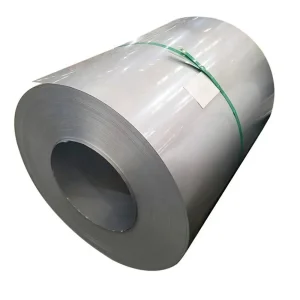
Wholesale China Suppliers Factory 8K Cold Rolled Stainless Steel Coil 201 304 316 430 2205 904L Suppliers, Factory
View Specification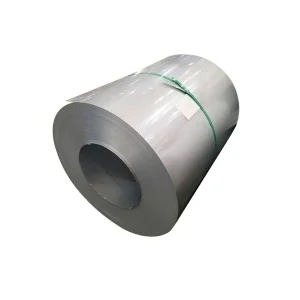
Wholesale China Suppliers Factory 8K Cold Rolled Stainless Steel Coil 201 304 304L 316 316L 309S 310S 321 430 2205 904L Supplier, Suppliers
View Specification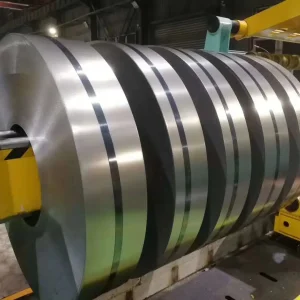
Wholesale 0.23mm CRGO Grain Oriented Electrical Silicon Steel Coil for Transformer | China Suppliers & Factory Supplier, Suppliers
View Specification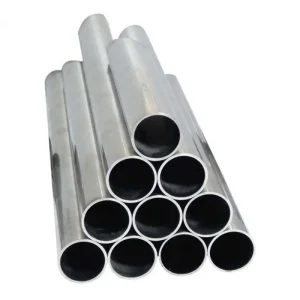
Wholesale High Zinc Hot-Dip Galvanized Steel Pipes from China Suppliers | Durable Greenhouse & Agricultural Steel Pipes Factory Manufacturers, Factories
View Specification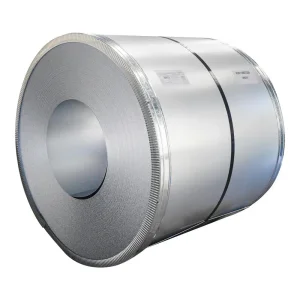
High-Quality China Suppliers Factory ZM AZM Alloy Coating 275g Zinc Aluminum Magnesium Steel Sheet for Solar Mounting Structure Manufacturer, Factories
View Specification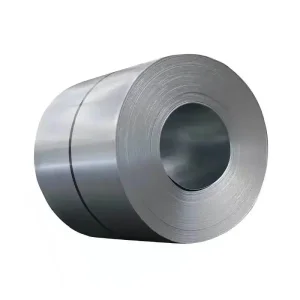
Wholesale China Suppliers Factory M310 M350 M470 M600 M800 Non-Grain Oriented Silicon Steel Coils for Transformers & Motors Manufacturers, Suppliers
View Specification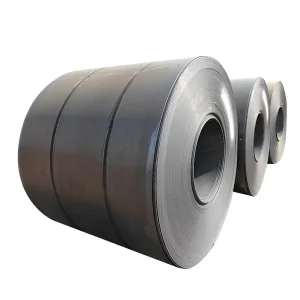
Wholesale Hot Rolled Steel Plate from China Suppliers - Premium Quality Steel Plates from Our Factory Supplier, Factory
View Specification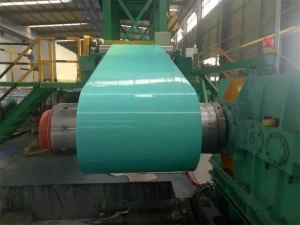
Wholesale China PPGI PPGL Galvanized Corrugated Metal Roof Suppliers - G550 Steel Plate Factory Products Manufacturers, Suppliers
View SpecificationFrequently Asked Technical & Procurement Questions
In-depth insights addressing metallurgical selection, processing parameters, and export procurement logistics.
What is the exact metallurgical difference between standard GI and Zinc-Iron Sheet (Galvannealed)?
Why is Zinc-Iron alloy preferred over GI in automotive resistance spot welding?
How does Zinc-Iron sheet prevent paint flaking and cratering defects?
What causes powdering or flaking in galvannealed steel during deep drawing, and how is it controlled?
What international standards govern Zinc-Iron alloy steel sheet production?
- ASTM A653 / A653M: Designations A25, A40, A60 (denoting galvannealed coating weights in $oz/ft^2$).
- EN 10346: Designations ZF100, ZF120, ZF140 (denoting zinc-iron alloy coating weight in $g/m^2$).
- JIS G3302: Designations F06, F08, F12 (where 'F' indicates galvannealed alloy).
- GB/T 2518: Designations ZF80 to ZF180.
How does the atmospheric corrosion resistance of Zinc-Iron sheet compare to standard GI?
What options are available for surface oiling and passivation?
- Dry (Un-oiled): For immediate phosphatization and painting lines.
- Lightly Oiled / Mill Oiled: 0.5 to 1.5 $g/m^2$ rust-preventative oil for temporary transit and storage protection.
- Pre-Lube Oil: Formulated drawing oil (1.0–3.0 $g/m^2$) for press stamping without requiring additional lubricant application at the die.
- Eco-Friendly Cr-Free Passivation: Inorganic silane/titanium passivates providing transit rust protection while remaining fully compatible with automotive adhesives and paints.