
Featured Product Catalog (Part I)
Direct-from-factory high-performance structural steel, coated coils, and precision hollow sections engineered for international industrial standards.
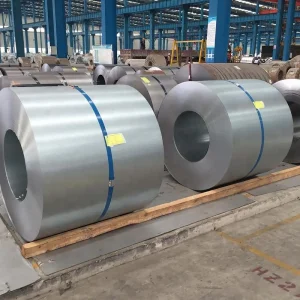
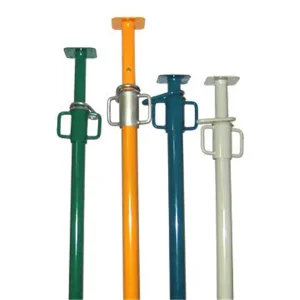
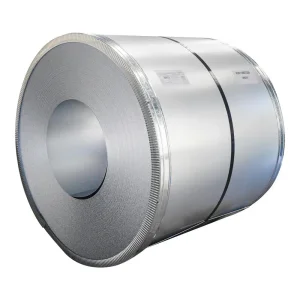
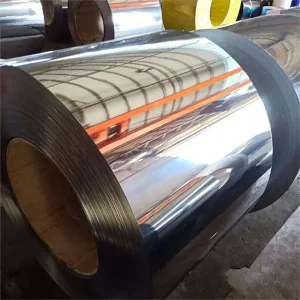
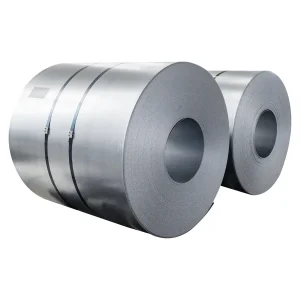
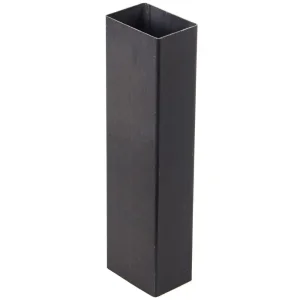
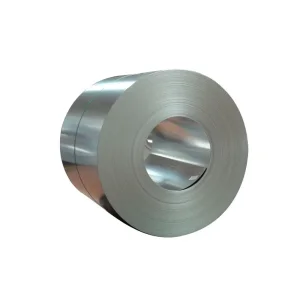
Executive Summary & Metallurgical Foundations of Al-Zn Alloy Coatings
Modern building envelopes demand an optimized balance between long-term atmospheric corrosion resistance, mechanical strength, and lifecycle economic viability. Zinc-Aluminum (Galvalume / Aluzinc) alloy roofing sheets represent the state of the art in metallic coating technology, providing up to 4x the service life of traditional hot-dip galvanized (GI) sheets in comparable aggressive environments.
Dendritic Microstructure
The 55% Aluminum, 43.4% Zinc, and 1.6% Silicon alloy formulation forms a unique biphasic dendritic matrix during rapid solidification. The solid aluminum-rich dendrites provide barrier protection, while zinc-rich interdendritic regions supply sacrificial galvanic protection.
Passivation & Barrier Layer
Upon atmospheric exposure, aluminum within the matrix oxidizes to form an insoluble, microscopic aluminum oxide (Al₂O₃) film. This passive layer drastically inhibits oxygen and moisture penetration, slowing down the sacrificial consumption rate of the zinc phase.
Thermal Reflectivity & Efficiency
Zinc-aluminum coated surfaces possess an exceptional Solar Reflectance Index (SRI) exceeding 0.65. This high thermal reflectivity minimizes building heat gain, significantly lowering HVAC energy consumption in tropical and industrial agricultural facilities.
When zinc-aluminum roofing sheets are cut on site, the exposed steel edge triggers a dual-action protection mechanism. Zinc within the adjacent coating dissolves sacrificially to neutralize exposed iron ions, while the surrounding aluminum matrix deposits an insoluble hydrated aluminum oxide film over the cut edge, creating an enduring physical barrier that prevents lateral creep corrosion.
Comparative Performance Matrix: Coating Technologies
| Coating Type | Nominal Composition | Corrosion Lifespan (C3 Marine) | Cut-Edge Protection | Max Service Temp |
|---|---|---|---|---|
| Hot-Dip Galvanized (GI) | 99% Zn | 10 – 15 Years | Excellent (Sacrificial) | 200 °C |
| Galvalume / Aluzinc (AZ) | 55% Al, 43.4% Zn, 1.6% Si | 30 – 50 Years | Superior (Barrier + Sacrificial) | 315 °C |
| Zinc-Aluminum-Magnesium (ZAM) | 84% Zn, 11% Al, 3% Mg, 2% Si | 50+ Years | Self-Healing (Simonkolleite) | 350 °C |
Technical Roadmap & Future Outlook (2025–2035)
The global metal roofing sector is undergoing a structural paradigm shift driven by decarbonization demands, harsh climate extremes, and smart building integration. Our engineering roadmap focuses on three breakthrough metallurgy vectors:
1. Quaternary ZAMS Coating Architectures
Moving beyond binary Al-Zn systems, the integration of trace Magnesium (1.0%–3.0%) and Silicon optimizes liquid zinc fluidity and creates a dense Simonkolleite [Zn₅(OH)₈Cl₂·H₂O] corrosion product upon weathering. This self-healing precipitate seals cut edges and punch holes within hours of atmospheric exposure.
2. Chrome-Free Nano-Ceramic Passivation
In strict compliance with EU RoHS and REACH mandates, traditional hexavalent chromium passivators have been replaced by eco-friendly fluorotitanic and zirconium nano-ceramic thin-film conversion coatings. These molecules bond directly with the metallic substrate, achieving superior paint adhesion and zero toxic runoff.
3. High-Strength Ultra-Light Substrates
Leveraging cold-rolled structural steel grades G550 (yield strength ≥ 550 MPa), engineering designs can reduce sheet thickness down to 0.35 mm – 0.42 mm while retaining structural load resistance against super-typhoon wind uplifts exceeding 250 km/h, cutting structural deadweight by 28%.
China Factory 4.0: Modern Manufacturing & Supply Chain Resilience
Operating out of Tianjin's advanced industrial manufacturing zone, Step Million Steel Supply Chain Co., Ltd. (SMSTEEL) combines mill-direct scale with automated precision engineering to eliminate quality variance and guarantee delivery timelines.
Continuous Hot-Dip Galvalume Line (CGL)
Our CGL lines incorporate closed-loop X-ray fluorescence (XRF) coating gauge feedback systems. Real-time air-knife pressure adjustments ensure zinc-aluminum coating thickness tolerances are controlled within ±2 g/m² across the entire width of the coil, preventing thin-spot vulnerability.
Zero-Defect Optical Quality Control
Every square meter of output passes through high-speed automated optical inspection (AOI) cameras detecting surface micro-pinholes, spangle irregularity, edge burrs, or oil contamination prior to roll forming and seaworthy export bundling.
Macro Industry Solutions & Multi-Scenario Deployment
Engineered to perform in complex atmospheric conditions, our zinc-aluminum roofing systems are customized for diverse sector challenges:
Industrial Logistics & Manufacturing
Wide-span standing seam profiles (e.g., 760/820 type) offer high rib geometry to handle heavy rainfall drainage while allowing thermal expansion/contraction without fastener penetration leaks.
Coastal Marine & C4/C5 Corrosive Zones
For structures within 1 km of ocean shorelines, AZ150 to AZ200 heavy coating weights combined with PVDF fluorocarbon topcoats prevent salt-fog pitting corrosion and maintain aesthetic color integrity for decades.
Agricultural Livestock & Chemical Storage
High ammonia fumes and damp organic environments rapidly degrade ordinary galvanized roofs. Our special anti-microbial and chemical-resistant organic overcoats ensure complete structural resistance.
Global Procurement Intelligence & Total Cost of Ownership (TCO)
For international procurement directors, EPC contractors, and steel stockists, purchasing metal roofing requires looking beyond initial FOB price to calculate Total Cost of Ownership across the 30-year design life of the structure.
Capital Expenditure (CAPEX) vs. Lifecycle OPEX
While 55% Al-Zn Galvalume roofing sheets carry a modest 10%–15% premium over basic GI sheets, their 300% lifespan multiplier slashes re-roofing labor, business interruption downtime, and maintenance budgets to near zero.
- Zero requirement for periodic rust-inhibitive repainting
- Reduced building framing steel requirements due to high-strength G550 thin-gauge profiles
- 100% recyclable material contributing to green building certification credits
Optimized Packaging & Ocean Freight Logistics
To eliminate transit damage from ocean moisture and humidity variations during long sea voyages, SMSTEEL employs heavy-duty export packaging protocols:
- VCI (Vapor Corrosion Inhibitor) anti-rust film wrapping
- Galvanized steel inner/outer protective corner rings
- High-tensile radial and axial steel strapping on eye-vertical or eye-horizontal wooden skids
Localized Support, Regulatory Compliance & Quality Assurance
Ensuring seamless tender compliance across North American, European, Southeast Asian, and Middle Eastern jurisdictions.
International Material Standards
Fully compliant with ASTM A792/A792M (USA), EN 10346 / DX51D+AZ (Europe), JIS G3321 (Japan), and AS 1397 (Australia). Mill Test Certificates (MTC) according to EN 10204 3.1 accompany every shipment.
Independent Third-Party Verification
We regularly collaborate with international inspection agencies including SGS, BV, Intertek, and Lloyd's Register to conduct pre-shipment testing for coating mass, bend testing, chemical analysis, and salt spray resistance.
Dedicated Technical Export Service
Our multilingual technical team provides rapid tender response, profile drawing optimization, customized cut-to-length sheet sizing, and 24/7 post-delivery engineering support.
Featured Product Catalog (Part II)
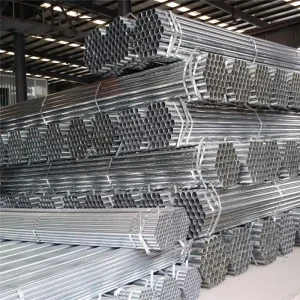
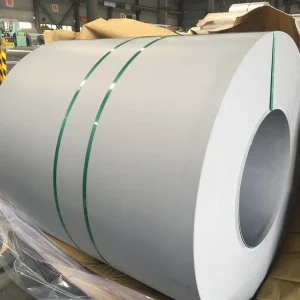
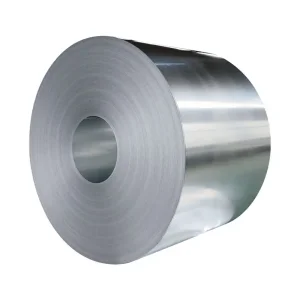
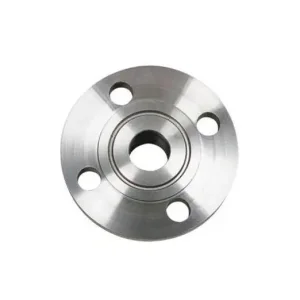
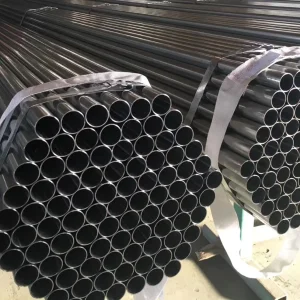
Explore our comprehensive inventory of greenhouse tubing, structural pipes, specialized tinplate, and pre-galvanized profiles.
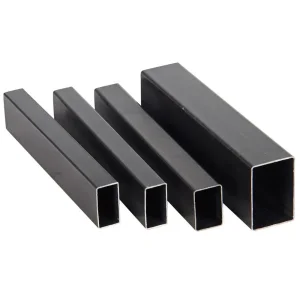
Frequently Asked Questions (Technical & Sourcing Intelligence)
Direct answers to crucial technical queries raised by structural engineers, procurement managers, and roofing system specifiers.
What is the exact difference between Galvalume (AZ) and Galvanized (GI) roofing sheets?
The core difference lies in metallic coating composition. Galvanized (GI) sheets feature a 99% pure zinc coating layer, providing sacrificial protection. Galvalume (AZ) consists of 55% Aluminum, 43.4% Zinc, and 1.6% Silicon. The aluminum forms an insoluble oxide barrier against atmospheric exposure, while the zinc offers sacrificial protection at edges. Under identical conditions (e.g., C3 marine/industrial atmospheres), AZ sheets last 3 to 6 times longer than GI sheets of equivalent coating thickness.
Can zinc-aluminum roofing sheets be used in animal confinement buildings or high-alkaline environments?
In unpainted form, standard 55% Al-Zn Galvalume is sensitive to direct contact with highly alkaline wet concrete or concentrated ammonia gas generated in intensive poultry/swine housing. For these specific micro-climates, we recommend either specifying our Zinc-Aluminum-Magnesium (ZAM) sheets—which form an ammonia-resistant protective film—or using factory pre-painted (PPGL) sheets with a high-performance chemical barrier back-coat.
How do you prevent micro-cracking of the metallic coating during severe roll forming?
Micro-cracking can occur if low-ductility steel is bent across sharp radii. SMSTEEL controls the cooling rate during the continuous hot-dip process to yield ultra-fine spangle grain sizes. Furthermore, we select soft-forming deep-drawing base grades (such as DX52D+AZ or DX53D+AZ) combined with optimized 1.6% Silicon addition to control the brittle intermetallic Fe-Al interface layer thickness below 1.5 microns.
What is the maximum continuous service temperature for zinc-aluminum roofing sheets?
55% Al-Zn coated sheets can operate continuously in high-temperature environments up to 315 °C (600 °F) without surface discoloration or degradation of heat reflectivity. They can withstand intermittent peak temperatures up to 500 °C, making them vastly superior to galvanized sheets which start peeling and flaking above 200 °C.
What third-party inspection certifications accompany international shipments?
Every shipment is backed by an EN 10204 3.1 Mill Test Certificate detailing ladle chemical analysis, mechanical tensile/yield testing, elongation percentages, coating weight verification (AZ30 to AZ200), and surface quality checks. SGS or BV inspectors can be appointed to verify coil dimensions, packaging integrity, and container loading prior to port departure.