
Precision Welded Steel Products & Industrial Alloys
Direct factory supply engineered to international ASTM, EN, DIN, and ISO standards for structural, energy, and heavy-manufacturing applications.

High-Quality Electrolytic Tinplate ETP and TFS Tin Clad Steel from China Factory
View Product Details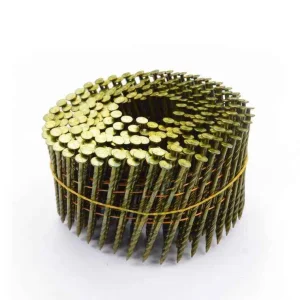
High-Quality 15 Degree Frame Coil Nail with Copper Plated Welding Wire
View Product Details
Wholesale Zinc Iron Alloy DC51D Dx51D ZF60 ZF275 Galvannealed Steel Coil
View Product Details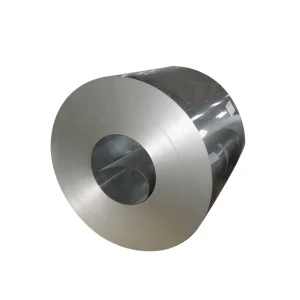
Customized ASTM A653 DX51D Z275 Hot Dipped Galvanized Steel Coils
View Product Details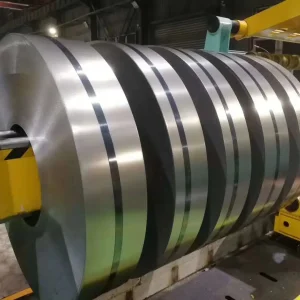
High-Quality 0.23mm CRGO Grain Oriented Electrical Silicon Steel Coil for Transformers
View Product Details
Factory Direct Stainless Steel Coil 201 304 304L 316 316L 309S 310S 321 430 2205 904L
View Product Details
Electrolytic Tinplate ETP and TFS Tin Clad Steel for Packaging Solutions
View Product Details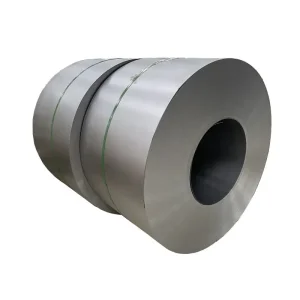
Wholesale High Strength Cold Rolled Steel Sheets for Deep Drawing Fabrication
View Product DetailsMetallurgical Foundations & Advanced High-Frequency Welding Technologies
A comprehensive evaluation of High-Frequency Electric Resistance Welding (HFW/ERW), Submerged Arc Welding (LSAW/SSAW), and automated pipe mill metallurgy.
High-Frequency Welded (HFW/ERW) Process
Utilizing high-frequency induction currents ranging from 300 to 500 kHz, hot-rolled skelp is continuously formed into cylindrical profiles. Solid-state resistance heating yields instantaneous localized forge welds without filler metals, guaranteeing superior weld factor joint efficiency ($E = 1.0$).
Micro-Alloying & Heat-Affected Zone (HAZ)
By controlling carbon equivalent (CEQ) values through micro-alloying elements ($Nb, V, Ti$), mill lines achieve ultra-fine grain structures. Post-weld inline seam annealing (PWHT) at $850^\circ\text{C}-900^\circ\text{C}$ completely eliminates martensitic brittleness and restores Charpy V-notch toughness across the HAZ.
Non-Destructive Testing (NDT) Protocol
Every linear batch undergoes multi-stage automated NDT, including full-body ultrasonic testing (UT) for internal laminations, offline eddy current testing (ET) for surface flaws, and hydrostatic pressure testing up to $100\%$ specified minimum yield strength (SMYS).
China's Manufacturing Supremacy: Tianjin-Hebei Steel Cluster Integration
Why sourcing directly from China's primary steel hubs yields unmatched economies of scale, material consistency, and rapid global export capabilities.
Upstream Iron & Steel Integration
Our strategic positioning within the Tianjin industrial zone grants direct pipeline access to molten iron supply, state-of-the-art continuous casters, and hot-strip rolling mills (such as Shougang, Tangsteel, and Baosteel). By eliminating intermediate reheating steps, we achieve significant carbon emission reductions while reducing coil cost variance by $12-18\%$ against overseas competitors.
Export Logistics & Port Connectivity
Located just 40 kilometers from Tianjin Xingang Port—Northern China's premier maritime hub—our facility guarantees rapid vessel berth booking, streamlined customs clearance, and specialized seaworthy packaging. From anti-rust oil coatings and plastic end caps to heavy-duty steel strip bundling, every batch is prepared for transoceanic transit without corrosion degradation.
| Manufacturing Metric | China Wholesale Factory Base | Global Regional Mills | Technical Advantage |
|---|---|---|---|
| Raw Material Lead Time | 24 - 48 Hours | 2 - 4 Weeks | Integrated local hot-strip mill supply chains |
| Section Size Variety | 15mm - 2200mm OD | Limited to niche ranges | Multi-stand roll forming & LSAW flexible tooling |
| Galvanizing Thickness | Up to 120 μm ($850 \text{ g/m}^2$) | Standard 30 - 45 μm | Deep-kettle hot-dip zinc dipping tanks |
| Cost Efficiency Index | Baseline (100%) | 125% - 145% higher | High-speed automated HF lines & energy optimization |
Global Sourcing Standards & Quality Compliance Framework
Navigating complex international engineering specifications, tariff classifications, and Mill Test Certificates (MTR) for risk-free international procurement.
International Standard Mapping
We manufacture in strict compliance with ASTM A53 Grade B (fluid transport), ASTM A500 Grade A/B/C (structural hollow sections), EN 10219 / EN 10217 (European structural/pressure specifications), and API 5L PSL1/PSL2 (line pipe for petroleum and natural gas systems).
EN 10204 3.1 & 3.2 Traceability
Every order is accompanied by an authentic Mill Test Report (MTR) according to EN 10204 3.1. Chemical composition (C, Mn, Si, P, S), mechanical properties (Yield, Tensile, Elongation), flattening test verification, and hydrostatic pressure logs are traceable back to the original heat number.
Third-Party Verification (SGS/TÜV)
To eliminate procurement risk for overseas EPC contractors, we support mandatory third-party pre-shipment inspections (TPI) by SGS, TÜV Rheinland, Bureau Veritas, or Intertek. Inspection protocols include ultrasonic thickness wall gauging, coating adhesion cross-hatch tests, and dimensional bevel checks.
Localization Support & Regional Engineering Adaptation
Tailoring product dimensions, anti-corrosion barrier coatings, and end-preparations to conform with local building codes across North America, Europe, the Middle East, and Southeast Asia.
Regional Building Code Compliance
Different markets demand distinct mechanical tolerances. In North America, pipes must meet ANSI/ASME B36.10M and IBC seismic bracing codes. In Europe, CE marking under CPR (Construction Products Regulation) EN 10219 is essential. Middle Eastern projects (SASO / Saudi Aramco specs) mandate high temperature-resistant corrosion barriers like 3-Layer Polyethylene (3LPE) or Fusion Bonded Epoxy (FBE).
Custom End Processing & Surface Metallurgy
To support immediate job-site assembly, our manufacturing plants offer custom end finishing: 30° beveling for field butt-welding, NPT/BSPT threading with couplings according to ANSI B1.20.1, roll-grooving for Victaulic mechanical joints, and swaged expansion ends. Surface treatments range from black varnish oil to hot-dip galvanized coating weights up to 610 g/m².
Specialized Industry Applications & Deployment Scenarios
From renewable solar mounting infrastructures to heavy municipal fluid transmission, see how welded steel pipe systems deliver structural safety and long-term durability.
Solar PV Tracker & Fixed Racking Systems
Recommended Alloy: Zinc-Aluminum-Magnesium (ZM/AZM) Coated Steel Sheet & Pre-Galvanized Square Tubes (SHS/RHS).
Engineering Benefit: Self-healing edge corrosion protection in aggressive coastal or desert environments, enduring 25+ years of maintenance-free service life.
Municipal Water & Fluid Transmission
Recommended Alloy: High-Zinc Hot-Dip Galvanized Welded Round Steel Pipes & Spiral Welded Pipes (SSAW).
Engineering Benefit: Smooth internal bore minimizes friction loss ($C\text{-factor} = 140$), while thick zinc or epoxy linings prevent tuberculation and bio-fouling.
Structural Shoring & Scaffolding Networks
Recommended Alloy: Heavy-Duty Adjustable Steel Props & Q345/S355 Black/Galvanized Hollow Sections.
Engineering Benefit: High compressive strength-to-weight ratio ensures superior buckling resistance during high-rise concrete pouring operations.
Strategic Industry Transformation & Future Trends (2025–2030)
How decarbonization, artificial intelligence in weld-line quality control, and CBAM regulatory demands are reshaping global steel pipe manufacturing.
Green Steel & Low-Carbon Electric Arc Furnaces (EAF)
With the implementation of the European Union's Carbon Border Adjustment Mechanism (CBAM), the global steel industry is pivoting toward hydrogen-based direct reduced iron (DRI) and scrap-based Electric Arc Furnace (EAF) steelmaking. Wholesale manufacturing facilities are adopting renewable solar micro-grids to power HF welding lines, lowering embedded carbon emissions per ton of finished pipe by up to 35%.
AI-Driven Real-Time Ultrasonic Flaw Detection
Next-generation pipe manufacturing lines integrate machine-learning computer vision and phased-array ultrasonic transducers right at the weld seam exit. AI algorithms dynamically adjust high-frequency induction power and squeeze roll pressure in real time, eliminating micro-voids, cold welds, and pinholes before the pipe reaches the sizing mill.
Specialized Hollow Sections, Coils & Structural Components
Explore our full line of corrosion-resistant galvanized sheets, electrical silicon coils, flange connections, and scaffolding support equipment.
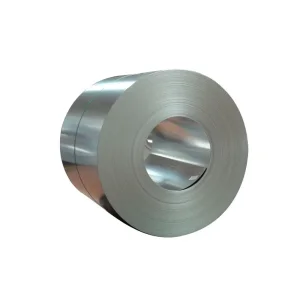
High-Quality Customized Hot Dipped Zinc Coated GI Sheets - ASTM A653 DX51D
View Product Details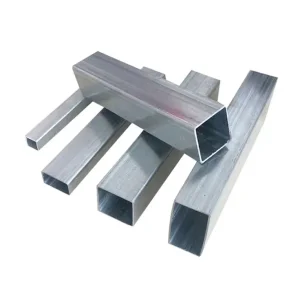
Pre-Galvanized Square Steel Tube 20*20 SHS RHS Rectangular Hollow Section
View Product Details
Slip on Plate Flanges for Welding Carbon Steel and Stainless Steel Blind Flanges
View Product Details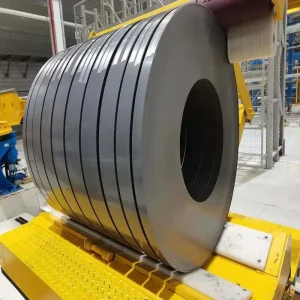
China Silicon Steel Coil (CRNGO) - Magnetic Alloy Sheets for Electric Motors
View Product Details
ZM AZM Alloy Coating 275g Zinc Aluminum Magnesium Steel Sheet for Solar
View Product Details
Cold Rolled High Strength Steel Sheets for Deep Drawing Applications
View Product Details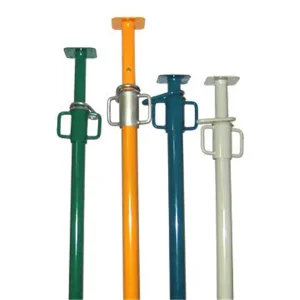
Heavy Duty Adjustable Steel Prop for Scaffolding Support in Construction
View Product Details
High Zinc Hot-Dip Galvanized Steel Pipes for Greenhouse & Agriculture
View Product DetailsFrequently Asked Questions (FAQ) for Global Buyers
In-depth answers addressing structural engineering, mill certifications, order customization, and international shipping logistics.
Partner with China's Leading Welding Steel Pipe Manufacturer
Get instant factory-direct quotations, Mill Test Report samples, and custom engineering consultations for your structural, fluid, or energy infrastructure projects.