
Primary Industrial & Packaging Steel Portfolio
Explore mill-direct high-grade steel solutions manufactured to ISO 9001, ASTM, and EN standards for worldwide enterprise applications.
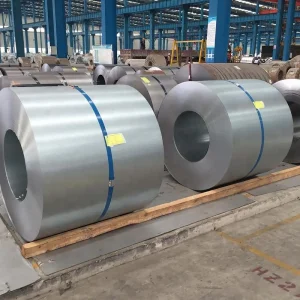
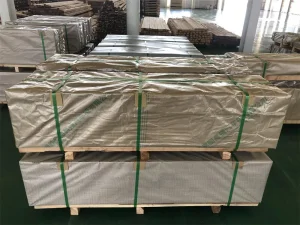
Global Tin Plate Procurement Matrix & User Intent Mining
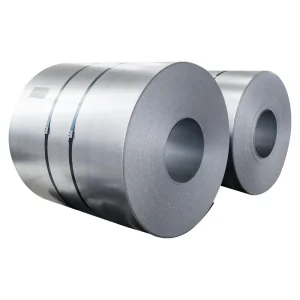
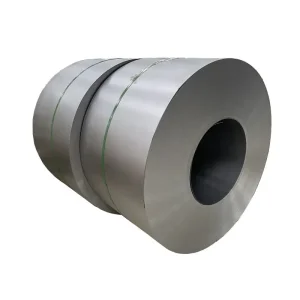
In the modern industrial packaging ecosystem, selecting a high-quality tin plate manufacturer and factory is no longer a simple transactional purchase—it is a critical strategic decision that impacts product integrity, shelf-life compliance, high-speed line efficiency, and corporate sustainability metrics. Electrolytic Tinplate (ETP) and Electrolytic Chromium Coated Steel (ECCS / TFS - Tin Free Steel) represent the pinnacle of cold-rolled flat steel engineering, requiring extreme metallurgical precision, ultra-thin gauge consistency, and flawless surface passivation.
As global supply chains navigate fluctuating raw material dynamics, strict environmental mandates (such as REACH compliance and BPA-NI internal lacquer regulations), and the shift toward lightweight rigid packaging, leading global manufacturers must deliver cold-rolled steel coils and sheets that exhibit superior drawability, uniform tin alloy layers, and zero lattice defects.
Critical Buyer Intent Drivers in Global Sourcing
Key procurement decision-makers across Europe, North America, Southeast Asia, and the Middle East evaluate tinplate mills against four strict engineering pillars:
Gauge & Temper Uniformity
Strict thickness tolerance within ±0.005 mm ensures flawless flange forming, prevents body buckling, and eliminates split seams on high-speed 2-piece drawn and wall-ironed (DWI) and 3-piece can body makers.
Tin Coating Integrity & Reflow
Uniform electrolytic plating with continuous tin-iron alloy (FeSn2) layer provides chemical resistance against aggressive food acids, sulfide blackening, and atmospheric corrosion during extended storage.
Surface Finish & Lacquer Adhesion
Custom surface finishes—Stone, Bright, Silver, and Matte—engineered to maximize coating film anchorage, prevent blistering during oven baking, and optimize print quality for decorative lithography.
Electrolytic Tinplate (ETP) vs. TFS Engineering Specification Matrix
Comprehensive technical breakdown comparing single reduced (SR) and double reduced (DR) tin mill products for rigid metal packaging.
| Parameters | Electrolytic Tinplate (ETP) | Tin Free Steel (TFS / ECCS) | Engineering Advantage |
|---|---|---|---|
| Coating Material | Pure Metallic Tin (99.90% purity) + FeSn2 alloy | Metallic Chromium + Chromium Oxide | ETP offers superior solderability; TFS provides excellent lacquer adhesion. |
| Coating Mass Range | 1.1 / 1.1 g/m² to 11.2 / 11.2 g/m² (Differential available) | Cr: 50–140 mg/m², Cr-Oxide: 7–35 mg/m² | Differential coatings allow optimized cost-efficiency for asymmetrical corrosive environments. |
| Temper Class (SR) | T1, T2, T3, T4, T5 (HRB 49 to 70) | T2, T3, T4, T5 | Single reduced temper ideal for deep drawing, complex closures, and easy-open ends. |
| Temper Class (DR) | DR520, DR550, DR580, DR620 (HR30T 73 to 80) | DR550, DR580, DR620 | Double reduced thin-gauge steel offers extreme tensile strength for lightweight container walls. |
| Surface Finishes | Bright (Reflowed), Stone, Fine Stone, Matte, Silver | Gritted, Stone, Bright | Controls aesthetic reflectivity and mechanical coefficient of friction during press operations. |
| Primary Applications | Food cans, beverage ends, aerosol cans, artistic tins | Can bottoms, crown caps, twist-off lids, DRD cans | Eliminates tin thread sulfur reactions; highly cost-effective for lacquered applications. |
Deep Drawing Temper Selection & Mechanical Properties
Selecting the correct mechanical temper is critical to avoid earring defect formation, wall tearing, or structural collapse. Continuous Annealing (CA) and Batch Annealing (BA) processes dictate the crystal grain structure and anisotropic characteristics of the final coil:
- Batch Annealed (BA) Grades: Yields a ductile, equiaxed grain layout with low hardness. Recommended for deep-drawn components (e.g., aerosol domes, necked-in food cans) requiring multidirectional metal flow without localized strain thinning.
- Continuous Annealed (CA) Grades: Provides exceptional stiffness, uniform fine grain size, and high yield strength. Engineered for high-speed automated end-making, structural ring components, and rectangular container bodies.
- Double Reduced (DR) High-Tensile Grades: Following initial annealing, the steel undergoes a secondary cold reduction pass of 10% to 40%. This cold-work hardening increases material rigidity dramatically, enabling a thickness reduction from 0.20 mm down to 0.14 mm while maintaining axial crush strength.
Electrolytic Tinning Line (ETL) Manufacturing Excellence
An end-to-end technical overview of state-of-the-art cold rolling, chemical cleaning, electroplating, reflow, and automatic defect inspection.
Cold Tandem Reduction
Hot-rolled pickled coils are reduced through 5-stand continuous cold rolling mills equipped with automatic gauge control (AGC) and shape meters to achieve precise final gauges.
Degreasing & Annealing
Electrolytic cleaning removes residual rolling oils before continuous protective-atmosphere hydrogen annealing restores ductile crystalline structure for forming flexibility.
Electrolytic Plating
Utilizing high-efficiency Ferrostan (methanesulfonic acid) or Halogen plating baths, tin ions are precisely electro-deposited onto the steel surface with atomic-level coating control.
Induction Reflow Melting
High-frequency induction coils heat the plated strip rapidly to 232°C (tin melting point), creating a mirror-like bright finish and bonding an interfacial FeSn2 alloy layer.
Chemical Passivation
Controlled chemical or electrochemical passivation (Chromium or Chromium-Free Titanium systems) stabilizes the surface film to prevent oxide growth during storage and baking.
Electrostatic Oiling & Inspection
Food-grade Dioctyl Sebacate (DOS) or ATBC oil is electrostatically applied, followed by 100% online optical pinhole detection and laser surface roughness verification.
Green Transition, BPA-NI Compliance & Technology Roadmap (2025–2030)
How advanced tinplate manufacturers are addressing decarbonization, regulatory shifts, and high-performance food contact standards.
The global metal packaging market is undergoing a seismic transition toward circular economy compliance. Steel remains the world's most recycled packaging material, with a closed-loop recycling rate exceeding 84% in mature industrial economies. To maintain this advantage, tinplate factories are executing ambitious technology roadmaps focused on three core operational fronts:
1. Chromium-Free Passivation (CFP) Innovations
In response to European Union REACH regulations and global occupational safety guidelines limiting hexavalent chromium (Cr6+), advanced manufacturers have perfected non-chromate passivation systems based on Titanium and Zirconium oxide chemistry (e.g., TCCT - Titanium Compound Conversion Treatment). These eco-friendly coatings deliver equivalent varnish adhesion and sulfur-stain resistance while guaranteeing full compliance with international food contact standards.
2. BPA-NI (Bisphenol A Non-Intent) Lacquer Compatibility
With global food safety agencies enforcing strict prohibitions on traditional epoxy-phenolic coatings containing BPA, modern tinplate surface energy must be precisely calibrated. Controlling surface oil film thickness (3 to 10 mg/m²) and surface energy ensures seamless wetting and adhesion of next-generation organosol, polyester, and acrylic water-based internal lacquers.
3. Ultra-Thin Double Reduced Lightweighting
Reducing raw material consumption without sacrificing vertical column collapse resistance is the holy grail of modern packaging engineering. By engineering ultra-clean steel substrates with minimal non-metallic inclusions, tinplate factories now offer high-strength DR620 and DR650 grades in thicknesses as thin as 0.13 mm, lowering logistics carbon footprints for global beverage and food brand owners.
International Standards, Compliance & Seaworthy Packaging Protection
Transporting high-precision cold-rolled tinplate across transoceanic shipping routes demands specialized protective packaging protocols. Moisture ingress or condensation inside containerized shipments can cause catastrophic white rust or oxidation. Professional tinplate exporters enforce multi-layer protective packaging architectures:
VCI Anti-Rust Protection
Coils and cut sheets are wrapped in heavy-duty Volatile Corrosion Inhibitor (VCI) paper, emitting protective vapor molecules that neutralize ambient moisture micro-droplets.
Steel Outer Shell & Strapping
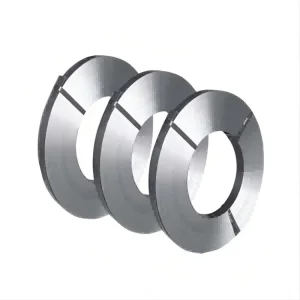
Galvanized steel outer side-guards, inner/outer steel corner protectors, and radial high-tensile steel banding prevent physical impact damage during port crane handling.
Certified Quality Standards
Fully compliant with international specifications including ASTM A623 / A624, EN 10202, JIS G3303, and ISO 11949 with 3.1 Mill Test Certificates (MTC) provided per heat.
High-Performance Flat-Rolled & Tubular Solutions
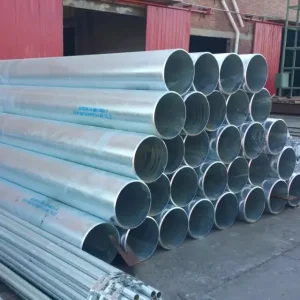
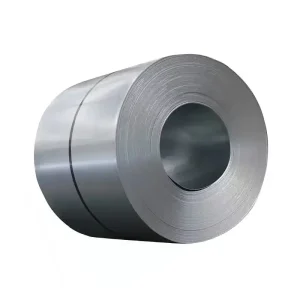
Complementary steel coils, tinplate sheets, electrical steels, and heavy-duty structural piping engineered for specialized industrial demands.
Frequently Asked Questions by Technical Procurement Managers
Expert engineering answers regarding tinplate specification selection, quality verification, and international sourcing compliance.