
Precision Coated Steel & Tubing Catalog
Direct mill sourcing for premium Electrolytic Tinplate, HRPO, Galvanized, and Structural Tubing engineered for global industrial standards.
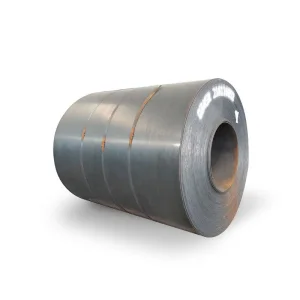
High-Quality Hot Rolled Pickled & Oiled (HRPO) Steel Heavy gauge, wide plate steel with a beautiful surface finish
View Product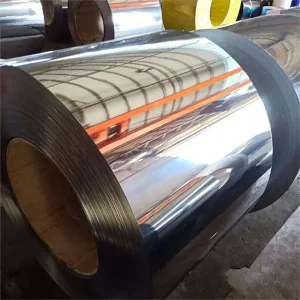
Wholesale China Suppliers of Electrolytic Tinplate ETP and TFS Tin Clad Steel for Packaging Quality Products
View Product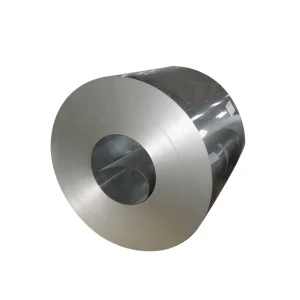
Wholesale customized spangle ASTM A653 DX51D Z 275 hot dipped zinc coated gi sheet rolled galvanized steel coils
View Product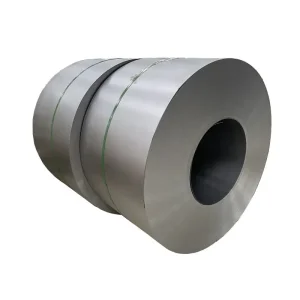
High-Quality High Strength Cold Rolled Steel Sheets with Extra Deep Drawing Quality - China Factory
View Product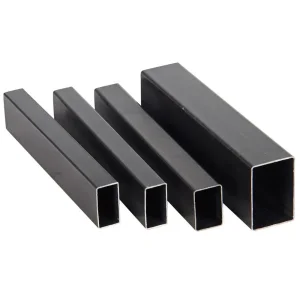
High-Quality China Suppliers Factory Construction Pipe 50x50mm 4x4 Square Tubing for Steel Fence Post
View Product
Wholesale China Square Tubing Suppliers - 50x50mm 4x4 Metal Pipe Factory for Durable Steel Fence Posts
View Product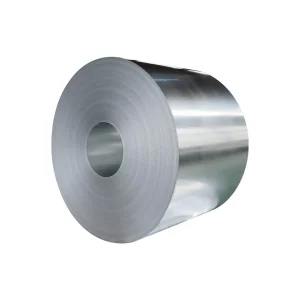
High-Quality DX53D DX54D Aluminized Silicon Coating Coils from China Factory - Reliable Suppliers
View Product
Wholesale China Suppliers Factory 50*50mm 4x4 Square Steel Tubing for Durable Fencing Projects
View ProductFundamentals of High-Quality Steel Coated with Tin
An authoritative technical analysis of Electrolytic Tinplate (ETP), Tin Free Steel (TFS/ECCS), and advanced tin-clad steel manufacturing processes.
In modern industrial metallurgy, steel coated with tin—commonly categorized under Electrolytic Tinplate (ETP) and Tin Free Steel (TFS / Electrolytic Chromium Coated Steel - ECCS)—represents one of the most sophisticated engineered flat-steel products. By combining the structural strength, ductility, and deep-drawing capacity of low-carbon steel with the exceptional corrosion resistance, non-toxicity, weldability, and aesthetic luster of metallic tin, manufacturers provide critical raw materials for global food packaging, aerosol canisters, automotive electronics, and specialized industrial enclosures.
Cross-Sectional Architecture of Electrolytic Tinplate
Achieving superior performance in tin-clad steel requires rigorous multi-layer cross-sectional synthesis. A precision ETP sheet comprises five primary metallurgical layers:
- Low-Carbon Steel Base Substrate: Provides mechanical rigidity, yield strength, and drawability (SR - Single Reduced or DR - Double Reduced).
- Fe-Sn Alloy Interface Layer: Formed through post-plating thermal melting (reflowing), creating an intermetallic FeSn₂ boundary that significantly increases interfacial shear strength and chemical stability.
- Free Metallic Tin Layer: Un-alloyed metallic tin layer providing anodic protection, ductility, lubricity during forming, and pristine metallic sheen.
- Passivation Chemical Film: Typically a chromium-based or advanced chromium-free (zirconium-titanium) oxide layer designed to retard surface oxidation and optimize lacquer/ink adhesion.
- Synthetic Oil Lubrication Film: Food-grade DOS (Dioctyl Sebacate) or ATBC (Acetyl Tributyl Citrate) applied at micro-gram levels (5–15 mg/m²) to prevent surface scratching during coil uncoiling and stamping.
| Technical Property | Electrolytic Tinplate (ETP) | Tin Free Steel (TFS / ECCS) | Hot-Dipped Galvanized (GI) |
|---|---|---|---|
| Primary Coating | 99.9% Pure Metallic Tin (Sn) | Metallic Chromium + Cr Oxide | Zinc (Zn) / Zinc-Aluminum |
| Coating Thickness | 0.38 µm – 1.5 µm (1.1 – 11.2 g/m²) | 0.02 µm – 0.05 µm | 5 µm – 30 µm (60 – 275 g/m²) |
| Solderability & Weldability | Excellent (High-speed resistance welding) | Requires edge grinding before welding | Moderate (Prone to zinc spatter) |
| Lacquer / Organic Adhesion | High | Superior (Best-in-class ink/paint bonding) | Moderate (Requires specific primers) |
| Primary Industry Applications | 3-piece sanitary cans, aerosols, electronics | 2-piece drawn cans, crowns, shallow draws | Construction, automotive panels, HVAC |
Global Industry Trends in Steel Coated with Tin
Emerging technology vectors, regulatory mandates, and market shifts shaping modern tinplate manufacturing and procurement strategy.
Ultra-Lightweighting & DR Steel
Global demand is rapidly shifting toward Double Reduced (DR) tinplate gauges down to 0.12mm - 0.15mm thickness. DR processing delivers higher tensile yield strengths (up to 750 MPa) while lowering material weight by up to 20% without sacrificing burst-pressure resistance.
Chromium-Free Passivation (CFP)
Under strict REACH regulations in Europe and FDA guidelines in the US, manufacturers are replacing traditional hexavalent chromium (Cr6+) passivation dipping processes with eco-friendly Titanium-Zirconium (Ti-Zr) and silane-based conversion coatings, eliminating hazardous substances completely.
BPA-NI Laminated Polymer Coatings
To eliminate Bisphenol-A (BPA) contamination risks in food packaging, direct PET/PP film thermoplastic lamination over tinplate substrate (TULC technology) is replacing liquid lacquers, providing absolute chemical isolation and superior formability.
Information Gain Strategy: Differential Tin Coating Optimization
A major procurement breakthrough for global buyers is the adoption of Differential Tin Coating Mass specifications (e.g., D2.8/5.6 g/m² or D5.6/11.2 g/m²). By applying a thicker tin layer on the inner side exposed to corrosive foodstuffs and a lighter tin layer on the external side intended for printing, procurement teams achieve up to a 14% reduction in raw material cost while maintaining identical food shelf life.
Global Enterprise Procurement Requirements
How Fortune 500 packaging buyers, OEM manufacturers, and steel stockists evaluate tinplate suppliers.
Procuring raw steel coated with tin involves navigating strict metallurgical parameters. A failure to match temper, coating weight, or surface finish to the end-use process can result in micro-cracking during deep drawing, flaking under pasteurization, or seam failures on high-speed welding lines. Modern procurement engineering focuses on three core technical pillars:
1. Temper & Mechanical Grades
Matching the continuous annealing (CA) or batch annealing (BA) temper designation to the forming process:
- T1 - T2 (BA): Soft tempers for extra-deep drawing and complex multi-step presswork.
- T3 - T5 (CA/BA): General-purpose tempers for sanitary can bodies, aerosol tops, and screw caps.
- DR7 - DR9 (CA): High-yield stiffness for thin-gauge 2-piece beverage cans and ends.
2. Surface Finish Aesthetics
Surface micro-roughness (Ra) controls ink reflectivity, oil retention, and tool wear during stamping:
- Bright Finish: Reflowed mirror finish showing smooth metallic luster (Ra ≤ 0.25 µm).
- Stone Finish: Rough ground roll pattern for enhanced scratch mask and printing bond (Ra 0.35–0.60 µm).
- Matte Finish: Non-reflowed dull finish ideal for non-glare industrial applications.
3. Chemical & Pinhole Testing
Global buyers demand stringent international quality standard compliance:
- ASTM A623 / A624: Standard specifications for tin mill products.
- EN 10202 / JIS G3303: European and Asian standards for cold-reduced tin mill products.
- Pinhole Detection: 100% online laser inspection ensuring zero defects down to 50 microns.
China Factory 4.0: Supply Chain Resilience & Efficiency
Integrating automated continuous electroplating lines, digital twin quality control, and direct port supply chain advantages.
Smart Manufacturing & Automated Plating Precision
China's Tier-1 steel coated with tin manufacturers have undergone a dramatic Industry 4.0 transformation. Modern production facilities utilize high-speed continuous electrolytic tinning lines (ETL) equipped with real-time fluoroboric acid or halogen electrolyte concentration monitors, automatic gauge controls (AGC), and AI-driven machine vision inspection systems.
This level of automation guarantees thickness uniformity across the full width of wide steel coils (up to 1200mm), restricting gauge variance to within ±0.002mm. Consequently, high-speed automated can-making machinery operating at rates above 1,200 cans per minute experiences near-zero jam rates and minimal tool wear.
Port Proximity & Raw Material Synergy
Located within key industrial hubs such as Tianjin, Chinese manufacturing clusters combine raw steel slab melting, cold-rolling mills, and electrolytic tinning units within a consolidated 50-kilometer radius. This geographic and operational integration minimizes internal logistics overheads and protects steel coils from atmospheric corrosion prior to packaging.
Coupled with direct access to major ocean freight hubs, Chinese manufacturers deliver unrivaled lead times (typically 15 to 25 days from order confirmation to ocean loading), backed by export seaworthy packaging utilizing anti-rust VCI paper, steel outer sleeves, and heavy-duty wooden skids.
Localized Application Scenarios across Industries
From food preservation to automotive EMI shielding, exploring how tin-clad steel powers modern industrial production.
Sanitary Food Cans
Non-toxic ETP with K-Plate passivation prevents sulfide staining from protein-rich foods like meat, seafood, and vegetables, delivering multi-year ambient storage life.
Aerosols & Chemicals
Precision temper T3/T4 tinplate withstands internal propellant pressures up to 18 bar, making it the industry standard for paints, insecticides, and lubricants.
Electronics & Shielding
Excellent electrical conductivity and solderability allow tin-clad steel sheets to be stamped into RF/EMI shielding cans for circuit boards and automotive modules.
Filter & Cable Components
Automotive oil filter bodies, fuel cap assemblies, and heavy-duty armored electrical cable wrapping utilize tin-coated steel for rust protection and formability.
Frequently Asked Questions on Steel Coated with Tin
Detailed answers to critical engineering, procurement, and manufacturing inquiries.
Complementary Coated Steel & Silicon Steel Products
Explore our full line of tinplate, electro-galvanized plates, ZM alloy sheets, and silicon steel coils.
High-Quality Electrolytic Tinplate ETP and TFS Tin Clad Steel for Packaging | China Suppliers Factory
View Product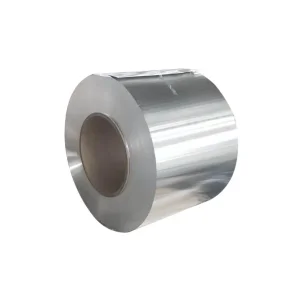
Wholesale Electrolytic Tinplate ETP & TFS Tin Clad Steel: Quality Packaging Solutions from China
View Product
High-Quality Customized ASTM A653 DX51D Z275 Hot Dipped Galvanized Steel Coils from China
View Product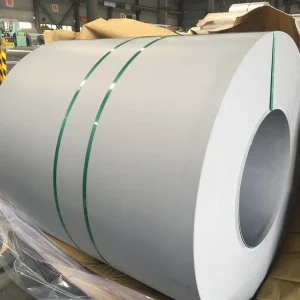
Wholesale Electro-Galvanized Steel Plate SECC/SECD/SECE 20/20 Coating - Reliable China Suppliers
View Product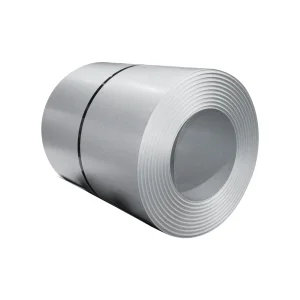
High-Quality Zn Al Mg coated steel sheet 275g Zinc Aluminum Magnesium ZM AZM Alloy Coating
View Product
Wholesale High Strength Extra Deep Drawing Cold Rolled Steel Sheets from China Suppliers & Factory
View Product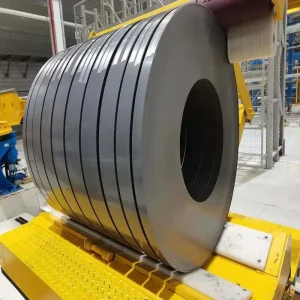
Wholesale China Silicon Steel Coil (CRNGO) - High-Quality Suppliers & Factory for Soft Magnetic Alloys
View Product
High-Quality Electro-Galvanized Steel Plate SECC/SECD/SECE 20/20 Coating - China Quality Manufacturer
View Product