
1. Macro-Industrial Landscape & Global Supply Chain Dynamics
In modern structural engineering and global infrastructure procurement, Square Hollow Sections (SHS) represent one of the most critical structural steel geometries. As architectural complexity escalates alongside aggressive global sustainability mandates, procurement directors, structural engineers, and EPC (Engineering, Procurement, and Construction) contractors require complete transparency into the supply chain capabilities of Tier-1 square pipe manufacturers. The modern industrial ecosystem demands steel tubing that balances high strength-to-weight ratios, precise dimensional tolerances, and multi-decadal corrosion resistance.
The global square steel pipe manufacturing landscape is undergoing a structural paradigm shift. Sourcing paradigms have transitioned from localized, fragmented mills to integrated manufacturing hubs equipped with continuous High-Frequency Induction Welding (HFIW) lines, automated non-destructive testing (NDT), and inline heat-treatment facilities. Leading manufacturing centers—specifically within specialized industrial zones such as Tianjin, China—leveraging raw material proximity, deep-water port infrastructure, and integrated supply chain clusters, now drive international standards across Asia, North America, Europe, and the Middle East.
As mega-projects in solar infrastructure, high-rise commercial framing, modular logistics centers, and marine transport hubs proliferate, the structural reliance on square steel tubing has expanded by an estimated 6.8% Compound Annual Growth Rate (CAGR). High-quality square pipe manufacturers serve as the backbone of this transformation, producing cold-formed and hot-finished structural hollow sections that comply with rigorous international codes including ASTM A500 Grade A/B/C/D, EN 10219, EN 10210, and JIS G3466.
2. Metallurgical Engineering & Manufacturing Technical Roadmap
Achieving superior mechanical properties in square steel tubing requires precise metallurgical control throughout every stage of production. The step-by-step manufacturing methodology employed by world-class factories distinguishes high-integrity structural tubing from commercial-grade commodities. Below is an exhaustive breakdown of the technical manufacturing roadmap executed in premier pipe production facilities:
Substrate Selection & Slitting
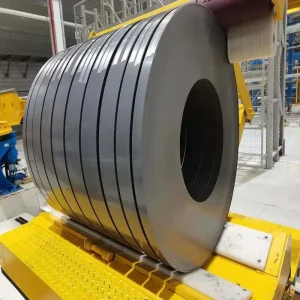
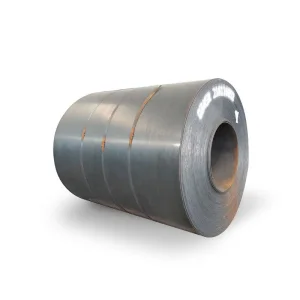
Hot-rolled carbon steel coils (HR) or cold-rolled strip substrates are thoroughly tested for chemical composition (Carbon Equivalent value Ceq ≤ 0.45%). Precision slitting cutters transform raw master coils into exact strip widths corresponding to the target square section perimeter.
Roll Forming & HFIW Joining
Gradual multi-stand roll-forming shapes flat strip into a continuous round tube profile. High-Frequency Induction Welding (HFIW at 300–500 kHz) fuses strip edges under forge pressure without added filler material, producing a homogeneous, full-penetration weld seam.
Turks Head Sizing & Squaring
The round welded pipe passes through a series of precision Turks Head sizing rolls. Equal mechanical pressure compresses the round cross-section into its final square geometry, guaranteeing sharp, uniform 90-degree corner radii and tight wall-thickness tolerances.
Inline NDT & Thermal Treating
Continuous eddy-current or ultrasonic testing inspects 100% of the weld seam for micro-cracks or voids. Post-weld seam heat treatment (seam annealing at 850–920°C) eliminates residual cold-working stresses, refining the metallurgical grain structure.
Coating Metallurgy: Hot-Dip Galvanizing (HDG) vs. Pre-Galvanized vs. Zinc-Aluminum-Magnesium (ZM)
Corrosion mitigation determines the operational longevity of square steel pipes in outdoor, coastal, and chemical environments. Factories offer distinct coating technologies tailored to operational environments:
-
✓
Hot-Dip Galvanizing (HDG / Batch Dip): Fabricated black square pipes are completely submerged in molten zinc at ~450°C. This forms a series of iron-zinc alloy layers (Gamma, Delta, Zeta) topped with pure zinc (Eta layer). Coating weights range from 300 g/m² to over 610 g/m² (up to 85 µm thickness per side), offering self-healing cathodic protection for heavy construction and infrastructure.
-
✓
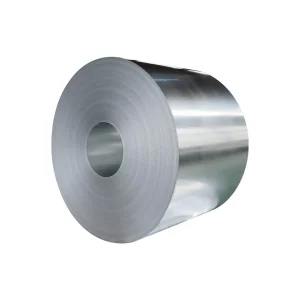
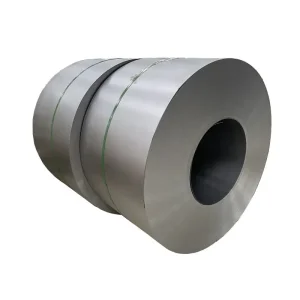
Pre-Galvanized (Mill Galvanized) Tubing: Produced directly from strip pre-coated with zinc (typically Z100 to Z275). The weld seam is continuously repaired inline via metal spraying. This yields a smooth, aesthetic surface ideal for indoor framing, light furniture, agricultural greenhouses, and electrical conduits.
-
✓
Zinc-Aluminum-Magnesium (ZM / ZAM) Alloys: Next-generation coating chemistry containing 3% Magnesium and 11% Aluminum. ZM coatings exhibit self-healing capabilities on cut edges through the formation of protective Simonkolleite corrosion products, providing up to 5x higher corrosion protection than standard zinc coatings in harsh marine and ammonia-rich agricultural setups.
3. Structural Engineering Mechanics & Technical Specifications Matrix
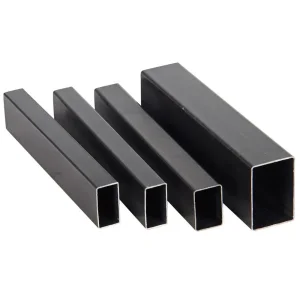
Square Hollow Sections (SHS) offer superior structural efficiency compared to traditional open structural profiles (such as I-Beams, Wide Flange Beams, and Channels). The closed square cross-section delivers equal moments of inertia across both principal axes ($I_x = I_y$), providing exception resistance to torsional buckling, combined axial compression, and multi-directional wind or seismic loads.
| Nominal Dimensions (mm) | Wall Thickness Range (mm) | Applicable Standards | Typical Steel Grades | Yield Strength ($R_{eH}$ Min MPa) | Tensile Strength ($R_m$ MPa) | Primary Industrial Use Cases |
|---|---|---|---|---|---|---|
| 20×20 to 50×50 | 0.8 mm - 4.0 mm | ASTM A500, GB/T 6728 | Q195, Q235, Grade A | 195 - 235 MPa | 315 - 430 MPa | Furniture, Light Fencing, Scaffolding, Solar Racking |
| 60×60 to 120×120 | 2.0 mm - 8.0 mm | EN 10219, ASTM A500 | S235JR, S275J2, Grade B | 235 - 275 MPa | 360 - 510 MPa | Agricultural Greenhouses, Commercial Framing, Trailers |
| 150×150 to 300×300 | 4.5 mm - 12.5 mm | EN 10210, ASTM A500 | S355J2H, Grade C, Q345B | 355 MPa | 470 - 630 MPa | Heavy Equipment Chassis, High-Rise Columns, Bridge Girders |
| 350×350 to 500×500 | 6.0 mm - 16.0 mm | EN 10210, JIS G3466 | S355K2H, S460NH, STKR490 | 355 - 460 MPa | 520 - 700 MPa | Offshore Platforms, Stadium Roof Trusses, Crane Booms |
When evaluating load-bearing efficiency, square pipes reduce aerodynamic drag surfaces by up to 30% compared to open structural sections. Their flat planar surfaces simplify joint connection detailing, reducing welding wire consumption and shop labor hours during structural steel fabrication.
4. Localized Application Scenarios & Industrial Engineering Solutions
The versatile mechanical profile of square steel tubing enables targeted application solutions across diverse global sectors. Specialized factories adapt steel chemistry, corner radius strictness, and coating protocols to match regional operating requirements:
Utility-Scale Solar PV Mounting Structures
Solar tracker torque tubes and ground-mount purlins demand stringent torsional stability and extreme atmospheric corrosion resistance. High-strength square tubing engineered with high zinc-aluminum-magnesium coatings guarantees 25 to 30-year maintenance-free service life in desert, coastal, and high-salinity agricultural solar parks.
Architectural & Heavy Building Infrastructure
Square structural hollow sections serve as primary support columns, space frame trusses, and curtain wall supports in airport terminals, sports stadiums, and distribution centers. Clean geometric lines allow architectural exposure while facilitating straightforward connection bolting and shop welding.
Heavy Machinery & Transportation Equipment
Manufacturers of agricultural machinery, commercial trailers, crane booms, and mining equipment utilize thick-walled square pipes for main chassis frames. High yield strength ensures structural fatigue resistance under extreme dynamic loading and cyclic stress environments.
High-Tech Agriculture & Smart Greenhouses
Modern multi-span commercial greenhouses depend on pre-galvanized square tubing for structural arches, gutter supports, and frame posts. Smooth interior and exterior finishes prevent plastic film abrasion while withstanding high internal humidity and chemical fertilizer corrosion.
5. Localized Support, Global Compliance & Quality Assurance
Navigating international trade compliance and ensuring rigid metallurgical adherence requires robust factory quality management systems. Tier-1 China manufacturers, exemplified by enterprise operations such as Step Million Steel Supply Chain Co., Ltd. (SMSTEEL), bridge global purchasing requirements through localized support frameworks:
-
✓
Complete Traceability & EN 10204 3.1/3.2 Certification: Every pipe bundle is shipped with Mill Test Reports (MTR) verifying heat numbers, chemical ladle analysis, mechanical yield/tensile testing, elongation %, and hydrostatic/NDT verification results. Third-party inspections by SGS, BV, or Intertek are seamlessly supported.
-
✓
Customized Mill Fabrication & Value-Added Services: Factories provide custom length cutting (±1mm tolerance), beveling, swagging, precision hole punching, robotic laser profiling, custom anti-corrosion varnish application, and specialized seaworthy bundle wrapping (hexagonal bundling with steel strapping and PVC end caps).
-
✓
24h Response & 48h Engineering Resolution Commitment: Dedicated international export teams provide rapid engineering clarification, tender documentation support, and immediate logistical troubleshooting to maintain project construction schedules.
-
✓
Flexible MOQs & Container Logistics Optimization: Small trial orders are accepted prior to high-volume contracts, enabling engineers and buyers to physically verify dimensional precision and coating adherence. Multi-size container loading strategies maximize container volume, lowering freight cost per metric ton.
6. Technological Innovation Roadmap & Future Industry Outlook
The global steel tube manufacturing sector is undergoing rapid technological evolution driven by decarbonization targets, Industry 4.0 automation, and advanced material science. Future-focused factories are actively implementing transformative operational technologies:
Green Steel & Low-Carbon Production
Transitioning from traditional Blast Furnace-Basic Oxygen Furnace (BF-BOF) steelmaking to Hydrogen-based Direct Reduced Iron (DRI) combined with Electric Arc Furnaces (EAF). This initiative aims to reduce embodied carbon emissions in square steel tubing by over 60% by 2030, aligning with EU CBAM (Carbon Border Adjustment Mechanism) directives.
AI-Driven Real-Time Weld Quality Control
Integrating machine-vision AI algorithms and multi-spectral thermography along HFIW welding lines. Real-time weld pool monitoring automatically adjusts welding power, squeeze roll pressure, and speed, effectively eliminating weld defects at the source.
Ultra-High-Strength Steel (UHSS) Formability
Developing specialized roll-forming passes capable of shaping high-yield steel grades (up to S700MC and S960QL) into square hollow sections without micro-fracturing along corner radii. This enables lighter, stronger structures for crane booms and automotive chassis.
7. Frequently Asked Questions (FAQ) for Engineering & Sourcing Teams
Clear, authoritative technical answers addressing common procurement, manufacturing, and structural design inquiries.
Pre-Galvanized square pipes are formed from steel coils that have already been continuously zinc-coated at the rolling mill. They offer a highly uniform, smooth aesthetic surface with zinc coating weights typically between Z100 and Z275 (approx. 7–20 µm thickness). The exterior weld seam is repaired inline via zinc spraying. Pre-galvanized pipes are ideal for indoor structures, light furniture, fencing, and greenhouses. Hot-Dip Galvanized (HDG) pipes are fully submerged in a bath of molten zinc after the square pipe is completely formed and welded. This coats both the exterior AND interior surfaces with a significantly thicker zinc-iron alloy layer (typically 300–610 g/m², or 45–85 µm thickness per side), making HDG essential for harsh outdoor, marine, industrial, and heavy structural applications.
Corner radii ($C_1$ and $C_2$) are controlled during the multi-pass Turks Head sizing process after HFIW welding. According to ASTM A500 and EN 10219 standards, external corner radii must typically equal $1.5t$ to $3.0t$ (where $t$ is the nominal wall thickness). Factory technicians utilize calibrated radius gauges and automated optical profile scanners to ensure corners remain uniform, avoiding sharp corners that could induce severe localized stress concentrations during structural loading.
Yes. For structural projects located in arctic or low-temperature environments, square pipes manufactured to EN 10210 or EN 10219 specifications can be supplied in fine-grain normalized structural steel grades such as S355J2H, S355K2H, or S460NH. These grades undergo Charpy V-notch impact testing, guaranteeing minimum absorbed energy values of 27 Joules or 40 Joules at -20°C or -50°C to prevent brittle fracture.
Square Hollow Sections offer exceptional torsional rigidity (often 200 to 300 times greater than open profiles of similar weight) and equal resistance to bending across both X and Y axes. This symmetry simplifies column design, optimizes axial load capacities under compression, reduces overall structure weight, minimizes surface area requiring protective painting or galvanizing, and streamlines architectural joining details.
All enterprise shipments are accompanied by comprehensive Material Test Certificates (MTC) conforming to EN 10204 Type 3.1 or 3.2. These documents provide complete heat number traceability, chemical composition breakdowns (C, Mn, Si, P, S, Cr, Ni, Cu, V, N, and Carbon Equivalent Ceq), mechanical test results (Yield Strength, Tensile Strength, Elongation), flattened/flare test results, NDT inspection logs, and coating weight thickness verifications.