
Primary Automotive & Structural Materials Lineup
Explore our flagship certified industrial coils, precision-rolled structural beams, and coated sheet products engineered for extreme formability and anti-corrosion protection.


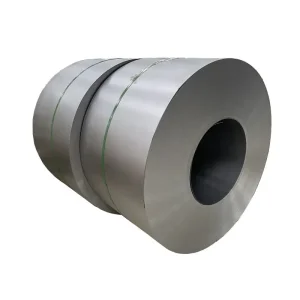

Industry Executive Summary: Technical Architecture of SECE Steel Coils
Understanding the critical role of SECE (Steel Electrolytic Cold Commercial / Extra Deep Drawing Grade) coils in modern automotive door panel stamping and side-collision safety engineering.
Metallurgical Purity & Composition
SECE steel coils represent the pinnacle of ultra-low carbon, interstitial-free (IF) steelmaking. By controlling carbon levels below 0.003% and micro-alloying with Titanium (Ti) and Niobium (Nb), our SECE substrate guarantees complete elimination of yield point elongation (YPE), preventing stretcher strain marks during complex car door stamping operations.
Electro-Galvanized Coating Uniformity
Unlike hot-dip processes that subject steel to thermal stress, electrolytic zinc deposition occurs near room temperature. This preserves the precise cold-rolled mechanical properties of the substrate while delivering a sub-micron uniform zinc coating (typically EG 10/10 to 60/60 g/m²), offering immaculate surface finish required for vehicle outer door skins.
Class-A Automotive Surface Standard
Automotive outer door panels demand zero surface imperfections. Our SECE coils adhere strictly to FB/FC/FD automotive surface quality criteria (JIS G3313 SECE / EN 10152 DC04+ZE). Continuous optical laser scanners inspect 100% of the coil surface for micro-pinholes, scratches, or zinc nodules prior to shipping.
Engineering Matrix: SECE Coil Specifications & Stamping Parameters
Comprehensive mechanical property benchmarks comparing SECE with alternative deep-drawing automotive grades (SECC, SECD, DX54D+ZE, Galvannealed ZF). Engineered for maximum drawability and zero springback.
| Steel Grade Standard | Yield Strength Rp0.2 (MPa) | Tensile Strength Rm (MPa) | Elongation A80 (%) | Plastic Strain Ratio (r-value) | Strain Hardening (n-value) | Primary Door Application |
|---|---|---|---|---|---|---|
| SECC (Commercial) | 170 – 260 | ≥ 270 | ≥ 33 | 1.2 – 1.4 | 0.15 | Door Brackets & Unexposed Reinforcements |
| SECD (Drawing Quality) | 140 – 220 | ≥ 270 | ≥ 37 | 1.4 – 1.7 | 0.18 | Inner Door Skins & Window Frame Channels |
| SECE (Extra Deep Drawing) | 120 – 180 | ≥ 270 | ≥ 41 | ≥ 1.8 | ≥ 0.22 | Complex Outer Door Panels & Handle Recesses |
| EN 10152 DC04+ZE | 130 – 210 | 270 – 350 | ≥ 38 | ≥ 1.6 | ≥ 0.20 | European Automotive Outer Door Shells |
| DX54D+ZF (Galvannealed) | 120 – 180 | 260 – 350 | ≥ 36 | ≥ 1.7 | ≥ 0.20 | Spot-Welded Corrosion Resistant Outer Skins |
Deep Drawing Mechanics: Controlling $r$-value and $n$-value in Door Stamping
In automotive press shops, deep drawing a vehicle door panel involves multiaxial tensile stress. The plastic strain ratio (r-value) indicates the material's resistance to thinning under drawing force. An $r$-value above 1.8 ensures that the SECE steel coil flows smoothly into deep press dies—such as door handle indentations and mirror mounting bosses—without localized necking or tearing.
Concurrently, the strain hardening exponent (n-value ≥ 0.22) governs strain distribution across large flat expanses, preventing oil-canning and loose metal conditions on the outer door skin. By maintaining strict control over annealing temperatures and temper mill reduction ratios, our SECE coils achieve isotropic mechanical behavior, minimizing directional anisotropy ($\Delta r \approx 0$).
Global Industry Trends: E-Mobility, Lightweighting & Surface Excellence
How EV OEMs and Tier-1 automotive stampers are redefining door system architectures using ultra-formable electro-galvanized SECE steel coils.
1. EV Range Extension & Aerodynamic Outer Skins
Electric vehicles demand hyper-aerodynamic body profiles to lower drag coefficients ($C_d$). Designers create sweeping curves and sharp accent lines across car doors. SECE coils provide the necessary ductility to realize these aggressive styling cues without cracking or micro-fracturing the anti-corrosion zinc layer.
2. Superior Paintability & E-Coat Adhesion
The electro-deposition process produces a uniform micro-roughness on the zinc surface. When passed through modern automotive cathodic electrodeposition (KTL/E-coat) baths, SECE steel fosters superior phosphate crystal nucleation, achieving exceptional paint adhesion and 15+ years of perforated corrosion resistance.
3. Low-Carbon Green Steel Manufacturing
Global automakers are targeting carbon neutrality across Tier-1 supply chains. Our production facilities integrate Hydrogen-rich direct reduced iron (DRI) processes and Electric Arc Furnace (EAF) smelting, reducing the embodied carbon footprint of SECE steel coils by up to 40% compared to legacy blast furnace routes.
China Industry 4.0: Smart Manufacturing & Supply Chain Resilience
How automated cold-rolling mills, digital quality control, and robust supply chain ecosystems ensure unmatched delivery speed and price competitiveness for international buyers.
Automated Rolling & Real-Time Thickness Control
Our modern cold-rolling complexes utilize continuous 5-stand tandem cold mills equipped with X-ray thickness gauges and Automatic Gauge Control (AGC). This closed-loop system maintains a hyper-precise thickness tolerance within ± 0.002 mm across the full width and length of every SECE coil.
Additionally, automated electrolytic plating lines continuously monitor electrolyte zinc ion concentration, current density, and strip speed. This ensures that the zinc layer weight—whether 10g/m² or 60g/m²—remains perfectly uniform, guaranteeing consistent spot-welding performance in automated automotive robotic cells.
Seamless Logistics & Seaworthy Export Packaging
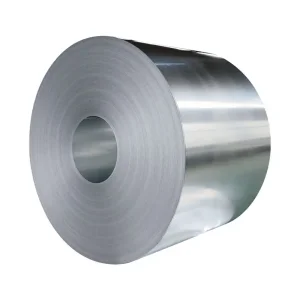
To prevent white rust and transit damage during ocean freight, all SECE coils undergo electrostatic oiling (0.5 – 2.0 g/m² anticorrosive oil) and are wrapped in multi-layer VCI (Vapor Corrosion Inhibitor) paper, heavy-duty steel outer rings, and plastic edge protectors. Fixed securely on steel skids, our shipments arrive factory-fresh at global ports.
China Smart Mill Advantage
- IATF 16949 Certified: Full automotive quality management compliance.
- Traceability: QR-coded coil tracking from raw billet to finished press blank.
- Rapid Lead Times: Standard SECE coil orders dispatched in 15-20 days.
- Custom Slitting: Precision coil slitting from 20mm up to 1500mm widths.
- Third-Party Inspection: SGS, BV, and Intertek mill audits supported.
Global Procurement Strategy: Total Cost of Ownership (TCO) Optimization
How Tier-1 automotive buyers and commercial distributors mitigate financial and operational risks when sourcing SECE steel coils from primary Chinese factories.
Die Wear & Tooling Longevity
Non-uniform steel coil hardness damages stamping dies and increases maintenance downtime. Our SECE coils feature consistent HRB hardness (typically 40-50 HRB), extending stamping die life by up to 25% and drastically reducing tooling refurbishment overheads.
Zero Scrap Yield Enhancement
By eliminating coil crown variations and edge wave defects through precision tension leveling, press shops achieve higher blanking efficiency. Material utilization rates increase, resulting in immediate raw material cost savings on high-volume OEM car door runs.
JIT Inventory & Safety Stock Management
To insulate global OEMs from geopolitical shipping disruptions, we offer flexible warehousing solutions, vendor-managed inventory (VMI) frameworks, and scheduled container dispatch from major Chinese deep-water ports (Tianjin, Shanghai, Qingdao).
Localized Application Scenarios in Vehicle Door Systems
From outer body panels to internal safety structural members, see where SECE and complementary steel grades perform inside a modern automobile door assembly.
1. Outer Door Panel Shell (Skin)
Primary Grade: SECE / EN 10152 DC04+ZE (Class-A Surface)
Key Requirements: Dent resistance, immaculate surface finish free of stretcher strains, excellent paint DOI (Distinctness of Image), and deep-drawing capability for door handle recesses.
2. Inner Door Structure & Frame
Primary Grade: SECD / SECE / DC03+ZE
Key Requirements: Complex geometric drawability to integrate window regulator tracks, speaker cutouts, wiring harness clips, and side-impact airbag mounting fixtures.
3. Side Anti-Collision Intrusion Beams
Primary Grade: High-Strength Cold Rolled / Hot-Formed Boron Steel
Key Requirements: Ultra-high yield strength (> 1200 MPa) to absorb lateral impact kinetic energy during crash testing, protecting cabin occupants.
4. Hinge Reinforcements & Latch Plates
Primary Grade: Hot Rolled Pickled & Oiled (S355JR / Q345B / SECC Thick Gauge)
Key Requirements: High fatigue strength, heavy thickness tolerance, and excellent thread tapping capability to hold heavy vehicle door assemblies under dynamic loads.
Frequently Asked Questions (FAQ) & Technical Q&A
In-depth technical answers addressing common engineering, procurement, and quality control inquiries regarding SECE coils for car doors.
What is the fundamental difference between SECC, SECD, and SECE steel coils?
- SECC (Commercial Quality): Designed for general bending, shallow forming, and unexposed structural brackets.
- SECD (Drawing Quality): Features lower yield strength and higher elongation, suited for moderate drawing like inner door frames and appliance panels.
- SECE (Extra Deep Drawing Quality): Utilizes Interstitial-Free (IF) ultra-low carbon steel. It exhibits maximum strain hardening exponent ($n$-value $\ge 0.22$) and plastic strain ratio ($r$-value $\ge 1.8$), allowing extreme deep drawing for complex car door outer panels without surface strain lines or necking.
Why is Electro-Galvanized (EG/SECE) preferred over Hot-Dip Galvanized (GI) for car door skins?
How do you prevent stretcher strain marks (Lüders lines) during deep drawing?
What welding parameters should be adjusted when spot-welding SECE steel sheet?
What zinc coating weight is recommended for automotive door panels?
How are SECE steel coils packaged to prevent white rust during transit?
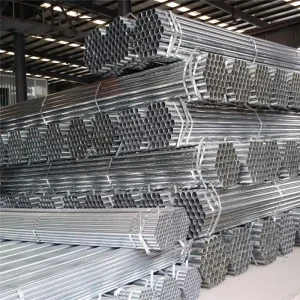
Complete Supply Portfolio: Coated Coils, Pipes & Specialty Steels
Explore our broader manufacturing catalog including galvannealed coils, high-zinc hot-dip pipes, silicon steel, and zinc-aluminum-magnesium alloy sheets.



Request a Technical Quote & Mill Test Certificate (MTC)
Partner directly with China's leading automotive steel coil manufacturer. Submit your required specifications (grade, thickness, width, zinc coating mass, and target port) to receive mill-direct pricing within 12 hours.