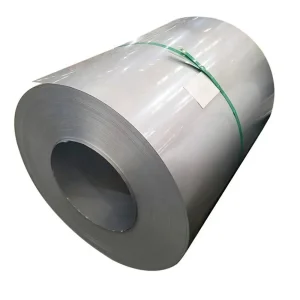
1. Executive Metallurgical Overview: The SECC-O Benchmark
Understanding the micro-structural synergy between Cold-Rolled Commercial Steel (SPCC), Continuous Electro-Galvanizing, and Electrostatic Surface Oiling.
JIS G3313 Standard Compliance
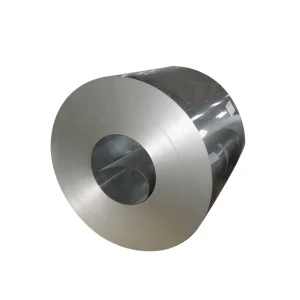
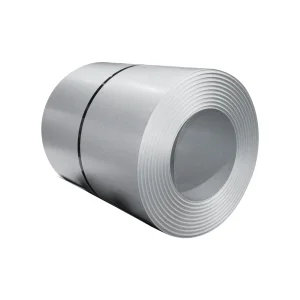
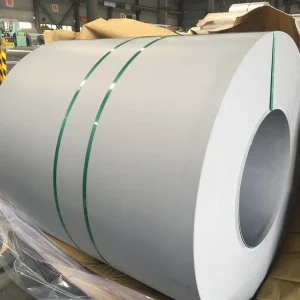
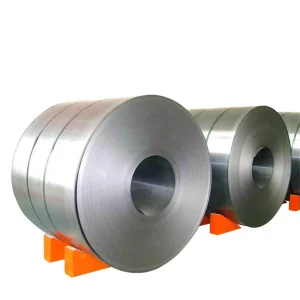
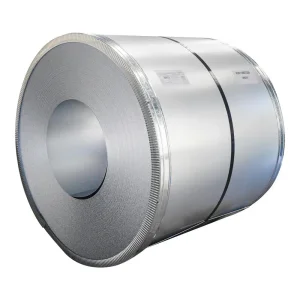
SECC (Steel Electrolytic Cold Commercial) is manufactured under rigid electrochemical deposition controls. The base material features precise carbon content (≤0.15%), manganese (≤0.60%), and phosphorus (≤0.035%), forming a ductile matrix ideal for precision stamping.
Electrostatic Oil Film Deposition
The "Oiled" designation (SECC-O) indicates an applied electrostatic oil film (0.5 to 2.0 g/m²). This uniform layer of Dioctyl Sebacate (DOS) or anti-rust mineral oil prevents initial white rust and acts as a boundary lubricant during metal forming.
Electro-Galvanized vs. Hot-Dip
Unlike Hot-Dip Galvanized (SGCC), SECC undergoes a cold electro-plating bath. This preserves cold-rolled grain structures, yields zero spangle, maintains tighter gauge tolerances (±0.03 mm), and guarantees a smooth surface for liquid or powder coating.
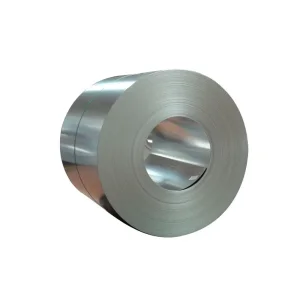
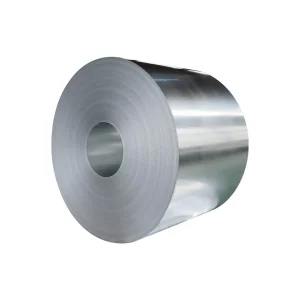
Technical Information Gain: Oiled SECC coils eliminate the micro-galling phenomenon during high-speed progressive die stamping operations. The oil film reduces friction coefficients from μ = 0.35 (dry zinc) down to μ = 0.12 (oiled state), expanding tool life by up to 300% in automated stamping environments.
| Steel Grade & Surface State | Zinc Coating Process | Typical Coating Weight (g/m²) | Oil Film Density (g/m²) | Surface Roughness (Ra μm) | Primary Industrial Utility |
|---|---|---|---|---|---|
| SECC-O (Oiled Commercial) | Continuous Electro-Galvanized | 10/10, 20/20, 40/40 | 0.5 – 2.0 (DOS / Mineral) | 0.60 – 1.20 | Computer Chassis, Server Racks, Enclosures |
| SECD-O (Oiled Drawing) | Continuous Electro-Galvanized | 20/20, 40/40 | 1.0 – 2.5 (Heavy Lubricant) | 0.80 – 1.40 | Deep-Drawn Motor Housings, Automotive Trays |
| SECC-C (Chromated / Un-oiled) | Electro-Galvanized + Passivation | 20/20 | 0.0 (Dry Chemical Film) | 0.50 – 1.00 | Direct Painting lines, Dry Storage Panels |
| SGCC (Hot-Dip Galvanized) | Molten Zinc Dip Bath | Z12 (120) – Z27 (275) | Optional (Usually Dry/Passivated) | 1.20 – 2.50 (Spangled) | HVAC Ducting, Structural Decking, Outdoor Posts |
2. Global Commercial Status & Supply Dynamics
Analyzing global demand drivers, supply chain resilience, and regional industrial utilization of oiled SECC coils.
Consumer Electronics & Hardware
Over 60% of prime SECC-O coils are supplied directly to tier-1 OEMs in East Asia, Southeast Asia, Europe, and North America for manufacturing server chassis, workstation covers, and high-end consumer electronics cases. The oiled coating protects surfaces against scratches during blanking, punching, and bending.
Automotive & Precision Components
In the automotive supply chain, oiled electro-galvanized coils serve as the backbone for interior mounting brackets, fuse box covers, and acoustic speaker grills. The precise thickness of the zinc layer ensures zero flaking during multi-stage progressive stamping operations.
Smart Home & HVAC Systems
Modern smart home appliances require high surface aesthetic integrity. SECC-O provides a rust-inhibited surface during transit, which can be degreased via standard alkaline washes before applying powder coatings, resulting in durable, corrosion-resistant appliance shells.
3. Anti-Corrosion Mechanisms & Degreasing Science
A deep chemical examination of how electro-deposited zinc and temporary oil films protect steel substrates against oxidation.
Sacrificial Protection Dynamics
The electro-galvanized layer acts as a sacrificial anode. Galvanic action dictates that zinc (standard electrode potential -0.76V) corrodes preferentially to protect the underlying iron (steel substrate, -0.44V). When cut edges or scratches occur during shearing, zinc ions migrate to cover the exposed iron edge, preventing under-film creep rust.
Oil Film Barrier Chemistry
The thin oil layer applied via electrostatic oilers functions as a physical hydrophobic barrier. It isolates zinc from atmospheric moisture, condensed humidity, and ambient oxygen during sea transportation. This eliminates white rust formation (Zn(OH)₂ / ZnCO₃) during long-term storage in tropical transit zones.
Factory Processing & Surface Cleaning Protocol: Before painting or e-coating, SECC-O parts are processed through an industrial aqueous alkaline degreaser (pH 10.5 – 11.5, 55°C–65°C). The specialized oil formula ensures 100% water-break-free surface readiness within a 45-second spray immersion, guaranteeing optimum paint adhesion strength exceeding 5B under ASTM D3359 cross-hatch testing.
4. Macro Industry Solutions & Precision Engineering Cases
How leading global manufacturers solve forming, corrosion, and cost challenges using mill-direct oiled SECC coils.
High-Density Server Racks
Challenge: Micro-burrs and rust degradation during high-speed multi-stage punching of 19-inch server chassis.
Solution: Switching to SECC-O 20/20 coating with controlled 1.2 g/m² oil film. Resulted in clean punch edges, reduced punch pin wear, and consistent electrical grounding performance.
Deep-Drawn Motor Covers
Challenge: Wall thinning and zinc peeling in complex deep-drawn electric motor housings.
Solution: Implementation of SECD-O (Deep-Drawing Grade, Oiled) steel coils with elongation rates > 38%. The oil film lubricates the die cavity, preventing galling and maintaining uniform wall thickness.
Transatlantic Shipping Logistics
Challenge: Ocean freight humidity leading to surface oxidization during 45-day transit cycles.
Solution: Dual-layer preservation using synthetic rust-inhibiting oils combined with VCI (Vapor Corrosion Inhibitor) packaging. Achieved zero customer claims across 5,000+ metric tons shipped annually.
5. Technology Roadmap & Future Outlook (2025–2035)
Next-generation advancements in eco-friendly surface oiling, hybrid thin-film coatings, and AI-driven quality inspection.
Bio-Based Synthetic Lubricants
Transitioning from traditional mineral oils to 100% biodegradable vegetable-derived synthetic esters. Fully compliant with EU RoHS 3 and REACH standards, offering low-temperature degreasability and reduced carbon footprints.
Nano-Passivation & Dry-Film Hybrid
Development of ultra-thin organo-silane coatings (0.2–0.5 μm) integrated with micro-oiled films. Eliminates traditional chromate passivation entirely while maintaining 300+ hours of neutral salt spray corrosion resistance.
AI Optical Oil Film Monitoring
Integration of real-time infrared laser spectroscopic sensors along continuous electro-galvanizing lines. Measures oil film thickness across the entire coil width at speeds up to 200 m/min, providing automated closed-loop adjustments.
6. Technical & Procurement FAQ (Frequently Asked Questions)
Expert answers addressing technical inquiries, storage shelf life, welding parameters, and purchasing specifications.
What is the standard shelf life of SECC-O (Oiled Electro-Galvanized Steel Coils)?
When stored in an climate-controlled warehouse (temperature between 15°C and 30°C, relative humidity <60%) with original waterproof packaging intact, SECC-O coils retain their rust-free condition and lubricity for 6 to 12 months. For humid ocean shipments, additional VCI wrapping is recommended to maintain surface integrity.
Does the oil film on SECC steel affect resistance spot welding (RSW)?
No. Standard electrostatic oil films applied at densities between 0.5 and 2.0 g/m² do not impede resistance spot welding. The oil burns off cleanly under electrode clamping pressure and electric current. However, welding current should be increased by roughly 5–10% compared to uncoated cold-rolled steel to compensate for the higher electrical conductivity of the zinc plating.
How do SECC, SECD, and SECE steel grades differ in stamping operations?
SECC is Commercial Quality, suitable for simple bending, shallow forming, and flat structural panels. SECD is Drawing Quality, featuring higher elongation (≥34%) for moderate stamping. SECE is Extra-Deep Drawing Quality (killed steel), offering exceptional r-value (plastic strain ratio ≥1.6) and elongation (≥38%) suited for complex deep-drawn stampings without necking or tearing.
Can SECC-O coils be powder-coated directly without washing?
No. Direct powder coating over oiled steel leads to cratering, poor adhesion, and pinhole defects during curing. The oil must be removed using a warm alkaline degreaser followed by a clean water rinse. Once dry, the underlying electro-galvanized surface provides an optimal substrate for powder coating and e-coating.
What quality verification documentation is provided by an authentic supplier?
A certified factory issues EN 10204 3.1 Mill Test Certificates (MTC) with every shipment. The MTC details chemical heats (C, Mn, P, S, Si), mechanical properties (Yield Point, Tensile Strength, Elongation), measured zinc coating mass per side (g/m²), oil film density test results, and dimensional tolerance verification.