
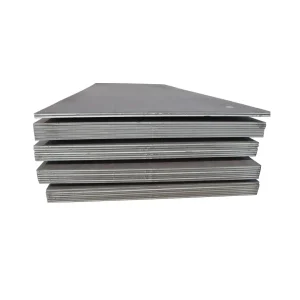
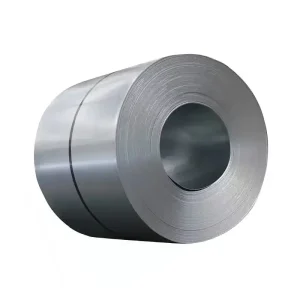
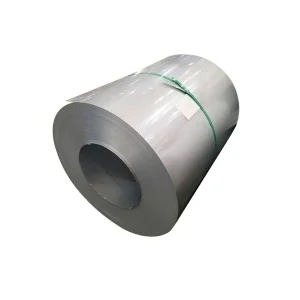
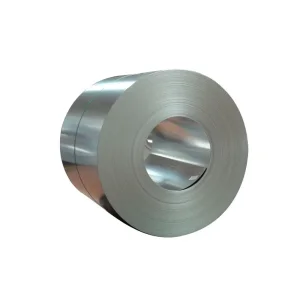
Primary Structural Steel & Industrial Coils Showcase
Explore mill-direct high-performance steel products manufactured under certified quality systems for global industrial and structural applications.
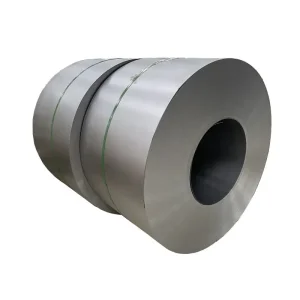
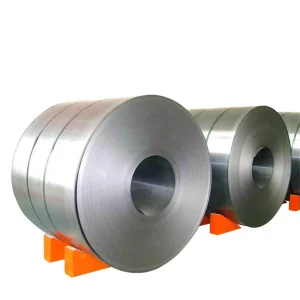
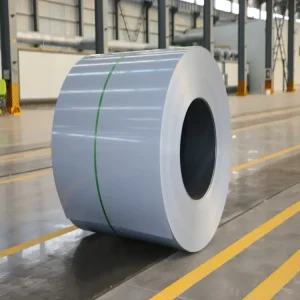
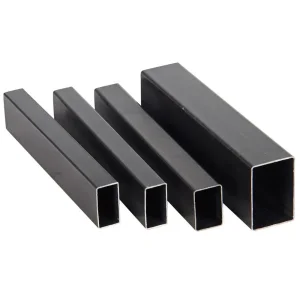
Precision Manufacturing & Structural Integrity of Rectangular Hollow Sections (RHS)
A Technical Whitepaper on Advanced High-Frequency Welded (HFW) Structural Tubing, Corner Radius Optimization, and Load-Bearing Mechanics.
Torsional Rigidity & Section Modulus
Rectangular Hollow Sections (RHS) deliver superior torsional strength compared to traditional open structural profiles (such as I-beams and channels). The closed-box geometry distributes bending moments evenly across orthogonal axes, drastically reducing lateral-torsional buckling under extreme multi-axial structural loads.
High-Frequency Induction Welding (HFW)
Utilizing state-of-the-art continuous roll-forming and solid-state High-Frequency Electric Resistance Welding (ERW/HFW), our manufacturing lines forge seam bonds without added filler metals. Post-weld microstructural normalization ensures homogenous mechanical properties across the Heat-Affected Zone (HAZ).
Optimized Corner Radius Precision
Corner cracking during secondary fabrication is eliminated through controlled multi-pass sizing rolls. Our proprietary cold-forming algorithms maintain tight external corner radii ($2.0t$ to $3.0t$) while controlling wall thinning, maximizing effective cross-sectional area and weld-joint fatigue strength.
Global Industry Trends Shaping Rectangular Hollow Section Sourcing
Analyzing macro-economic shifts, decarbonization directives, and the transition toward ultra-high-strength structural steel framing.
1. High-Yield Grade Substitution (S355 to S460/S690)
Global structural engineering standards increasingly favor high-yield strength structural hollow sections. Transitioning from standard S235/S275 grades to S355J2H, S460NH, and ultra-high-yield steels allows EPC contractors to reduce overall structural deadweight by up to 28% without sacrificing structural safety factor margins.
2. Prefabricated & Modular Off-Site Construction
The acceleration of Prefabricated Prefinished Volumetric Construction (PPVC) demands structural RHS tubing with strict dimensional tolerances and flat planar faces. Exact section squareness and twist control ensure seamless robotic welding and rapid bolting on modular assembly lines.
3. Green Steel & Low-Carbon EPD Verification
International environmental regulations require verified Environmental Product Declarations (EPD) and Carbon Border Adjustment Mechanism (CBAM) accounting. Modern steel production integrates electric arc furnace (EAF) scrap feeds and energy-efficient induction lines to lower embodied carbon per ton.
Global Technical Standards & Material Equivalency Matrix
Comprehensive structural specifier guide matching international codes for Rectangular Hollow Section steel procurement.
| Standard Specification | Common Steel Grades | Yield Strength ($R_e$, MPa) | Tensile Strength ($R_m$, MPa) | Primary Industrial Applications |
|---|---|---|---|---|
| EN 10219-1/2 (Cold Formed) | S235JRH, S275J0H, S355J2H, S460NH | 235 – 460 Min | 360 – 630 | Modular Building Frames, Bridges, Structural Steelwork |
| EN 10210-1/2 (Hot Finished) | S275J2H, S355NH, S460NLH | 275 – 460 Min | 430 – 650 | Heavy Cranes, High-Stress Dynamic Structures, Offshore Platforms |
| ASTM A500 / A500M | Grade A, Grade B, Grade C, Grade D | 228 – 345 Min | 310 – 427 | Commercial Infrastructure, Machinery Racks, Architectural Structures |
| AS/NZS 1163 (Australasia) | C250L0, C350L0, C450L0 | 250 – 450 Min | 320 – 520 | Mining Infrastructure, Agricultural Equipment, Solar Stanchions |
| JIS G3466 (Japan Standard) | STKR400, STKR490 | 245 – 325 Min | 400 – 490 | Seismic-Resistant Building Columns, Civil Engineering Frameworks |
Macro-Structural Applications & Specialized Solutions
How optimized Rectangular Hollow Sections deliver performance across high-load global sectors.
Solar Energy Tracking Systems
Galvanized RHS tubing serves as torque tubes and support piers in utility-scale solar farms. High torsional resistance protects solar arrays against extreme wind-uplift pressures while hot-dip zinc coatings ($Z275$ to $Z600 / ZM310$) guarantee 25+ years of zero-maintenance field exposure.
Heavy Machinery & Vehicle Chassis
OEM transport manufacturers utilize high-yield RHS for commercial trailer frames, crane booms, and agricultural machinery. Precise dimensional uniformity enables automated laser cutting, precise robotic bending, and repeatable structural fabrication.
High-Rise Structural Truss Systems
Used extensively in long-span roof trusses, airport terminal frames, and stadium superstructures. The flat planar surfaces of RHS profiles eliminate complex node beveling required by round pipes, cutting fitting and welding costs by up to 35%.
Comprehensive Quality Control & Global Compliance Framework
Mitigating procurement risk through full-traceability inspection protocols and third-party validation.
Non-Destructive Testing (NDT)
100% online continuous Eddy Current testing combined with ultrasonic seam inspection verifies weld line integrity across entire production runs, catching micro-porosity and incomplete penetration instantly.
EN 10204 3.1 / 3.2 Mill Certification
Every order is dispatched with certified Mill Test Reports (MTR) detailing chemical heat analysis (C, Mn, Si, P, S, Cr, Ni, Cu, V) and mechanical test values (Yield, Tensile, Elongation, Charpy V-Notch impact testing down to -40°C).
Third-Party Inspection Integration
We work smoothly with international third-party inspection agencies including SGS, Bureau Veritas (BV), TÜV, and Intertek for pre-shipment dimensional validation, coating thickness gauging, and container loading supervision.
Technology Roadmap: Next-Generation Structural Hollow Section Manufacturing
Innovative metallurgical pathways and digital manufacturing integration driving structural steel efficiency through 2030.
AI-Monitored Roll Forming & Adaptive Sizing
Integrating real-time laser profiling sensors and dynamic neural feedback loops into cold-forming stands automatically compensates for coil spring-back and batch thickness variations, delivering ultra-precise profile symmetry.
Zinc-Aluminum-Magnesium (ZAM) Coatings
Replacing traditional pure zinc hot-dip baths with advanced $Zn-Al-Mg$ alloy coatings provides up to 5 times superior cut-edge self-healing protection in harsh coastal and agricultural ammonia environments.
Smart Traceability Matrix
Direct 2D DataMatrix laser-marking on each individual steel tube enables instant digital verification of raw material heat numbers, welding parameters, and quality testing records via cloud-connected mobile devices.
Frequently Asked Questions: Rectangular Hollow Section Sourcing
Expert answers to common engineering, procurement, and manufacturing inquiries.
Specialized Structural Tubing, Pipes & Coated Steel Series
Explore our complementary mill-direct steel product lines for construction, greenhouse framing, and electrical manufacturing.
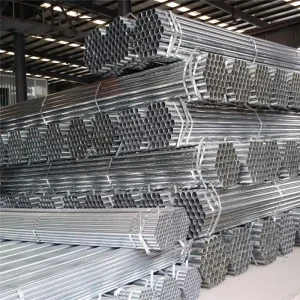
Request a Custom Technical Quote & Section Tables
Contact our structural steel metallurgical engineering team for comprehensive cross-reference charts, EN 10204 3.1 material certificates, and competitive mill-direct volume pricing.