
Featured Corrosion-Resistant & Structural Steel Products
Premium anti-rust steel plates, zinc-aluminum-magnesium sheets, silicon steel coils, and structural ERW pipes supplied directly from certified Tianjin manufacturing lines.
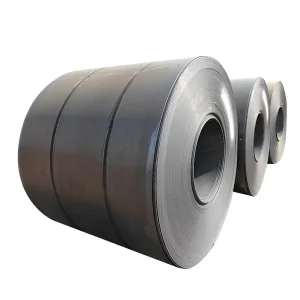
Wholesale Hot Rolled Steel Plate from China Suppliers - Premium Quality Steel Plates
View Product Specs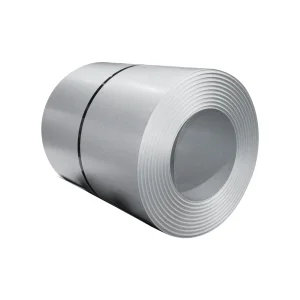
Zinc Aluminum Magnesium Coated Steel Sheet 275g for Solar Mounting Factory Direct
View Product Specs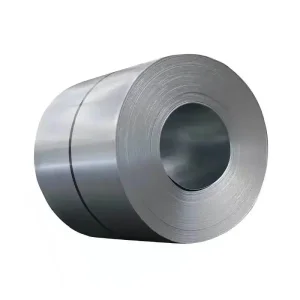
Wholesale CRNGO M310 M350 M470 M600 M800 Non-Grain Oriented Silicon Steel Coil
View Product Specs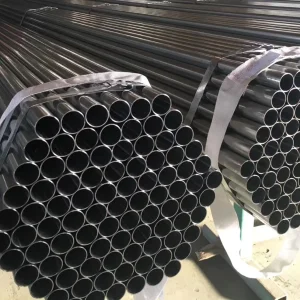
ERW Iron Tube & Carbon Steel Pipe ASTM A106 Sch 40 Factory Reliable Suppliers
View Product Specs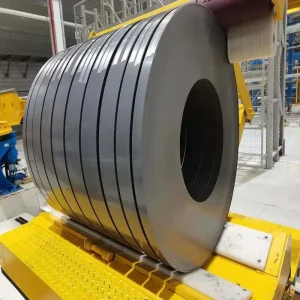
Wholesale Silicon Steel Coil (CRNGO) Direct Manufacturers & Factories
View Product Specs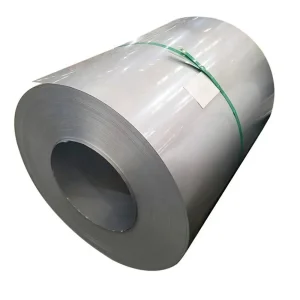
Cold Rolled Stainless Steel Coil 201 304 316 321 430 904L 2205 Factory Direct
View Product Specs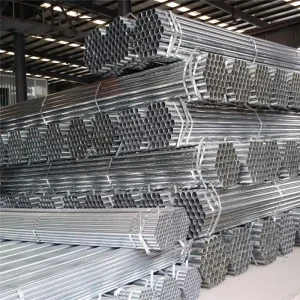
Thick-Wall Pre Galvanized Steel Pipe for Greenhouses - China Suppliers Quality Products
View Product Specs
High-Quality Non-Grain Oriented Silicon Steel Coil CRNGO M310 to M800 Supplier
View Product SpecsThe Electrochemical Science of Steel Corrosion: How Do We Prevent Rusting?
An in-depth engineering breakdown of steel oxidation kinetics, atmospheric exposure mechanisms, and sacrificial barrier protection.
Rusting, chemically known as the formation of hydrated iron(III) oxides ($Fe_2O_3 \cdot nH_2O$), is an electrochemical reaction that occurs when iron alloys are simultaneously exposed to oxygen ($O_2$) and moisture ($H_2O$). In industrial environments, this reaction is vastly accelerated by atmospheric pollutants such as sulfur dioxide ($SO_2$), airborne chlorides ($Cl^-$) in coastal regions, and localized humidity microclimates.
Anodic Reaction: $Fe \rightarrow Fe^{2+} + 2e^-$
Cathodic Reaction: $O_2 + 2H_2O + 4e^- \rightarrow 4OH^-$
Precipitation Reaction: $Fe^{2+} + 2OH^- \rightarrow Fe(OH)_2 \xrightarrow{O_2} Fe_2O_3 \cdot nH_2O$ (Rust)
Without adequate metallic or chemical barrier protection, bare carbon steel degrades at rates ranging from 15 µm/year in mild rural zones (C1/C2 category according to ISO 12944) up to over 200 µm/year in extreme marine and chemical industrial zones (C5-M / CX). Preventing this continuous degradation requires engineered protective layers that interrupt either the ionic transport or the anodic dissolution of the underlying iron lattice.
Core Mechanisms for Long-Term Rust Prevention
Industrial suppliers and steel processing plants rely on three fundamental engineering approaches to prevent rust from compromising structural integrity:
1. Sacrificial Anodic Protection
Applying base metals with lower electrode potential than iron (such as Zinc, $E^\circ = -0.76V$, compared to Iron, $E^\circ = -0.44V$). When damaged, the zinc coating acts as a sacrificial anode, oxidizing first to protect exposed underlying steel.
2. Passivation & Barrier Isolation
Creating impervious non-porous oxide layers (such as Chromium Oxide $Cr_2O_3$ in stainless steel) or dense inorganic salt layers (Zinc Carbonate / Zinc Hydroxide complexes) that isolate the iron lattice from oxygen and moisture.
3. Vapor Phase & Chemical Inhibition
Utilizing Vapor Corrosion Inhibitors (VCI) and protective oil films during maritime transport and warehouse storage. VCI molecules evaporate and adsorb onto metal surfaces, forming an invisible, non-polar hydrophobic monomolecular shield.
Global & Industrial Reality of Rust Prevention in 2025+
Why international infrastructure buyers, power utilities, and automotive OEMs are shifting toward higher-grade protective coatings and specialized steel supply chains.
According to studies published by NACE International (Association for Materials Protection and Performance), corrosion accounts for an estimated direct economic cost of $2.5 trillion globally. Over 15% to 35% of these losses could be eliminated by adopting existing, cost-effective anti-corrosion engineering solutions during initial raw material procurement.
In modern industrial applications—such as offshore wind turbine foundations, coastal solar mounting structures, agricultural greenhouse tubing, and high-efficiency electric vehicle motor cores—rust prevention is no longer just about aesthetics. It directly impacts structural safety, electrical core loss performance, warranty liability, and Total Cost of Ownership (TCO).
Comparing Metallic Coating Technologies for Steel Protection
Select the optimal anti-rust surface treatment based on chemical composition, salt spray resistance (ASTM B117), cut-edge protection, and overall cost efficiency.
| Coating Technology | Typical Coating Composition | Salt Spray Life (ASTM B117) | Cut-Edge Protection | Primary Industrial Applications |
|---|---|---|---|---|
| Hot-Dip Galvanizing (HDG) | 99% Pure Zinc ($Zn$) | 500 - 1,200 Hours | Moderate (Sacrificial $Zn$) | Structural Steel Pipes, Outdoor Beams, Guardrails |
| Zinc-Aluminum-Magnesium (ZAM) | $Zn$ + 11% $Al$ + 3% $Mg$ | 2,000 - 4,000 Hours | Self-Healing (Simonkolleite Phase) | Solar PV Mounting, Marine Racking, Agriculture |
| Galvalume / Aluzinc (AZ) | 55% $Al$ + 43.4% $Zn$ + 1.6% $Si$ | 1,500 - 2,500 Hours | Low (Barrier Dominant) | Corrugated Roofing Sheets, High-Heat Panels |
| Electro-Galvanized (EG) | Pure Zinc (Thinner Layer 10-30g/m²) | 100 - 300 Hours | Low | Home Appliances, Automotive Interior Panels |
| Stainless Steel Passivation | Chromium oxide film ($10.5\%+ Cr$) | 3,000+ Hours (316L / 2205) | High (Self-Passivating) | Chemical Processing, Offshore Energy, Food Industry |
China's Factory Efficiency & Manufacturing Advantages in Rust-Proof Steel
How Tianjin and Hebei industrial clusters achieve high throughput, strict quality consistency, and cost competitive advantage for global steel importers.
Fully Integrated Port & Industrial Cluster
Situated in Tianjin (Xingang Port), our production facilities benefit from direct, low-cost raw material supply from top-tier Chinese state mills (such as Shougang, Ansteel, Baosteel) alongside immediate access to international deep-water maritime shipping lanes.
Continuous High-Frequency Weld & Zinc Injection
Our 8 high-frequency welded (ERW) tube lines feature inline automated seam scraper systems followed by dual-jet thermal zinc-spraying equipment. This ensures that the longitudinal weld seam—traditionally the weakest link for rust—has matching corrosion protection to the rest of the tube body.
Automated Quality Control & Salt Spray Testing
In-line magnetic eddy current testing, ultrasonic wall thickness gauge systems, and continuous lab-scale ASTM B117 salt spray chamber validation guarantee that every export bundle meets promised zinc coating weights ($Z100$ to $Z600$) without coating flaking or micro-cracking during bending.
Localized Anti-Rust Steel Application Scenarios
Real-world deployment examples across diverse regional environmental conditions worldwide.
1. Solar PV Racking in Tropical Coastal Zones (Southeast Asia & Middle East)
Challenge: Solar farms built near coastlines face extreme humidity, salt spray, and temperatures reaching 50°C. Traditional GI profiles fail at cut edges within 3–5 years.
Solution: Specifying Zinc-Aluminum-Magnesium (ZAM 275g/m²) steel sheets. The magnesium ions dissolve and react with atmospheric carbon dioxide to create a self-repairing protective film over cut edges and punched bolt holes, guaranteeing a 25-year service lifespan.
2. Agricultural Greenhouses & High-Humidity Farms (South America & Europe)
Challenge: Greenhouses maintain 85%+ relative humidity combined with volatile organic fertilizers and chemical pesticide vapors, attacking steel pipe internal walls.
Solution: Hot-dip galvanized thick-wall structural square and round steel pipes ($Z300$ to $Z500$ zinc coating). Immersing finished pipes into molten zinc bath ensures complete internal and external coverage that prevents internal structural collapse.
3. Electrical Motors & Transformer Stator Cores (Global Energy Grid)
Challenge: Cold Rolled Non-Grain Oriented (CRNGO) silicon steel coils suffer inter-laminar oxidation during long oceanic transit and atmospheric storage, increasing eddy current loss.
Solution: Application of inorganic/organic hybrid insulating coatings (such as C-5 or C-6 insulation coating) combined with VCI anti-rust oil paper wrapping and sealed steel container packaging to prevent rust during sea freight.
4. Offshore & Underground Pressure Piping Systems
Challenge: Underground water supply conduits and offshore fluid pipelines are vulnerable to soil acidity and electrolytic stray currents.
Solution: Heavy-wall ASTM A106 Sch 40 ERW carbon steel pipes equipped with 3PE (Three-layer Polyethylene) outer anti-corrosion coating and internal epoxy lining, combining mechanical toughness with chemical isolation.
Global Sourcing Guide: How to Buy Anti-Rust Steel from China
Step-by-step framework for international B2B purchasing managers, EPC contractors, and steel stockists.
When purchasing rust-resistant steel products globally, pricing per metric ton should never be evaluated in isolation. A procurement manager must audit five critical technical parameters to prevent field failures and project delays:
- Verify Zinc / Alloy Coating Mass ($g/m^2$): Always insist on EN 10204 3.1 Mill Test Certificates (MTC) stating exact triple-spot test coating weights rather than nominal values.
- Match Steel Grade to Mechanical Loads: Ensure steel substrate selection ($Q195, Q235, Q345, DX51D, S355$) balances yield strength requirements with elongation ductility for roll-forming or bending.
- Specify Anti-Rust Sea-Freight Packaging: Ocean freight subjects steel cargo to high humidity, temperature swings, and salt water mist. Mandate plastic wrap, anti-rust VCI paper, wooden skids, and heavy-duty steel strapping.
- Third-Party Inspection Rights: Professional suppliers readily accept independent pre-shipment inspections from global agencies like SGS, BV, or Intertek to verify dimensions, coating thickness, and surface quality before vessel loading.
Additional Factory Anti-Rust & Coated Steel Solutions
Galvanized coils, galvalume roofing sheets, stainless steel rolls, aluminized silicon coils, tinplate, and high-strength spiral pipes.
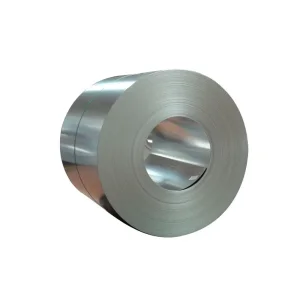
Customized Spangle Hot Dipped Zinc Coated Galvanized Steel Coils ASTM A653 DX51D Z275
View Product Specs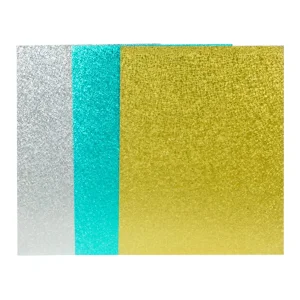
Galvalume Aluzinc Zinc Aluminum Coating Roofing Sheets for Durable Roofing Solutions
View Product Specs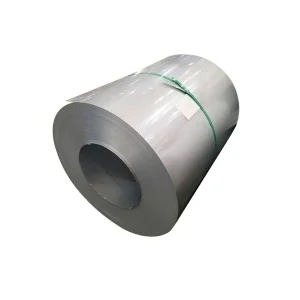
2B BA No.4 8K Cold Rolled Stainless Steel Coil 201 304 316L 321 430 2205 904L
View Product Specs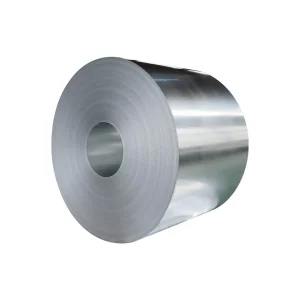
DX53D DX54D Aluminized Silicon Coating Coils for Bread Pans and Heat Shield Trays
View Product Specs
High-Quality Non-Grain Oriented Silicon Steel Coils M310 M350 M470 M600 M800
View Product Specs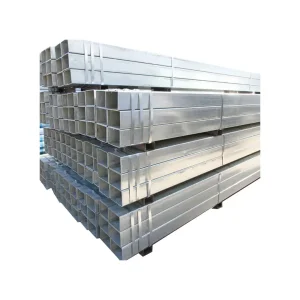
40x40 SHS & 200x100 RHS Hot Dip Galvanized Square & Rectangular Steel Pipe
View Product Specs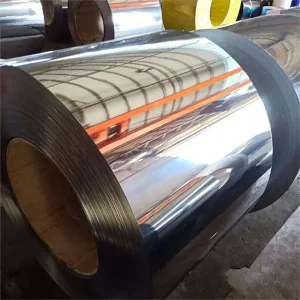
Electrolytic Tinplate (ETP) and TFS Tin Clad Steel for Metal Packaging Suppliers
View Product Specs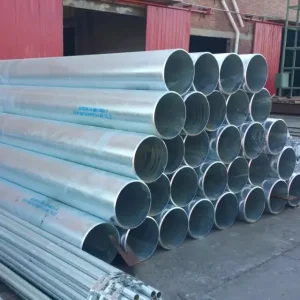
High-Strength Spiral Steel Pipe ASTM A53 A106 Gr.B Large Diameter Pipe Supplier
View Product SpecsFrequently Asked Questions: Preventing Steel Rust & Sourcing
Clear, authoritative answers from our metallurgists and international sales directors.
Need Technical Specifications or a Mill-Direct Quote?
Connect directly with our engineering and procurement management team in Tianjin. We provide custom coating formulations, custom section sizes, and fast ocean freight quote estimates within 24 hours.
Request Direct Factory Quote