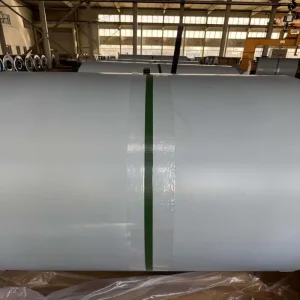
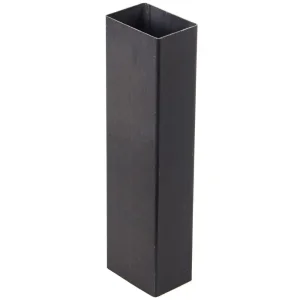
High-Performance Coated & Structural Steel Solutions
Explore our mill-direct lineup engineered for extreme durability, architectural integrity, and demanding industrial applications.
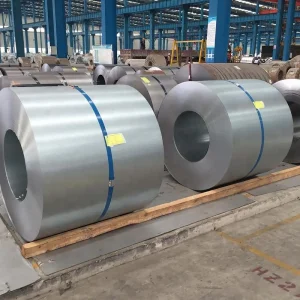
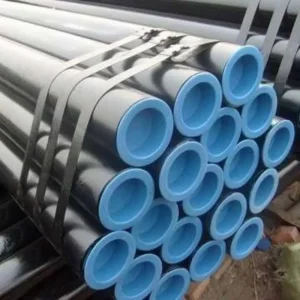
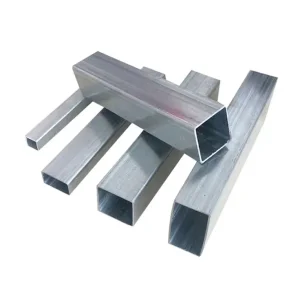
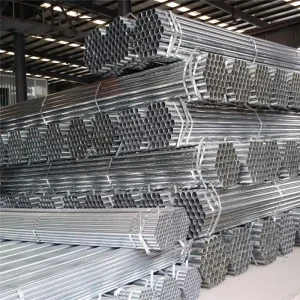
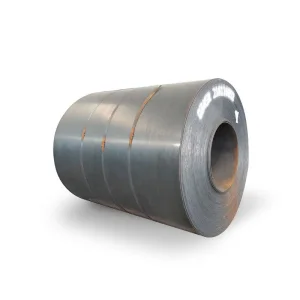

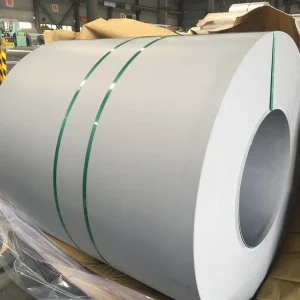
The Paradigm Shift in Metallic Corrosion Defense
Addressing structural degradation in extreme atmospheric, chemical, and marine environments through advanced ternary alloy coating chemistry.
Modern industrial infrastructure faces escalating environmental stressors. Standard galvanizing methods—such as pure zinc hot-dip galvanizing (HDG) or traditional Al-Zn Galvalume—frequently suffer from premature red rust at sheared edges, punched holes, and scratched surfaces. This breakdown shortens asset lifespans and inflates lifecycle maintenance costs in critical infrastructure, photovoltaic racking, modern agriculture, and automotive manufacturing.
As a leading Chinese manufacturer and global supplier, Step Million Steel Supply Chain Co., Ltd. (SMSTEEL) integrates state-of-the-art hot-dip Zn-Al-Mg processing lines. By controlling alloy chemistry, cooling gradients, and crystallographic formation, our mill produces coated steel products that comply with rigorous international standards (ASTM A1046, EN 10346, JIS G3323) while drastically reducing overall material consumption.
Microstructure Mechanics & Cut-Edge Self-Healing
Understanding how ternary element equilibrium creates dense, insoluble protective protective film barriers.
Ternary Microstructure Phase Composition
Unlike conventional zinc coatings that form coarse, porous oxidation products, Zn-Al-Mg hot-dip coatings consist of a fine-grained ternary matrix. The structure is composed of primary primary Zinc phase matrix, binary Zn-Mg2 eutectic phase, and a highly stable ternary Zn-Al-Mg2 phase. This dense crystalline packing restricts electrolyte penetration and reduces the corrosion current density significantly.
The Self-Healing Cut-Edge Mechanism
When steel coated with Zn-Al-Mg is sheared, drilled, or scratched, the exposed steel substrate triggers an electrochemical reaction. Magnesium and aluminum ions leach out of the adjacent coating to form a tight, adherent protective film—primarily composed of Simonkolleite [Zn5(OH)8Cl2·H2O] and magnesium-substituted basic zinc carbonates. This layer seals the exposed edge, halting red rust propagation.
Friction Reduction & Press Forming Superiority
Magnesium addition increases coating hardness while decreasing the coefficient of friction. During roll forming, stamping, or bending, Zn-Al-Mg exhibits drastically lower galling and flaking compared to soft pure zinc coatings. Mold wear is reduced by up to 60%, enabling high-speed automated processing without coating detachment.
Zn-Al-Mg vs. Conventional Metallic Protective Coatings
Empirical laboratory data reflecting Neutral Salt Spray Testing (SST ISO 9227 / ASTM B117) and mechanical workability ratings.
| Performance Metric / Feature | Standard Hot-Dip Galvanized (HDG) | Galvalume / Al-Zn (GL) | SMSTEEL Hot-Dip Zn-Al-Mg (ZAM) |
|---|---|---|---|
| Nominal Coating Composition | 99% Zn, Trace Fe | 55% Al, 43.4% Zn, 1.6% Si | 84-95% Zn, 1.5-11% Al, 1.5-3% Mg |
| Salt Spray Resistance (Flat Surface) | 200 – 500 Hours (Red Rust) | 1,000 – 1,500 Hours | 3,000 – 6,000+ Hours |
| Cut-Edge Corrosion Protection | Poor (Sacrificial Zn quickly depletes) | Very Poor (Al causes edge passivation) | Exceptional (Self-Healing Simonkolleite Film) |
| Ammonia & Alkaline Resistance | Low (Rapid Zinc Hydroxide dissolution) | Moderate | Outstanding (Magnesium Stabilized Film) |
| Coating Hardness (HV) | 60 – 105 HV | 110 – 130 HV | 150 – 210 HV (High Scratch Resistance) |
| Formability & Galling Tendency | Prone to flaking under heavy press | Micro-cracking under sharp bends | Excellent flowability & minimal tool wear |
| Weight Reduction Potential | Requires thick coating (Z275-Z600) | Medium (AZ150) | High: Equal lifespan with Z100-ZM180 |
Localized Application Scenarios & Engineering Field Use
Customized structural and flat-rolled Zn-Al-Mg steel deployments across challenging climate zones and industrial environments.
Photovoltaic (PV) Solar Racking & Ground Mounts
Solar farms located in desert sandstorm areas, coastal mudflats, and saline-alkali land face high abrasion and ground-moisture corrosion. Zn-Al-Mg steel profile channels, post posts, and brackets eliminate the need for post-fabrication hot-dip dipping, enabling direct roll-forming from pre-coated coils with complete cut-edge security.
Modern Livestock & Smart Agriculture Greenhouses
Agricultural structures operate in warm, highly humid atmospheres laden with ammonia (NH3) from animal waste and fertilizer runoff. Standard galvanized steel degrades within 3 to 5 years. Zn-Al-Mg tubing and purlins provide chemical neutralization resistance, extending greenhouse structural integrity to 25+ years.
Coastal Infrastructure & Marine Highway Guards
Seaport logistics parks, highway guardrails, subsea tunnel cable trays, and bridge cable ducts endure relentless salt fog (chloride ion exposure). Zn-Al-Mg steel maintains low corrosion rates in C4/C5 marine environments without costly secondary paint maintenance.
Automotive Chassis, Structural Components & EV Casing
Electric vehicle battery enclosures, underbody rails, and suspension arms are subjected to gravel impact, road de-icing salts, and moisture. Zn-Al-Mg's superior hardness resists stone-chip damage while preventing rust creep beneath underlying primer coats.
HVAC Systems, Cable Trays & Electrical Enclosures
Air conditioning ducting, server room cable management, and outdoor power cabinets require high precision forming, flame retardancy, and moisture resistance. Zn-Al-Mg eliminates zinc flaking during tight lock-forming operations, preventing internal system contamination.
Architectural Metal Roofing & Composite Decking
Large-span commercial roofs, airport terminals, and industrial warehouses benefit from high-strength Zn-Al-Mg steel sheets. They withstand standing water, acid rain exposure, and severe atmospheric polutants while reducing structural deadweight.
Technical Roadmap & Future Metallurgical Evolution
Strategic advancements in thin-gauge ultra-high strength steel, environmentally friendly passivations, and smart coating monitoring.
Phase 1: Alloy Optimization
Transitioning from basic medium-aluminum coatings to specialized low-aluminum (1.5% Al) and high-aluminum (11% Al) Zn-Al-Mg variants customized for specific acidity or alkalinity levels.
Phase 2: Ultra-High Strength Integration
Combining Zn-Al-Mg coatings directly with Advanced High-Strength Steels (AHSS) and Dual-Phase (DP) steels (yielding 780-1180 MPa) without hydrogen embrittlement.
Phase 3: Cr-Free Eco-Passivation
Pioneering 100% Hexavalent Chromium-Free organo-silane and nano-ceramic passivation layers, fully compliant with EU RoHS 3.0 and REACH directives.
Phase 4: Low-Carbon Green Steel
Integrating hydrogen-based direct reduced iron (DRI) substrate steel with energy-efficient induction zinc pots to achieve near-zero carbon footprint steel supply.
China's Supply Chain Resilience & SMSTEEL Manufacturing
Combining world-class production scale, integrated logistics port access, and rigorous metallurgical quality assurance.
66,700 m² Tianjin Production Hub
Located in the Jinghai Development Area, Tianjin, our direct mill facility operates 8 high-frequency welded pipe lines, automated slitting stations, continuous hot-dip coating units, and specialized section profiling equipment under one synchronized management framework.
Raw Material & Price Stability
Direct strategic alliances with major primary steel producers (e.g., Baosteel, Shougang, HBIS) ensure steady raw coil allocation, consistent chemistry control, and immunity to localized material shortages, protecting client project schedules.
Seaport Logistics & Rapid Fulfillment
Our proximity to Tianjin Port (Xingang)—the primary maritime gateway in North China—enables efficient containerized and break-bulk loading. Dedicated export packaging (waterproof VCI paper, steel strapping, timber skids) ensures zero sea-transit damage across 80+ international destination ports.
International Standards & Certification Framework
Full traceability, third-party inspection compliance, and dedicated technical field assistance for worldwide buyers.
Manufacturing Standards Compliance
All hot-dip Zn-Al-Mg coils, sheets, and structural pipes manufactured by SMSTEEL conform precisely to global specifications:
- ASTM A1046 / A1046M: Zinc-Aluminum-Magnesium Alloy-Coated Steel Sheet
- EN 10346: Continuously hot-dip coated steel flat products
- JIS G3323: Hot-dip zinc-aluminum-magnesium alloy-coated steel sheets
- GB/T 38816: Continuously hot-dip zinc-aluminum-magnesium alloy coated steel sheet and strip
E-E-A-T Quality Testing Verification
Every batch shipped includes an authentic EN 10204 3.1 Mill Test Certificate (MTC). Our internal laboratory verifies:
- Chemical composition via Optical Emission Spectrometry (OES)
- Coating mass & triple-spot weight verification
- Mechanical tensile, yield, and elongation testing
- Salt spray and cross-hatch adhesion testing
- Third-party inspections welcome (SGS, BV, Intertek, TUV)
Frequently Asked Questions (FAQ) & Sourcing Insights
In-depth responses to essential metallurgical, procurement, and field fabrication queries.
Traditional HDG utilizes a virtually pure zinc bath (99%+ Zn). While effective, pure zinc sacrificial protection consumes itself rapidly in acidic, alkaline, or marine environments, and provides zero self-healing protection at sheared cut edges. Zn-Al-Mg incorporates 1.5%–11% Aluminum and 1.5%–3% Magnesium. The addition of Magnesium forms a ultra-dense, low-solubility basic zinc salt film (Simonkolleite) that dramatically slows down coating consumption and automatically repairs cut edges and scratches via ionic migration.
The cut-edge self-healing mechanism functions reliably on steel sheet and profile thicknesses up to 6.0 mm. For cut edges up to 2.0–3.0 mm, complete self-healing occurs rapidly within a few weeks of exposure. For thicker gauges (up to 6.0 mm), the ionic film formation completely suppresses active pitting and red rust lateral spreading, maintaining long-term structural integrity without secondary paint touch-ups.
Yes. Zn-Al-Mg steel can be welded using standard High-Frequency (HF) welding, MAG/MIG welding, Laser welding, and Resistance Spot welding. Because Zn-Al-Mg offers equivalent corrosion protection at lower coating weights (e.g., ZM120 replacing HDG Z275), zinc vapor generation and spatter during welding are noticeably reduced, leading to cleaner weld seams and reduced porosity.
Absolute cost performance is one of Zn-Al-Mg's greatest advantages. Although the per-ton raw material cost of Zn-Al-Mg coil is slightly higher than standard GI, its superior corrosion resistance allows engineers to specify thinner coating weights (reducing total weight per meter). Furthermore, eliminating post-fabrication dipping and post-weld painting saves substantial labor, freight, and processing costs, delivering an overall project saving of 15% to 30%.
For standard sizes and coating specs (such as ZM120, ZM180, ZM275), SMSTEEL maintains regular stock coils with lead times as short as 7 to 10 days. For custom coil slitting, profiling, or pipe dimensions, production lead time is typically 15 to 25 days. We support flexible trial orders starting from 5 to 10 metric tons to facilitate engineering verification.
Additional High-Quality Industrial Steel Products
Explore our complete mill catalog including specialized pipe fittings, heavy plate, and stainless steel lines.